
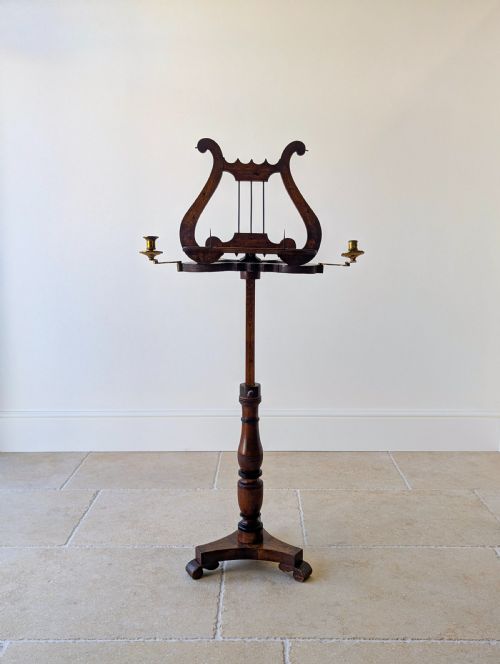

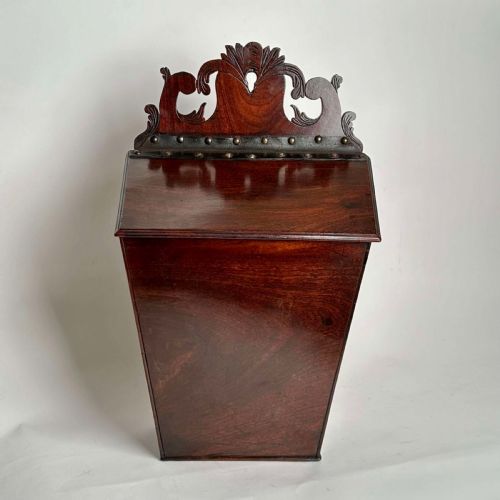

Brass and Mahogany Rack
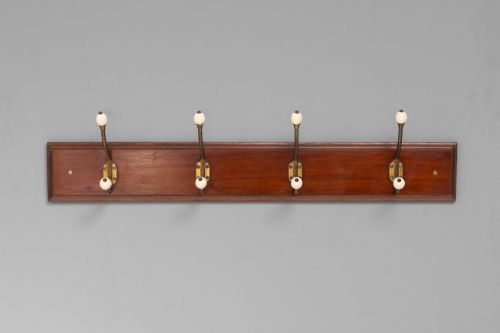
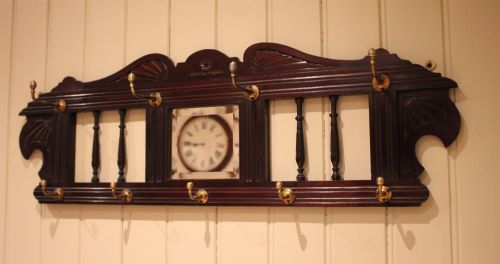
A brass and mahogany rack combines rich timber and bright metal to hold your books, coats, or papers with quiet authority.
Brass and Mahogany Rack
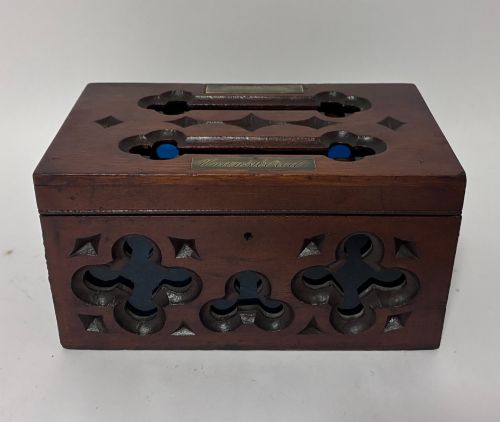
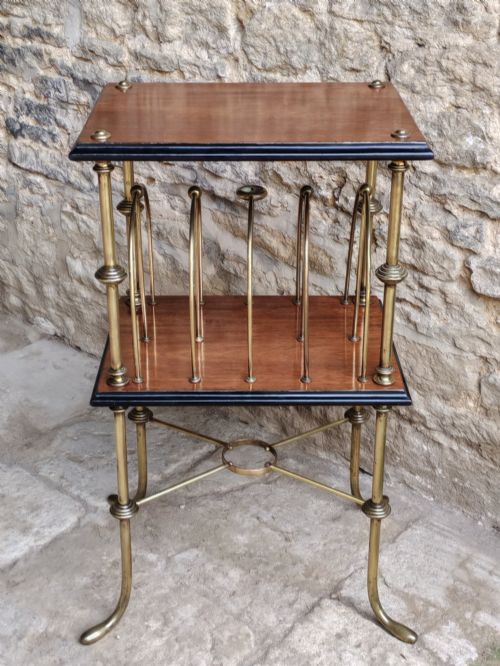
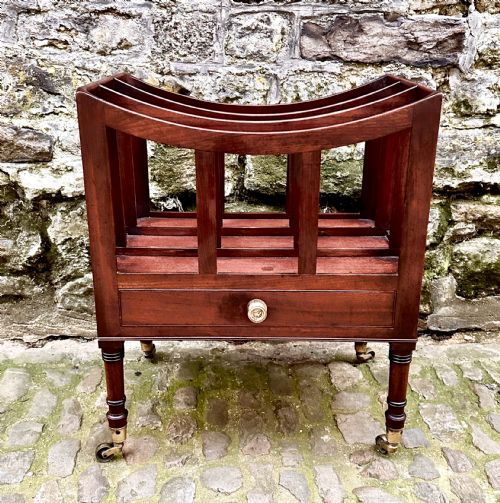
A brass and mahogany rack encompasses functional domestic items designed to organise hallway items, literature, and stationery, spanning periods from the Georgian era through to the Edwardian period.
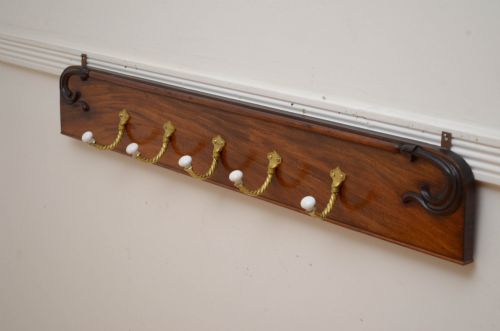
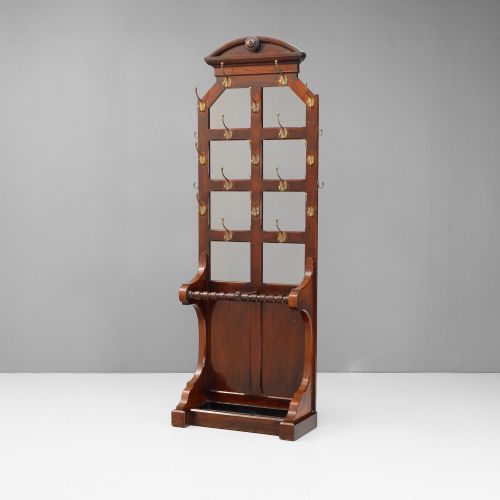
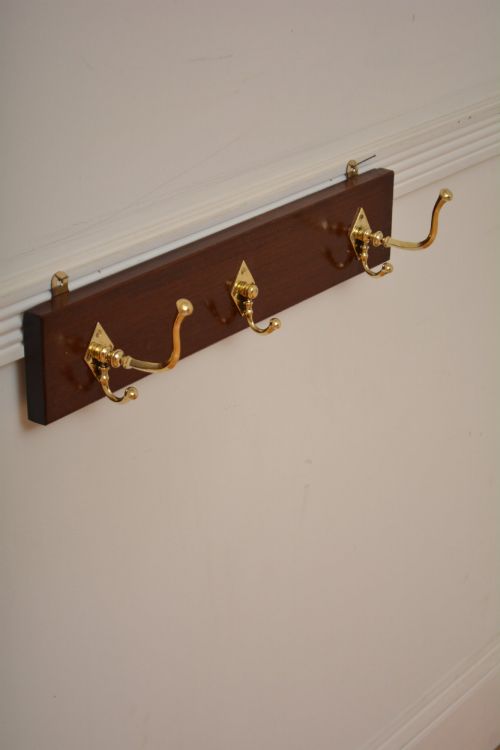
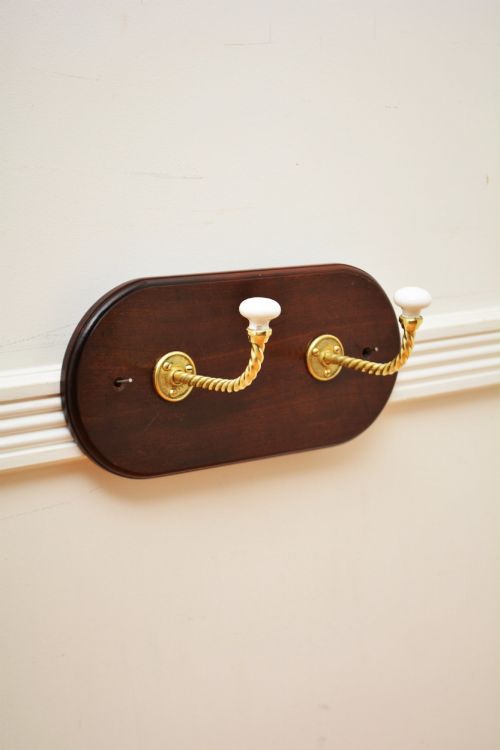
You will most commonly encounter wall-mounted coat hooks, magazine stands, and canterburys, alongside umbrella stands and desktop letter holders that merge rich timber frames with metal mountings.
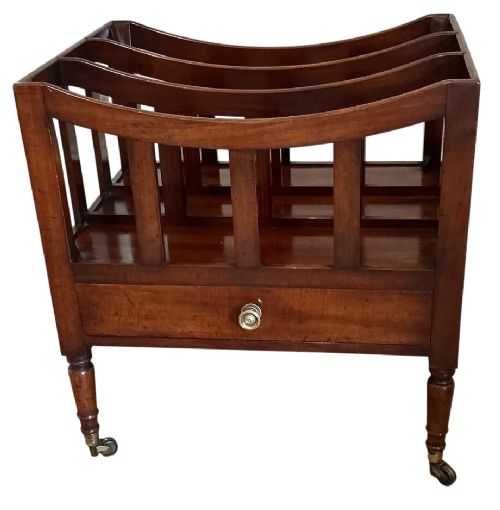
Pieces frequently display specific regional or stylistic influences, taking forms from simple Victorian coat racks to structured Regency boat-shaped canterburys.
How they were made
Constructed primarily from solid or veneered mahogany, these pieces utilise dense hardwoods that take a deep, polished finish and provide structural stability.
Cast brass hooks, handles, gallery rails, and mounting plates are secured to the timber, often complemented by secondary materials like ceramic inserts, glass, or cast iron.
Joinery techniques range from traditional dovetailing in boxes and drawers to robust screw-fixings on wall racks and structural mounts designed to bear daily weight.
Listings feature items spanning the Georgian, Regency, Victorian, and Edwardian periods, constructed in mahogany, brass, cast iron, and ceramic.
What varies in quality
The standard of a piece rests heavily on the crispness of the brass casting and the depth of figure in the mahogany timber grain.
Design sophistication also dictates worth, separating mass-produced utilitarian hardware from bespoke cabinet work featuring hand-turned elements or intricate inlay.
Originality of the metalwork and fixings preserves the integrity of the object, as replacement hooks or altered mounts diminish historical cohesion.
Benetfink And Co Cheapside London·Shoolbred·Thwaites And Reed
The Brass and Mahogany Rack Glossary
- Canterbury
- A low, partitioned stand used for holding sheet music or newspapers, typically featuring slatted or turned divisions above a drawer.
- Gothic Revival
- A nineteenth-century design style drawing on medieval architectural motifs, often seen in pointed arches or heavy chamfered detailing.
- Regency
- A style period spanning the early nineteenth century defined by classical restraint, elegant proportions, and neat brass stringing or mounts.
- Aesthetic Movement
- A late Victorian artistic approach emphasising visual beauty over narrative function, frequently expressed through simplified forms and contrasting materials.
- Bracket Feet
- Short architectural supports found beneath small cabinets, chests, and desk accessories, lifting the main body off the floor or surface.
Brass and Mahogany Rack: Frequently Asked Questions
What is a canterbury used for?
A canterbury serves to store sheet music, folios, or periodicals neatly upright within its divided sections. These low stands often sat beside a piano or in a drawing room for easy access.
Over time, their internal compartments adapted to hold modern magazines while retaining their traditional timber frame and carrying handles.
How do I date a mahogany rack?
Dating relies on examining the construction methods, the style of the brass hardware, and the timber's finish. Georgian and Regency pieces show finer joinery and crisper brass inlays.
Later Victorian and Edwardian examples often feature heavier cast plates, mass-produced hooks, or stylised motifs associated with the Aesthetic and Gothic Revival movements.
Where were wall racks placed?
Wall-mounted racks traditionally hung in hallways and entrance passages to accommodate hats, heavy coats, and walking sticks. Smaller versions were positioned in studies for letters and newspapers.
The inclusion of drip trays or ceramic inserts on specific stands indicates placement designed for damp umbrellas and coats.
How do I care for mahogany and brass?
Maintenance involves dusting the mahogany regularly with a soft cloth and occasionally feeding the timber with a traditional wax. Harsh chemical cleaners must be avoided to preserve the natural patina.
Brass elements can be left to age naturally or polished very gently with a non-abrasive cloth if bright definition is preferred.