






Dark Wood Framed Textile
These dark wood framed textile pieces bring historic needlework and woven artistry into rooms, offering tactile depth and narrative richness.
Dark Wood Framed Textile
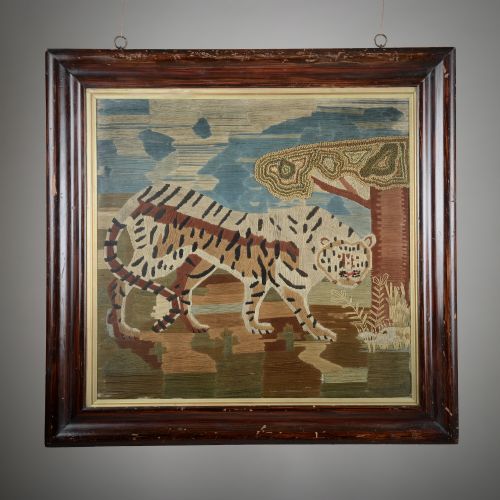
When you search for dark wood framed textile, you encounter works where historic fabrics, embroideries, and tapestries are secured behind glass within timber frames. The examples span various origins, featuring pieces framed in mahogany and carved hardwood alongside oak structures.
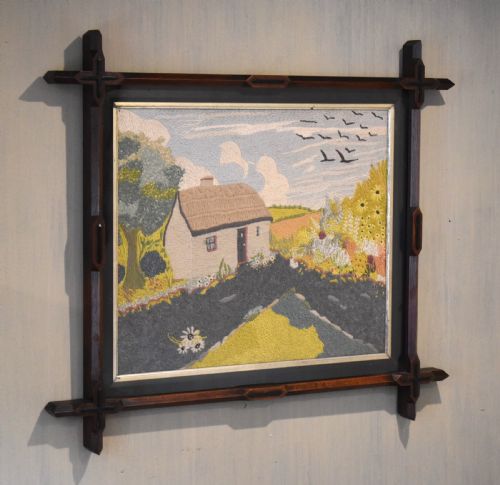
The selection ranges from Georgian religious needlework and early nineteenth century embroidered pictures to Arts and Crafts compositions and Victorian folk art. You are most likely to meet nineteenth century wall art and samplers, alongside framed Toile de Jouy fragments and embroidered trays.
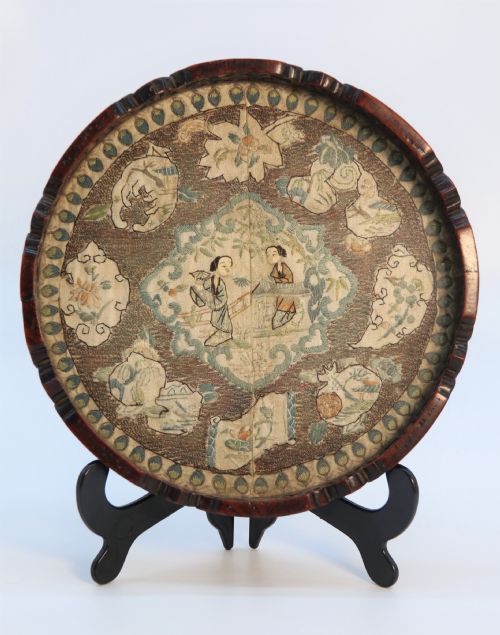
Geographic origins vary from English narrative scenes and Chinese carved trays to Anglo-Indian screens and French Chateau fragments. Each object unites fabric arts with substantial wooden framing to preserve historical textile work.
Materials and construction
The construction relies on dark timbers such as mahogany, oak, and carved hardwood to build protective frames around delicate fabric interiors. Silk, wool, canvas, and linen serve as the foundational textiles for needlework, samplers, and tapestry weaving.
Maker techniques incorporate silk thread embroidery, wool work, and silver and gold thread embellishments applied to pictorial and decorative surfaces. Glass is fitted over the textile work to protect the fragile fibres from dust and handling.
Listings feature pieces spanning the Georgian and Victorian eras up to nineteen hundred, incorporating wood, glass, silk, wool, canvas, and linen.
What defines quality
Quality rests on the complexity of the needlework and the fidelity of the framing materials. Finer pieces demonstrate intricate threadwork, such as gold and silver embroidery or detailed pictorial narration, paired with substantial carved or polished hardwood frames.
The condition of the textile and the preservation under glass dictate the standing of a piece within the range. Superior examples maintain vibrant thread colours and stable fabric integrity within their original or period timber mounts.
The Dark Wood Framed Textile Glossary
- Sampler
- A piece of needlework produced as a demonstration or test of skill in various stitches. These often feature alphabets, numerals, and decorative motifs.
- Toile de Jouy
- A type of cotton or linen fabric featuring a repeating printed design depicting a complex scene, typically in a single colour on a light background. Eighteenth-century fragments are frequently salvaged and framed as art.
- Needlework picture
- A pictorial composition created using needle and thread on canvas or linen ground. These works range from religious subjects to literary illustrations.
- Tapestry
- A form of textile art woven on a vertical loom, traditionally using coloured wool and silk yarns to form pictorial designs. They are mounted in heavy wooden frames for wall display.
Dark Wood Framed Textile: Frequently Asked Questions
How should I hang a framed textile?
Hang these pieces away from direct sunlight to prevent the silk, wool, and linen threads from fading over time. Stable indoor humidity protects both the antique timber frame and the fragile textile within.
Ensure the wall fixings match the weight of the hardwood or oak frames. Professional picture wire and secure brackets distribute the load safely.
Are these textiles cleaned?
Antique textiles are rarely washed because moisture and detergents can damage historic fibres, silk threads, and metallic embroidery. Surface dust is kept off by the protective glass front.
Conservation efforts focus on stable mounting rather than active cleaning. The sealed frame shields the historic fabric from environmental wear.
How do I identify the period?
Dating relies on the style of the needlework, the framing timber, and construction methods. Georgian and Victorian pieces show distinct stitching patterns and framing profiles.
Documentation or stylistic markers such as Arts and Crafts motifs help narrow the date of origin. Comparing the textile technique to known historical examples clarifies the era.
Can frames be swapped?
Original frames are integral to the character and history of the piece. Swapping them alters the context in which the textile has been preserved.
Most collectors prefer keeping pieces in their period mountings, such as oak or mahogany frames. Altering the framing can diminish the historical integrity of the object.