



Dark Wood Cooler
When you search for a dark wood cooler, you find centuries of fine dining vessels built to chill wine and hold ice at the table.
Dark Wood Cooler
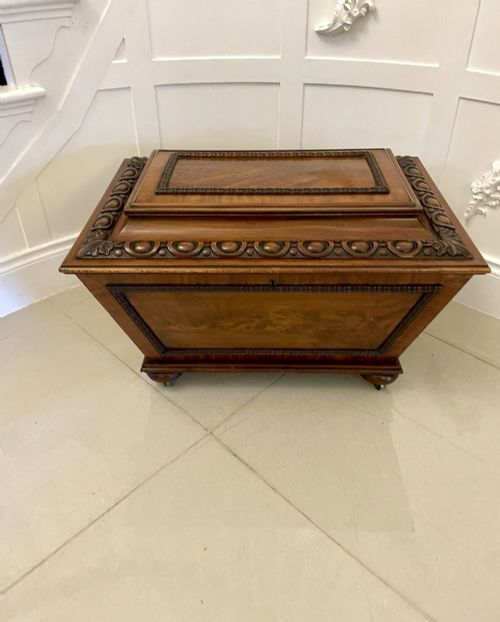
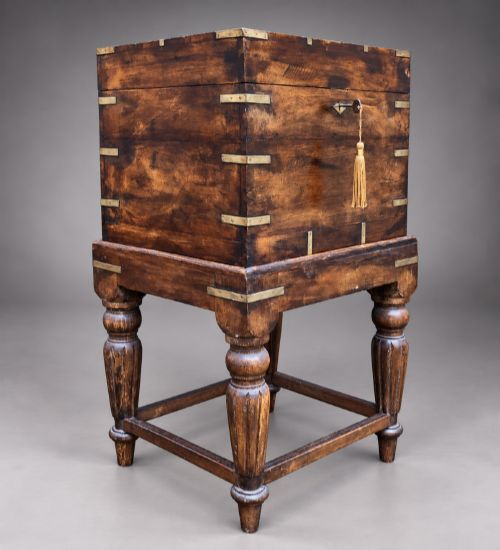
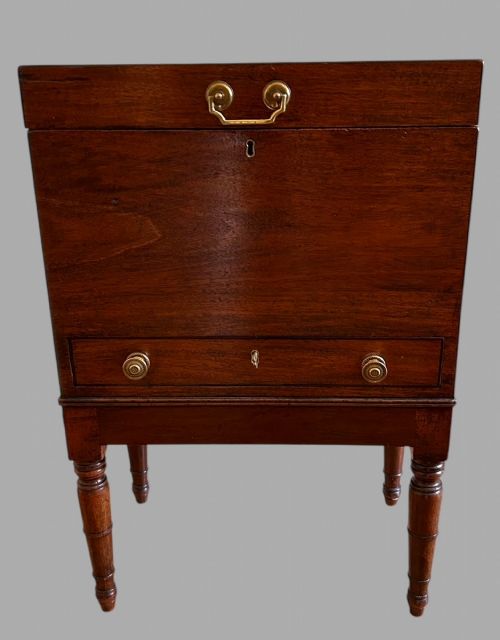
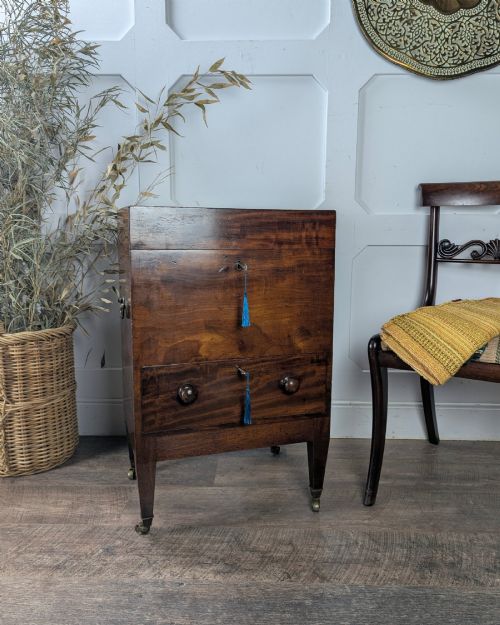
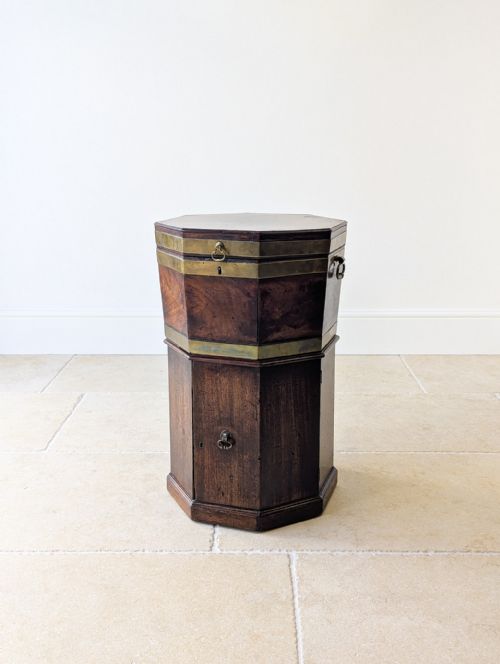
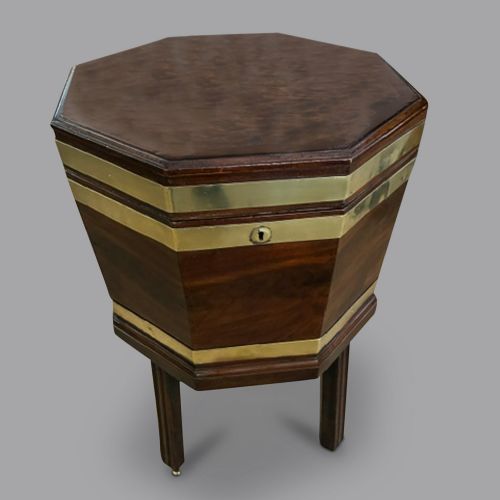
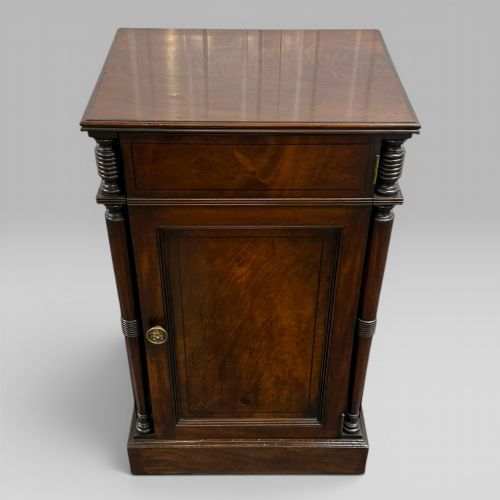
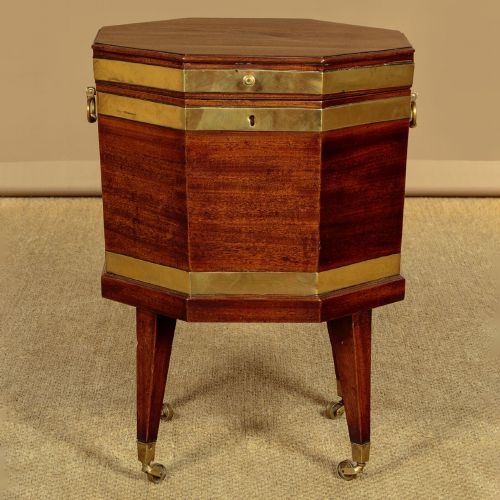
A dark wood cooler encompasses various historic forms designed for holding bottles and ice during meals, most frequently appearing as a cellarette or wine cooler. These pieces emerge primarily from Georgian, Regency, and Victorian periods, reflecting the shifting dining customs of elite households.
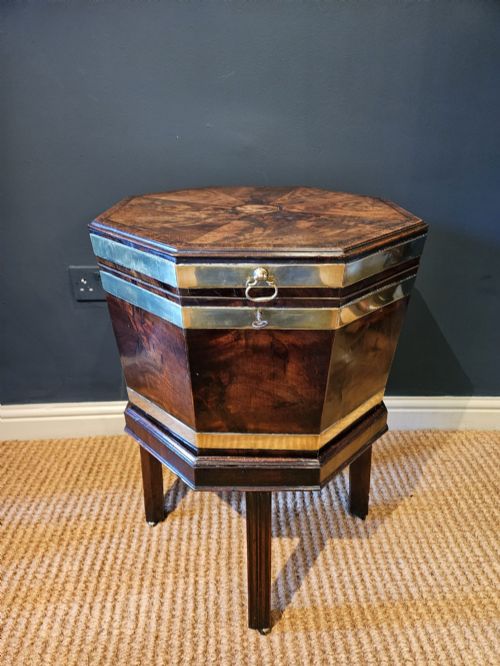
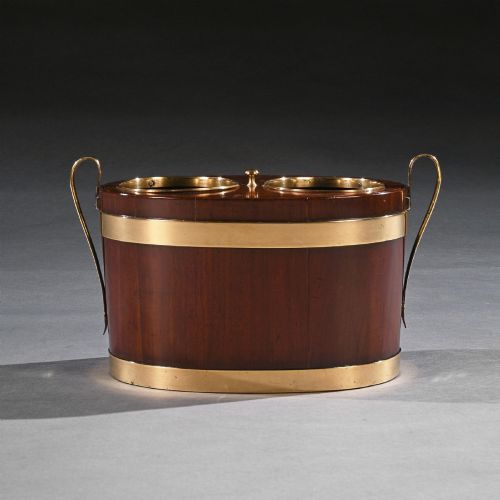
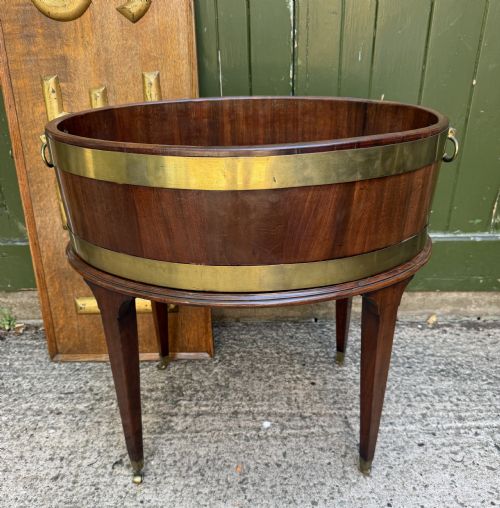
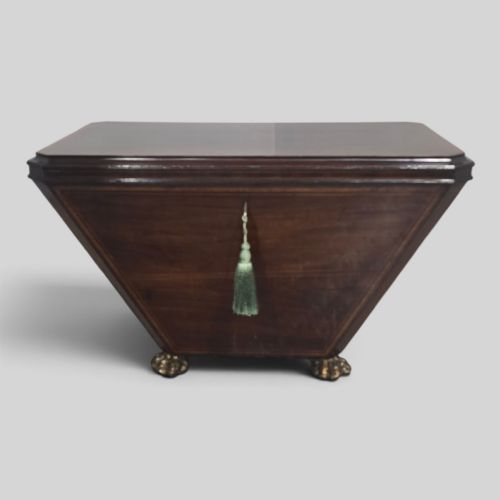
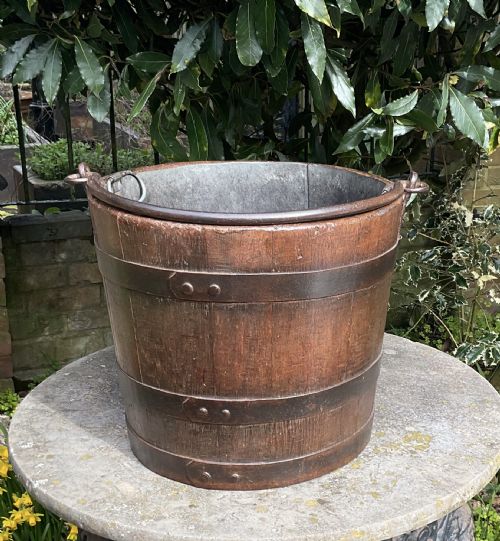
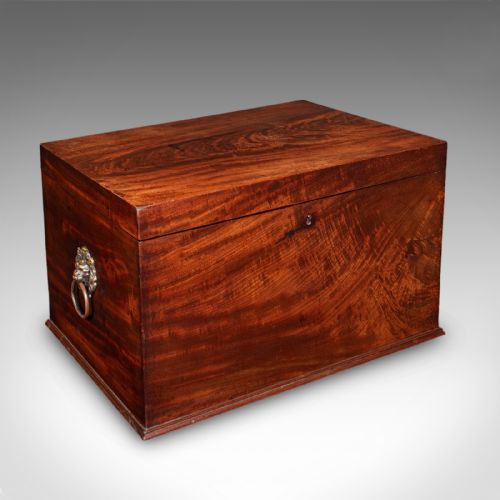
The most common variants on this page take the shape of octagonal or oval brass-bound buckets and sarcophagus-form boxes. Cabinetmakers constructed these vessels to sit discreetly beneath sideboard tables or stand freely beside the dining table.
Materials and construction methods
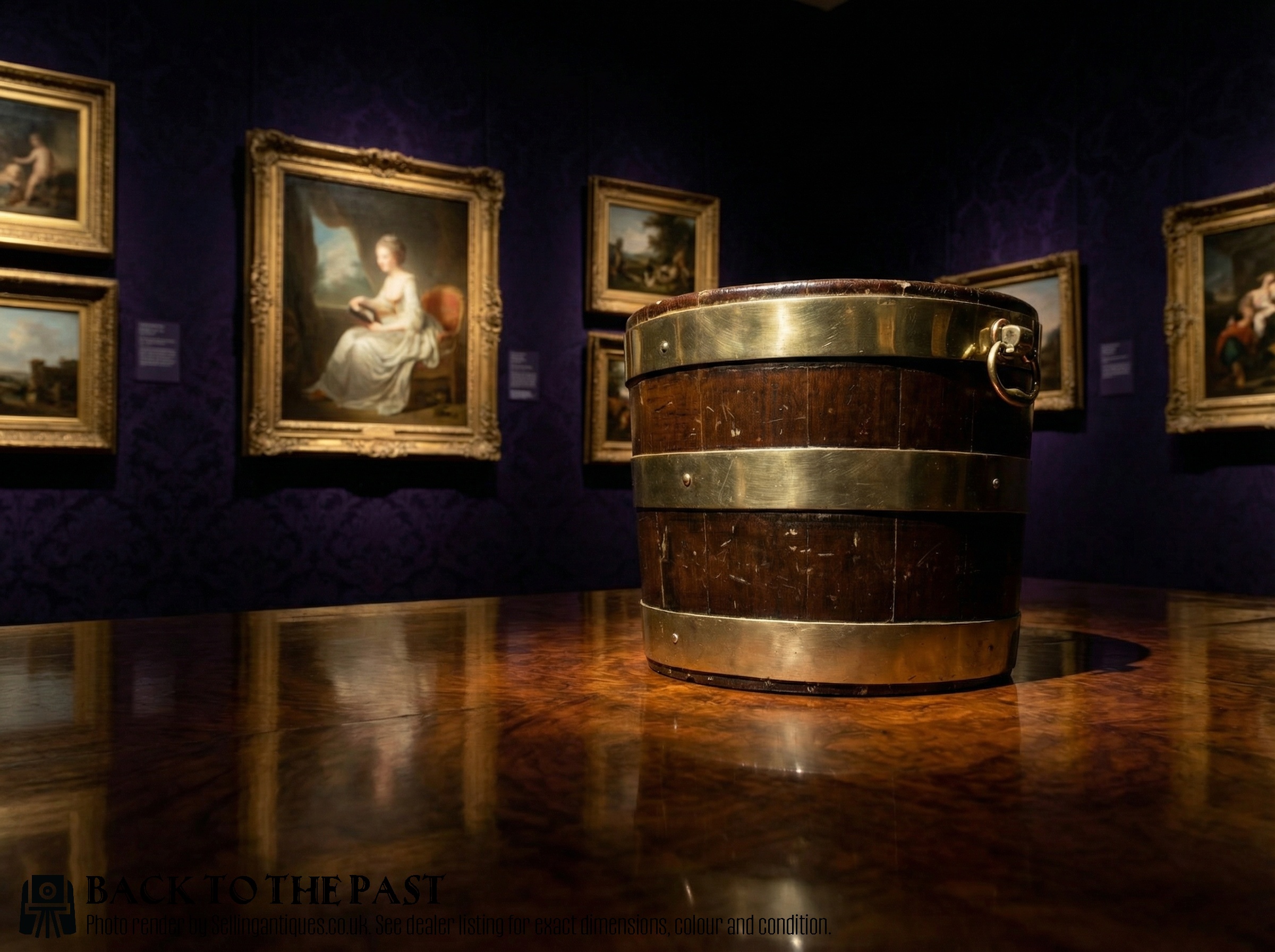
Makers relied heavily on solid mahogany, oak, and rosewood, often selecting dense grain patterns and figuring to elevate the visual weight of each piece. Coopered construction appeared frequently in bucket forms, where individual wooden staves were bound tightly with brass bands.
Metalwork played a structural and decorative role, with brass hoops, drop handles, and castors securing the heavy timbers against dampness and movement. Cabinetmakers also applied fine satinwood inlay to enrich the exterior surfaces of later neoclassical examples.
Dark Wood Cooler Retail Price Guide 2026
Typical asking prices for dark wood cooler among the pieces listed under this phrase on Sellingantiques today, from the lower quarter to the upper quarter. They describe what is for sale here now, not the wider market.
The listings here span the Georgian, Regency, and Victorian eras, predominantly constructed from mahogany with brass and iron mounts.
Distinctions in craftsmanship
Quality rests in the precision of the cooperage and the selection of timber, where tightly fitted staves and richly figured mahogany distinguish master workshops from standard production. The crispness of hand-cut brass binding and the retention of original interior linings signal superior original manufacture.
Attribution to prominent cabinetmakers like Gillows elevates the standing of certain pieces, visible in the sculptural confidence of carved paw feet or sophisticated sarcophagus proportions. Simpler provincial pieces display heavier joints and plainer secondary woods.
Edwards and Roberts·Gillows·Gillingtons·Freemans of Norwich
The Dark Wood Cooler Glossary
- Cellarette
- A lockable container used for storing wine bottles near the dining table. They often featured lead linings to hold ice for chilling.
- Coopered
- Built using curved wooden staves joined together side by side, similar to the construction of a barrel or cask.
- Sarcophagus form
- A monumental box shape with a domed or peaked lid, mimicking ancient stone coffins popular in Regency design.
- Brass bound
- Fitted with structural metal bands that reinforced the wooden staves and added decorative contrast.
- Padouk
- A dense tropical timber with a deep reddish hue, favoured by makers working within Anglo-Indian colonial traditions.
Dark Wood Cooler: Frequently Asked Questions
What is a dark wood cooler used for?
These vessels originally served to cool wine bottles and store ice safely away from the main kitchen during long formal dinners.
Today, collectors repurpose them as distinctive umbrella stands, log boxes, or decorative planters within traditional interiors.
How do I date a wine cooler?
Dating relies on observing the combination of timber, hardware, and overall architectural form, such as Georgian bracket feet or Regency sarcophagus proportions.
Cabinetmaking techniques like hand-cut dovetails and forged brass hoops provide further clues to the decade of manufacture.
Are these coolers lined with metal?
Many historic examples retain their original fitted metal interiors, which were designed to hold ice and water without damaging the wood.
Some interiors feature divided compartments built to separate individual wine bottles during service.
Where should I place a cellarette?
These freestanding pieces suit dining rooms, large hallways, or studies where their rich mahogany and brass details can anchor a corner.
They pair naturally beside antique sideboards or beneath historic oil paintings.