



Dark Wood Cherub Panel
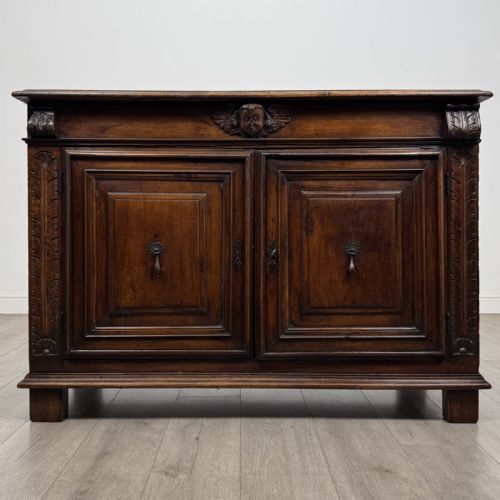
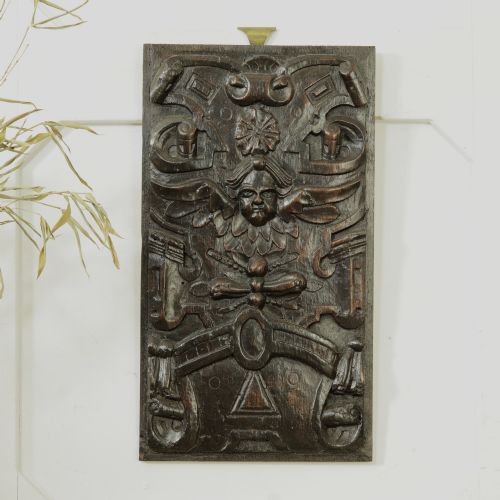
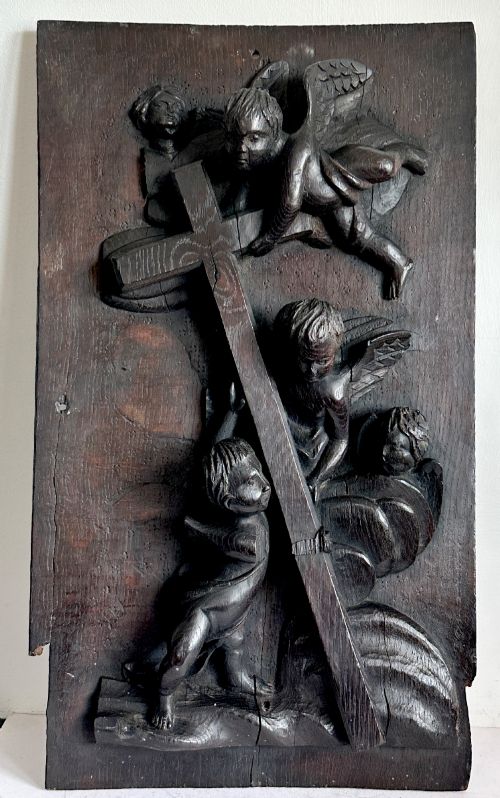
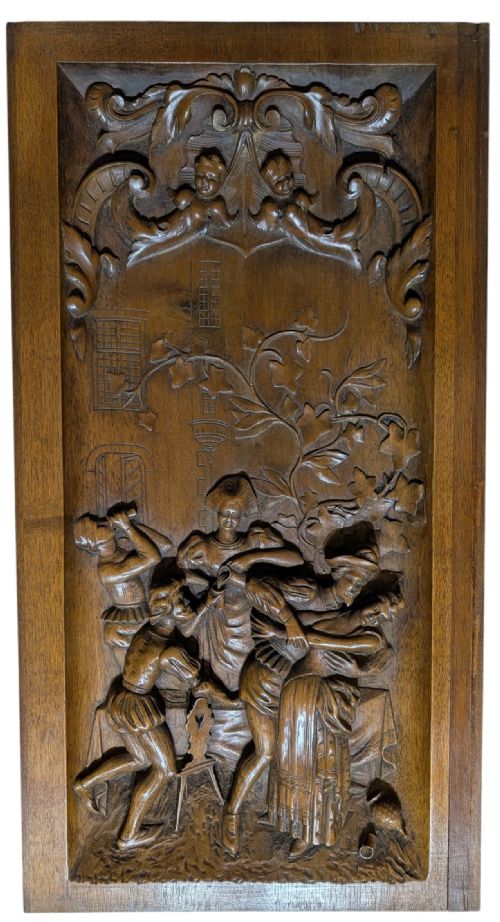
These dark wood cherub panel items bring seventeenth-century and later carved relief work directly into your home.
Dark Wood Cherub Panel
A dark wood cherub panel combines heavy timber framing with figural carving, often representing putti or angels in high relief. Buyers seek these pieces to anchor a room with architectural history and seventeenth-century or nineteenth-century character.
Most examples appearing on this page take the form of wall carvings, architectural salvage, or overdoor sections made from oak and mahogany. Baroque, Jacobean, and Renaissance Revival styles dominate the selection, showing deep carving and pierced acanthus leaves.
Some variations incorporate oil paint, gesso, or silver leaf alongside the dark wood, while others function as wall mirrors or staircase panels. The maker Edward Pearce appears in attribution for larger seventeenth-century works.
How they were made
Carpenters and carvers shaped these pieces primarily from solid oak and mahogany, working the timber with chisels and gouges to achieve high-relief depth. Seventeenth-century workshops relied on hand-carving techniques to produce pierced acanthus leaves and detailed putti figures.
Later Victorian iterations utilised similar timber reduction methods alongside applied elements like gesso, silver leaf, and occasional oil paint finishes. Structural components such as architectural salvage and framing timber dictated the scale of the final carving.
Dark Wood Cherub Panel Retail Price Guide 2026
Typical asking prices for dark wood cherub panel among the pieces listed under this phrase on Sellingantiques today, from the lower quarter to the upper quarter. They describe what is for sale here now, not the wider market.
Listings feature oak and mahogany pieces spanning the seventeenth century through to the Victorian era, encompassing architectural salvage and wall reliefs.
What varies in quality
Depth of carving and sharpness of detail separate the finest wall reliefs from standard architectural salvage. Pieces attributed to specific carvers or executed in seventeenth-century Baroque styles demonstrate superior sculptural confidence in the rendering of cherub faces and acanthus foliage.
The integrity of the timber ground and the preservation of original surface treatments dictate the standing of an individual panel. Intricate pierced work and substantial scale denote ambition in the original workshop.
Edward Pearce
The Dark Wood Cherub Panel Glossary
- Putti
- Plural of putto, depicting plump, winged infant figures resembling cherubs in classical art. These motifs appear frequently in Renaissance Revival and Baroque wood carvings.
- Acanthus
- A carved ornamental motif modelled after the leaves of the Mediterranean acanthus plant. It forms curling foliage patterns around central figures on seventeenth-century panels.
- High-Relief
- A sculptural technique where figures project significantly from the background plane. This method creates strong shadow and depth on heavy timber panels.
- Architectural Salvage
- Building elements rescued from older structures for decorative reuse. Many wall panels and overdoor carvings begin their secondary life through this recovery process.
- Jacobean
- The stylistic period spanning the early seventeenth century in England. Furniture and woodwork from this era typically feature dark oak and geometric or strapwork carving.
Dark Wood Cherub Panel: Frequently Asked Questions
What is a dark wood cherub panel?
A dark wood cherub panel is a carved wooden architectural fragment or wall relief featuring winged putti figures, typically executed in oak or mahogany during the seventeenth or nineteenth century.
These panels originated as parts of larger architectural schemes, staircases, or overdoors before entering circulation as decorative wall art.
How were dark wood cherub panels used?
Historical interiors integrated these carved panels into wall panelling, staircases, and overdoor placements to display status and classical taste.
Modern interiors generally mount them directly onto walls as standalone sculptures or incorporate them within architectural framing.
How do I hang a heavy wooden panel?
Heavy oak and mahogany panels require secure wall fixings distributed evenly across the timber frame or backplate to support the significant weight.
Consulting a professional installer ensures the panel anchors safely into structural wall studs or masonry.
How can I tell seventeenth-century panels apart from later copies?
Seventeenth-century panels display period tool marks, timber shrinkage appropriate to age, and deep hand-carved relief in native oak.
Nineteenth-century revival pieces often utilise different framing methods or machine assistance alongside Victorian interpretations of Baroque styles.