





Baroque Oak Wall Relief
These baroque oak wall relief carvings bring dramatic seventeenth and eighteenth-century sculptural depth into your interior through robust timber panels and figural plaques.
Baroque Oak Wall Relief
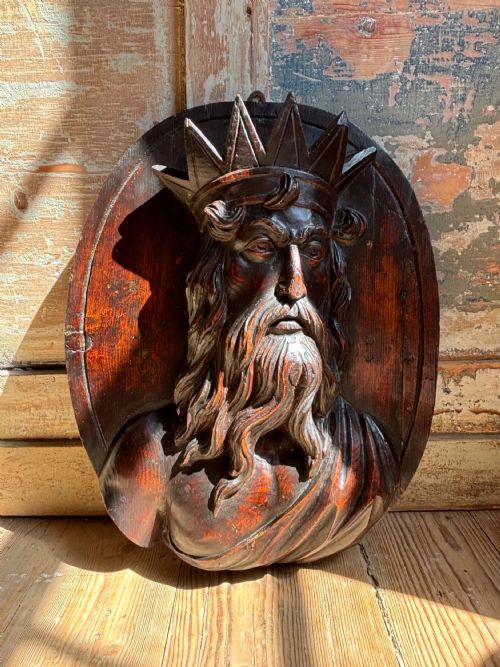
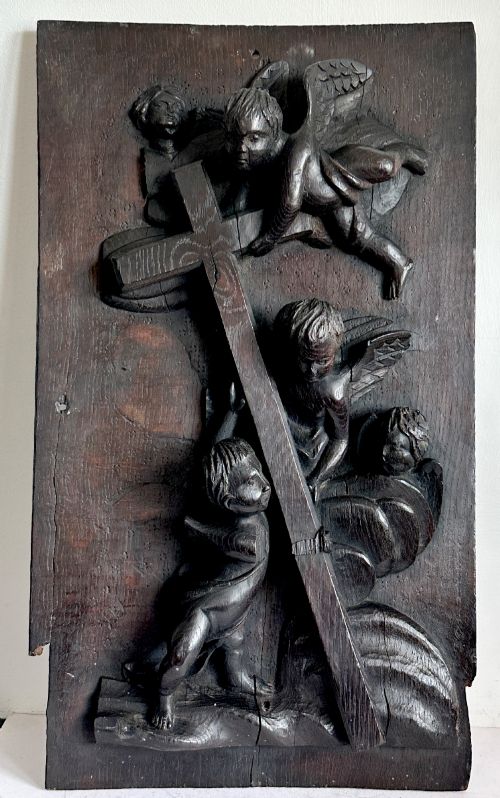
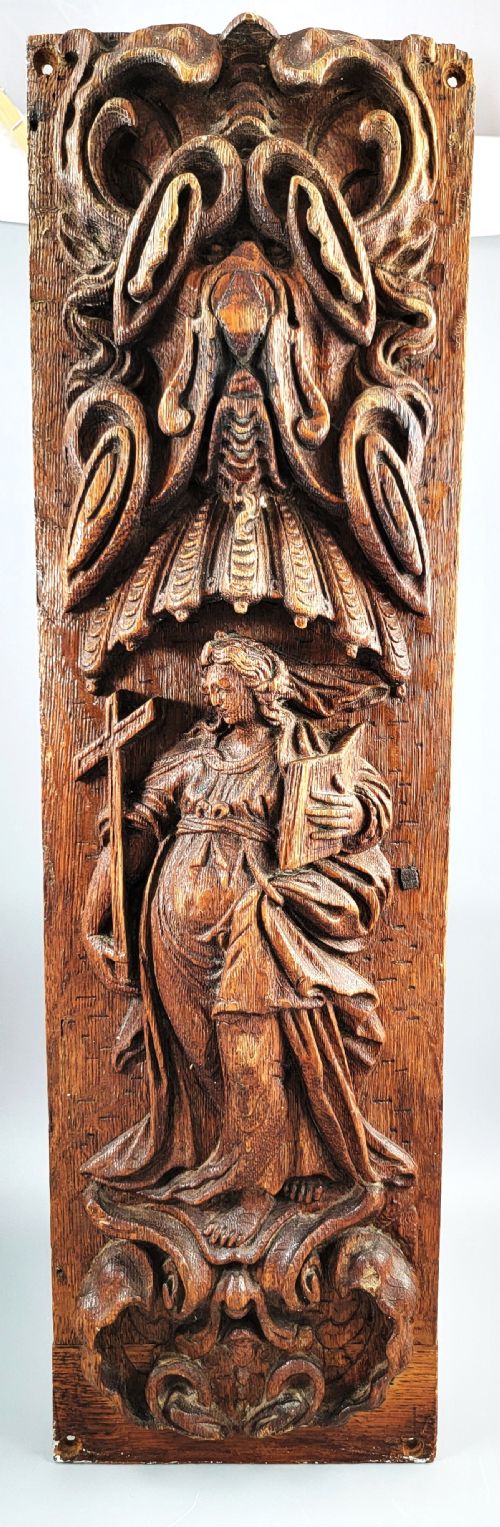
A baroque oak wall relief represents carved timber architectural elements, overdoor panels, and figural plaques originating primarily from the seventeenth and eighteenth centuries, alongside later nineteenth-century revivals. When you search for baroque oak wall relief, you encounter deeply sculpted subjects ranging from mythological figures like Neptune and allegories of faith to heraldic cherubs and Roman helmets.
The objects span Flemish, German, French, and English origins, reflecting regional interpretations of the baroque style through pierced acanthus leaves and dynamic dimensional carving. Architectural salvage and wall sculptures dominate the available forms, designed originally for grand staircases, overdoors, and panelled interiors.
Materials and construction methods
Carvers worked primarily in solid oak and walnut timber, utilising hand-carving techniques to achieve high relief and pierced undercut details. The natural grain of the wood provides the structural foundation for deep chisel work, allowing intricate forms such as cherubs and acanthus leaves to emerge directly from the board.
Selected pieces incorporate applied paint and leaf gilding to accentuate focal points and enrich the sculptural surface. These decorative finishes highlight the muscular contours of figures and the complex geometry of baroque ornamentation.
Baroque Oak Wall Relief Retail Price Guide 2026
Typical asking prices for baroque oak wall relief among the pieces listed under this phrase on Sellingantiques today, from the lower quarter to the upper quarter. They describe what is for sale here now, not the wider market.
A French seventeenth-century panel shares space with a nineteen-hundred clock of the universe from a château.
Assessing sculptural quality
Sculptural depth and anatomical precision separate standard architectural timber fragments from masterwork carvings. The treatment of drapery, facial expression, and the fluidity of acanthus foliage demonstrate the carver's anatomical understanding and technical capability.
The integrity of the original timber surface and the crispness of the hand-carved details define the visual impact of each panel. Superior examples retain their original surface depth without excessive smoothing from later interventions.
Edward Pearce
The Baroque Oak Wall Relief Glossary
- Baroque
- An ornate artistic style prevalent during the seventeenth and early eighteenth centuries, characterised by drama, deep relief, and exuberant ornamentation. It emphasises movement and theatricality in sculptural composition.
- Relief
- A sculptural technique where the sculpted elements remain attached to a solid background of the same material. High relief projects significantly from the plane, creating deep shadows.
- Acanthus
- A stylised leaf motif derived from Mediterranean flora, widely used in classical and baroque architecture and woodcarving. It forms curling, scroll-like patterns across panels and friezes.
- Overdoor
- An architectural panel or decorative feature positioned directly above a doorway. These elements were frequently carved with elaborate figural or heraldic subjects.
- Architectural salvage
- Building components rescued from demolition or alteration for reuse in interior decoration. These fragments preserve historic craftsmanship and materials.
Baroque Oak Wall Relief: Frequently Asked Questions
How were these panels originally displayed?
These carved panels functioned as integral components of grand domestic and ecclesiastical interiors. They were built into oak-panelled walls, overdoors, and staircase structures.
Over time, many of these architectural elements were salvaged from historic buildings to be mounted independently as wall sculptures.
How do I care for baroque oak wall reliefs?
Maintain stable indoor humidity levels and keep the timber away from direct heat sources and strong sunlight. This prevents the oak from drying out or splitting.
Dust the carved surfaces gently with a dry, soft brush to remove debris from deep recesses without disturbing the wood.
How can I distinguish seventeenth-century work from nineteenth-century revivals?
Examine the back of the panel and the tool marks left by the carver. Seventeenth-century pieces typically exhibit hand- Hewn timber preparation and period-specific joinery.
Nineteenth-century revival pieces often display machine-assisted preparation or subtle differences in stylistic interpretation and patination.
What subjects typically appear in these carvings?
Common motifs include allegorical figures representing faith, classical figures such as Neptune, and mythological or heraldic cherubs. Foliate designs featuring acanthus leaves are also prevalent.
Specific panels may depict military elements like Roman helmets or architectural trophies associated with baroque interior design.