
Dark Oak Relief Carving
Dark oak relief carving brings deep, textured historical timber into interiors through panels, figures, and architectural salvage.
Dark Oak Relief Carving
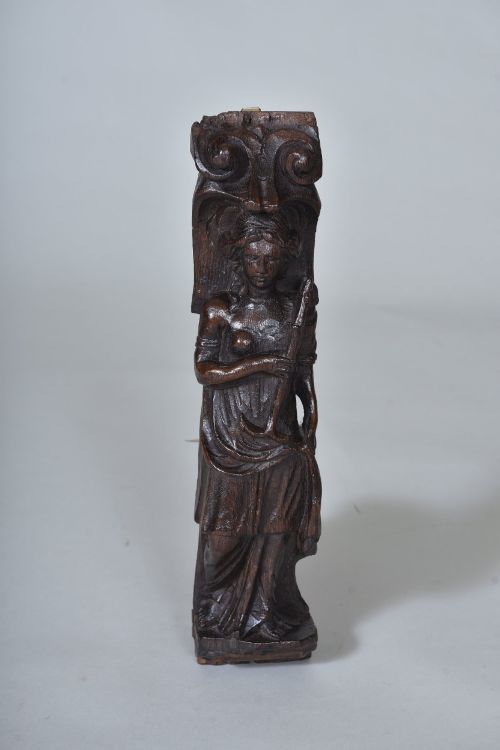
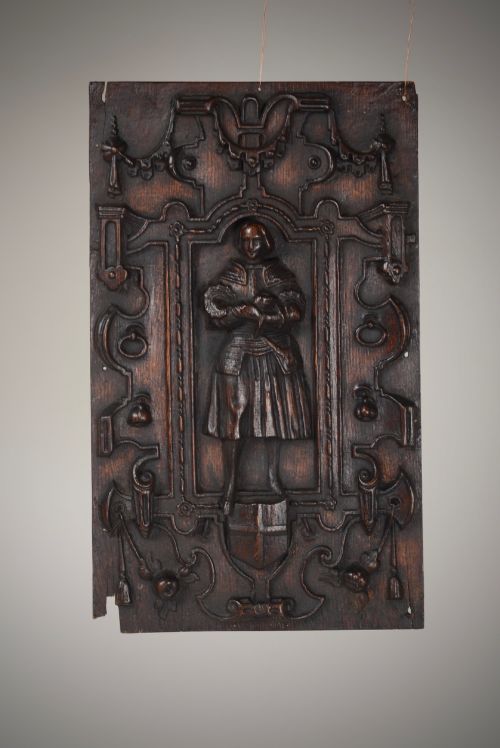
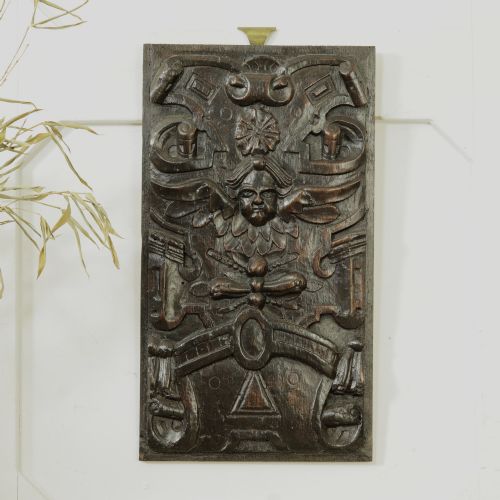
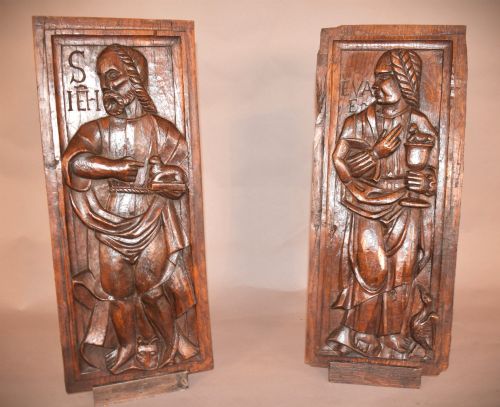
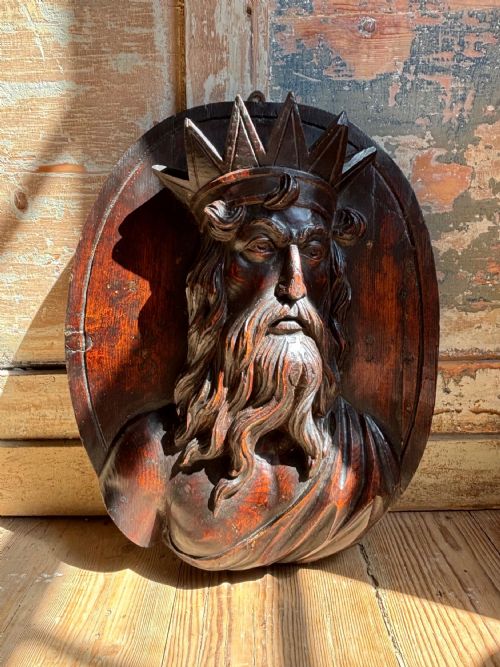
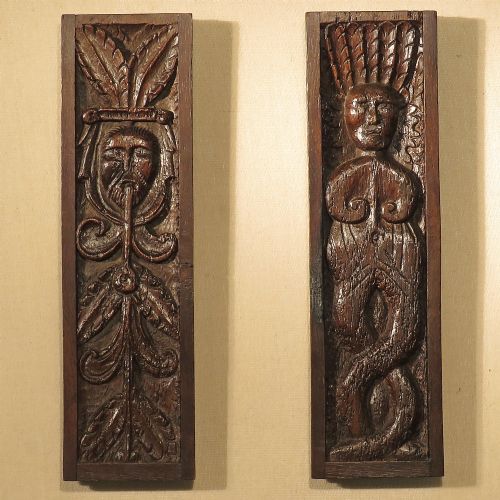
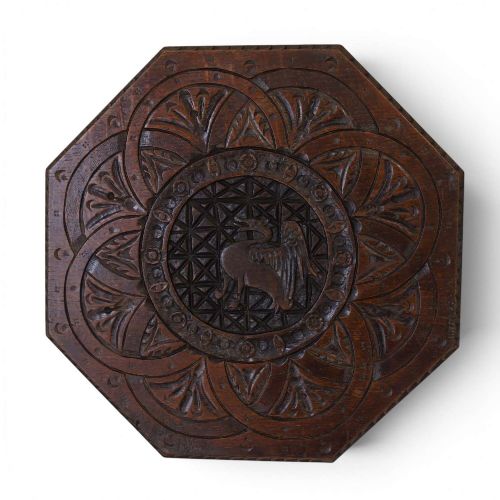
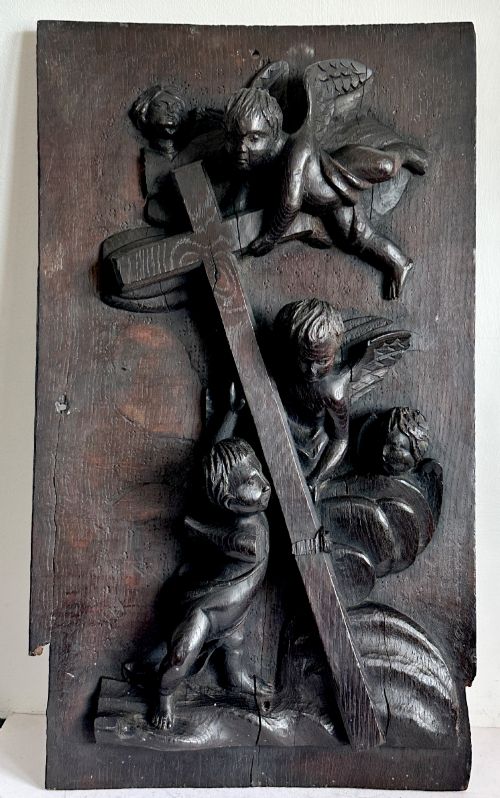
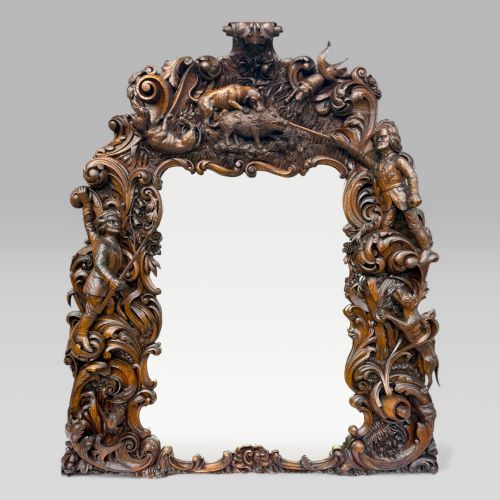
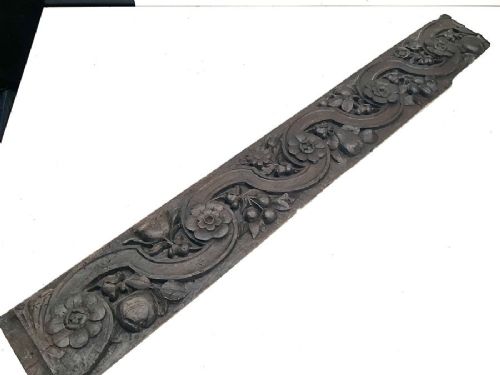
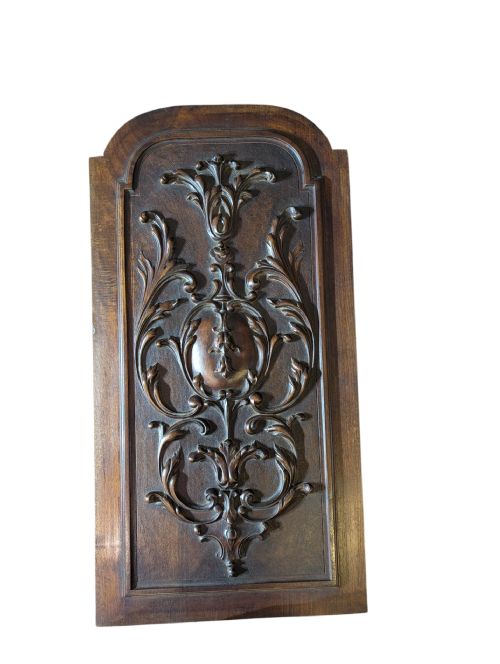
Dark oak relief carving primarily comprises architectural salvage, wall panels, wall reliefs, and sculptures shaped from durable hardwood over centuries. Buyers seeking dark oak relief carving typically encounter sixteenth, seventeenth, and nineteenth-century pieces ranging from small domestic panels to large overmantles.
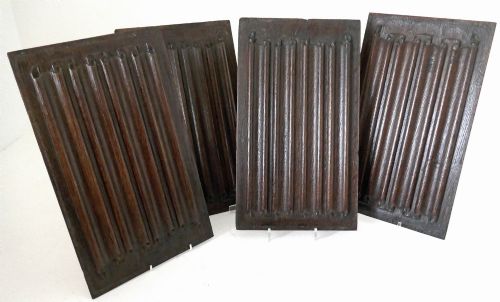
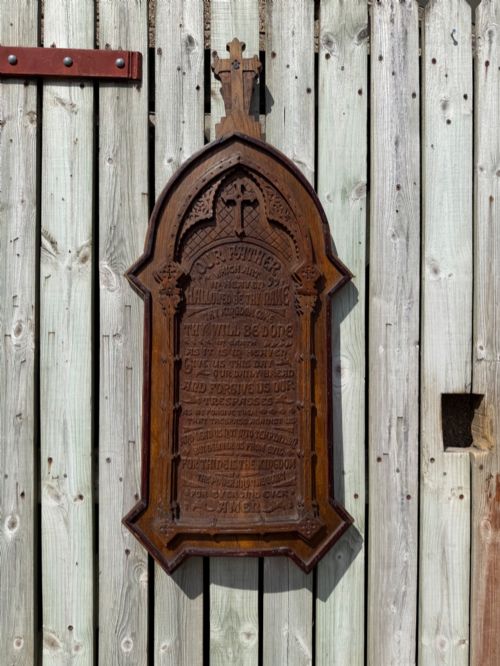
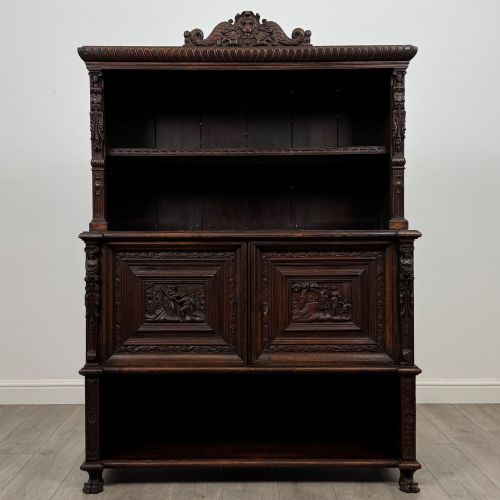
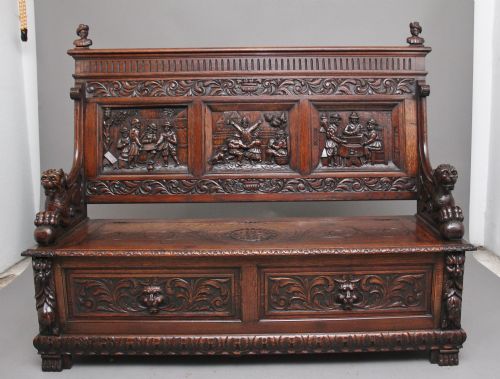
The domestic and ecclesiastical forms include cupboards, settles, friezes, and plaques depicting figures, allegories, and heraldry. Pieces span periods from medieval medieval fragments and Tudor linenfold up to Victorian and Arts and Crafts revivals.
Makers and workshops from England, France, Germany, and the Netherlands utilised dense local timber to produce sculptural furniture and architectural elements. These objects retain deep patination acquired through centuries of handling and environmental exposure.
Materials and technique
Makers relied primarily on oak, alongside supplementary hardwoods like walnut and fruitwood, selecting quarter-sawn boards for stability and pronounced medullary rays. Timber was seasoned before carvers worked the material using gouges, chisels, and mallets to achieve varying depths of relief.
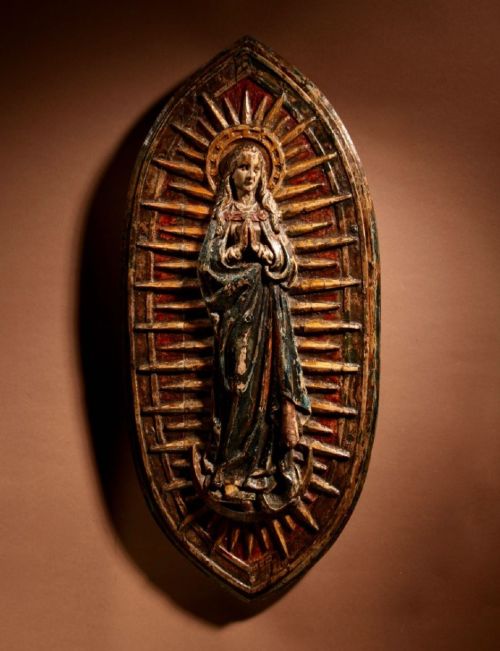
Surface finishing often involved wax, oil, or historical polishes applied to highlight the natural grain and carved contours. Certain panels incorporated polychrome pigments or brass elements to accentuate specific details within the composition.
Listings feature oak, walnut, brass, and polychrome materials across periods spanning the sixteenth to the twentieth centuries.
Judging quality
The integrity of the surrounding timber and the survival of the original surface patination dictate the desirability of a piece. Earlier seventeenth and sixteenth-century examples demonstrate a distinct sculptural vigor compared to later revival interpretations.
Edward Pearce
The Dark Oak Relief Carving Glossary
- Relief
- A sculptural technique where figures or designs project from a flat background. High relief involves elements standing far out from the backing board.
- Linenfold
- A style of carved wooden panel resembling folded fabric or parchment. It is commonly found on sixteenth-century English church and domestic woodwork.
- Overmantle
- A decorative architectural structure placed above a fireplace mantel. These often incorporate large carved panels, mirrors, or armorial bearings.
- Polychrome
- The practice of decorating architectural elements or sculptures in a variety of colours. Pigments were applied directly to the timber surface.
Dark Oak Relief Carving: Frequently Asked Questions
What periods do these carvings come from?
The pieces span several distinct eras, beginning with pre-sixteenth-century medieval fragments and sixteenth-century Tudor work. Subsequent centuries are represented by seventeenth-century Baroque output and later nineteenth-century Gothic Revival pieces.
Each period exhibits specific stylistic traits, from the geometric rigidity of linenfold panels to the dramatic pierced acanthus leaves of the high Baroque.
How were these panels originally used?
Many items originated as structural architectural salvage, functioning as wall panels, overmantles, staircase components, or friezes within large houses and churches. Others formed integral parts of furniture such as cupboards, coffers, and high-back settles.
Over time, individual panels were frequently removed from their original settings to be displayed independently as decorative wall art.
How should I care for dark oak relief carving?
Maintain stable indoor humidity levels and keep antique timber away from direct heat sources and strong sunlight. This prevents the wood from drying out, warping, or splitting.
Apply a minimal amount of traditional beeswax occasionally to nourish the surface and maintain the natural lustre of the aged wood.
How can I tell a sixteenth-century panel from a revival piece?
Early pieces display tool marks left by hand chisels and carry natural wear patterns consistent with centuries of age. The grain structure and joining techniques also provide clues regarding the period of manufacture.
Revival pieces from the nineteenth century often utilise machine assistance and display a different consistency in the depth and crispness of the carving.