





Dark Wood Buffet Stand
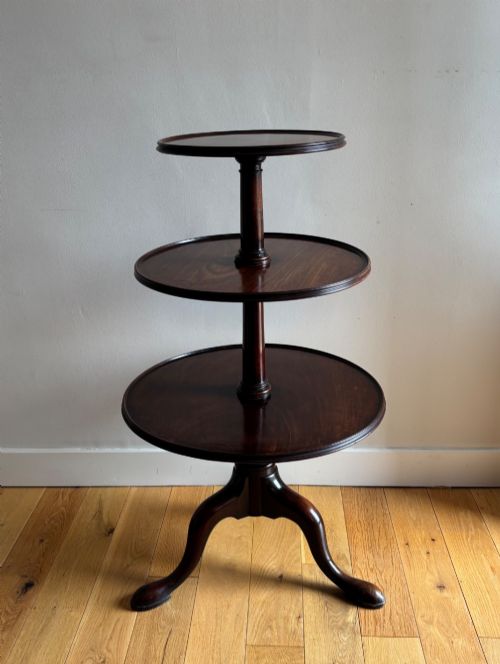
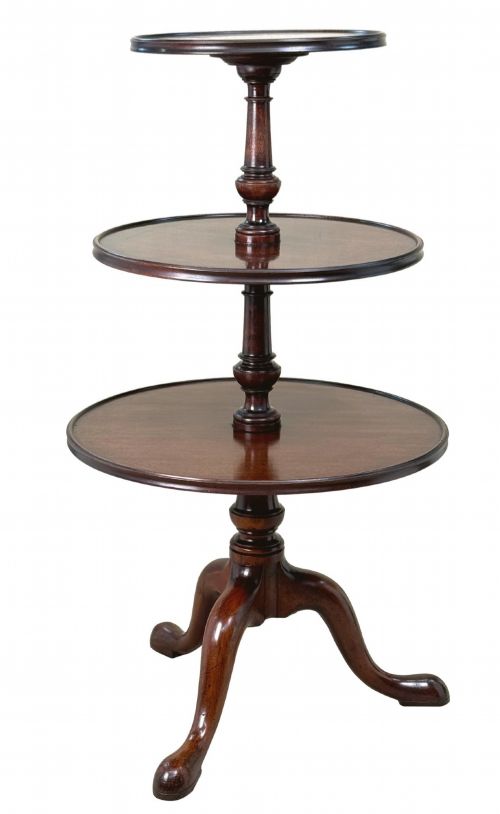
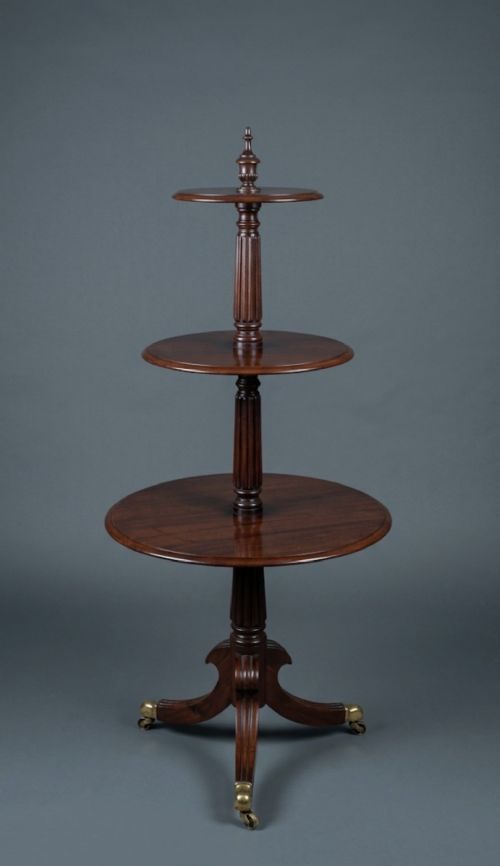
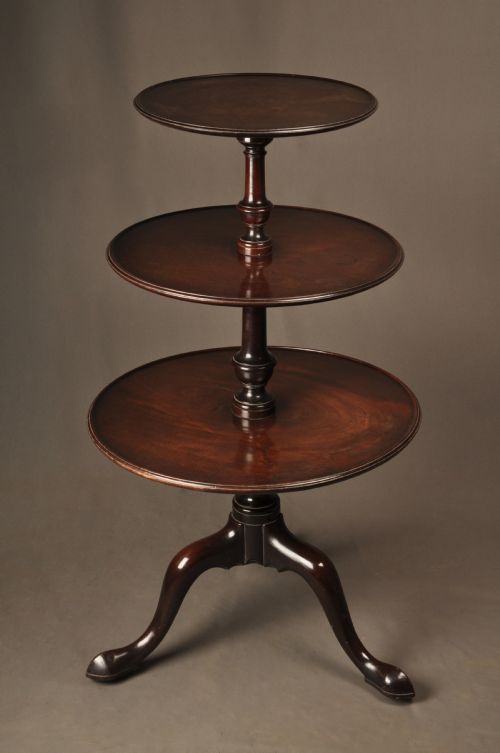
These dark wood buffet stand pieces bring tiered utility and timber richness to a room, offering sturdy surfaces for dining service or display.
Dark Wood Buffet Stand
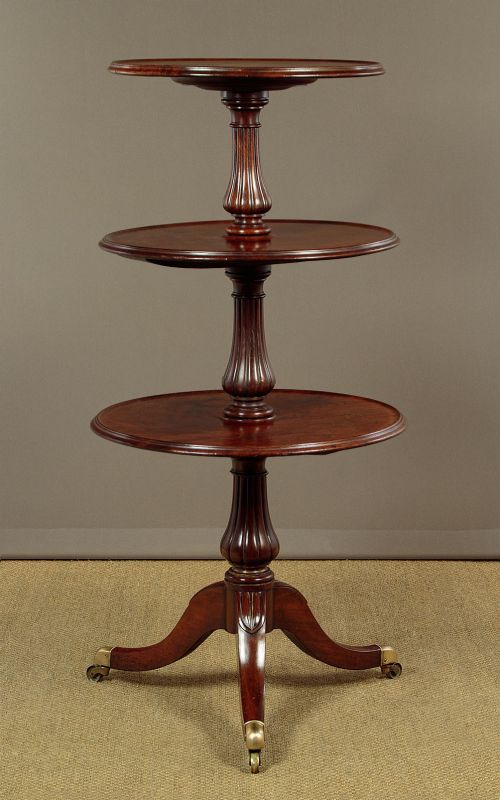
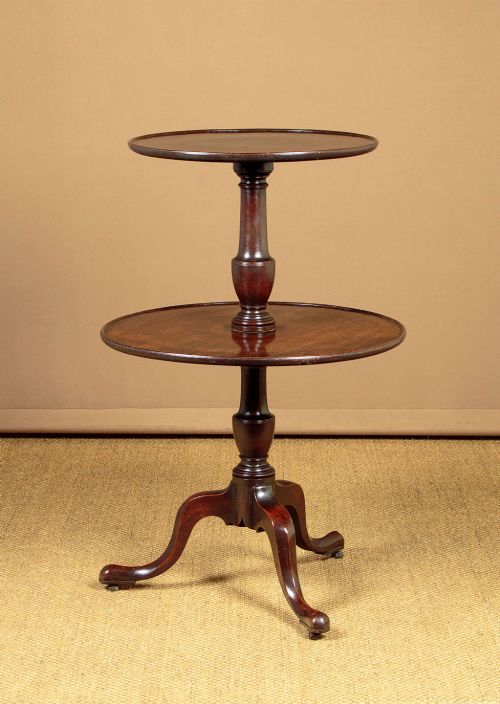
When searching for a dark wood buffet stand, buyers encounter tiered serving furniture, dumb waiters, and console tables primarily from the eighteenth and nineteenth centuries. These pieces span George III, Regency, and Victorian periods, often taking the form of multi-tiered circular tables designed to hold dishes or display objects.
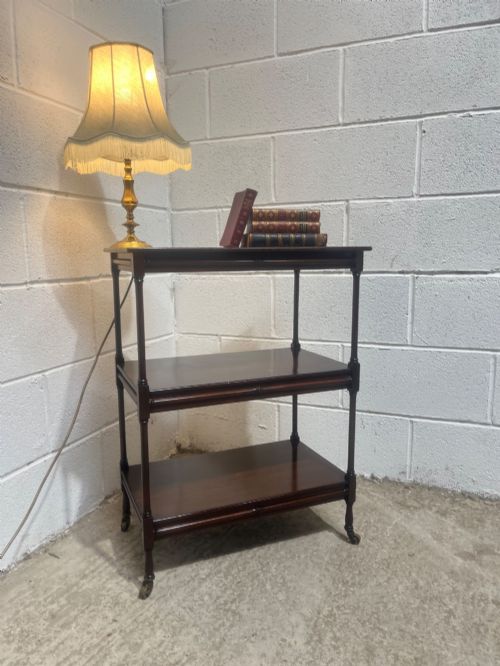
The majority of pieces met on this page consist of mahogany dumb waiters with graduated tiers, alongside oak cabinets on stands and rosewood buffet shelves. Origins lean towards English workshops, though examples incorporate styles like Flemish Renaissance Revival and Burmese carving.
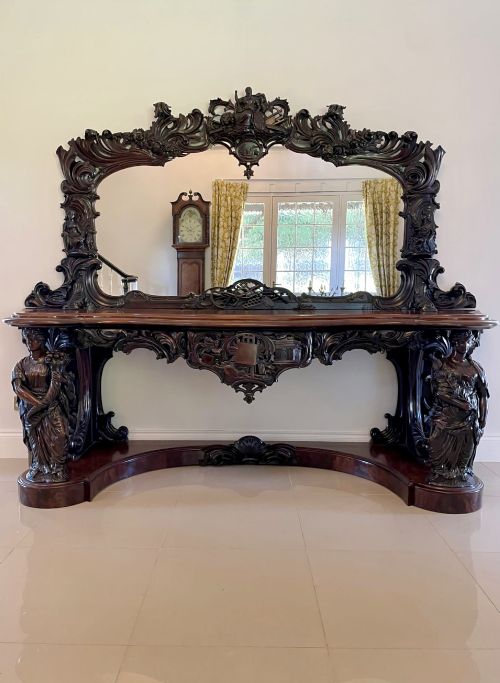
Forms range from folding two-tier serving stands to large revolving three-tier tables and mirror-backed console tables. The primary purpose centres on practical surface space combined with the deep tones of traditional timbers.
Distinctions in quality
Quality rests in the selection of timber grain, such as figured mahogany or burr walnut, and the crispness of turned columns and carved details. Pieces displaying exhibition quality feature finer joinery, substantial brass hardware, and well-balanced multi-tiered revolving mechanisms.
Proportion and stability separate standard utility pieces from finer examples designed for formal dining rooms. The thickness of the timber tiers and the integrity of the central pillar dictate the longevity and overall presence of the stand.
Dark Wood Buffet Stand Retail Price Guide 2026
Typical asking prices for dark wood buffet stand among the pieces listed under this phrase on Sellingantiques today, from the lower quarter to the upper quarter. They describe what is for sale here now, not the wider market.
Listings feature mahogany, oak, and walnut timbers across Georgian, Regency, and Victorian periods.
Gillows·Gordovil Spain
The Dark Wood Buffet Stand Glossary
- Dumb waiter
- A tiered stand used for holding food and tableware without domestic servants present. These pieces typically feature two or three graduating circular trays on a central pedestal.
- Tiered table
- Furniture constructed with multiple horizontal surfaces placed one above another. This design maximises display and storage footprint in compact spaces.
- Console table
- A table designed to stand against a wall, frequently supported by wall brackets or console legs. Versions on this page include mirror-backed and cabinet variations.
- Etagere
- A piece of furniture consisting of a set of open shelves for displaying small objects. These decorative stands often utilise walnut or rosewood.
- Revolving tier
- A rotating shelf mechanism allowing diners access to dishes from various angles. This feature appears frequently on eighteenth-century circular serving stands.
Dark Wood Buffet Stand: Frequently Asked Questions
What is a dark wood buffet stand used for?
These pieces serve as auxiliary surfaces for holding plates, glassware, and serving dishes during meals. Historically placed beside a dining table, they remove the need for constant service.
Today, buyers utilise them in dining rooms or living spaces as display stands for lamps, books, and decorative objects.
How do I tell a Georgian piece from a Victorian one?
Georgian examples, particularly from the George III period, favour clean classical lines, restrained mahogany grain, and precise pillar turnings. They often incorporate revolving tiers designed for practical dining room use.
Victorian pieces frequently introduce heavier carving, such as lion masks or Gothic Revival motifs, alongside darker oak, burr walnut, or elaborate mirror-backed console structures.
Are the tiers on these stands fixed or folding?
Construction varies by period and specific form, with many traditional dumb waiters featuring fixed graduating trays secured to a central turned column. Some designs incorporate folding shelves or two-part configurations for easier storage.
Revolving mechanisms also appear on circular tiered examples, allowing each shelf to spin independently on the central spindle.
How do I care for antique mahogany and walnut?
Maintain the timber by keeping pieces away from direct heat sources and sudden humidity changes that cause wood to split. Regular dusting with a soft, dry cloth preserves the finish.
Apply quality beeswax sparingly when the wood appears dry, buffing gently to maintain the natural lustre of the dark timber.