
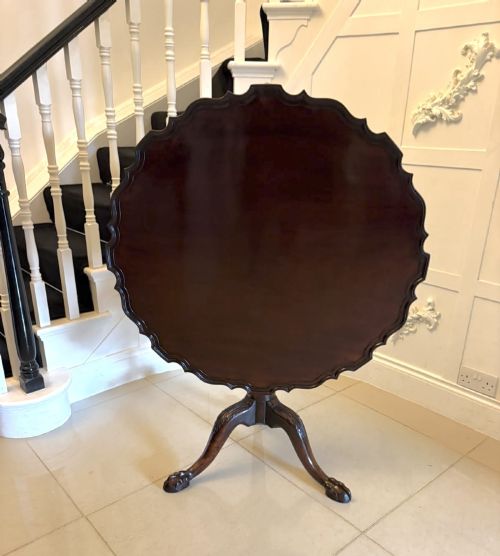
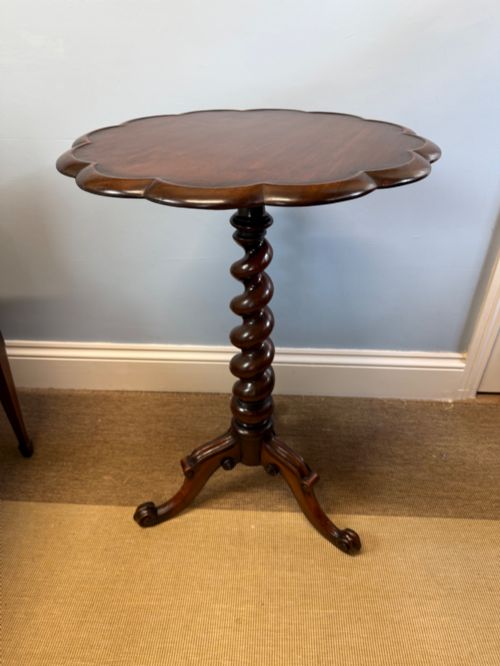
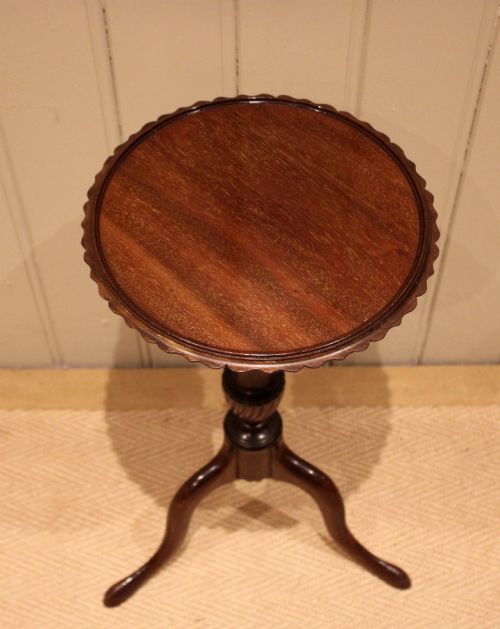
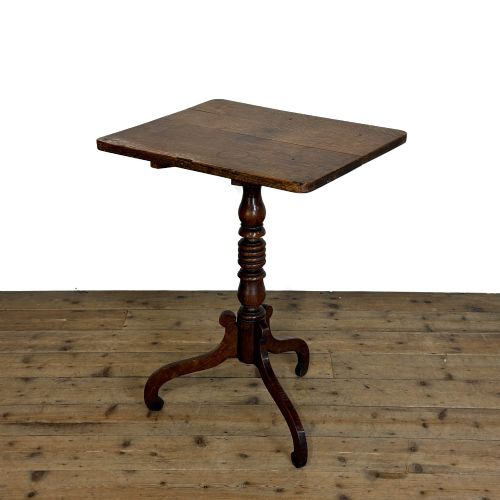

Dark Tripod Wine Table
A dark tripod wine table brings compact elegance to a corner, offering a sturdy central pedestal and a surface for a glass.
Dark Tripod Wine Table
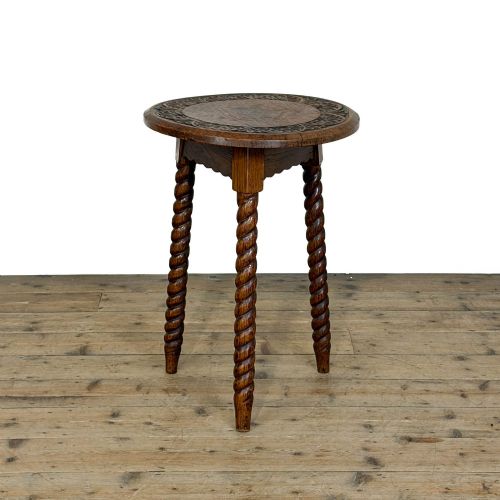
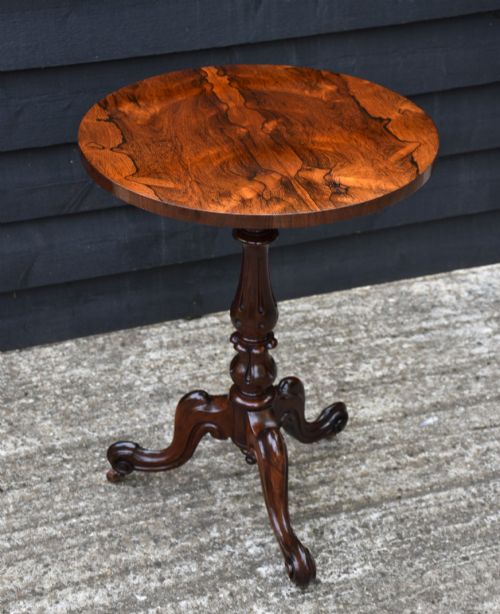
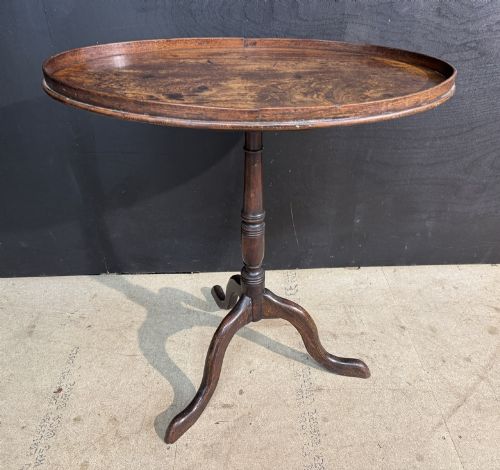
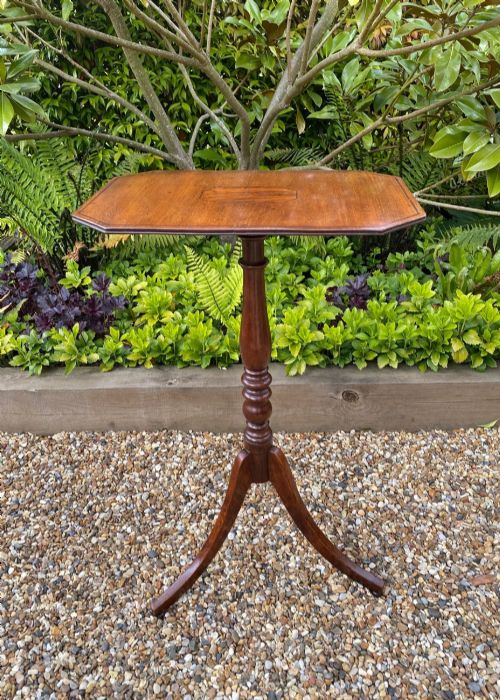
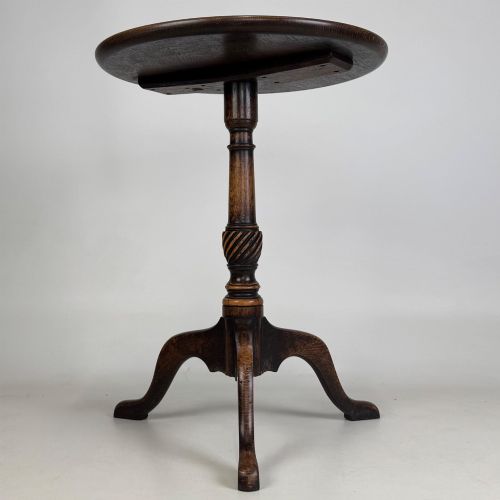
A dark tripod wine table stands on three legs supporting a central pedestal, designed originally to hold bottles and glasses near a chair or hearth. When you search for a dark tripod wine table, you find pieces intended for portability and intimate service rather than large dining.
The versions most common on this page date from the Georgian and Victorian eras, alongside later revivals, and typically measure small enough to tuck beside a sofa. These examples frequently feature circular or shaped tops, sometimes resting on a tilt mechanism for storage against a wall.
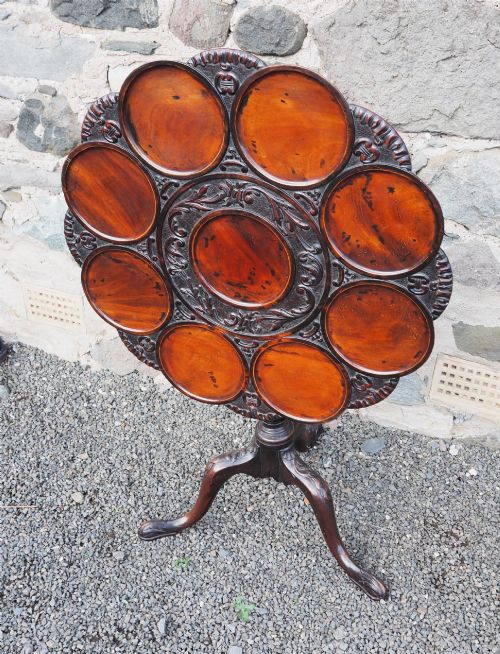
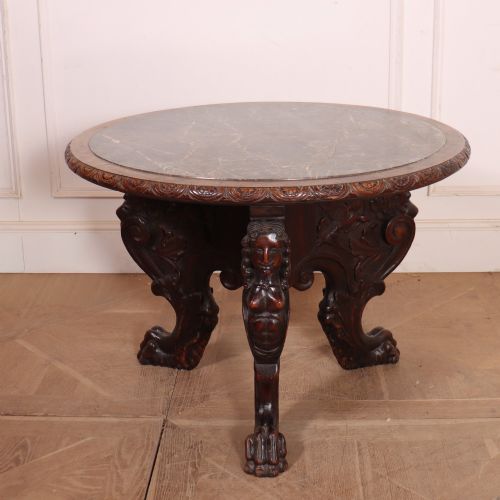
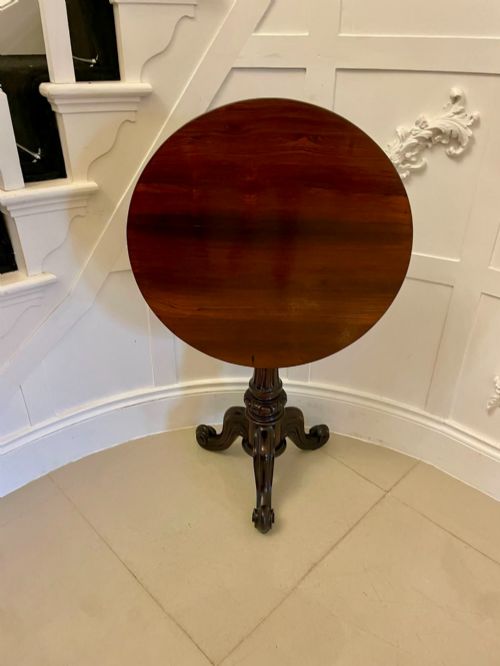
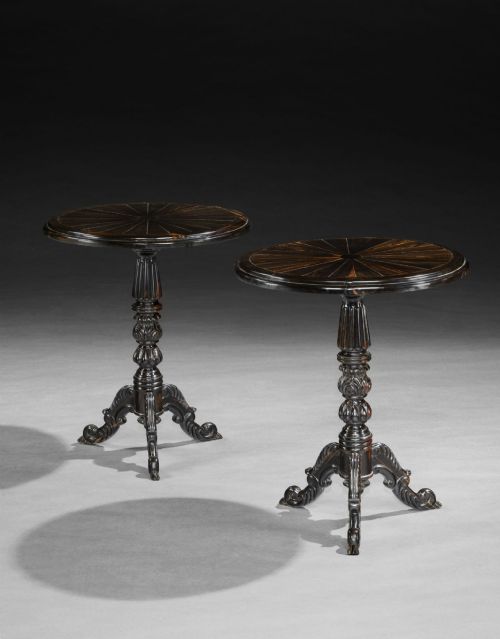
Makers shaped these stands from dense timbers with rich natural tones, producing forms that range from plain country oak to carved mahogany and rosewood. The three-legged base provides stable footing on uneven floors while occupying minimal floor space in a room.
Judging the standard
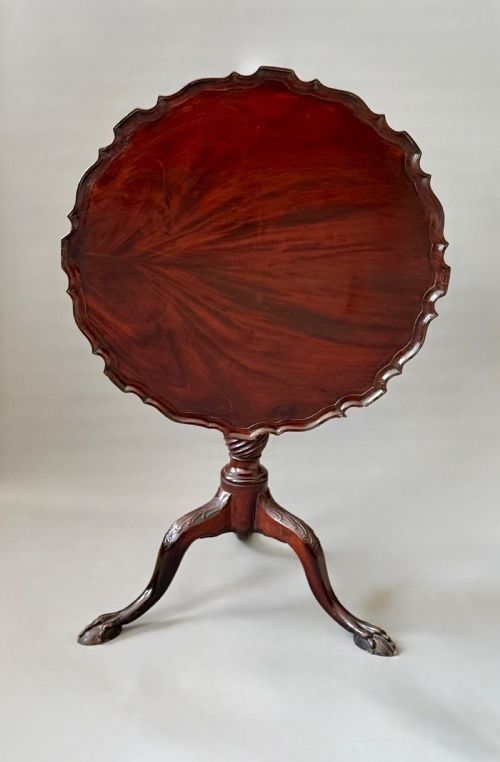
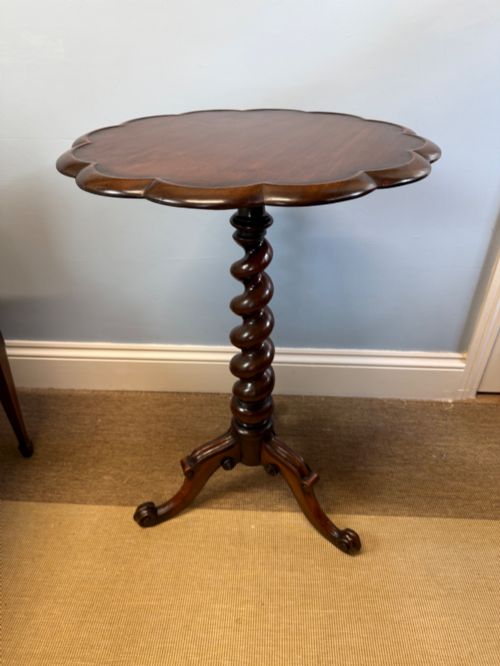
Quality rests in the crispness of the timber carving, the proportional balance of the three legs to the top, and the smooth operation of the tilt mechanism. Superior examples display tightly figured mahogany or rosewood with hand-shaped edges like pie crust rims, rather than mass-produced uniformity.
The connection between the central pedestal and the legs determines the structural integrity, where tighter joints prevent wobble and ensure longevity. Heavier timbers and thoughtful proportion distinguish pieces made for formal drawing rooms from simpler country workshop items.
Listings feature timbers including mahogany, oak, rosewood, walnut, fruitwood, and marble across the Georgian, Victorian, and Edwardian periods.
Gillow
The Dark Tripod Wine Table Glossary
- Tilt top
- A table mechanism allowing the wooden surface to pivot vertically on its pedestal for easy storage. This device saved space in period rooms.
- Pie crust
- A raised, carved edge moulded into a wavy, scalloped outline resembling pastry. This decorative border is typical of finer 18th-century tables.
- Birdcage
- A wooden framework beneath the table top that permits both rotation and tilting. It adds height and mechanical complexity to the pedestal.
- Cricket table
- A small, three-legged occasional table usually constructed from oak with a round top. These sturdy pieces originated in country homes and cottages.
- Tripod base
- A support structure consisting of three diverging legs joined to a central pillar. This design prevents rocking on uneven timber floorboards.
Dark Tripod Wine Table: Frequently Asked Questions
What is a dark tripod wine table used for?
These small stands served historically to hold wine bottles and drinking glasses close to guests during social gatherings. Today they function well as lamp tables or bedside stands in compact spaces.
The three-legged design allows the table to sit snugly into corners or beside armchairs without obstructing walkways.
How do I spot a tilt top mechanism?
Look underneath the circular wooden top for a small brass catch or wooden latch fixed to the central pillar block. Releasing this catch allows the surface to pivot flat against the stem.
This clever feature enabled servants to clear the floor quickly after an evening of entertaining.
How do I tell Georgian from Victorian tables?
Georgian examples from the 18th century often display restrained elegance with slender proportions and fine timber grain. Victorian pieces tend to be heavier, sometimes featuring richer rosewood or bolder carved details.
Revival pieces from later decades often imitate these earlier styles closely.