


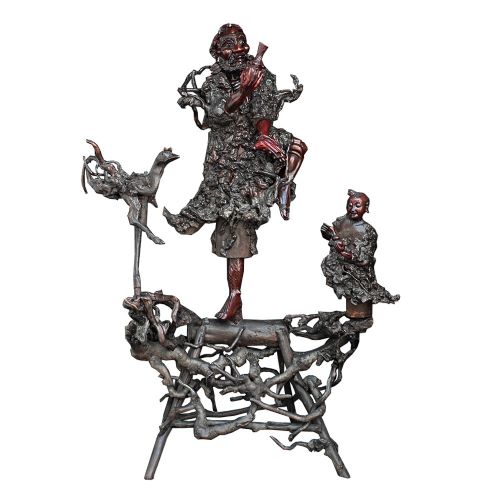
Dark Timber Oriental Statues
Dark timber oriental statues bring heavyweight presence to a room, carved from dense woods into figures of deities, fishermen, and animals.
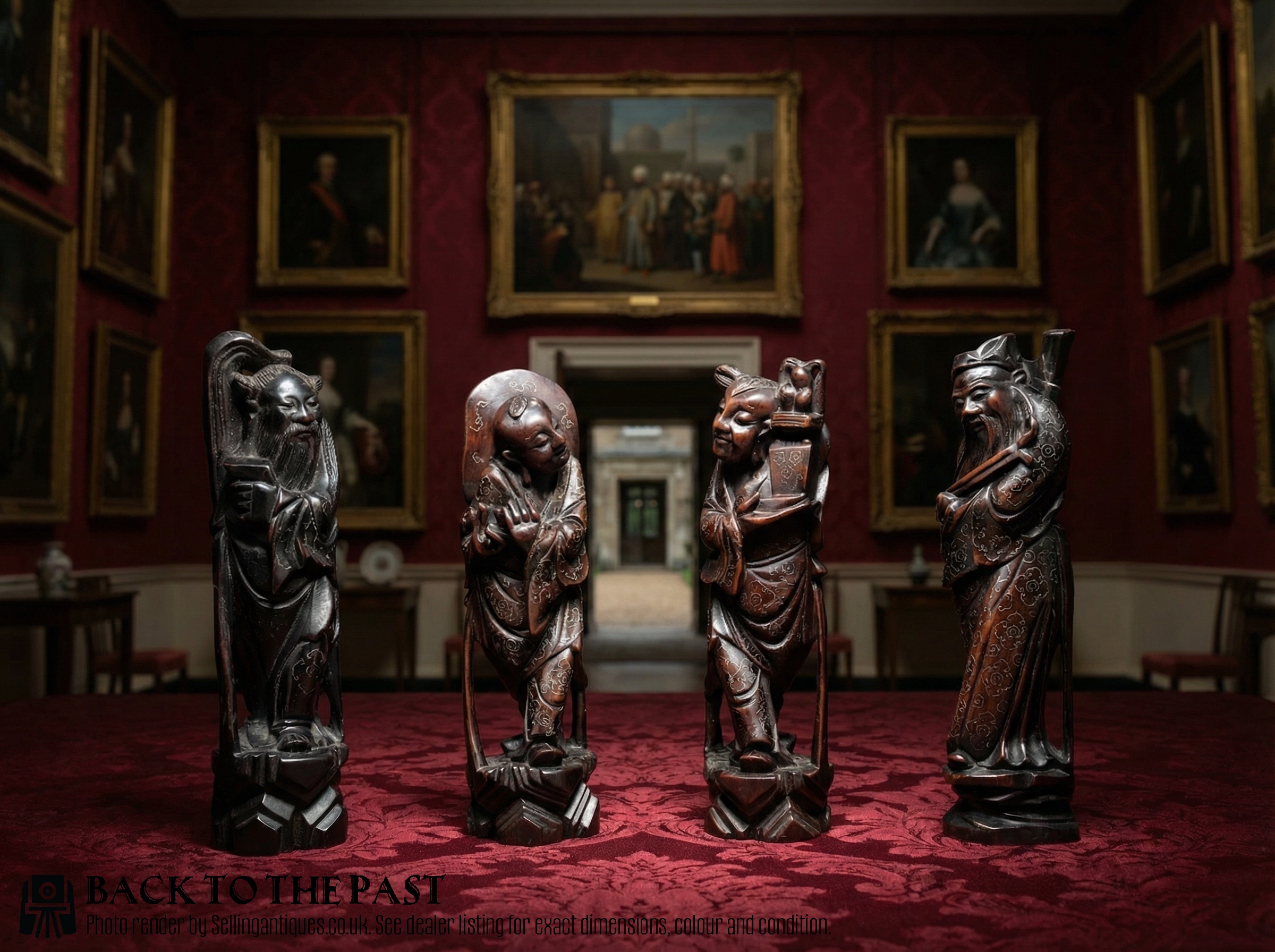
Dark Timber Oriental Statues
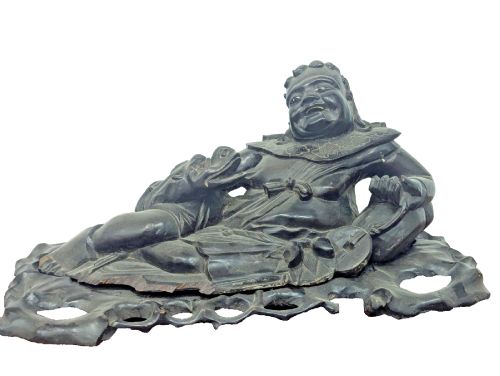
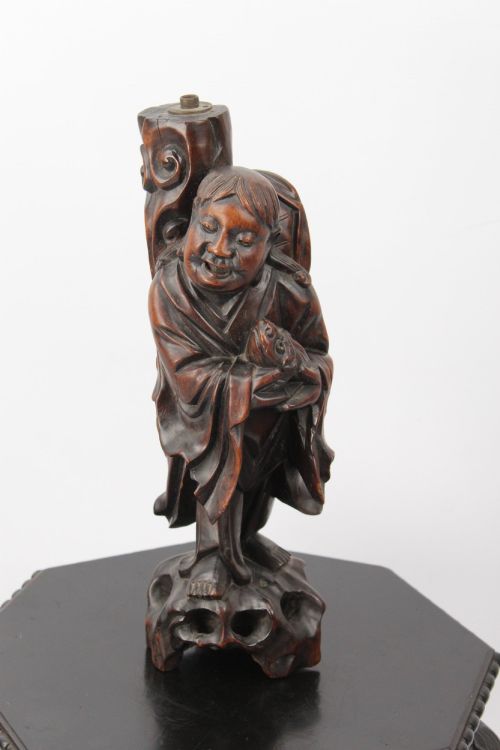
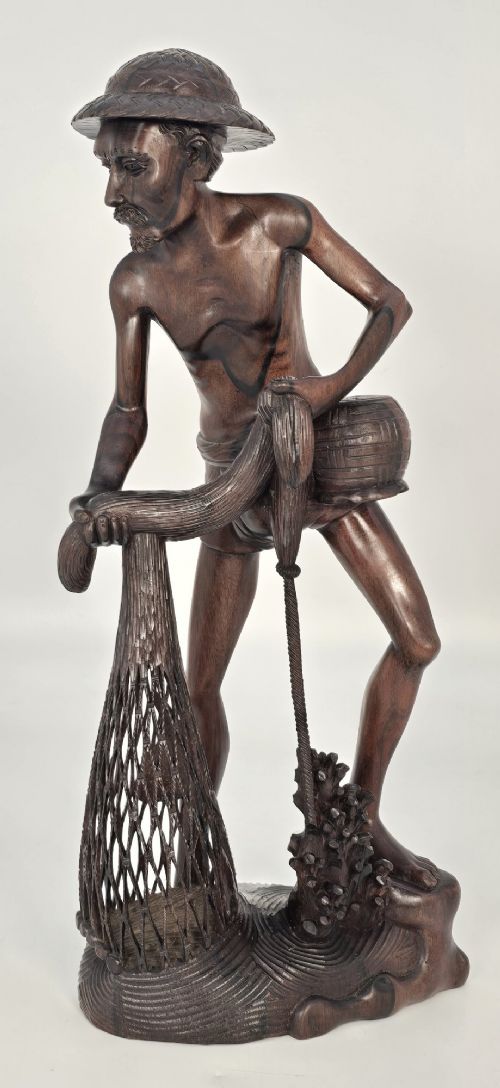
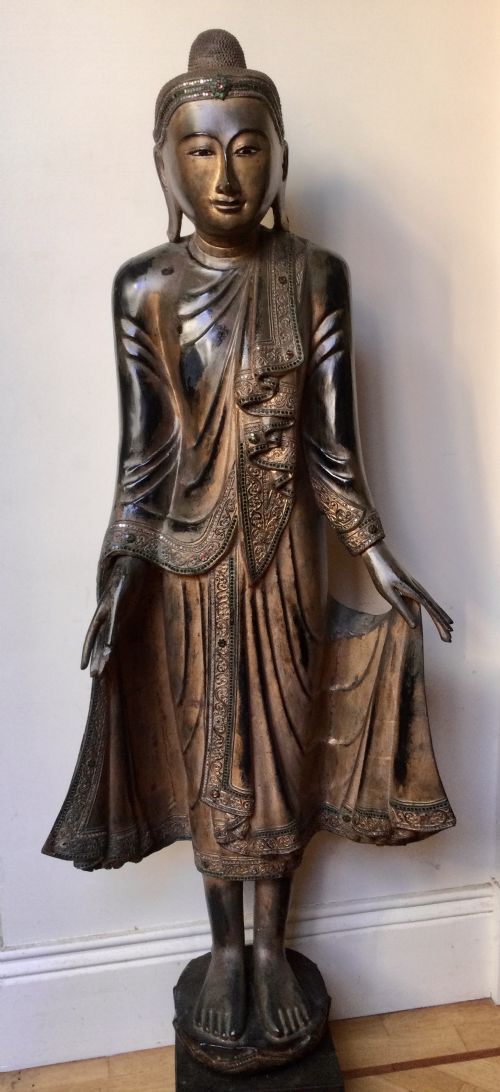
Dark timber oriental statues encompass hand-carved hardwood sculptures originating from nineteenth and early twentieth-century workshops in China, Japan, India, and Indonesia. These pieces portray figures such as the laughing Buddha, Daoist immortals, fishermen, and mythical creatures like foo dogs and dragons.
The selections encountered here range from large ceremonial elephants and pairs of Mandarin ducks to intricate root carvings and folk art figures. Artisans utilised dense timbers to capture fine details in robes, expressions, and natural textures across various Asian decorative traditions.
How they were made
Carvers employed dense hardwoods and burr root wood, working the material with hand chisels and gouges to define muscular forms, flowing garments, and feather or scale textures. Certain Japanese items utilise the nata-tsukuri technique, leaving distinct hatchet marks visible across the surface for a rugged texture.
Listings feature hard woods, burr root wood, and occasional brass accents across nineteenth and early twentieth-century Asian sculpture forms.
What varies in quality
Quality rests in the anatomical proportion of the figures and the depth of the undercutting within the carved foliage or robes. Superior examples demonstrate confident handling of facial expressions and fluid movement in complex multi-figure groups.
The choice of material also dictates distinction, with heavy, figured hardwoods and complex root formations commanding greater sculptural presence than plain timber blocks. Crisp tool marks without sanding away character separate master carvers from routine workshop output.
The Dark Timber Oriental Statues Glossary
- Hardwood
- A dense timber derived from broad-leaved trees, providing the heavy weight and durability necessary for intricate Oriental carving.
- Root Wood
- Timber sourced from the root burls of trees, shaped by natural growth patterns into twisting, organic sculpture forms.
- Qing Dynasty
- The final imperial dynasty of China, spanning from sixteen forty-four to nineteen twelve, associated with traditional decorative arts.
- Nata-Tsukuri
- A Japanese woodworking style that leaves the faceted chop marks of a small hatchet visible on the finished surface.
- Foo Dog
- A traditional guardian lion sculpture placed outside gates or temples to ward off negative spirits.
Dark Timber Oriental Statues: Frequently Asked Questions
How do I clean dark timber statues?
Dust the carvings gently with a soft, dry brush to prevent dirt accumulation in the crevices. Avoid using liquid polishes or water, which can damage the aged patina of the wood.
Keep the pieces away from direct sunlight and radiators to prevent the timber from drying out and splitting over time.
Where should I place these statues?
Position larger sculptures on sturdy sideboards or low tables where their weight and height command attention in a room. Smaller figures suit bookshelf displays or desk settings.
Ensure the placement area maintains a stable indoor climate free from sudden temperature fluctuations.
How are Chinese and Japanese styles different?
Chinese carvings often focus on smooth, polished surfaces depicting deities, auspicious animals, and immortals with deep symbolic meaning. Japanese pieces frequently incorporate visible tool marks and folk art traditions reflecting daily life and nature.
Both traditions rely on dense hardwoods but express regional aesthetic values through posture and subject matter.
What does root wood mean?
Root wood carvings utilise the gnarled, twisting burls found beneath the soil, shaped by nature into dramatic, undulating forms. Artisans then carve supplementary details into these natural shapes to create figures or animals.
Every root carving remains entirely unique because no two tree root systems grow in the same pattern.