



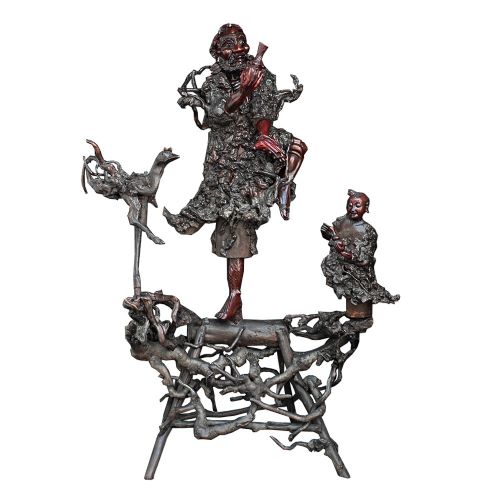

Natural Root Wood Carvings
Natural root wood carvings bring raw, organic sculpture indoors, offering gnarled forms and polished burr grains that collectors prize for their tactile presence.
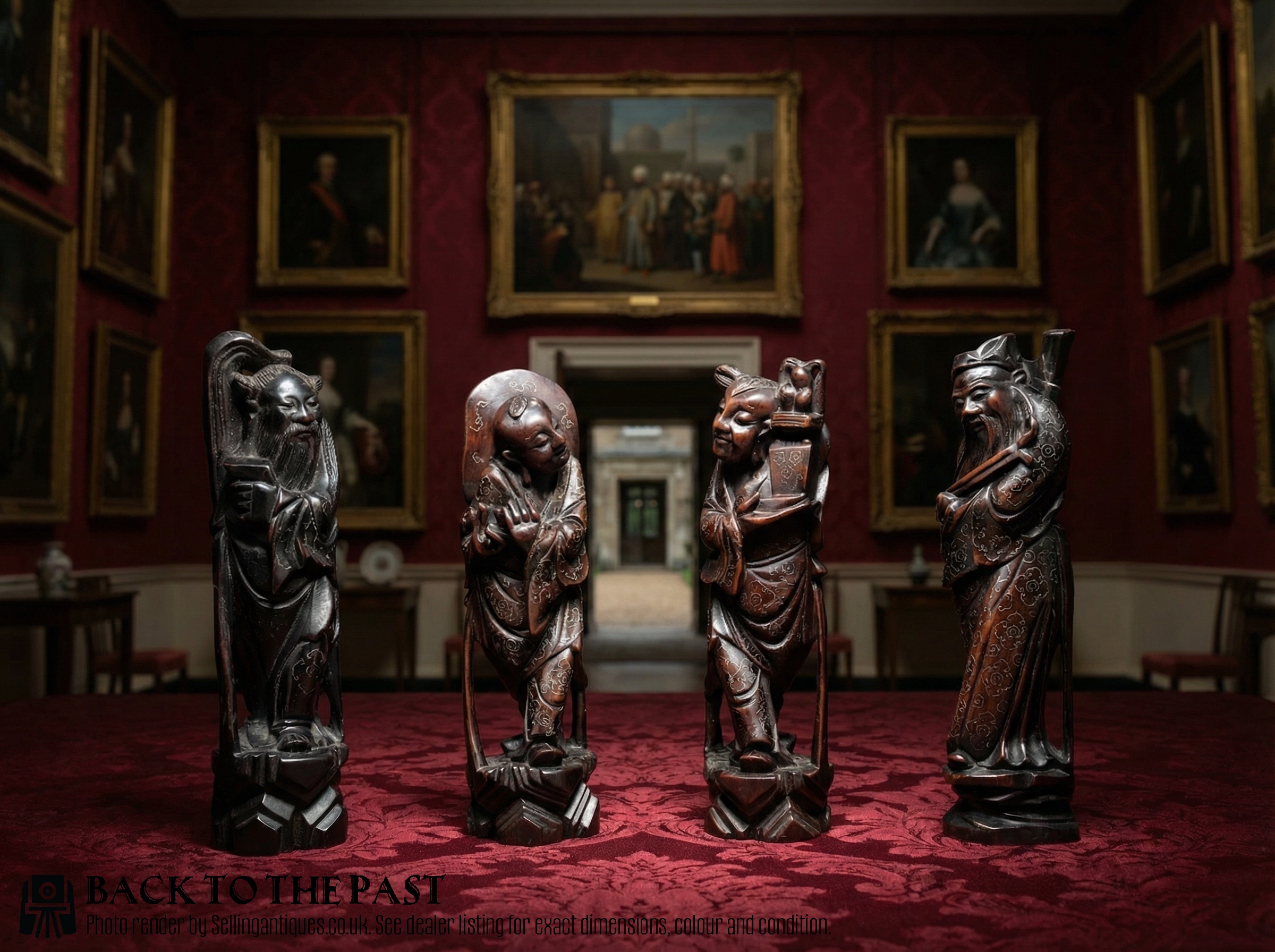
Natural Root Wood Carvings
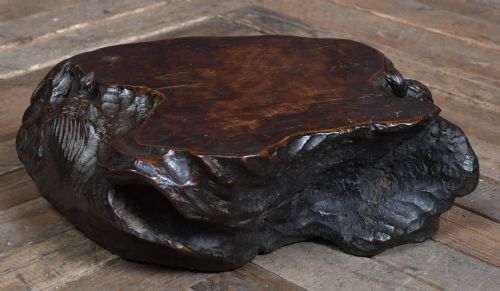
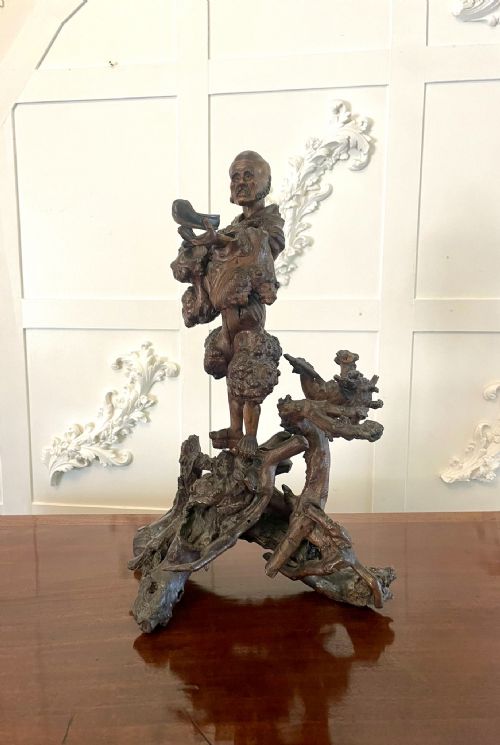
Natural root wood carvings are sculptural objects shaped from the gnarled underground growths and burls of trees, embracing the unpredictable contours dictated by nature. When you search for natural root wood carvings, you encounter nineteenth-century pieces ranging from Chinese scholar figures and bonsai display stands to Japanese turtle stands and British folk art branch figures. These pieces merge utilitarian forms like tables and lamps with organic sculpture, highlighting the natural twists of the timber.
The selections span distinct cultural traditions, including Chinese Qing Dynasty rootwood carvings alongside Japanese Meiji period examples and European folk art. You will find small decorative sculptures, table lamps, and side tables integrated with quartz tops or polished surfaces. Each piece reveals the distinct arboreal growth patterns characteristic of nineteenth-century craftsmanship.
How they were made
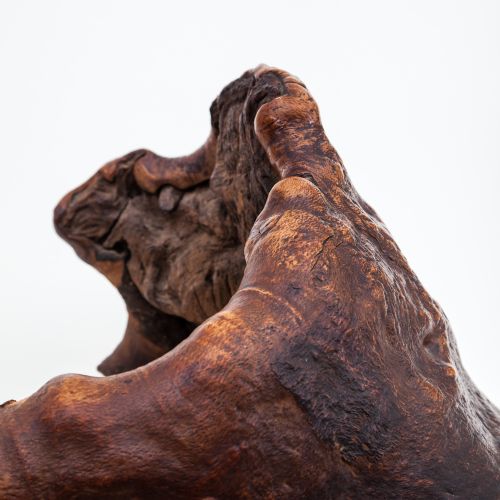
Carvers worked with dense materials such as burr walnut, rootwood, yew wood, and carved hardwood, following the natural contours of the timber. Artisans pared away unwanted material while preserving knots, twists, and gnarled grains to suggest figures, animals, or functional objects.
Finishes vary from high polishes that accentuate the rich grain of burr walnut to more matte treatments on Chinese rootwood scholar figures. Structural elements occasionally incorporate other materials, such as inset quartz tops fitted neatly into organic rootwood tables.
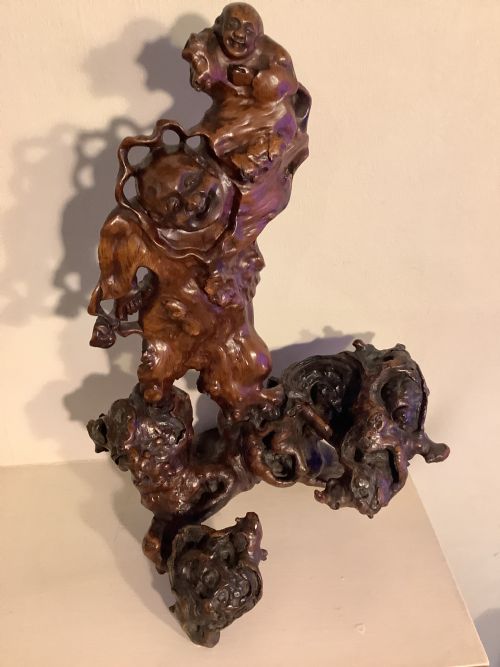
One nineteenth-century carving cleverly turns a gnarled knot into a man carrying a boy on his shoulders.
What varies in quality
Quality rests in the harmony between the natural growth of the wood and the intervention of the carver. Superior pieces make clever use of gnarled forms to depict subjects like figures or turtles without forcing an unnatural shape upon the timber.
The complexity and integration of the form dictate distinction, seen in whether a root supports a functional quartz-topped table or stands as a fluid figurative sculpture. Denser woods with highly figured burr patterns and careful hand-polishing elevate the visual depth of the object.
The Natural Root Wood Carvings Glossary
- Burr wood
- Timber harvested from a tree growth where the grain has grown in a deformed, swirling manner. This produces highly figured patterns prized for decorative surfaces.
- Rootwood
- Wood taken from the root system of a tree, known for eccentric twisting shapes and irregular contours. Carvers utilise these complex forms to create organic sculptures.
- Bonsai stand
- A low platform or table designed to elevate a potted tree or decorative object. Nineteenth-century examples often utilise gnarled roots to frame the display.
- Meiji Period
- The era in Japanese history spanning from eighteen sixty-eight to nineteen twelve. Carvings from this time demonstrate refined naturalist observation.
Natural Root Wood Carvings: Frequently Asked Questions
What are natural root wood carvings?
These pieces are sculptural objects formed from the gnarled root systems and burls of trees, shaped by nineteenth-century carvers.
They capture organic irregularities to create figures, stands, and tables that celebrate natural timber forms.
How were root carvings used?
Historical uses include display stands for bonsai trees, scholar's desk items, and decorative sculptural figures.
Some pieces doubled as functional small tables and lighting fixtures integrated into domestic interiors.
How do I identify nineteenth-century pieces?
Nineteenth-century examples are defined by hand-carved detailing on dense hardwoods, burr walnut, and regional rootwood.
Stylistic markers align with Qing Dynasty, Meiji period, and European folk art traditions of that era.
How should I care for root wood?
Keep polished root wood carvings away from direct heat sources and sudden humidity changes to protect the timber.
Dust gently with a dry cloth to maintain the natural finish of the burr and grain.