






Dark Wood Root Carving
A dark wood root carving transforms natural gnarled timber into expressive figurative sculpture, bringing organic form and tactile warmth to an interior.
Dark Wood Root Carving
When you search for dark wood root carving, you encounter sculptural works that celebrate the natural twists, burls, and knots of timber. These objects range from freestanding figurative sculptures and animal studies to functional display stands and lighting.
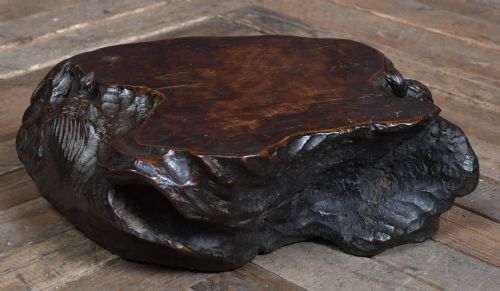
The pieces on this page span the nineteenth century into the twentieth century, crossing Chinese Qing Dynasty, Japanese Meiji period, and Victorian rustic traditions. Chinese examples frequently depict mythical creatures such as Dogs of Foo or figures, while Japanese works often incorporate natural bases for bronze figures or bonsai displays.
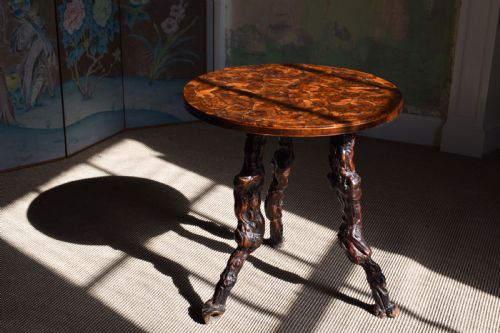
Forms include side tables, headrests, walking sticks, and sculptural lamps alongside standalone carvings. Each item utilises the eccentric grain and growth patterns of root wood, hardwood, and briar wood to dictate the finished silhouette.
Evaluating quality and execution
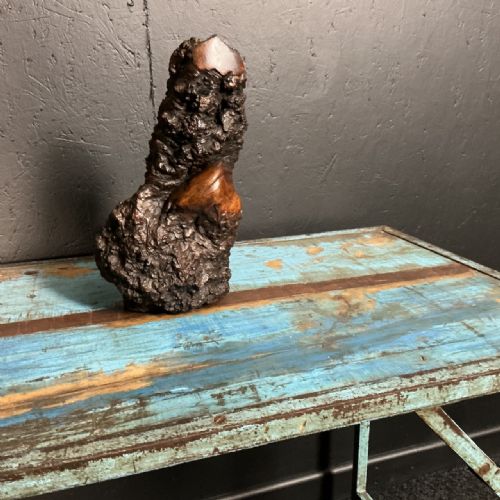
The success of a dark wood root carving rests upon the carver's ability to perceive a finished figure within an untamed piece of timber. Superior examples demonstrate a clever integration of natural knots and branches into anatomical or expressive details without excessive, clumsy intervention.
Condition and stability define the upper tier of pieces, where the seasoned hardwood or root wood remains free from structural compromise despite the natural stresses inherent in burr and root timbers. Patina also plays a vital role, with deep, handling-softened surfaces distinguishing mature nineteenth-century examples from later work.
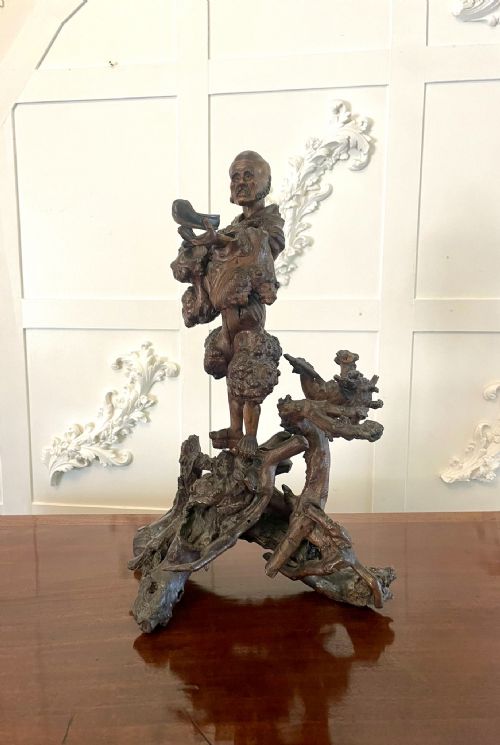
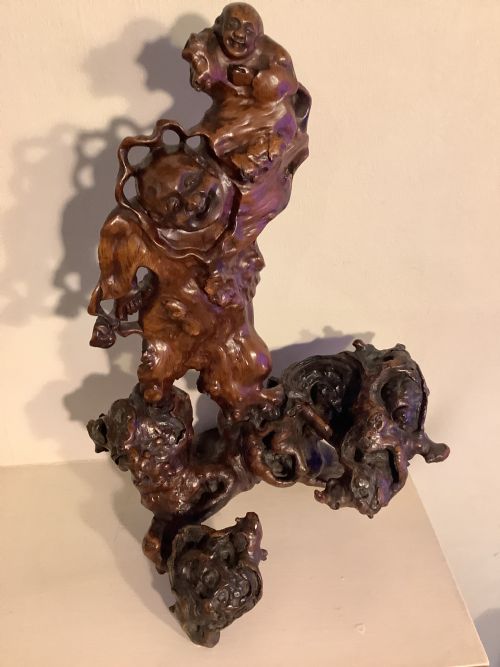
One nineteenth-century artisan transformed a gnarled piece of timber into a clever depiction of a man carrying a boy on his shoulders.
Gyoko
The Dark Wood Root Carving Glossary
- Root wood
- Timber taken from the root system of a tree, prized by carvers for its dense, highly twisted, and unpredictable grain patterns. These irregular formations allow artisans to create dynamic, organic sculptures.
- Burl wood
- A tree growth where the grain has grown in a deformed manner, resulting in highly swirled and figured wood surfaces. It is frequently utilised in decorative carvings and small furniture.
- Dog of Foo
- A traditional Chinese mythological guardian lion often depicted in pairs protecting sacred spaces. Carvers frequently render these creatures in root wood and hardwood.
- Meiji Period
- A period in Japanese history spanning from eighteen sixty-eight to nineteen twelve, known for refined craftsmanship and decorative arts. Works from this era often pair cast bronze with natural root wood bases.
- Bonsai stand
- A specialised display platform designed to elevate a potted tree or decorative object. These stands are often carved from hardwood or root wood to echo natural forms.
Dark Wood Root Carving: Frequently Asked Questions
What is a dark wood root carving?
A dark wood root carving is a sculptural object fashioned from the twisted, gnarled underground or lower growth of a tree. Artisans use the natural anomalies of the timber to shape figures, animals, and functional items.
These works embrace the organic irregularities of hardwood, briar, and root wood, resulting in pieces where no two items share the same silhouette.
How do I date a root carving?
Dating relies on stylistic clues, tool marks, and the historical context of the traditions involved, such as nineteenth-century Chinese Qing Dynasty or Japanese Meiji period conventions. Examining the depth of the patina and the wear on the timber provides further indication of age.
Material choices also assist, as specific woods and associated components like brass or bronze match the manufacturing periods recorded in the evidence.
Where were these carvings made?
The listings on this page originate primarily from Chinese and Japanese workshops, alongside European folk art and Victorian rustic traditions. Chinese regional carvers and Japanese Meiji period artisans produced many of the figurative and display pieces.
European makers also contributed folk art branch figures and walking sticks utilising root-ended handles during the nineteenth century.
How should I display a root carving?
Root carvings serve as sculptural focal points on side tables, mantels, or dedicated display stands. Their organic forms contrast effectively with clean architectural interiors.
Position them away from direct heat sources and strong sunlight to protect the seasoned hardwood and preserve the natural patina of the wood.