


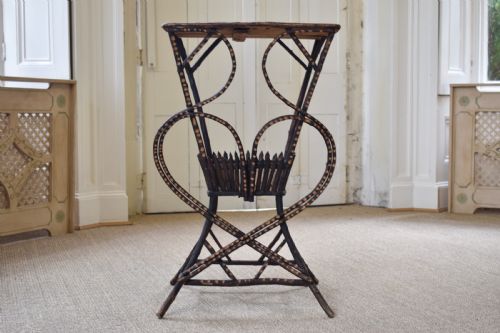
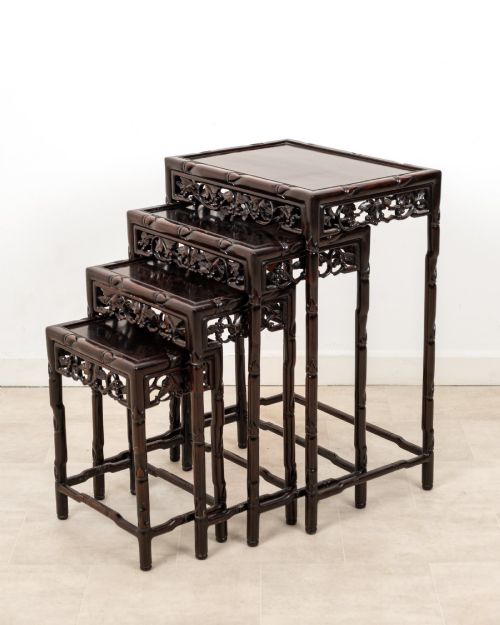
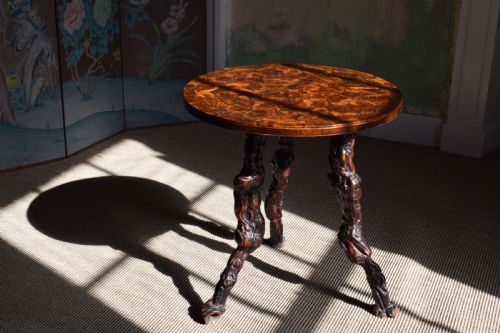
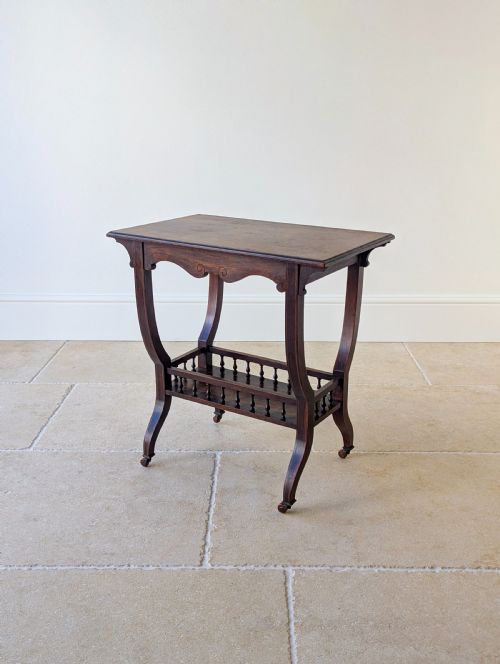
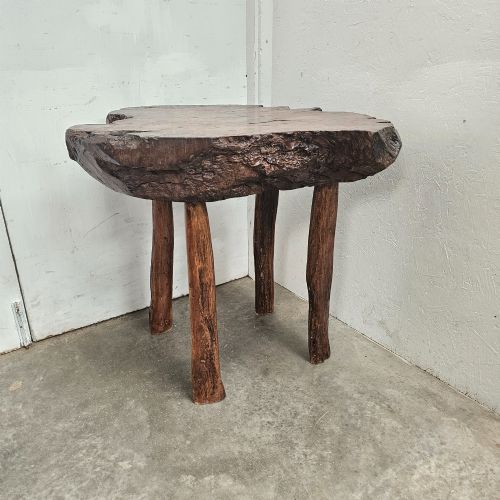


Dark Timber Occasional Table
A dark timber occasional table is a versatile surface for a room, prized for rich grain and compact proportions.
Dark Timber Occasional Table
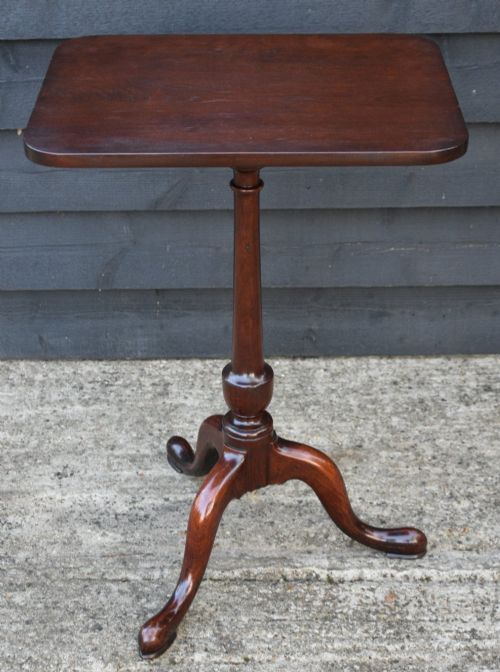
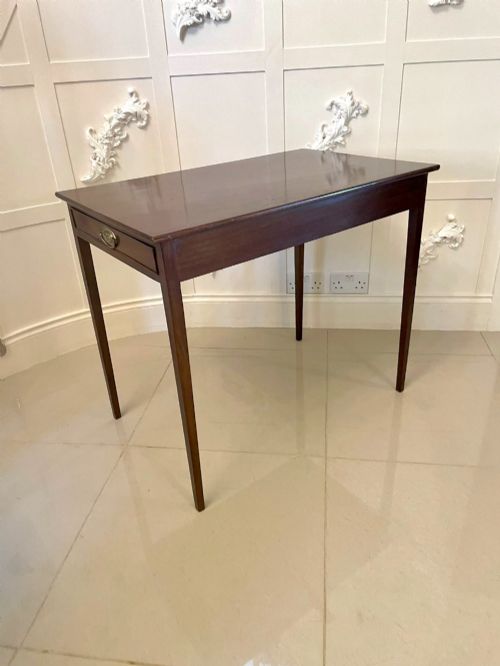
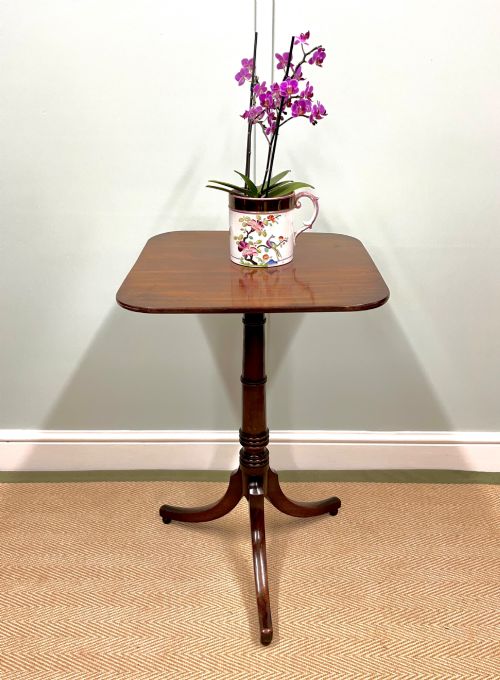
A dark timber occasional table serves everyday domestic utility in forms ranging from wine tables and lowboys to nests and plant stands. You encounter pieces spanning the eighteenth century through the Art Deco era, encompassing Georgian, Victorian, Edwardian, and regional colonial workshops.
The selection here includes side tables, console tables, and centre tables designed for specific domestic corners. Construction varies from simple English country elm and oak to intricately carved Anglo-Indian rosewood and Chinese hardwood.
Materials and construction
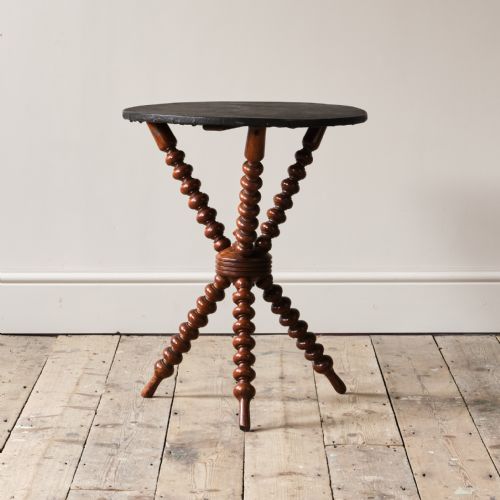
Cabinetmakers utilised dense woods such as mahogany, rosewood, oak, elm, padouk, and teak, often finished with hand-turned legs, barley twists, or tripod bases. Joinery relies on traditional methods appropriate to each period, from Georgian cabinetwork to folk art twig construction.
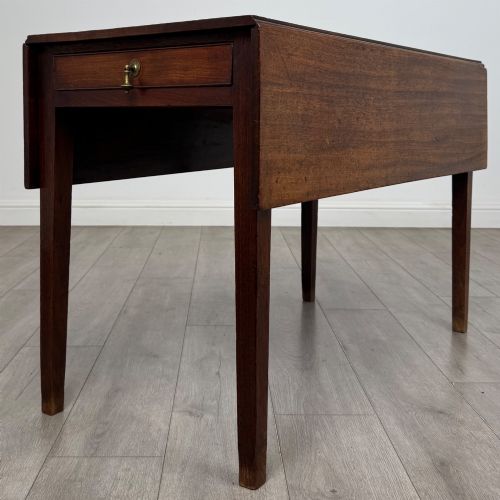
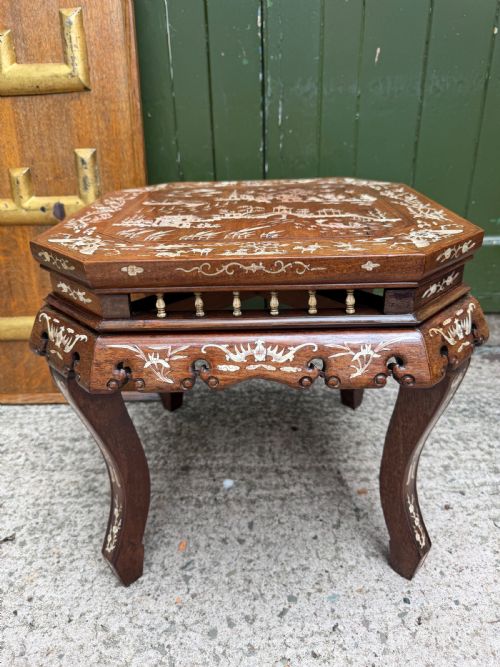
Surface ornamentation ranges from mother-of-pearl inlay and hand-carved motifs to simple polished timber tops that showcase natural grain. Brass fittings appear on specific forms like pembroke tables and campaign-influenced designs.
Dark Timber Occasional Table Retail Price Guide 2026
Typical asking prices for dark timber occasional table among the pieces listed under this phrase on Sellingantiques today, from the lower quarter to the upper quarter. They describe what is for sale here now, not the wider market.
Listings feature woods including mahogany, rosewood, oak, elm, teak, padouk, yew, and chestnut across various global origins.
Judging quality
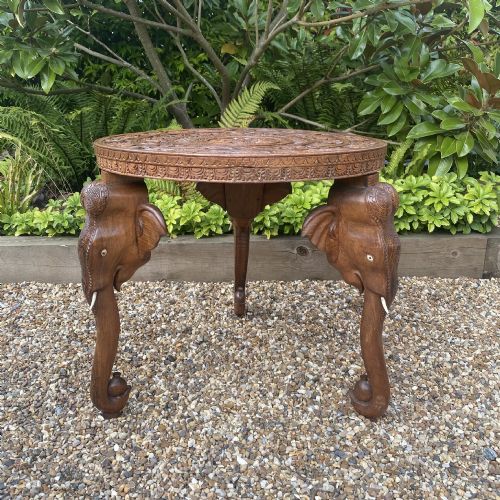
Quality rests upon timber selection and the crispness of execution, whether in the carving of an elephant head base or the precise turnings of a wine table. Superior examples show considered proportion and integration of materials.
The integrity of the timber surface and the stability of joints distinguish finer workshop production from simpler vernacular pieces like cricket tables.
Liberty of London
The Dark Timber Occasional Table Glossary
- Lowboy
- A small kneehole dressing table or side table with one or more drawers, originating in the late seventeenth century. These domestic items provided compact drawer storage alongside a surface for grooming or writing.
- Tripod table
- A small occasional table supported by a pillar and three legs. This form gained popularity in the eighteenth century for flexibility in domestic spaces.
- Pembroke table
- A small table with hinged drop leaves on either side. Thomas Sheraton suggested the name derived from the ninth Earl of Pembroke.
- Barley twist
- A type of turning shaped like a helix resembling twisted barley sugar. The technique appears frequently on seventeenth and nineteenth-century English furniture supports.
- Padouk
- A heavy tropical hardwood valued for durability and a deep reddish-brown tone. Cabinetmakers utilised it for export and colonial furniture production.
Dark Timber Occasional Table: Frequently Asked Questions
Where should I place an occasional table?
These pieces suit positions beside seating, in hallways, or serving as lamp stands. Their compact footprint allows placement in narrow or awkward spaces.
Larger centre tables function independently in the middle of a room, while nests of tables deploy only when needed.
How do I clean dark timber surfaces?
Dust regularly with a dry, soft cloth to prevent grit accumulation. Avoid modern silicone sprays that build up residue over time.
Apply traditional beeswax occasionally to nourish the grain and maintain the polish of mahogany, oak, or rosewood.
Are these tables sturdy enough for daily use?
Solid hardwood construction ensures durability for everyday tasks like holding lamps or drinks. Tripod bases require level flooring to remain stable.
Lighter vernacular pieces or intricately carved occasional items benefit from careful placement away from heavy traffic areas.
How can I tell a Georgian table from a Victorian one?
Georgian pieces often display restrained lines, mahogany veneers, and subtle tripod or drop-leaf configurations. Cabinetmakers of that era favoured classic proportions.
Victorian examples frequently introduce heavier carving, rosewood timbers, and elaborate turnings like barley twist supports.