




Dark Teak Lamp Table
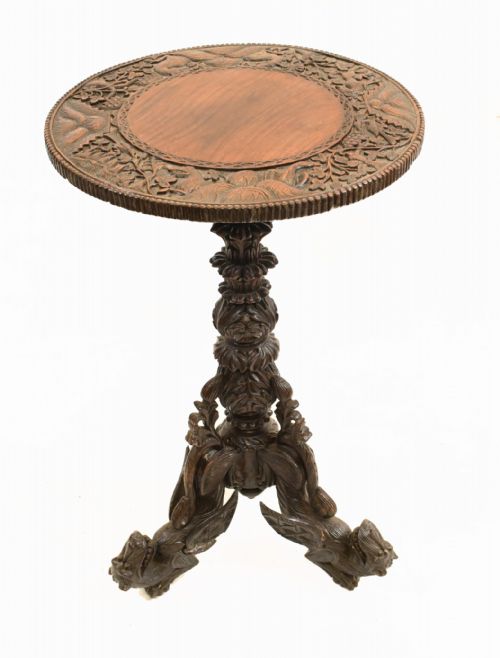
These dark teak lamp table pieces bring heavy carving and dense timber from the nineteenth and early twentieth centuries into modern rooms.
Dark Teak Lamp Table
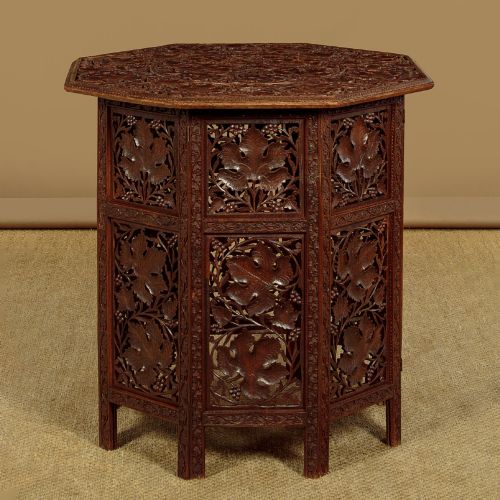
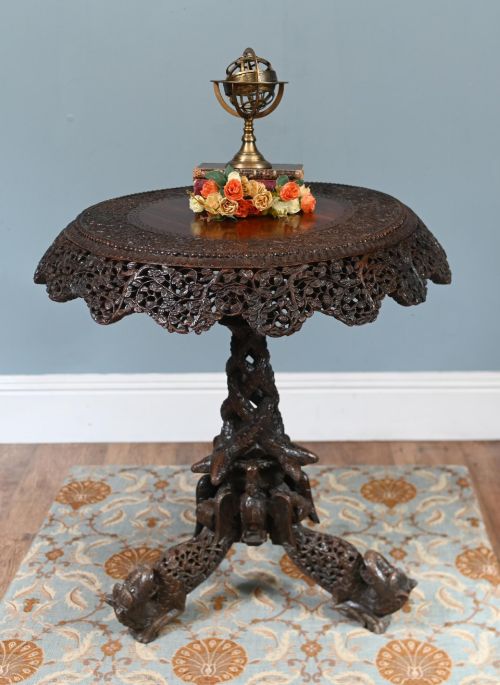
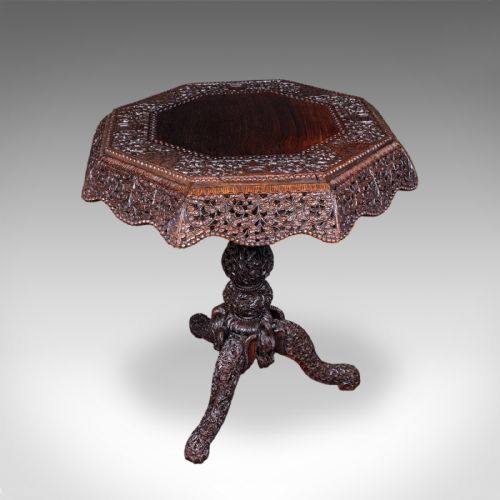
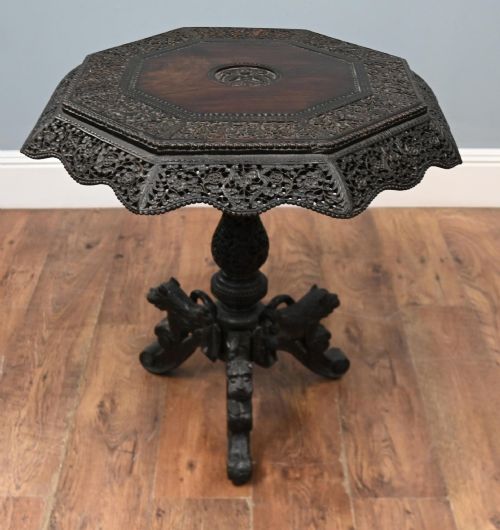
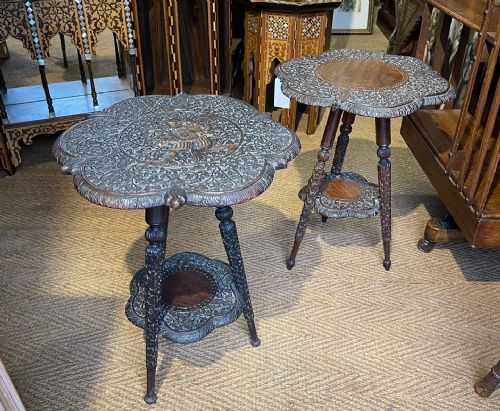
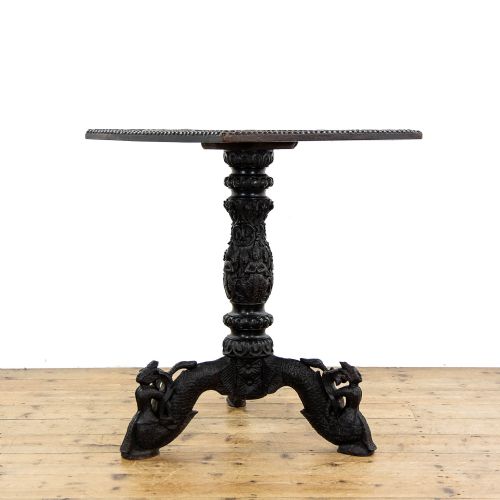
When you search for a dark teak lamp table, you encounter heavily carved occasional and side tables originating from colonial workshops across Asia. These pieces typically take the form of round, octagonal, or folding tables designed to hold small lamps or tea sets.
The versions most commonly met on this page date from the Victorian era up to the nineteen-twenties, reflecting Anglo-Indian, Burmese, and broader Oriental stylistic traditions. Their deep colour and dense grain make them natural focal points beside seating or in hallways.
How they were made
Maker workshops utilised dense tropical timbers such as teak, padouk, and rosewood, which provided the heavy structural weight required for intricate hand carving. Artisans worked these hard timbers with deep relief carving, piercing, and turning techniques to create folding mechanisms, tilt tops, and pedestal bases.
Some examples incorporate secondary materials like glass or marble inset into the carved wooden frames, adding contrasting textures to the dark timber surfaces.
Dark Teak Lamp Table Retail Price Guide 2026
Typical asking prices for dark teak lamp table among the pieces listed under this phrase on Sellingantiques today, from the lower quarter to the upper quarter. They describe what is for sale here now, not the wider market.
Listings span the Victorian period through to 1920, predominantly featuring teak, padouk, and rosewood shaped into side and occasional tables.
What varies in quality
Quality rests upon the crispness of the hand carving and the structural stability of the timber joints. Pieces with deeply undercut, sharp botanical or figural motifs display a superior hand to those with shallow, hurried surface scoring.
The integrity of folding actions, tilt mechanisms, and pedestal assemblies distinguishes sturdier examples from those that have suffered from timber shrinkage or loose joinery over the decades.
The Dark Teak Lamp Table Glossary
- Anglo-Indian
- A descriptive term for furniture made in India during the British colonial period, often combining British furniture forms with traditional local carving styles. These pieces frequently employ dense hardwoods such as teak and padouk.
- Padouk
- A heavy, durable tropical hardwood with a reddish-brown colour that darkens with age. It accepts fine detail carving exceptionally well.
- Tilt top
- A tabletop hinged to a central pillar, allowing the surface to fold vertically when not in use. This mechanism requires precise fitting to remain stable in the horizontal position.
- Occasional table
- A small, movable table intended for versatile use around a room rather than a fixed dining or desk purpose. They suit placement beside chairs for lamps or small objects.
- Carved hardwood
- Timber shaped with chisels and gouges to create low or high relief decorative patterns. The depth and definition of the carving dictate the visual richness of the surface.
Dark Teak Lamp Table: Frequently Asked Questions
What is a dark teak lamp table?
A dark teak lamp table is a small, nineteenth or early twentieth-century occasional table, often featuring dense hand-carved decoration originating from South or East Asia. They were built from heavy tropical hardwoods to serve beside seating.
These items range from folding stands to pedestal designs, accommodating table lamps or decorative objects within domestic interiors.
How do I date a carved wooden table?
Dating relies on examining the timber species, construction joints, tool marks, and stylistic clues within the carving. Nineteenth-century examples often display hand-sawn elements and deep patination on the wood.
Comparing the specific regional motifs, such as Anglo-Indian or Burmese patterns, helps narrow down the decade of manufacture alongside any documented provenance.
Where were these tables made?
These pieces were produced in workshops across regions influenced by British colonial trade, including India, Burma, Indonesia, and China. Local artisans adapted indigenous woodworking techniques to suit European domestic forms.
Export production flourished during the Victorian period, supplying markets in Britain and beyond with distinctive regional furniture.
How do I care for antique teak?
Maintain antique teak by keeping it away from direct heat sources and sudden humidity changes that cause timber to split. Dust regularly with a soft, dry cloth rather than applying heavy liquid polishes.
Occasional application of natural wax preserves the deep colour of the hardwood without building up a sticky surface residue.