


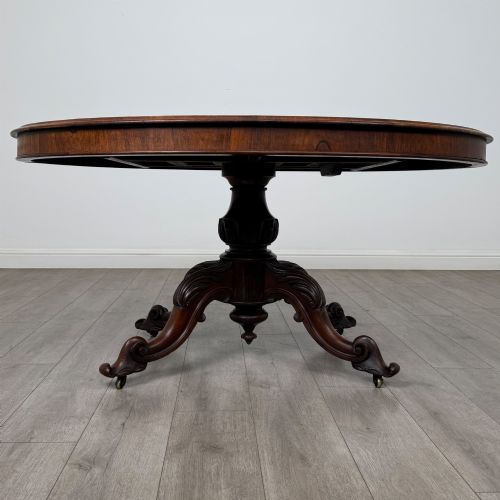
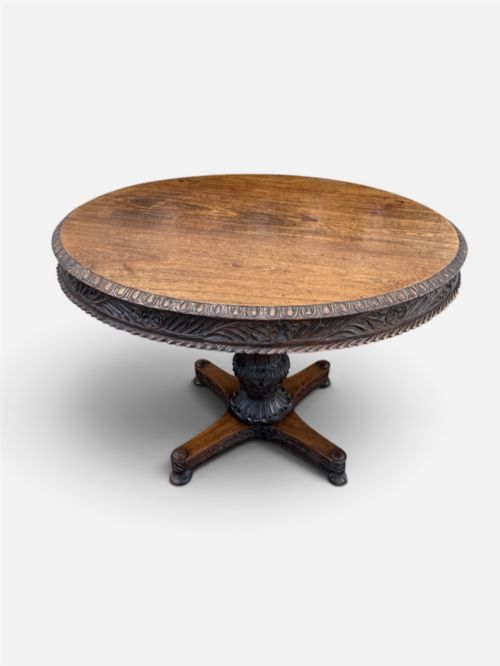
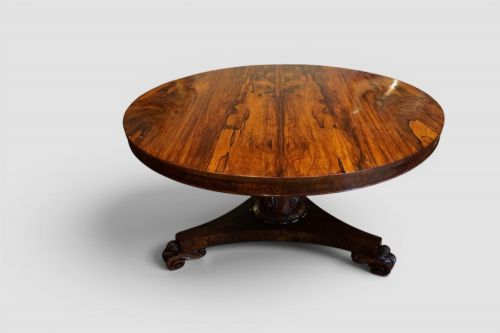
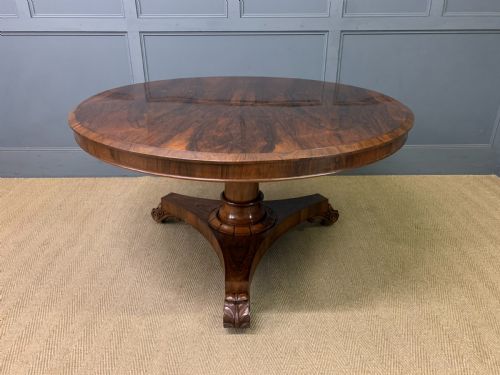
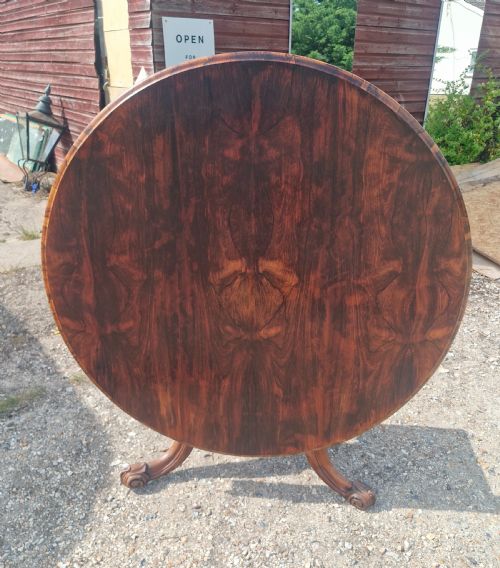
Dark Rosewood Dining Table
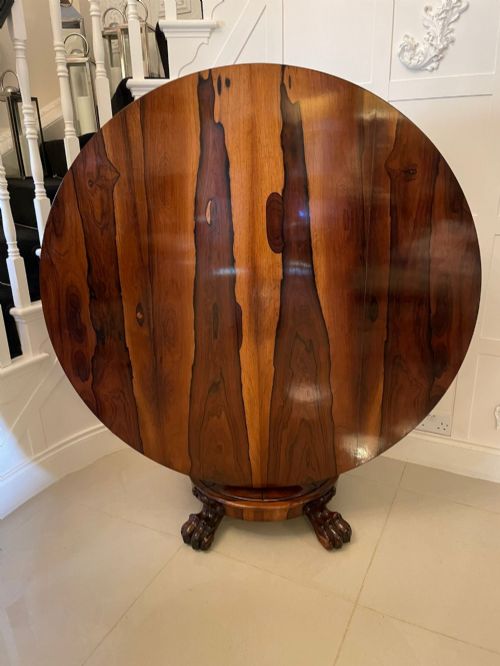
A dark rosewood dining table brings deep timber figure and architectural presence to a room, uniting social dining with nineteenth-century cabinet work.
Dark Rosewood Dining Table
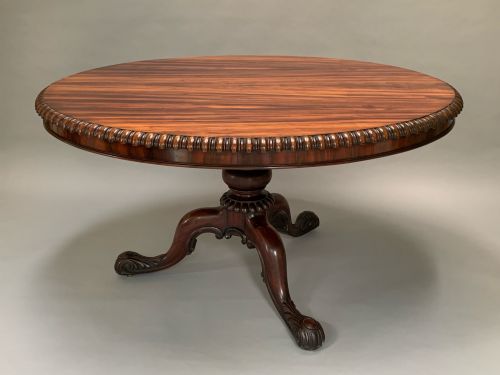
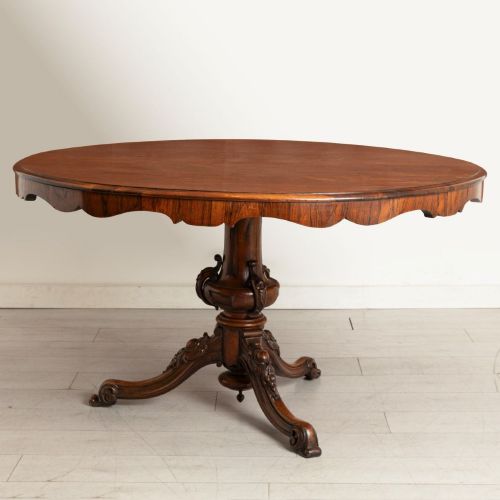
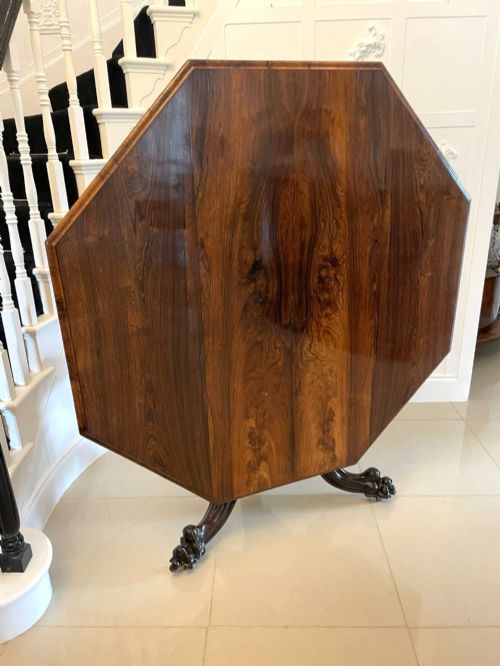
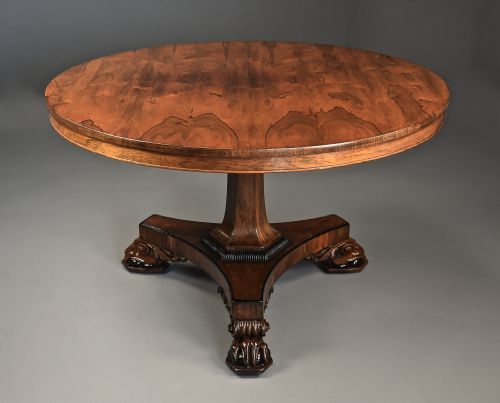
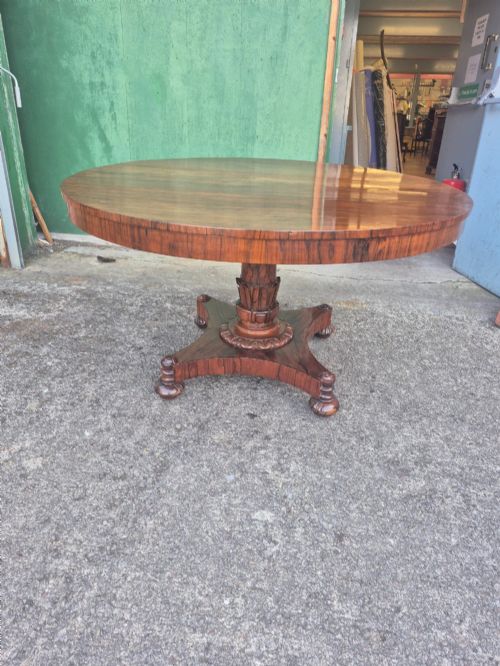
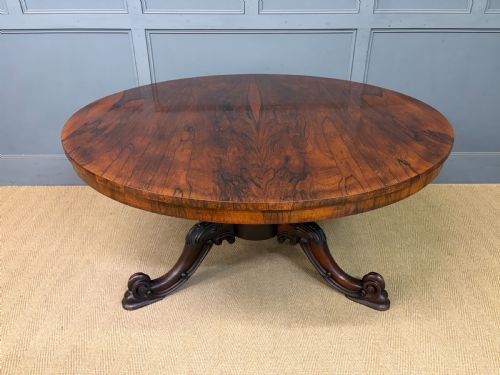
A dark rosewood dining table encompasses versatile circular breakfast forms, large tilt-top centre tables, and extending dining pieces suited to formal interior schemes. The versions most commonly met on this page span the Regency, William IV, and Victorian periods, often functioning as multi-use centre or loo tables.
Makers and workshops from these eras utilised dense exotic hardwoods to construct robust pedestals, triform bases, and solid carved supports. Buyers frequently encounter examples featuring tilt-top mechanisms designed to save space when not in domestic use.
Construction and materials
Cabinet makers constructed these tables using rosewood timber and veneer over secondary woods, frequently incorporating brass inlay, parcel gilt accents, or specific regional timbers such as albuera wood. Turning and carving formed the solid rosewood bases, pedestals, and legs.
Tilt-top and snap-top mechanisms relied on solid brass catches and pivoting timber blocks that allowed heavy round tops to fold vertically. French polishing finished the surfaces to highlight the dark, figured grain patterns characteristic of the period.
The inventory spans Regency, William IV, Victorian, and French Art Deco stylistic periods.
Judging quality
Quality rests in the selection of figured rosewood veneer and the crispness of the hand-carved details on the column and base. Tables with substantial, well-balanced triform or quatrefoil platforms demonstrate superior proportion compared to plainer domestic versions.
The engineering of the tilt-top mechanism and the integration of brass inlay separate standard production from exceptional workshop output. Gillows and other leading makers achieved greater refinement in their joinery and stability.
Gillows
The Dark Rosewood Dining Table Glossary
- Triform base
- A three-sided pedestal foundation that supports the central column. This configuration provides stability for heavy round dining tables.
- Tilt-top table
- A table designed with a hinged top that pivots to a vertical position. This allows the piece to be stored against a wall when dining concludes.
- Loo table
- A large round or oval nineteenth-century table originally used for card games such as loo. These pieces double effectively as spacious dining surfaces.
- Parcel gilt
- The practice of applying thin gold leaf to specific carved details or mouldings. It contrasts with the dark rosewood grain.
- Albuera wood
- A dense exotic timber recorded in nineteenth-century workshop production. It shares similar heavy qualities with rosewood.
Dark Rosewood Dining Table: Frequently Asked Questions
How do I use a tilt-top table?
Release the brass catch beneath the tabletop to pivot the surface from horizontal to vertical. This allows the heavy piece to rest flat against a wall.
Return the top to the horizontal position and secure the latch before placing items on the surface for dining.
What is a loo table?
A loo table is a nineteenth-century round or oval table designed for card games. They feature central pedestals that accommodate seated guests comfortably.
Due to their generous proportions, these tables serve well as everyday dining furniture in modern rooms.
How do I identify William IV tables?
William IV tables display heavy proportions, bold circular or octagonal pedestals, and robust scroll feet. Carved leaf motifs frequently adorn the central column.
Cabinet makers of this period favoured dark rosewood and substantial timber scantlings that give the furniture an architectural presence.
Where were these tables placed?
These tables typically stood in the centre of large reception rooms, functioning as focal points for the interior. Their finished undersides and pedestals allowed them to be viewed from all angles.
In smaller spaces, tilting the top enabled the furniture to clear floor area when not required for meals.