

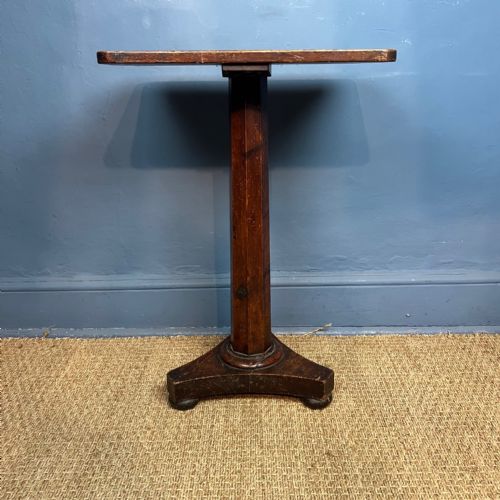
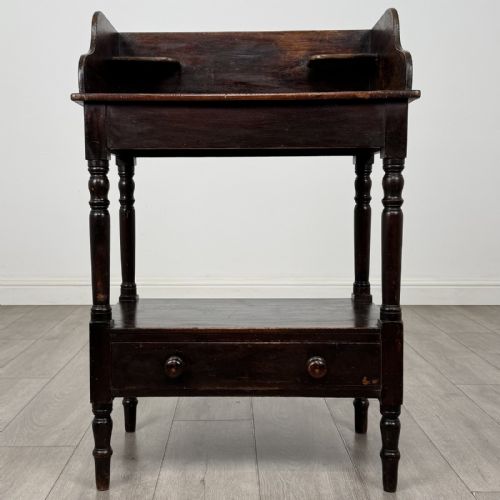
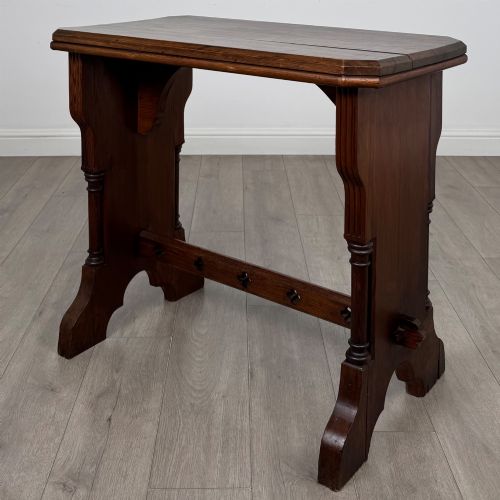
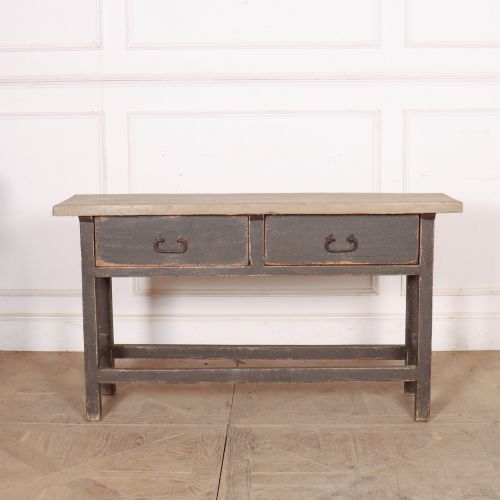




Dark Pine Side Table
These dark pine side table examples offer practical surfaces shaped by domestic vernacular traditions and functional utility.
Dark Pine Side Table
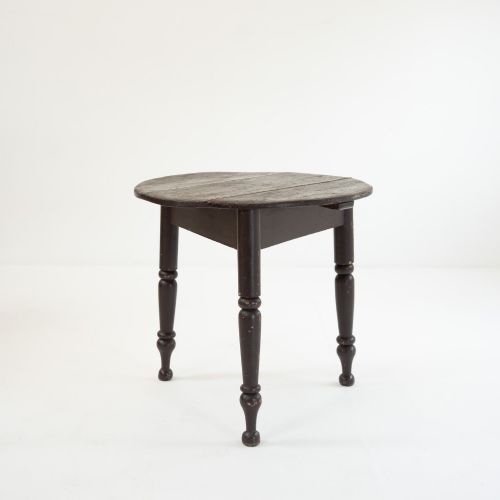
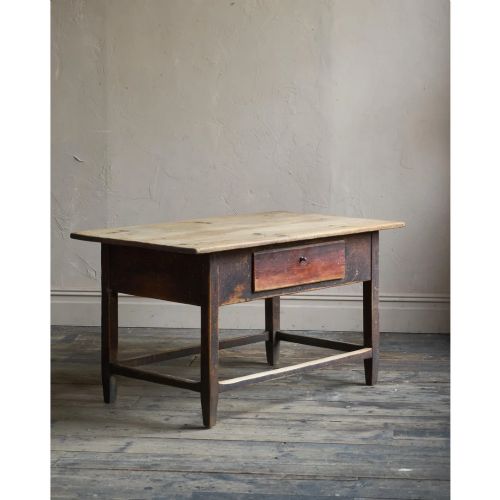
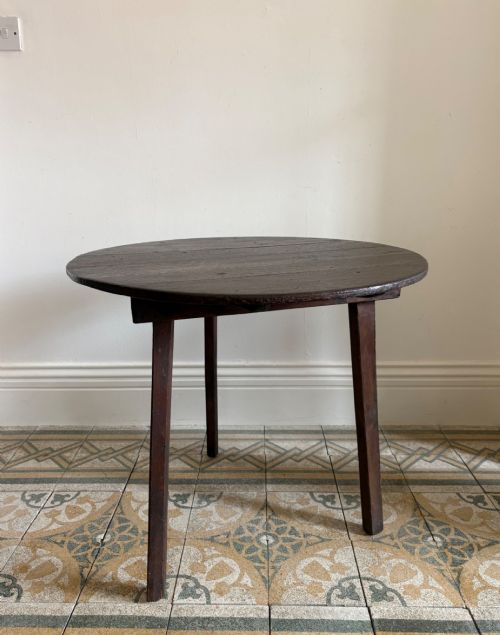
When you search for a dark pine side table, you encounter practical utilitarian furniture spanning Victorian and Georgian periods. These pieces include rustic country forms, bedside cabinets, and occasional tables with honest construction.
You are most likely to meet 19th-century and Victorian examples on this page, often showing the deep patination of aged softwood or applied dark paint finishes. They serve as versatile surfaces for modern interiors while retaining their historic character.
How they were made
Joiners built these items predominantly from solid pine and pitch pine, occasionally pairing timber species by utilising oak for hard-wearing plank tops. Traditional construction relied on stable joinery and simple turned or pegged legs.
Makers often finished surfaces with layered historical paint, sometimes in black, grey, or blue, or allowed the softwood to darken naturally through decades of use and exposure.
Dark Pine Side Table Retail Price Guide 2026
Typical asking prices for dark pine side table among the pieces listed under this phrase on Sellingantiques today, from the lower quarter to the upper quarter. They describe what is for sale here now, not the wider market.
Listings feature pine alongside oak, iron, and brass across Victorian and Georgian periods.
What varies in quality
Quality rests in the integrity of the timber, the honesty of the surface patination, and whether original structural components remain intact. Tables retaining authentic historic paint finishes or untouched timber grains command greater interest.
The sophistication of the joinery and the balance of proportions distinguish utilitarian vernacular work from more considered regional pieces.
The Dark Pine Side Table Glossary
- Cricket table
- A small three-legged round table originating in vernacular domestic spaces. These sturdy pieces typically feature a solid plank top supported by splayed wooden legs designed to remain steady on uneven floors.
- Pitch pine
- A dense, resinous softwood sourced primarily from North America and heavily utilised in nineteenth-century joinery. Its high resin content produces a distinctively rich grain pattern and deep natural colouration as it ages.
- Vernacular furniture
- Domestic items made by local tradesmen rather than metropolitan workshops to serve practical everyday needs. These pieces reflect regional materials and traditional construction methods without following high-style academic designs.
- Drapers table
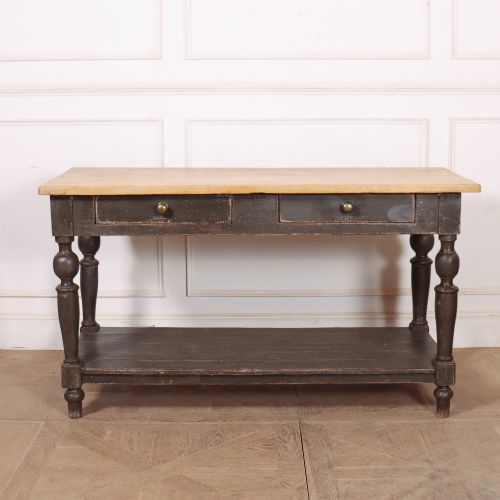
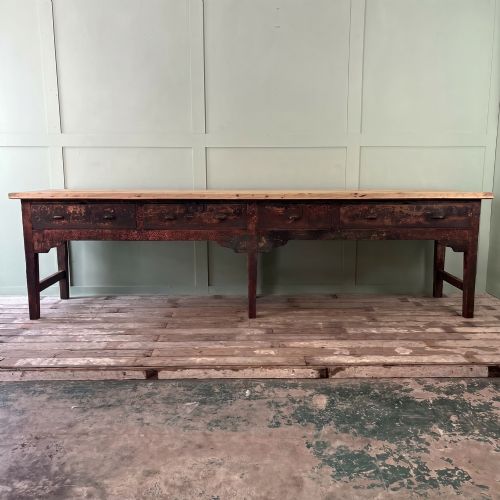
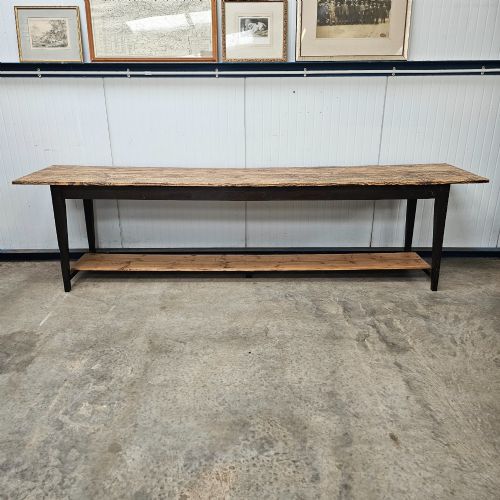
- A long, substantial utility table traditionally used in textile shops for folding cloth. They usually incorporate deep proportions, lower stretchers, and sturdy bases designed to bear heavy daily loads.
- Box stretcher
- Horizontal wooden bracing connecting the lower sections of table legs in a closed rectangular frame. This structural element adds rigidity to the piece and often doubles as a low shelf for storage.
Dark Pine Side Table: Frequently Asked Questions
How do I date a dark pine table?
Dating relies on examining construction marks, timber characteristics, and hardware where original components survive. Tool marks left by early saws and hand-planed surfaces indicate earlier periods.
Changes in nail types and assembly methods further help narrow down the decade of manufacture. Comparing the patination of the wood to documented examples provides additional context.
Are these tables suitable for daily use?
These tables function well in modern spaces as bedside surfaces, writing desks, or occasional stands. Their sturdy softwood construction easily accommodates daily household demands.
Applying appropriate surface protection helps preserve historic paint layers and bare pine timbers from moisture and heat. Regular dusting maintains the natural patination acquired over centuries.
What is the difference between pine and pitch pine?
Standard pine generally refers to softer European softwood species that take paint readily and weather to a soft golden tone. Pitch pine contains a significantly higher resin content, giving the timber a heavier weight and a more pronounced grain.
Objects made from pitch pine often display a deeper natural amber or dark reddish colouration. This resinous quality also provided greater resistance to moisture in practical utility furniture.
How should I clean a painted pine surface?
Cleaning historic painted surfaces requires a gentle approach using a soft, dry cloth to remove dust. Avoid harsh chemical solvents or abrasive cleaners that might strip away fragile layers of old paint.
If moisture is necessary, dampen the cloth slightly with plain water and dry the area immediately. Preserving the original surface crust maintains the historic value of the piece.