

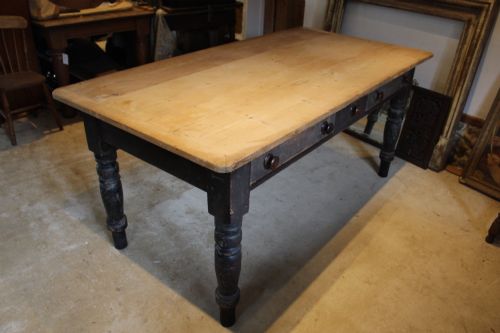
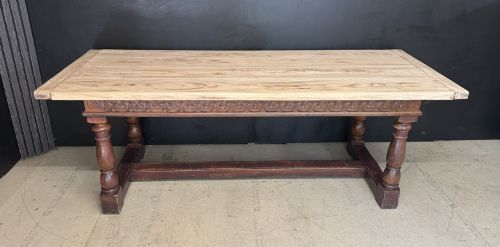
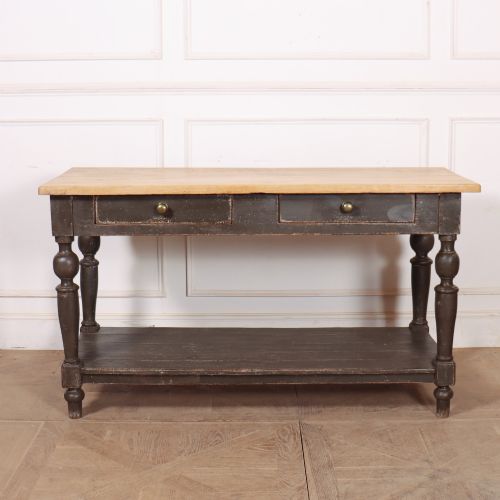
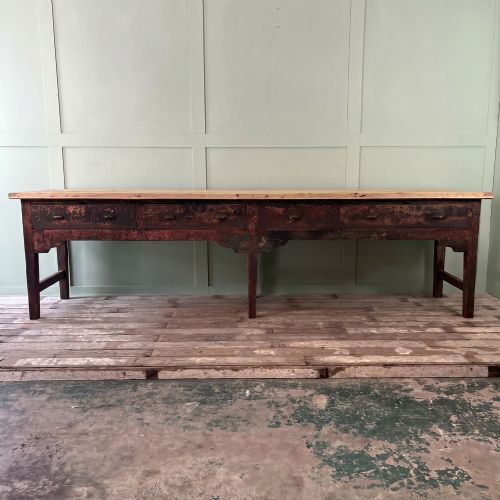

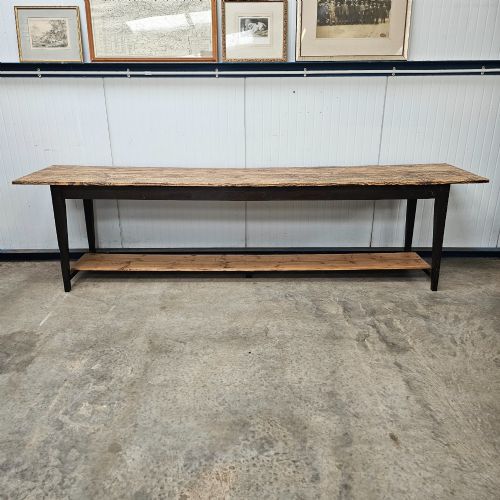


Dark Pine Kitchen Table
A dark pine kitchen table is a sturdy, characterful centrepiece built for daily domestic use, bringing warmth and generous proportions to any interior.
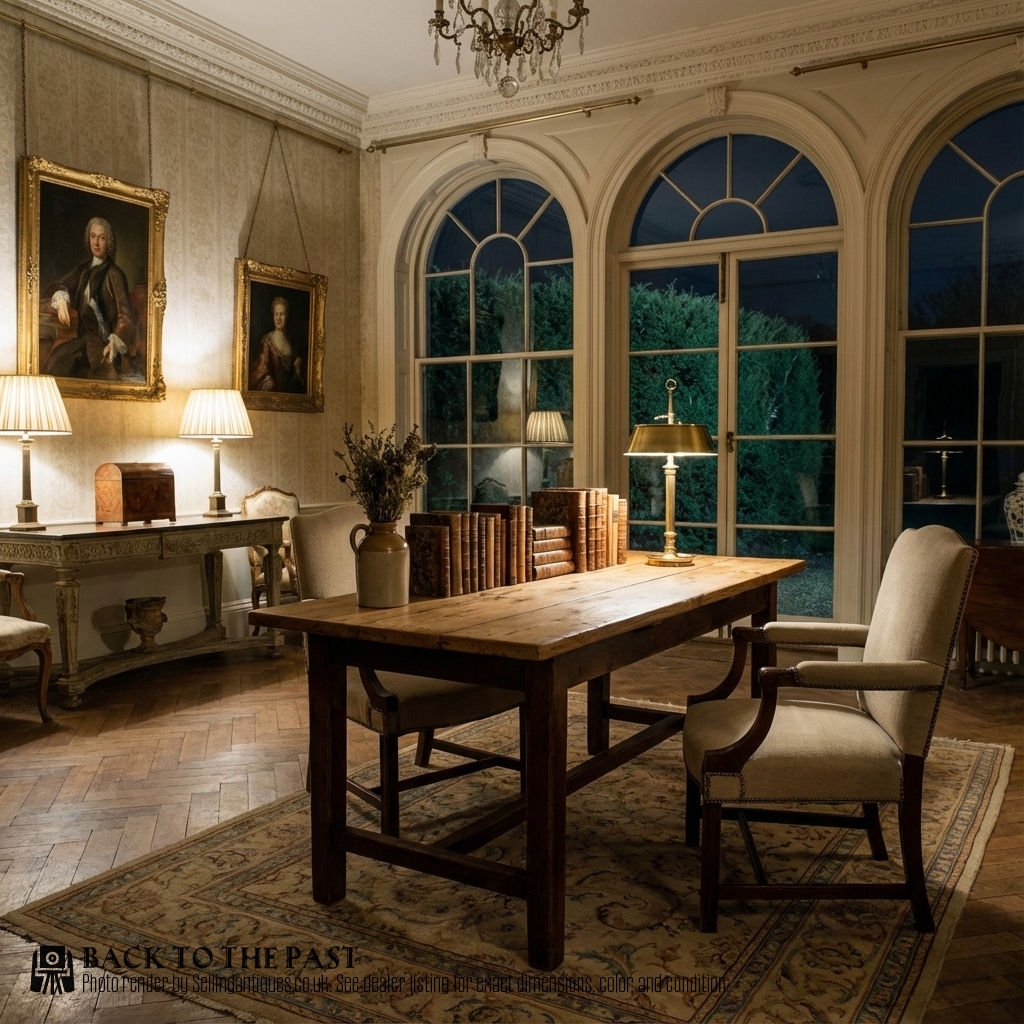
Dark Pine Kitchen Table
A dark pine kitchen table encompasses practical surfaces used across centuries for food preparation, dining, and general household tasks. These pieces arrive from various periods including the 18th century, Victorian era, and 1920, reflecting long histories of domestic service.
The selections available range from modest rustic forms to large refectory and harvest tables. Many examples incorporate useful drawers or drop-leaf designs, suiting both compact spaces and sprawling country houses.
Origins span English, French, and Welsh workshops, each bringing distinct regional proportions and construction traits to the dining and kitchen tables seen here.
Materials and construction methods
Makers relied primarily on solid pine and oak, often pairing these timbers to give table tops and structural frames maximum resilience. Secondary materials such as brass, iron, and ceramic occasionally appear in handles or fittings.
Surfaces frequently show layers of historic paint or waxed finishes that protect the wood while deepening its dark tone over decades of use.
Dark Pine Kitchen Table Retail Price Guide 2026
Typical asking prices for dark pine kitchen table among the pieces listed under this phrase on Sellingantiques today, from the lower quarter to the upper quarter. They describe what is for sale here now, not the wider market.
Distinguishing quality across examples
Superior execution shows in the integration of timber joints and the balance of proportions between the top and the supporting legs or trestles. Tables retaining original hardware and uncompromised structural integrity command greater appreciation.
The depth of patina and the honesty of wear accumulated over generations separate everyday utility items from pieces possessing distinct regional character and superior joinery.
The Dark Pine Kitchen Table Glossary
- Refectory table
- A long, narrow dining table originally built for communal dining halls. These scaled-down domestic versions offer immense length and sturdy underframes.
- Drapers table
- A long counter-like table traditionally utilised in textile shops for folding cloth. They often feature multiple drawers and lower tiers.
- Drop leaf table
- A table with hinged leaves on either side that fold down to save space. This mechanism allowed tables to expand quickly when guests arrived.
- Trestle table
- A table consisting of two or more supports connected by a horizontal beam. This design provides maximum legroom beneath the top.
- Dresser base
- The lower section of a kitchen dresser, functioning as a sideboard or serving table. They provide substantial surface area and storage drawers.
Dark Pine Kitchen Table: Frequently Asked Questions
How do I clean a dark pine kitchen table?
Maintain the surface by wiping it gently with a damp cloth and mild soap, avoiding harsh chemicals that strip the finish. Regular applications of natural wax help preserve the dark tone and protect the timber from moisture.
Allow any spills to lift naturally rather than scrubbing aggressively, ensuring the historic patina remains undisturbed.
Can I use a kitchen table for daily dining?
These tables were built specifically for rigorous daily utility, making them ideal for family meals and food preparation. Their robust construction handles active household environments with ease.
Using placemats and coasters prevents excessive marking while letting the natural character of the timber remain visible.
How do I date an antique pine table?
Examine the construction marks, tool traces, and the way joints are fastened beneath the top. Hand-cut elements and timber shrinkage patterns often point towards earlier periods.
Compare the overall proportion and hardware style with known regional pieces from the eighteenth and nineteenth centuries.
Are pine tables structurally stable?
Solid timber frames provide substantial weight and balance, though centuries of use can introduce minor movement. Traditional joinery ensures these pieces remain firm under normal domestic loads.
Checking the floor clearance and leg alignment helps maintain even stability in older dining rooms.