
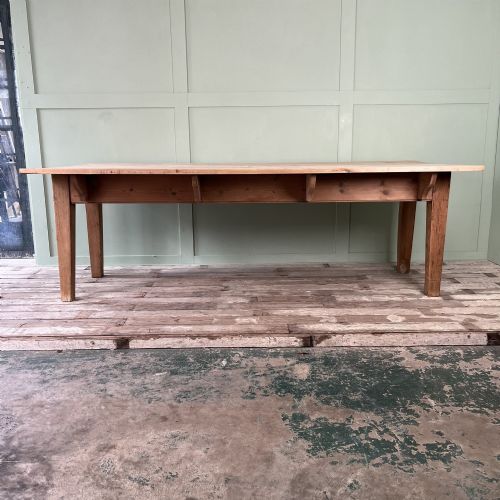
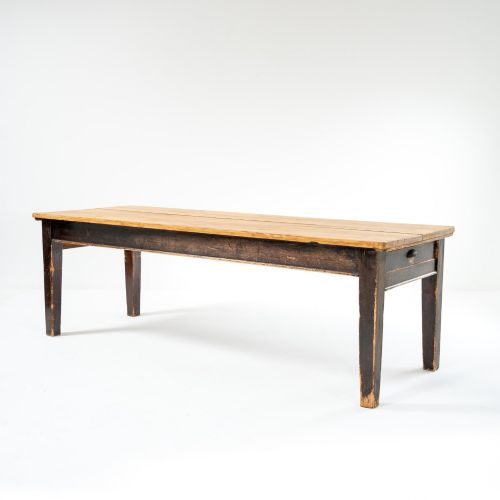
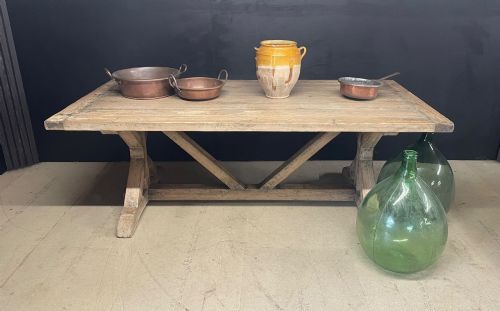
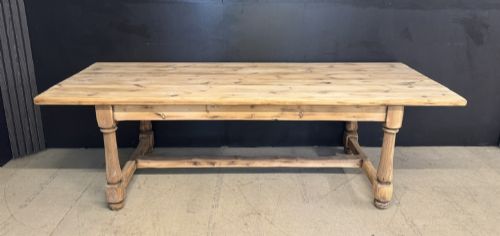

Pine Farmhouse Dining Table
A pine farmhouse dining table brings enduring utility and unpretentious character to a room.
Pine Farmhouse Dining Table
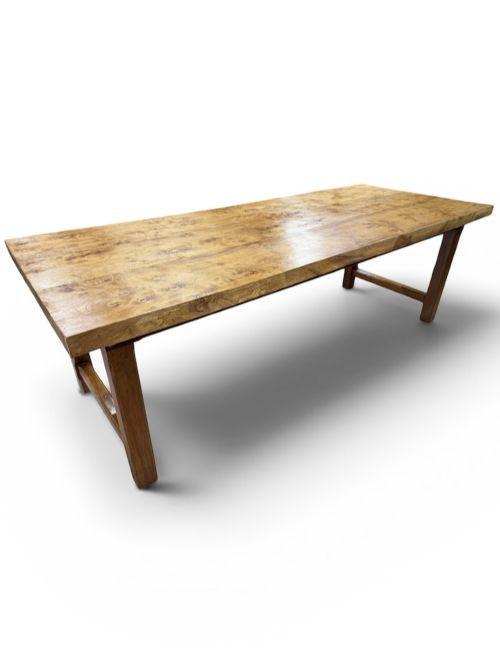
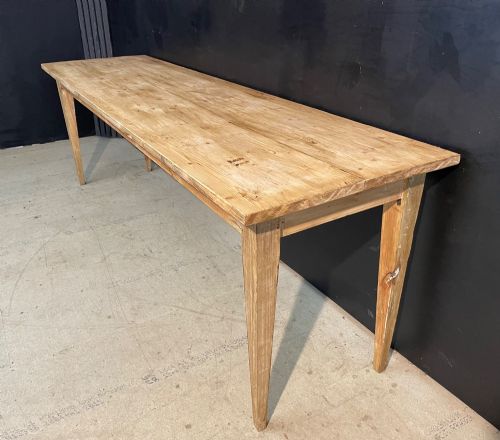
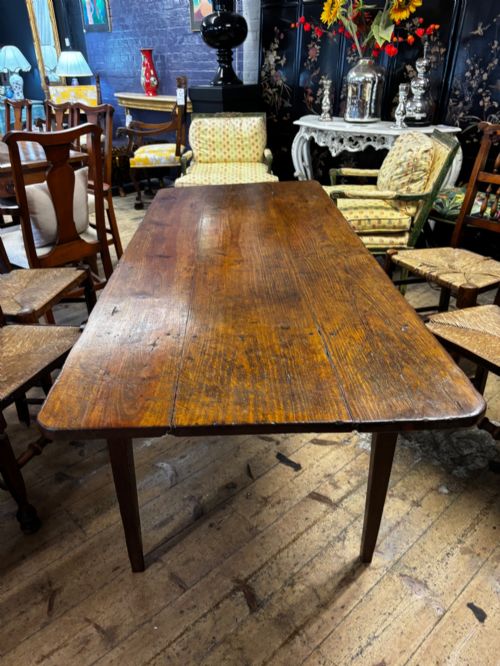
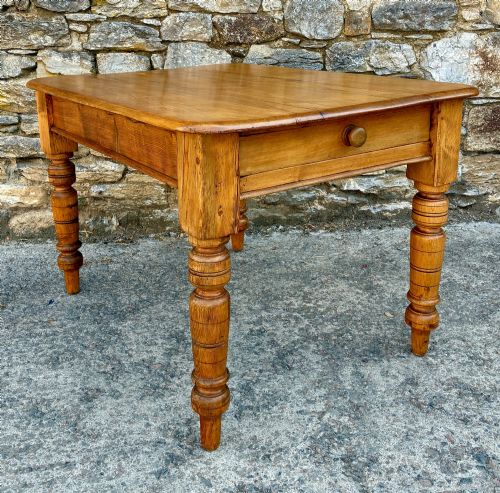
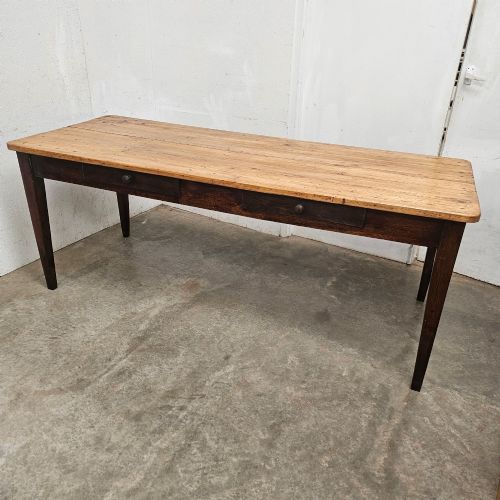
A pine farmhouse dining table is a functional work surface built for domestic labour and daily meals. These tables originate primarily from nineteenth-century kitchens, farmhouses, and country properties, reflecting a tradition of heavy use.
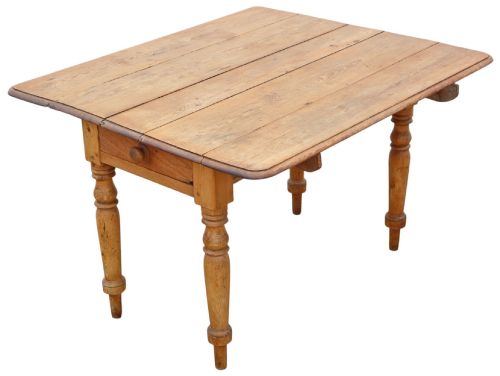
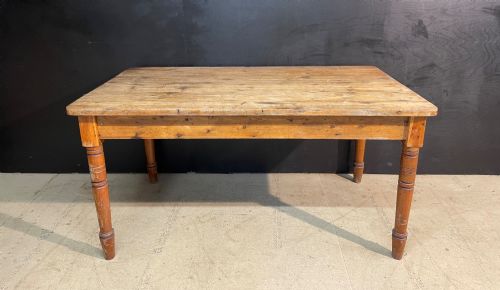
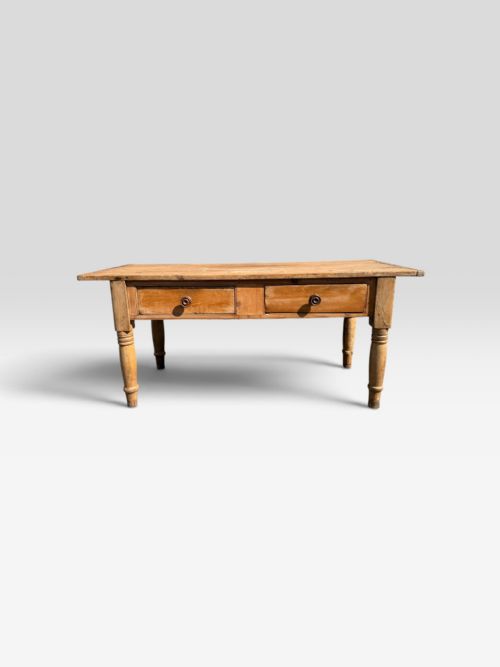
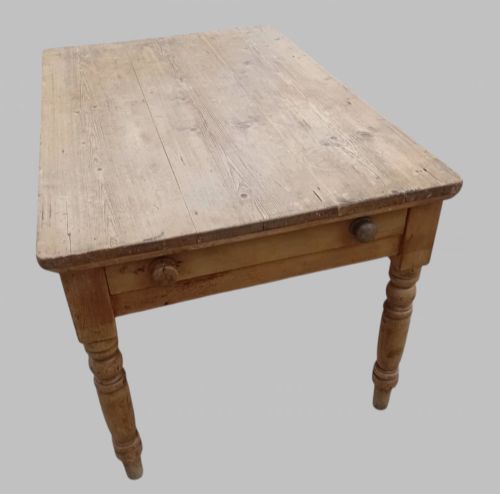
Most examples found on this page date from the Victorian period through to the early twentieth century. They appear as simple rectangular boards on robust legs, occasionally incorporating drawers or scrubbed tops.
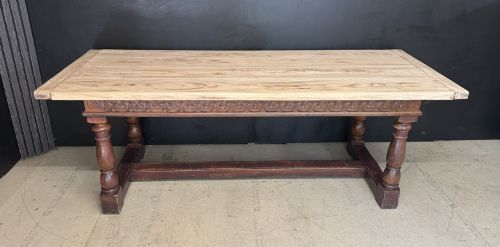
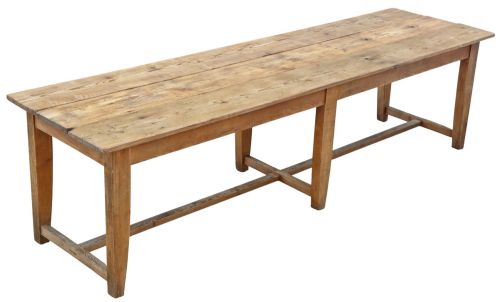
Regional variations span English, French, and Scandinavian workshop traditions. They range from compact kitchen tables to large refectory and harvest formats designed to seat many people.
How They Were Made
Makers constructed these tables predominantly from solid pine timber, frequently pairing softwoods with oak, fruitwood, or sycamore for structural components. Pitch pine and standard pine boards provided thick, durable surfaces capable of withstanding heavy daily wear.
Joinery techniques relied on sturdy framing, pegged mortise and tenon joints, and occasional drawers constructed with hand-cut dovetails. Scrub-top surfaces were repeatedly scoured with water and sand to maintain hygiene, leaving a pale, weathered grain.
Secondary finishes included painted legs or aprons, utilising traditional pigments that have since developed patinated wear. Trestle and refectory formats employed heavy underframes to support extended lengths of timber without sagging.
Pine Farmhouse Dining Table Retail Price Guide 2026
Typical asking prices for pine farmhouse dining table among the pieces listed under this phrase on Sellingantiques today, from the lower quarter to the upper quarter. They describe what is for sale here now, not the wider market.
Some tables retain flour dust embedded deep within nineteenth-century drawer corners from years of active kitchen preparation.
What Varies in Quality
The integrity of the original timber foundation separates standard utilitarian pieces from exceptional examples. Deeper planks, dense pitch pine, and untouched structural framing indicate superior original construction.
Proportion and scale distinguish individual tables, with longer eight-seat refectory formats or uncommon drop-leaf and wind-out mechanisms commanding greater presence. Tables retaining original painted legs or integrated multiple drawers show higher levels of bespoke regional craftsmanship.
The degree of surface wear and natural bleaching alters the visual weight of the piece. Scrubbed tops with smooth, undulating grain patterns reflect decades of honest use rather than harsh modern sanding.
The Pine Farmhouse Dining Table Glossary
- Scrub-top
- A wooden table top designed to be aggressively scrubbed clean with water and abrasive brushes. This process wears away the softer summer growth of the pine, leaving a raised, textured grain.
- Refectory table
- A long, narrow dining table originally built for communal dining halls. These sturdy forms utilise heavy underframes or trestle bases to support extended timber lengths.
- Pitch pine
- A dense, resinous variety of pine timber prized for its strength and dark figuring. It resists moisture better than standard softwoods.
- Harvest table
- A large utility table traditionally used during seasonal agricultural gatherings. They typically feature long spans designed to seat large households.
- Drop-leaf table
- A table with hinged side flaps that can be folded down to save space. This mechanism allowed rural householders to alter the footprint of the furniture as needed.
Pine Farmhouse Dining Table: Frequently Asked Questions
How do I clean a scrubbed pine top?
Clean the surface using warm water and a mild soap applied with a soft brush, following the direction of the grain. Avoid harsh chemical agents that can strip the natural patina accumulated over decades.
Allow the timber to dry naturally rather than applying artificial heat. Periodic application of neutral beeswax helps protect the dry wood from moisture rings and daily stains.
Can I seat six people comfortably?
Many standard kitchen and farmhouse tables accommodate six diners depending on the length of the frame and the placement of the legs. Trestle designs offer more legroom along the sides than four-legged tables.
Check the clearance beneath the aprons and drawers to ensure dining chairs slide underneath properly. Measure both the table length and your seating before deciding on a daily configuration.
What is the difference between pitch pine and standard pine?
Pitch pine contains a higher resin content, making the wood significantly heavier, harder, and darker in tone than standard softwoods. It develops a rich, amber hue as it ages.
Standard pine is lighter in weight and colour, often showing more prominent knots and a softer grain structure. Both materials were widely utilised in nineteenth-century country furniture.
How do I date a nineteenth-century table?
Examine the construction methods beneath the top, looking for hand-sawn board marks, pegged joints, and handmade drawer dovetails. Machine-cut elements typically point towards the later Victorian period or the early twentieth century.
Wear patterns, timber shrinkage, and the presence of original paint or hardware offer further clues to the age of the piece. Regional styles also help narrow down the manufacturing decade.