

Dark Oak Slant Bureau
A dark oak slant bureau brings centuries of fitted stationery storage and a sturdy writing slope into a room.
Dark Oak Slant Bureau
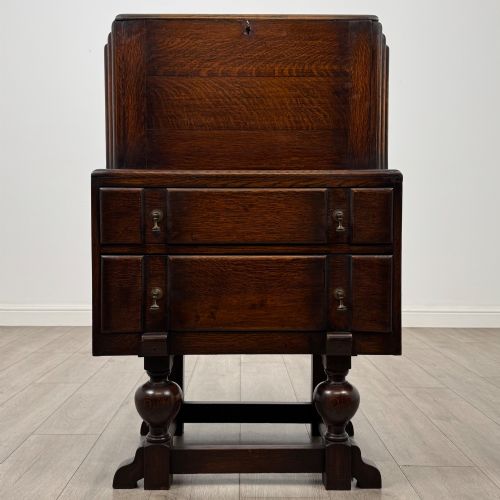
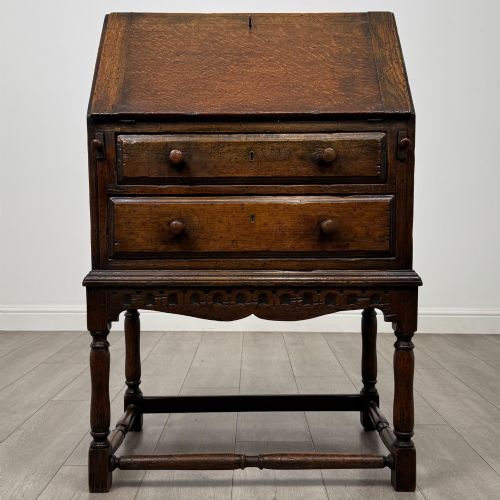
A dark oak slant bureau is a writing desk featuring a sloping fall-front flap that lowers to reveal an interior of pigeonholes and small drawers. When you search for this phrase, you find practical writing furniture designed to keep correspondence and documents organised out of sight.
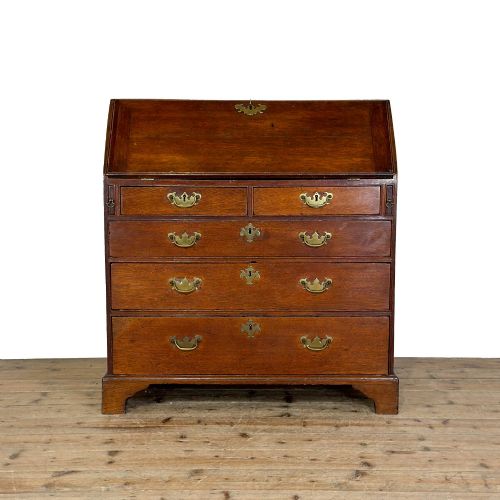
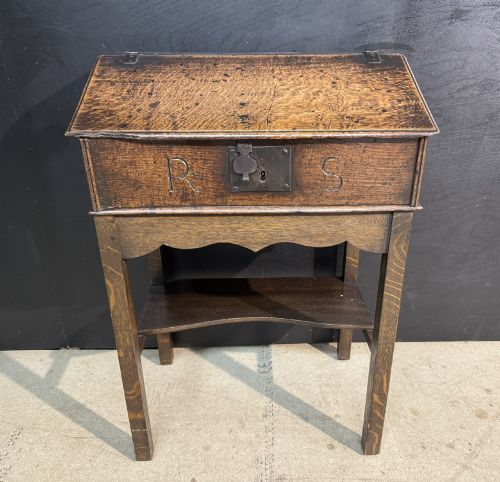
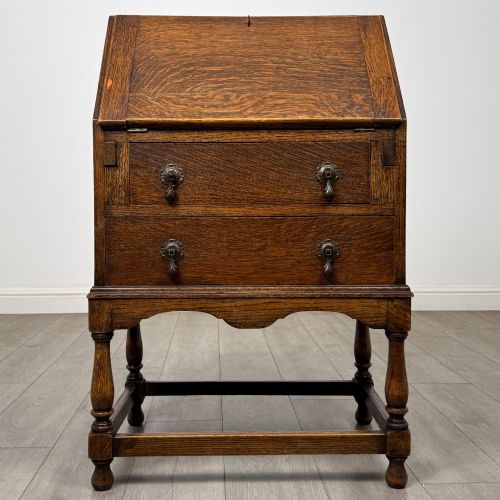
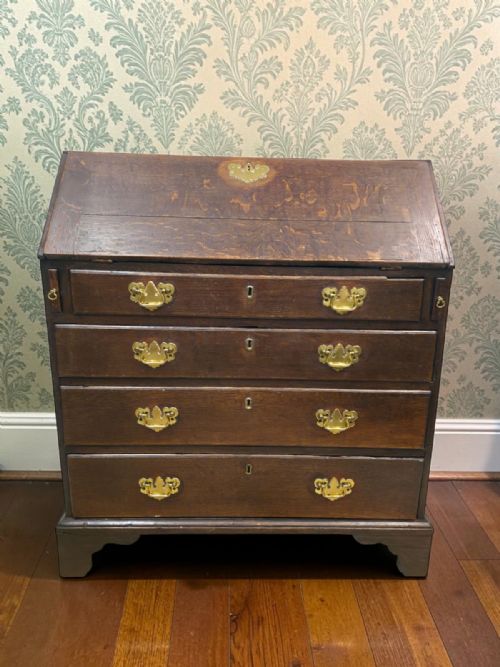
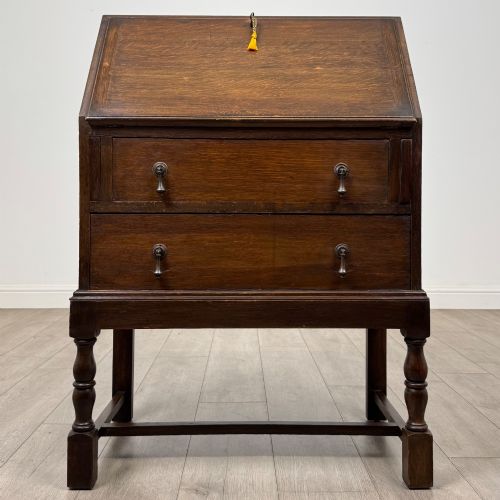
The pieces appearing on this page span several eras, from the seventeenth century and the Georgian period through to Edwardian interpretations and nineteen-twenties revivals. These desks often combine deep timber tones with brass handles, hinges and key escutcheons.
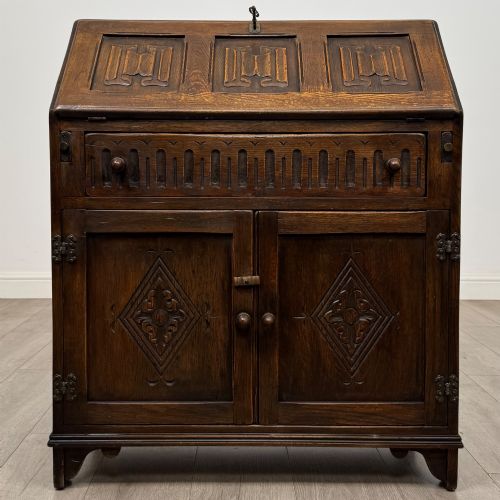
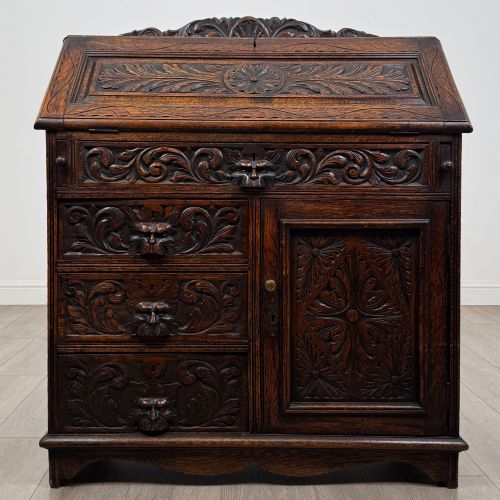
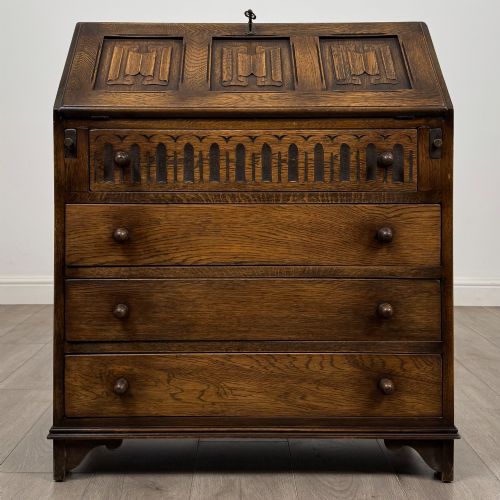
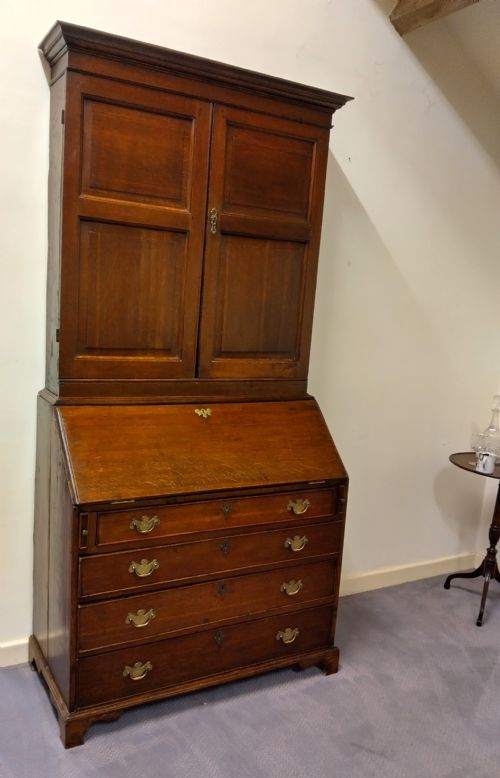
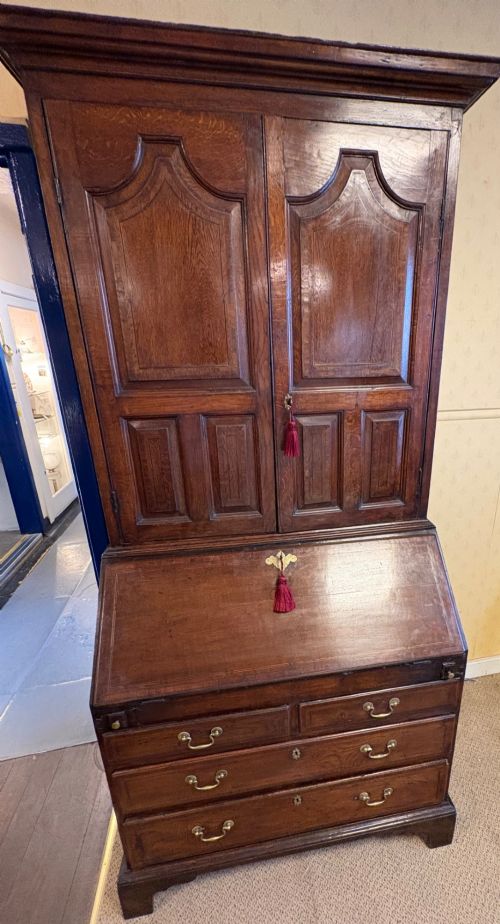
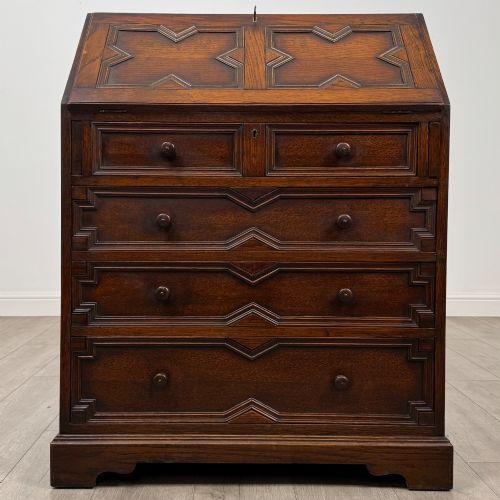
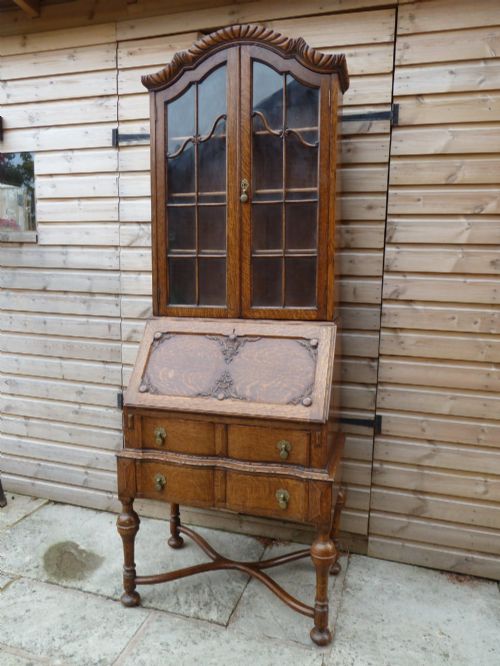
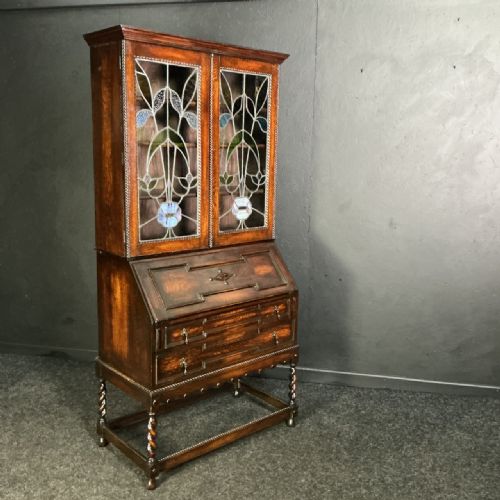
Many examples take the form of simple fall-front writing desks, while others rise into taller bureau bookcases with glazed upper sections for displaying volumes. Common stylistic touches include carved linenfold panels, Jacobean geometric mouldings and the occasional green man motif.
How they were made
Makers built these items primarily from solid oak and wood inlay, relying on the timber's hard-wearing grain for structural endurance. Panels and interior compartments often display careful joinery to handle the stress of daily writing and storage.
Hardware such as brass handles and iron fittings secure the drawers and support the heavy fall-front flap when lowered. Leather writing surfaces occasionally line the interior slope to provide a smooth plane for quills and pens.
Listings range from seventeenth-century vernacular pieces and Georgian items to Edwardian revivals and nineteen-twenties interpretations.
What varies in quality
The standard of a dark oak slant bureau rests on the complexity of its interior fitments, such as stepped drawer arrangements and hidden compartments. Simpler vernacular pieces offer robust utility, whereas examples from the Georgian era or revival periods often showcase finer carving and more deliberate proportions.
The integrity of the timber and the crispness of decorative elements like linenfold panels or brass hardware distinguish standard utility models from exceptional cabinet-making. Alterations and adaptations, such as modifications for modern electronics, also influence the character of the piece.
The Dark Oak Slant Bureau Glossary
- Slant bureau
- A desk featuring an angled fall-front flap that opens to create a writing surface. This slope conceals the inner compartments.
- Fall-front
- The hinged lid of a desk that drops down from a vertical or angled position to form the writing desk. It typically rests on pull-out lopers when open.
- Linenfold
- A style of wood carving that mimics folded fabric or linen cloth. It appears frequently on Edwardian panels.
- Bureau bookcase
- A combination piece stacking a shelved bookcase above a sloping writing desk. The upper doors are frequently glazed.
- Escutcheon
- A protective plate surrounding a keyhole, usually fashioned from brass. It guards the surrounding wood from wear.
Dark Oak Slant Bureau: Frequently Asked Questions
What is a dark oak slant bureau used for?
These pieces function as compact writing desks with integrated storage for letters, papers and writing implements. The sloping lid folds down to provide a firm surface for correspondence.
Interior compartments organise stationery out of sight when the desk is closed, keeping rooms tidy.
How do I date a dark oak bureau?
Dating relies on construction methods, hardware types and stylistic details like linenfold carving or geometric mouldings. Seventeenth-century examples often display vernacular framing, while Georgian pieces show more refined proportions.
Revival pieces from the Edwardian era and nineteen-twenties frequently imitate earlier seventeenth-century and Jacobean styles.
Are all these desks made of solid oak?
The listings consist largely of oak construction, occasionally complemented by wood inlay and brass or iron hardware. Some interiors incorporate secondary timbers for drawer linings and internal dividers.
Glass and leather also appear on specific bookcase and writing surface variants.