
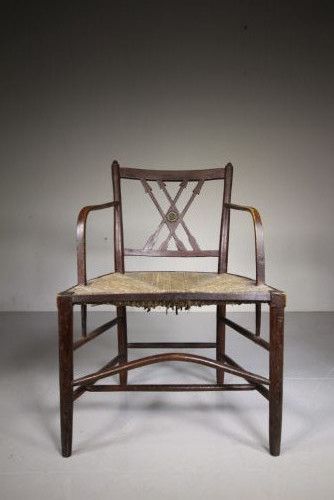
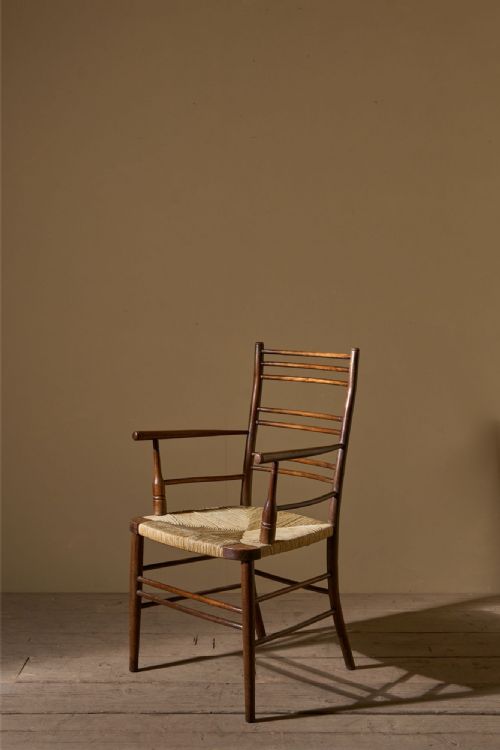
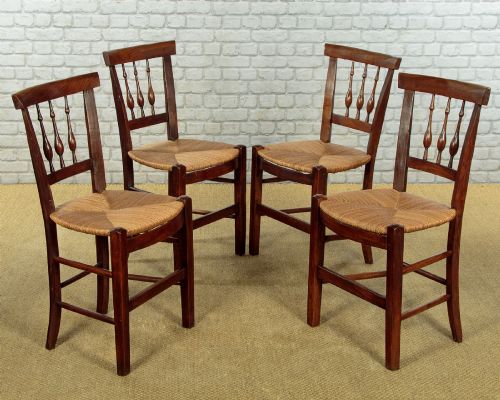
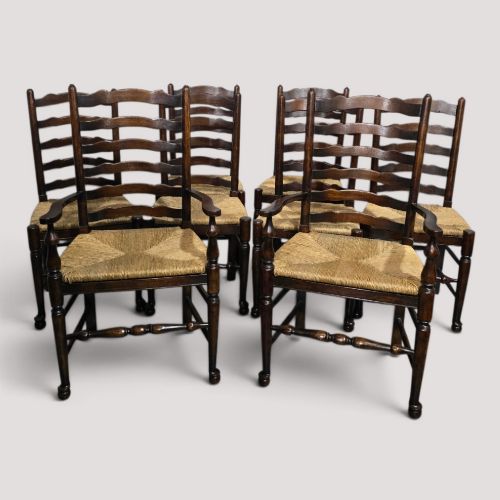



Dark Oak Rush Chair
A dark oak rush chair brings honest country vernacular craftsmanship and tactile natural seating into any room.
Dark Oak Rush Chair
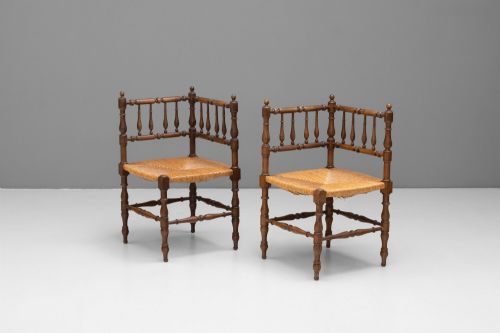
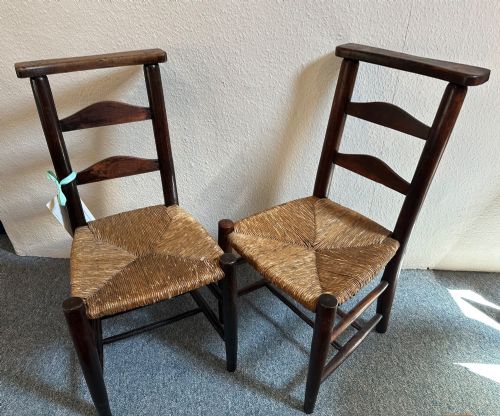
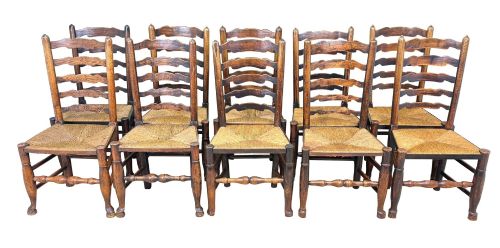
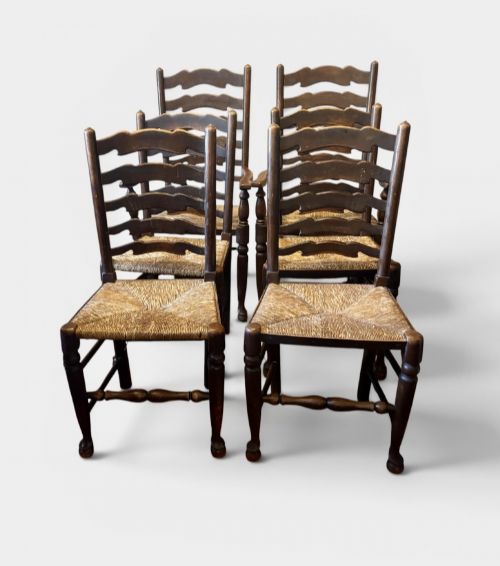
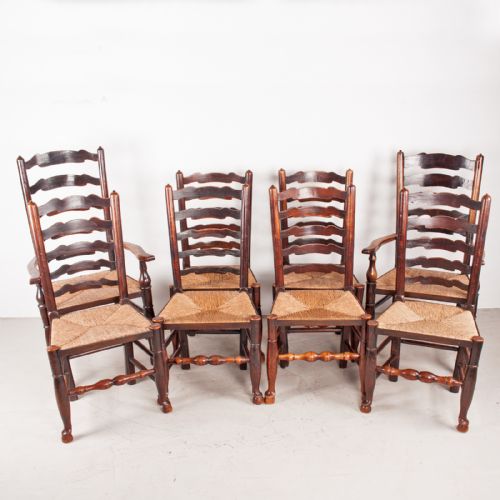
When searching for a dark oak rush chair, buyers encounter robust vernacular seating rooted in English country traditions spanning the Georgian era through the nineteenth and early twentieth centuries. These sturdy seats appear in multiple forms across listings, including dining chairs, armchairs, side chairs, rocking chairs, and corner chairs.
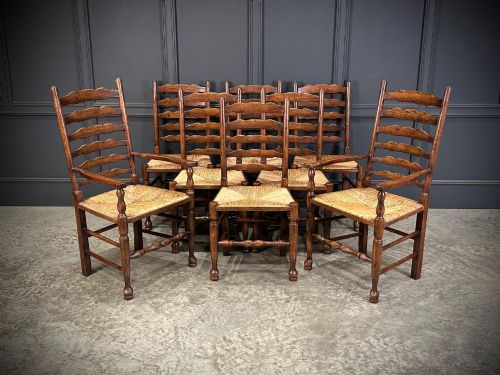
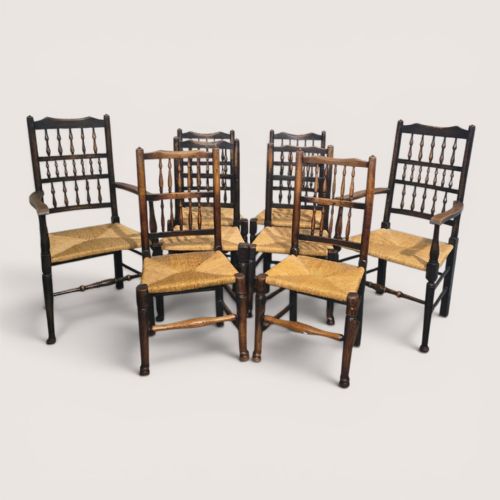
The versions most commonly met on this page belong to the nineteenth century and the early decades of the nineteen-hundreds, often adopting ladder back or spindleback designs. Makers utilised local timbers to construct dependable everyday seating suitable for kitchens, libraries, and farmhouse dining rooms.
Examples range from single accent pieces to large harlequin sets and matched dining suites numbering up to ten chairs. Regional influences such as Cheshire, Lancashire, and Suffolk appear alongside Arts and Crafts interpretations by notable firms.
How they were made
Construction relies heavily on native timbers combined with hand-twisted river rush for the seating platform. Frameworks typically utilise oak, ash, elm, or painted wood joined through traditional mortise and tenon methods.
The rush is woven tightly over wooden frames to create a resilient, textured pad that yields comfortably with use. Artisans shaped ladder backs and turned spindles on lathes, producing balanced upright supports for daily domestic service.
Listings feature oak, ash, and elm timbers combined with rush seats across Georgian, Victorian, and Arts and Crafts periods.
What varies in quality
Quality rests upon the integrity of the timber frame and the tightness of the woven rush seat. Superior examples maintain sturdy structural joints without excessive movement, while lesser pieces suffer from loose framing or brittle, dry rush degradation.
Finer items display thoughtful proportion, pleasing timber grain, and original surface treatments such as early paint or patinated oak. The skill involved in hand-turning spindles and shaping robust ladder backs distinguishes standard utility seating from finer vernacular work.
Liberty and Co·William Morris
The Dark Oak Rush Chair Glossary
- Ladder back
- A chair back featuring horizontal wooden slats arranged like the rungs of a ladder. This traditional construction provides sturdy lumbar support.
- Rush seat
- A seating surface woven from natural marsh reeds twisted into cords. It offers a firm yet flexible pad.
- Spindleback
- A chair back constructed with multiple slender turned wooden vertical rods. These components distribute weight evenly across the frame.
- Vernacular
- Everyday objects made by regional tradesmen following local traditions rather than high-style court fashions. These pieces prioritise practical utility.
- Harlequin set
- A collection of related chairs that match in general style and period but vary slightly in individual details. Such groups often accumulated in homes over many years.
Dark Oak Rush Chair: Frequently Asked Questions
What is a dark oak rush chair?
A dark oak rush chair is a traditional wooden seat featuring a woven rush bottom and a robust timber frame.
These pieces encompass dining chairs, armchairs, and rocking chairs built within English country and Arts and Crafts traditions.
How do I care for a rush seat?
Rush seating requires dry conditions and occasional gentle cleaning to prevent the natural fibres from becoming brittle.
Keeping these chairs away from excessive moisture and direct heat preserves the flexibility of the woven reeds.
Are ladder back chairs comfortable?
Ladder back chairs offer upright support designed for dining and task work rather than lounging.
The horizontal slats press against the back while the woven rush provides a slightly yielding base.
How do I date an old rush chair?
Dating relies on examining the turning style of the wood, the construction joints, and signs of tool marks.
Comparing the timber patination and regional design traits against documented examples helps narrow down the period.