
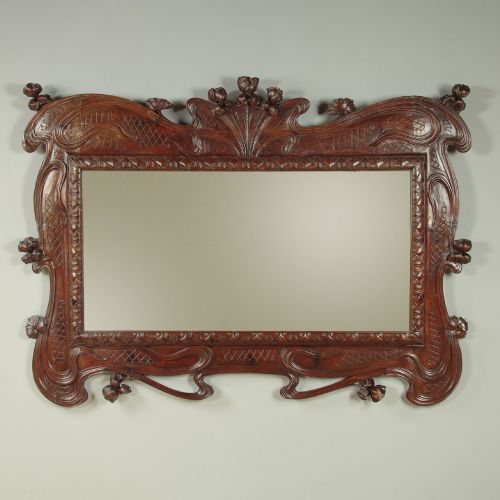
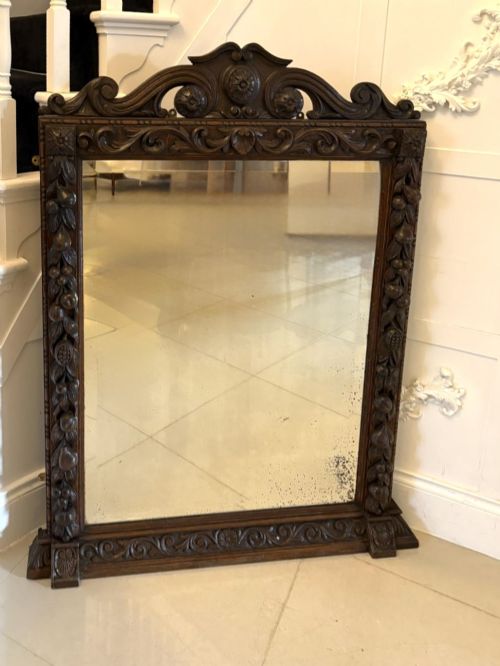
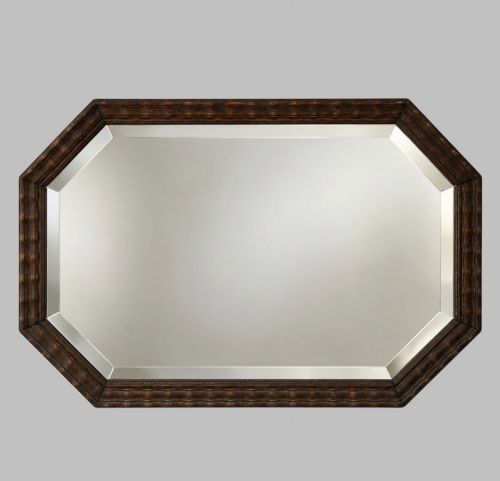
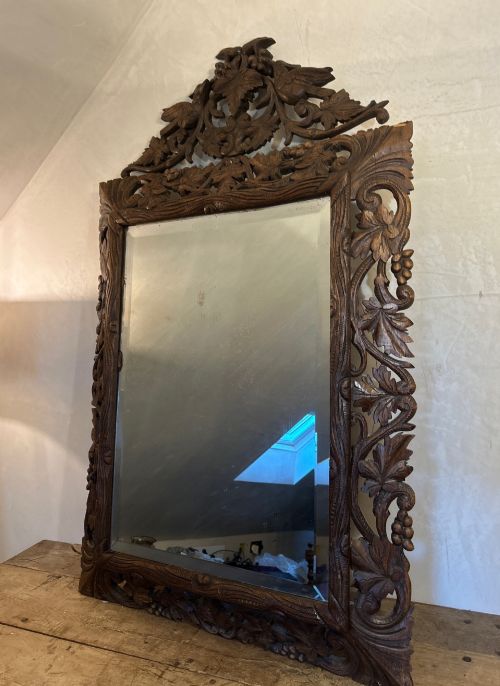


Dark Oak Overmantel
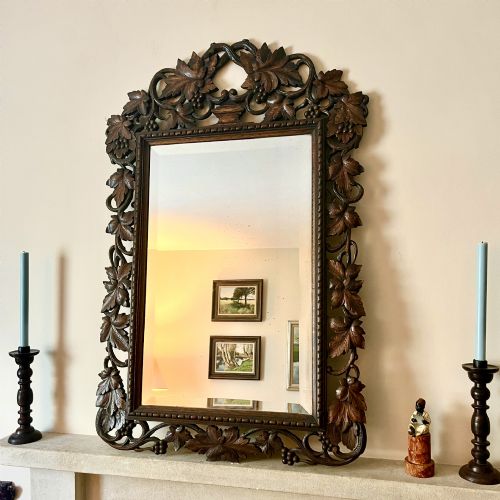
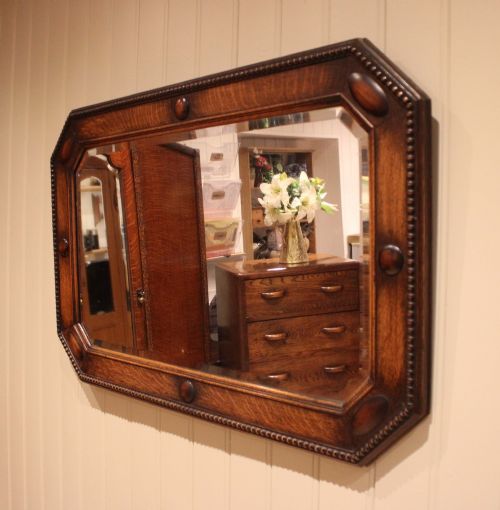
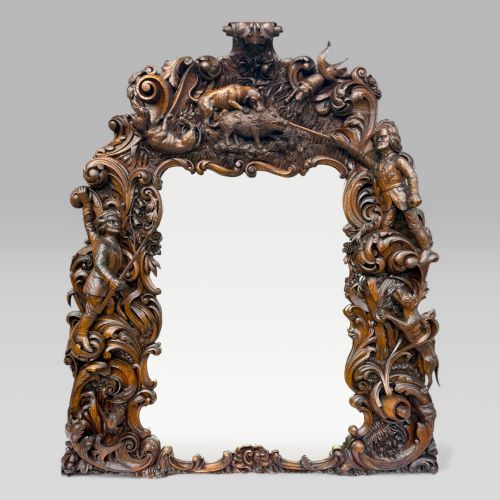
These heavy dark oak overmantel pieces bring architectural presence and deep grain to a chimney breast, grounding a room with substantial woodwork.
Dark Oak Overmantel
A dark oak overmantel serves as a focal point above a fireplace, anchoring the mantelpiece with heavy timber construction and mirrored glass. Buyers seek these pieces to add period character and a sense of architectural permanence to a main reception room.
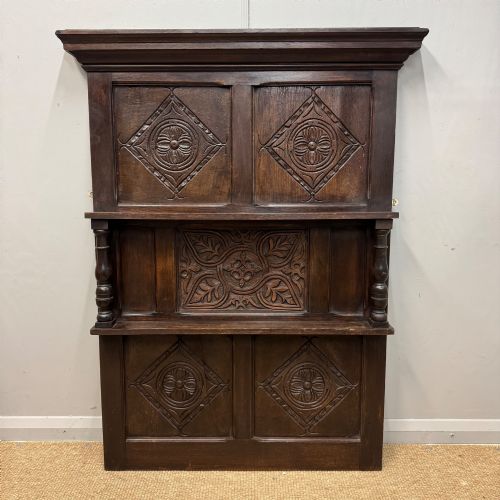
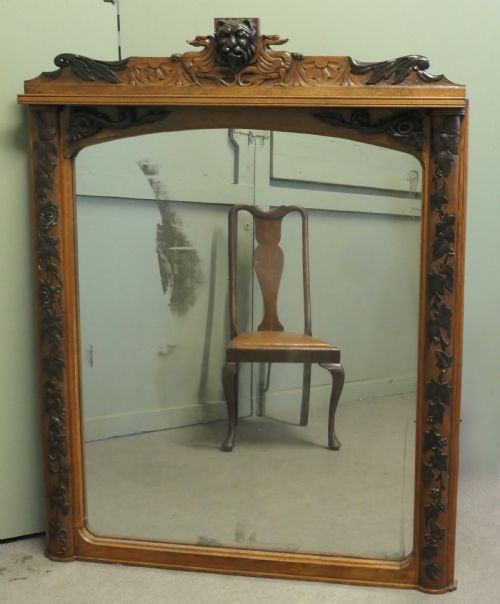
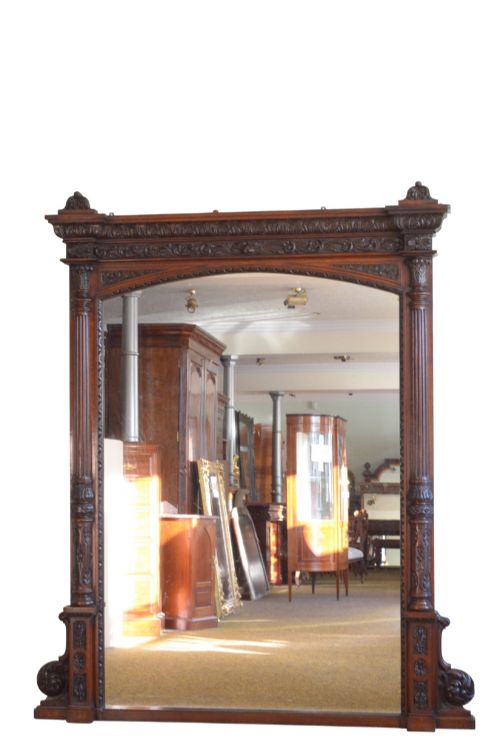
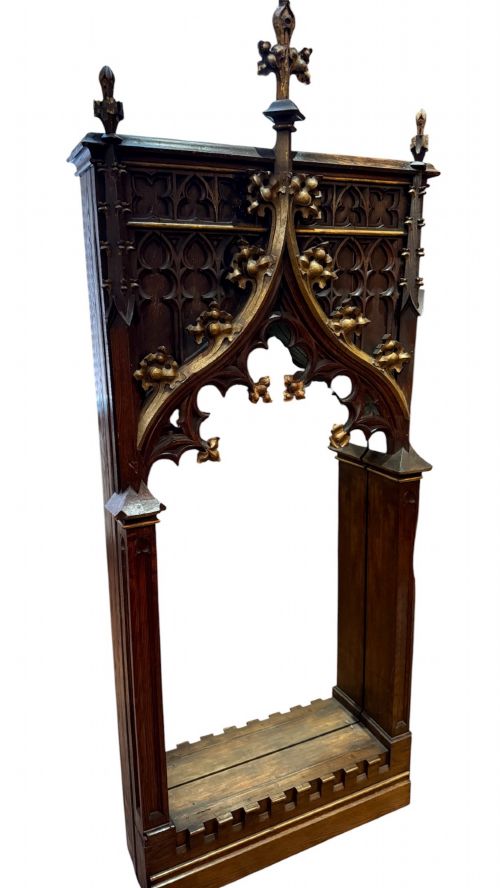
Most examples found here date from the nineteenth century into the early twentieth century, spanning Victorian, Edwardian, and revival styles. Pieces range from simple rectangular frames to heavily carved gothic structures with side columns and crested pediments.
Materials and construction methods
Carpenters built these frames using solid oak, frequently augmented by walnut accents and mirror glass. Timber was selected for its dense grain and capacity to take deep hand-carved relief work.
Joinery combined traditional mortise and tenon framing with applied mouldings and pegged joints to support the weight of large glass plates. Surfaces were polished or waxed to achieve a deep dark lustre that highlights the natural figuring of the wood.
Listings feature oak, walnut, and mirror glass across Victorian, Edwardian, Art Deco, and seventeenth-century periods.
Distinguishing quality in dark oak framing
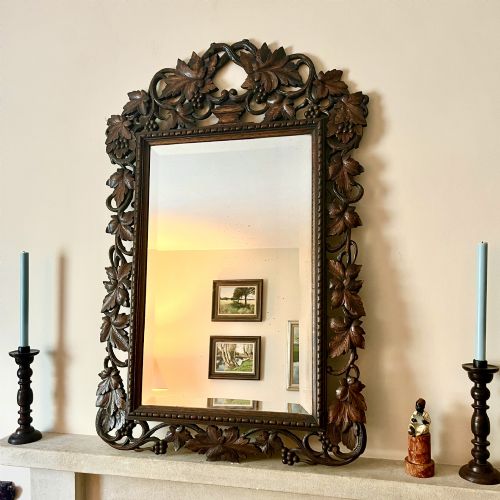
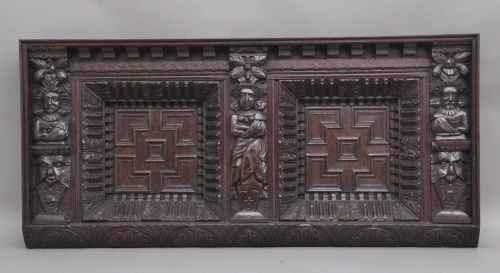
Quality rests upon the depth and crispness of the hand carving rather than simple surface decoration. Superior pieces display undercut foliage, figures, or geometric panels executed with precision by skilled hands.
The architectural integration of the frame defines the higher tier, where side columns, cushion mouldings, and pediments proportion correctly with the central mirror plate. Heavier solid timber construction and original bevelled mirror glass further separate exceptional examples from standard framing.
Waring and Gillow·Old Charm
The Dark Oak Overmantel Glossary
- Overmantel
- A mirror or decorative panel designed to sit directly on the mantelpiece above a fireplace. These large formats often incorporate multiple mirror plates and heavy architectural surrounds.
- Cushion frame
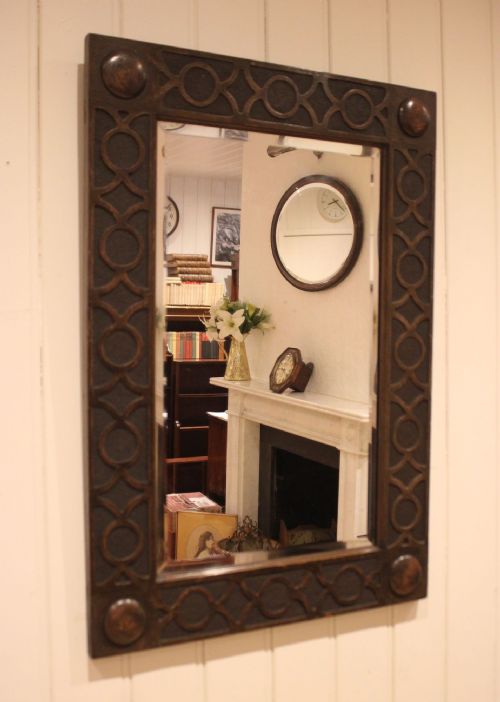
- A framing style where the timber profile swells outward in a convex curve toward the outer edge. This creates a bold, tactile border that catches the light across the oak grain.
- Gothic Revival
- An architectural and decorative style drawing on medieval forms, featuring pointed arches, tracery, and heavy carved motifs. Pieces from this movement display strong vertical lines and ecclesiastical details.
- Bevelled glass
- Mirror glass with an angled, polished edge tapering toward the margin. This technique adds depth and refracts light around the perimeter of the reflection.
- Architectural salvage
- Elements rescued from historic buildings, such as carved panels, friezes, or surrounds, repurposed for modern interiors.
Dark Oak Overmantel: Frequently Asked Questions
How do I secure a heavy oak overmantel to the wall?
Because these oak frames carry significant weight from solid timber and glass, they require direct fixing into masonry or heavy wall studs using appropriate brackets.
Most overmantels also benefit from resting securely on the mantel shelf itself, which bears the primary downward load while wall fixings prevent tipping.
What is the difference between an overmantel and a wall mirror?
An overmantel is specifically proportioned in width and height to sit above a fireplace opening, often featuring horizontal emphasis or architectural detailing like shelves and columns.
Standard wall mirrors are designed for general room placement and lack the specific structural heft required to anchor a chimney breast.
How do I clean and maintain dark oak frames?
Dust the carved woodwork regularly with a soft dry cloth and apply a quality beeswax periodically to nourish the dry timber.
Avoid using modern liquid sprays or silicon-based polishes, which can build up in the intricate recesses of the hand carving and dull the dark finish.
How do I date a Victorian gothic oak mirror?
Examine the timber for hand-cut tool marks on the reverse and check the silvering on the mirror plate for signs of natural oxidation and edge speckling.
Stylistic cues like pointed arch tracery, heavy linenfold panels, and deep chamfered mouldings typically point to the nineteenth-century revival periods.