



Gothic Revival Overmantel
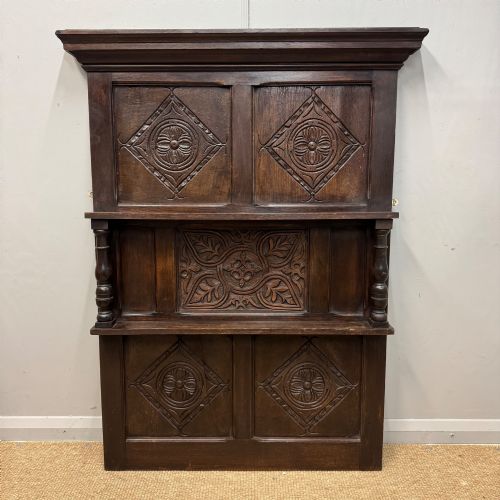
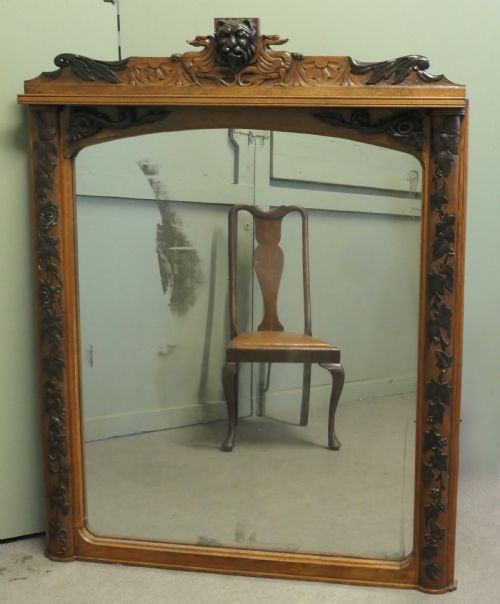
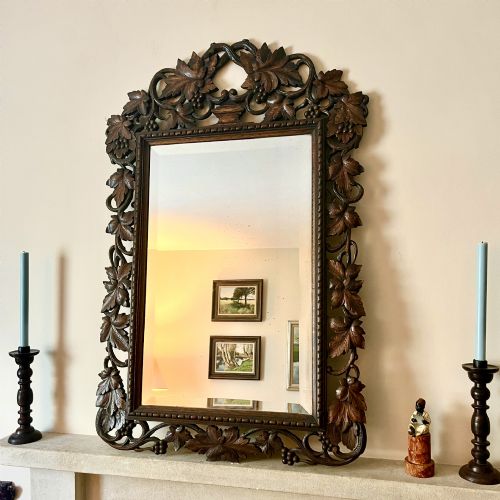
A gothic revival overmantel brings dramatic architectural presence to a room, offering deep carvings and substantial timber frames.
Gothic Revival Overmantel
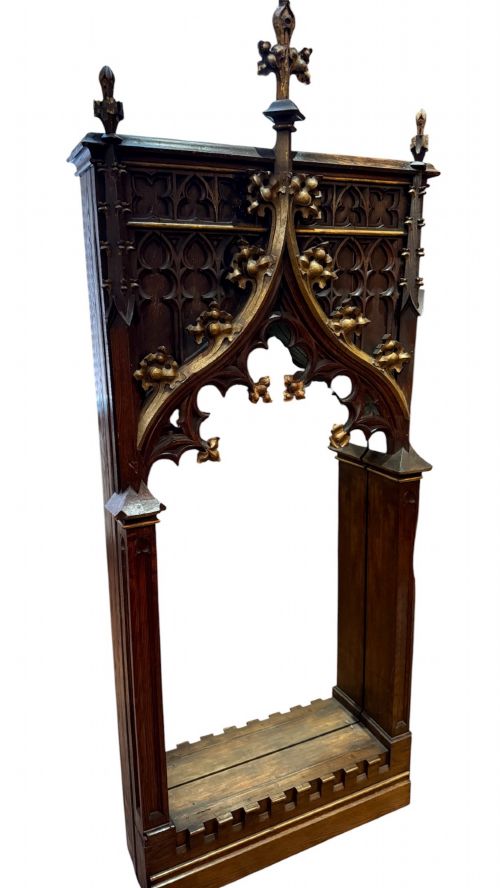
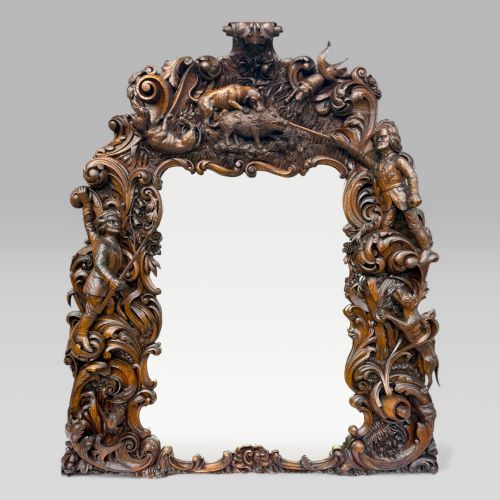
When you search for a gothic revival overmantel, you encounter substantial architectural wall mirrors and carved panels designed to sit above a fireplace. The pieces on this page are predominantly from the nineteenth century, including Victorian examples spanning from the 1860s to the 1880s.
Most entries take the form of large wall mirrors and overmantel mirrors framed in solid timbers. Oak is the most frequent material, accompanied by walnut, mahogany, and occasional giltwood or gesso finishes.
The aesthetic draws heavily on medieval architectural motifs, appearing under styles such as Victorian Gothic Revival, German Historicism, and Arts and Crafts. You will also find related pieces like armorial panels and tryptic mirror arrangements.
Materials and construction
Carpenters and joiners utilised seasoned oak and walnut to build heavy structural frames capable of supporting large sheets of mirror glass. Deep relief carving was executed directly into the timber, employing motifs derived from medieval stone tracery and ecclesiastical architecture.
Mirrored glass was set securely into rebated frames, sometimes complemented by gesso mouldings or gilding on specific decorative elements. Joinery techniques relied on sturdy mortise and tenon construction to ensure the heavy frames remained stable over mantels.
Gothic Revival Overmantel Retail Price Guide 2026
Typical asking prices for gothic revival overmantel among the pieces listed under this phrase on Sellingantiques today, from the lower quarter to the upper quarter. They describe what is for sale here now, not the wider market.
Listings feature nineteenth-century pieces spanning the 1860s, 1880s, and 1890s, alongside later Arts and Crafts examples from 1920.
Factors of quality
The distinction between standard examples and superior pieces rests entirely upon the depth and crispness of the timber carving. Hand-carved mouldings with sharp undercut details represent a higher grade of craftsmanship than shallow machine-cut or pressed ornamentation.
Proportion and timber selection also dictate worth, with dense, figured oak and walnut commanding greater architectural presence. The integration of original mirror glass, free from excessive foxing or modern replacement, preserves the integrity of the piece.
The Gothic Revival Overmantel Glossary
- Overmantel
- A mirror or panel specifically designed to be positioned on the wall directly above a fireplace mantelpiece. These pieces anchor the visual weight of a chimney breast.
- Giltwood
- Timber that has been coated with a thin layer of gold leaf or metallic powder over a prepared gesso ground. This finish catches candlelight and natural illumination.
- Gesso
- A plaster-like mixture applied to wood surfaces to create a smooth base for gilding or to form low-relief decorative mouldings. It allows for intricate surface detail.
- Tryptic
- A piece divided into three panels or mirror sections, typically featuring a larger central pane flanked by two narrower wings. This format provides an expansive field of reflection.
- Armorial
- A design incorporating heraldic coats of arms, crests, or shields carved into wood or rendered in paint. Such panels often denote specific familial lineages or institutional commissions.
Gothic Revival Overmantel: Frequently Asked Questions
Can these mirrors go in modern rooms?
Placing a large architectural mirror above a contemporary fireplace creates a striking contrast between old and new design. The dark timbers and historic motifs ground minimalist interiors and add vertical scale to high ceilings.
When styling modern spaces, allow the carved frame to serve as the primary focal point of the wall. Keeping surrounding decoration restrained lets the architectural qualities of the timber stand out clearly.
How do I clean antique mirror glass?
Clean mirror glass gently using a soft, lint-free cloth and a mild glass cleaning solution applied to the cloth rather than directly onto the glass. This prevents moisture from seeping behind the silvering or rotting the wooden rabbet.
Exercise caution around the edges of antique glass where the silver backing is frequently fragile or degraded. Avoid harsh chemical sprays that can strip historic patination from the surrounding wooden frame.
What defines the Gothic Revival style?
The Gothic Revival draws inspiration from medieval architecture, incorporating pointed arches, trefoils, quatrefoils, and heavy structural timberwork. In nineteenth-century interiors, this translated into imposing furniture and wall pieces that evoked castles and cathedrals.
Pieces from this movement often display a seriousness of form and meticulous attention to historical ornament. They reflect a nineteenth-century fascination with craftsmanship predating the industrial revolution.