
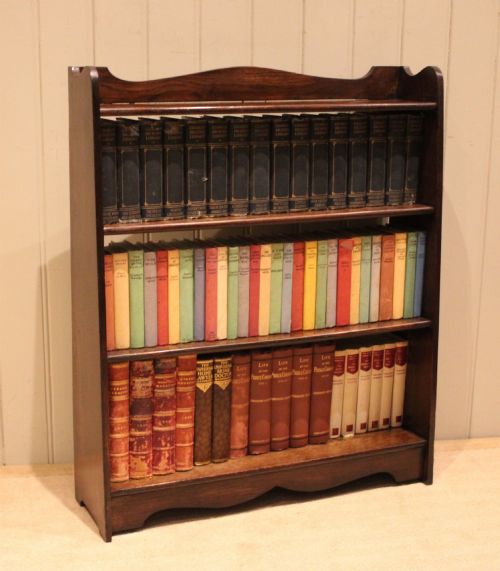
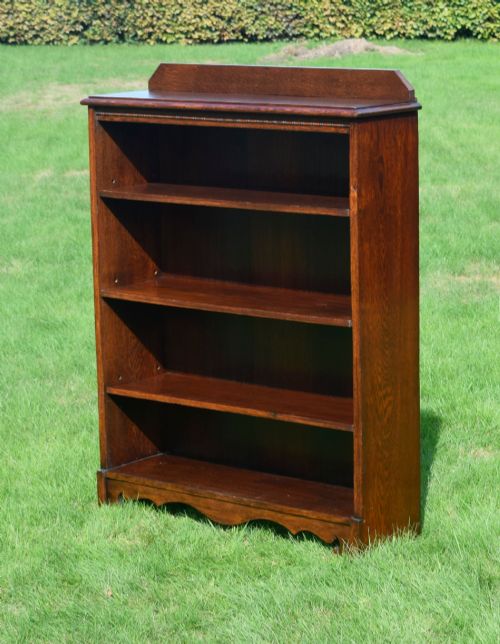
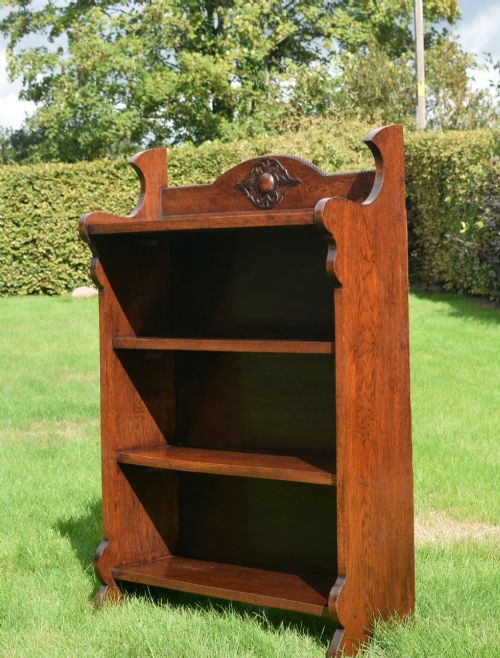
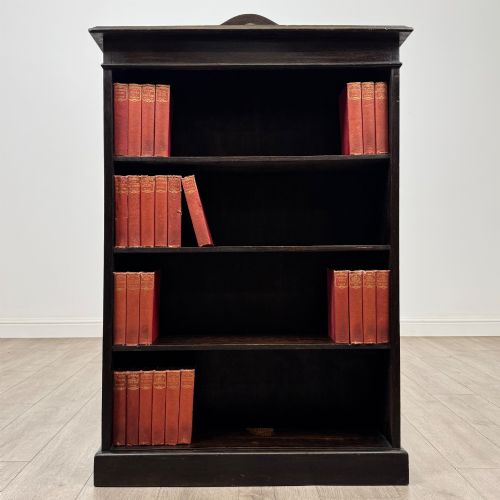
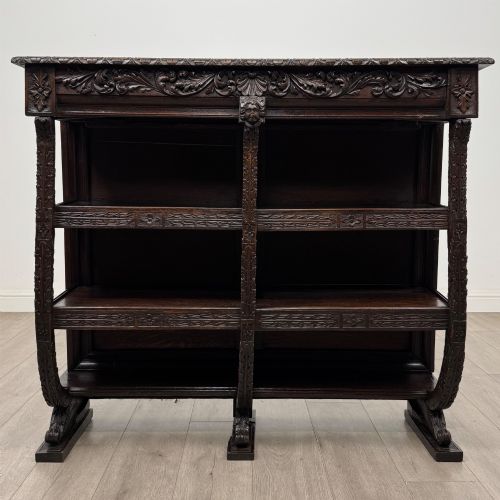
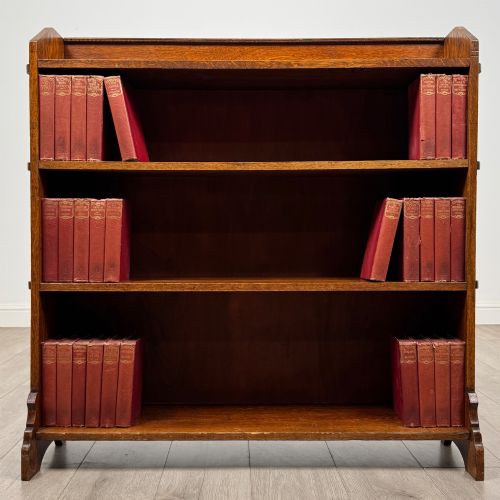
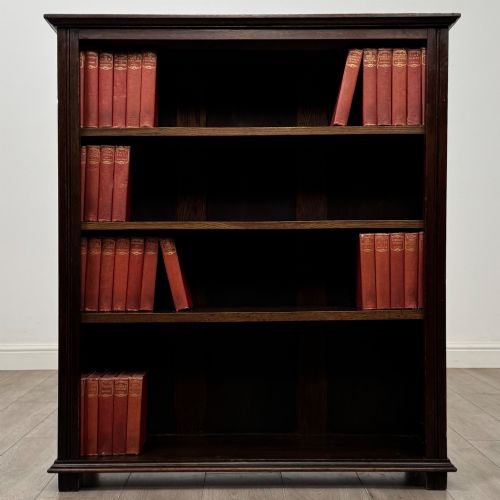
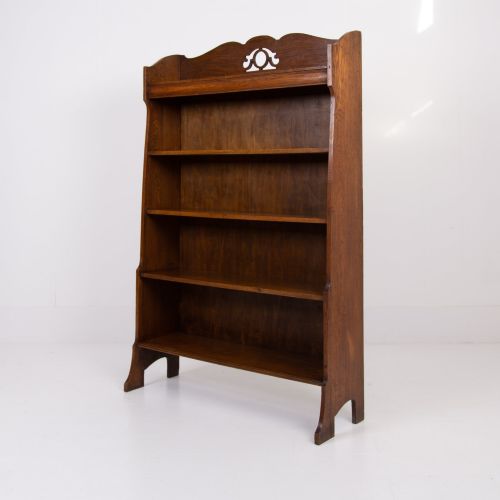
Dark Oak Open Bookcase
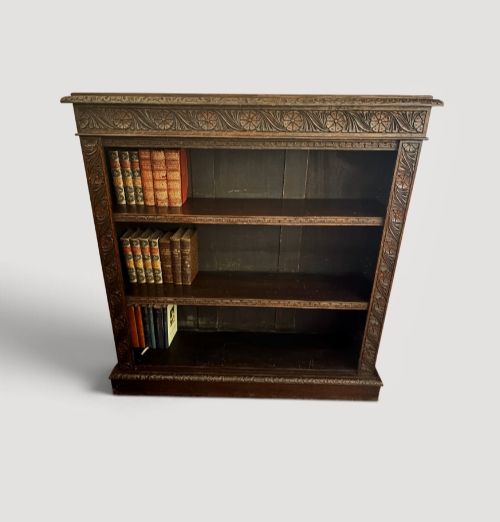
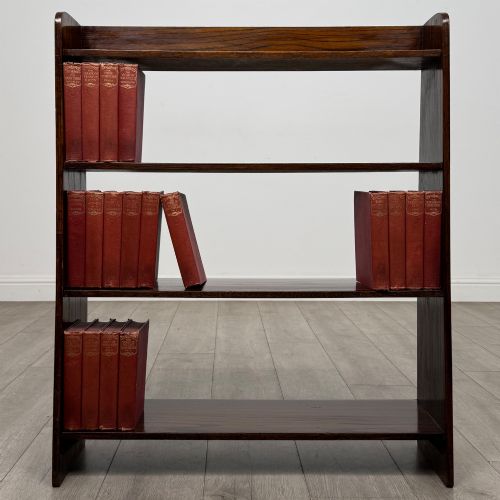
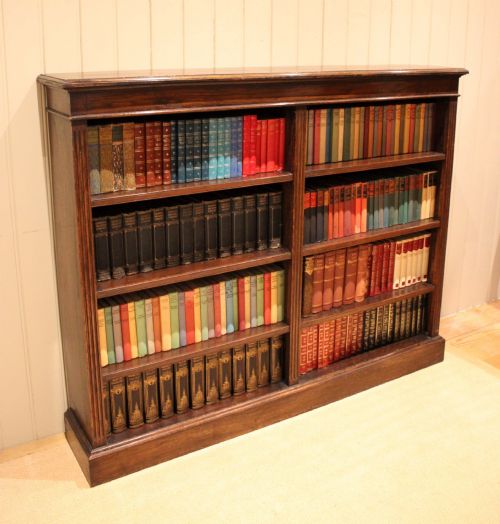
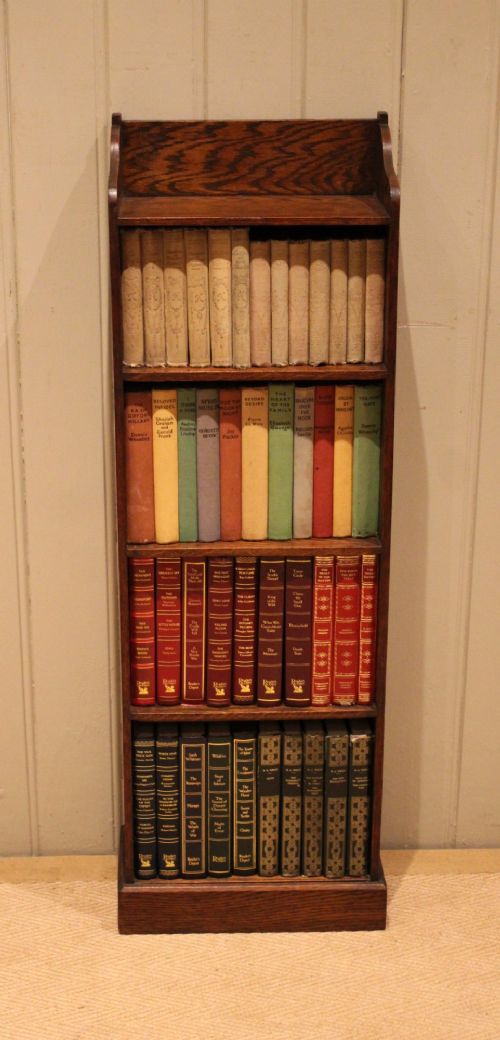
A dark oak open bookcase brings sturdy timber, accessible shelves and deep grain into a room without closing off the walls.
Construction and Materials
Makers constructed these bookcases primarily from solid oak, utilising its natural density and strength to support heavy rows of books. Cabinet makers often applied dark stains, wax finishes, or ebonisation to achieve deep, sombre tones across the timber grain.
Joinery techniques included mortise and tenon frames alongside dovetailed shelf supports, ensuring structural stability without the need for enclosed doors. Metal elements such as brass or iron appear occasionally as handles, brackets, or decorative embellishments on specific styles.
Distinctions in Quality
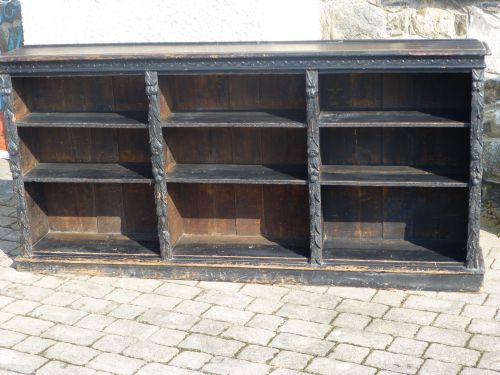
Quality rests on the selection of the timber and the depth of the carving, where pieces showing crisp hand-carved details or Gothic Revival motifs stand apart from plain utility items. Heavier timber scantlings and substantial back panels indicate higher grade workshop production rather than mass commercial output.
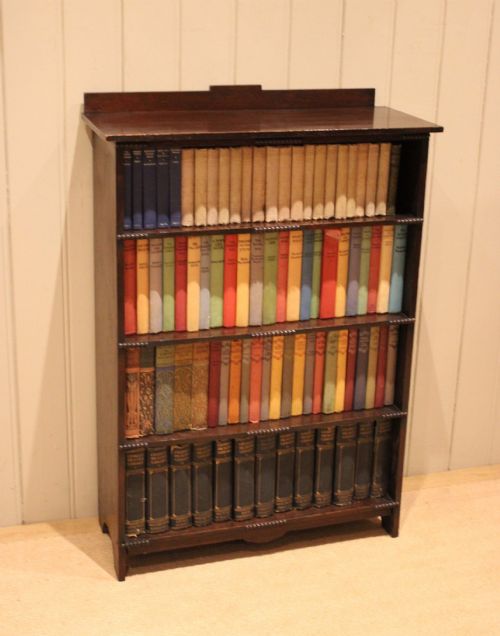
The sophistication of the internal architecture also defines the tier of the piece, with adjustable shelving mechanisms and beaded edge detailing demonstrating superior craftsmanship. Finish condition matters greatly, as original patinated dark surfaces hold more visual depth than later applied coats.
Materials appearing alongside dark oak in these records include brass brackets, iron hardware, walnut accents, and ebonised wood surfaces.
Heals
The Dark Oak Open Bookcase Glossary
- Dark oak
- Timber treated with stains, wax or age to produce a deep, brown or near-black coloration. This finish defines the heavy aesthetic seen across nineteenth and twentieth century British furniture.
- Open bookcase
- A shelving unit lacking doors, designed for the direct display and retrieval of books. These units range from low dwarf models to tall library standing bookcases.
- Arts and Crafts
- A design movement prioritising traditional craftsmanship, visible construction, and simple forms. Pieces from this tradition often display honest joinery and minimal applied ornament.
- Ebonised
- Wood treated with chemical stains or dark pigments to imitate expensive ebony. This technique appears frequently on Victorian and nineteenth-century decorative items.
- Adjustable shelves
- Shelving resting on movable pegs or metal ratchets, allowing the internal height to change. This feature points towards better quality library furniture.
Dark Oak Open Bookcase: Frequently Asked Questions
How do I clean dark oak?
Dust the timber regularly with a soft, dry cloth to prevent grit accumulation in the grain. Apply a traditional beeswax periodically to nourish the wood and maintain its deep lustre.
Avoid using silicone-based sprays or harsh chemical cleaners, as these strip the historic finish and create a greasy film over the dark oak surface.
Can I adjust the shelves?
Many period bookcases feature adjustable shelves supported by wooden pegs, brass pins, or slotted vertical strips. This allows you to alter the interior spacing to accommodate varying book heights.
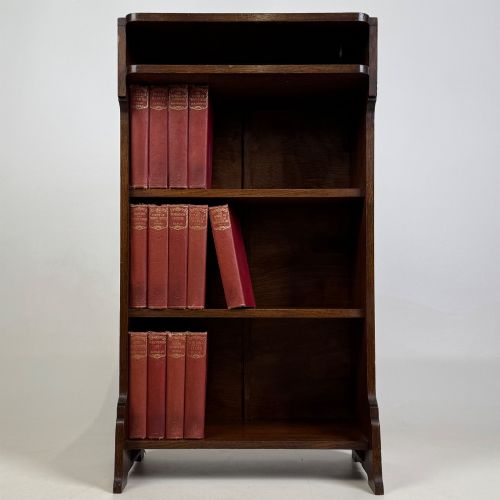
Fixed shelves are also common, particularly in smaller rustic or arts and crafts models where the partitions form part of the structural rigidity.
Where should I place an open bookcase?
Position these units against interior walls away from direct sunlight and strong heat sources. Rapid temperature fluctuations cause oak timber to dry out and split.
Because the back is often exposed or lightly panelled, placing the bookcase where ambient air can circulate behind it helps preserve the condition of the wood.
How do I date a dark oak bookcase?
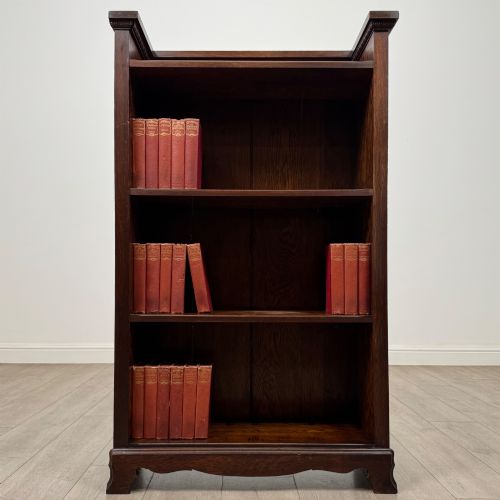
Examine the timber preparation marks, the style of any carving, and the overall construction methods. Victorian and Gothic Revival pieces tend to feature heavy mouldings and deep carved ornamentation, while Edwardian and later examples lean towards simpler lines.
Hardware types and shelf support mechanisms also provide clues, as machine-tooled screws and modern fixings indicate twentieth-century manufacture.