
Dark Oak Monks Seat
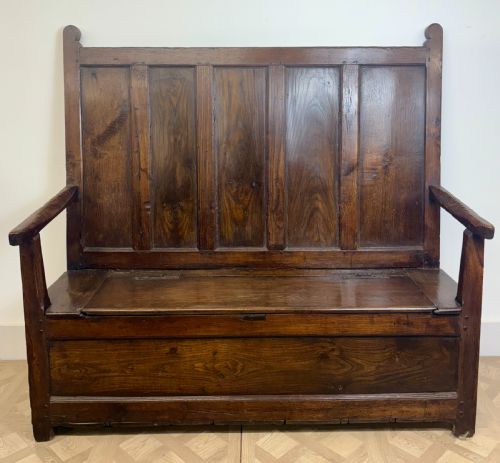
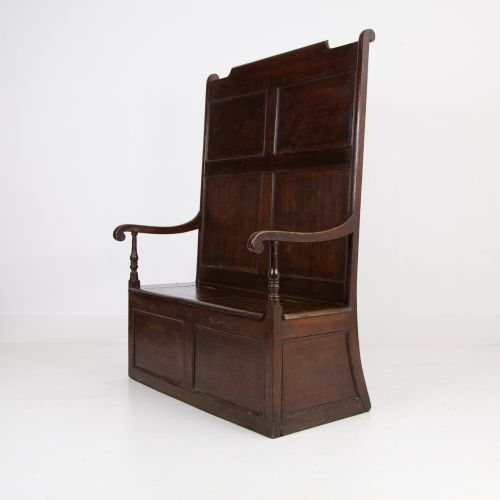
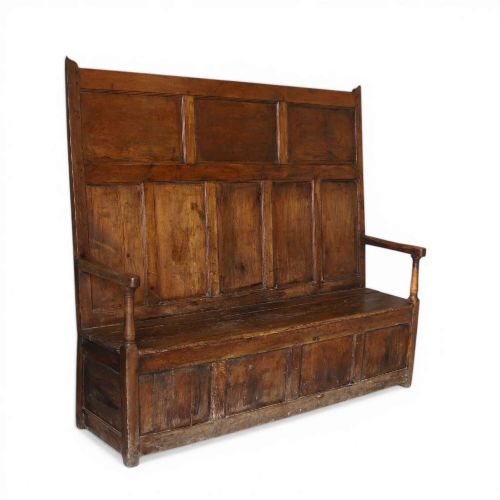
A dark oak monks seat provides versatile seating with a hidden storage box beneath the lift-up lid and a folding top.
Dark Oak Monks Seat
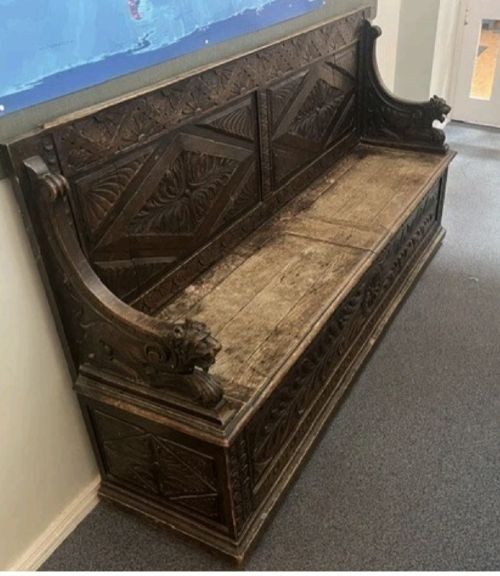
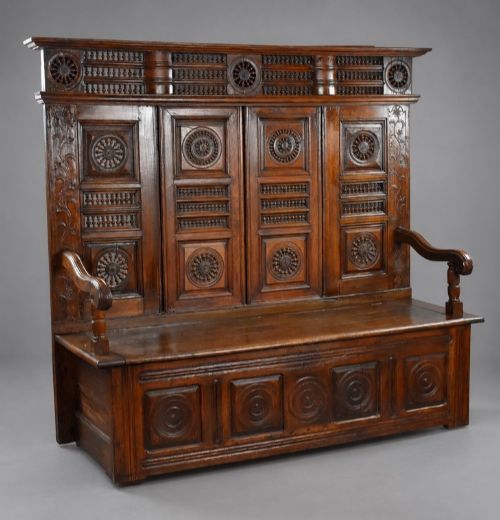
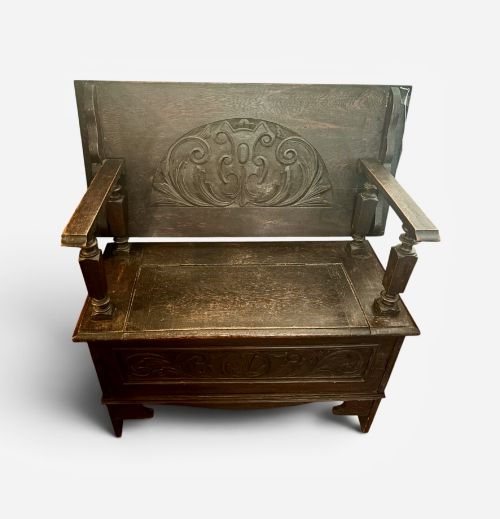
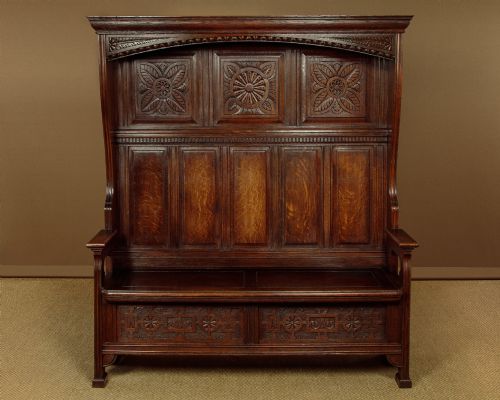
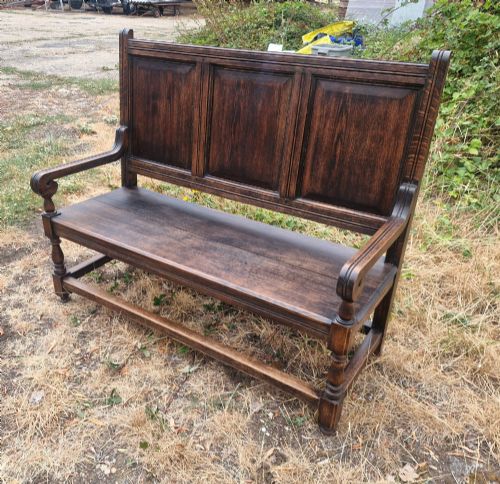
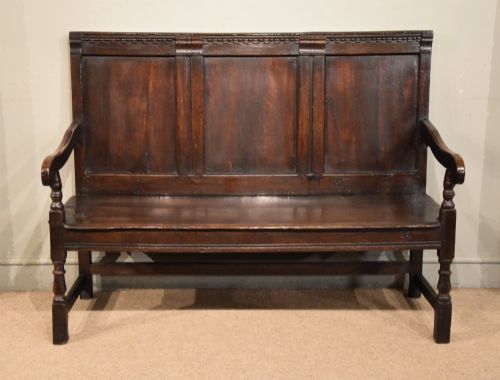
A dark oak monks seat combines a high backrest with a box compartment beneath the seat, offering storage space alongside a bench. Many examples feature a folding top mechanism that transforms the back into a table surface when tilted forward.
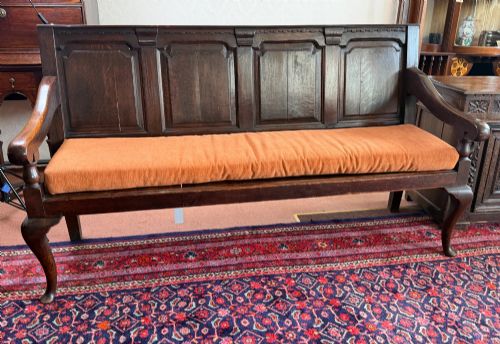
The pieces listed span multiple eras, with Victorian interpretations, 18th-century country house settles, and early 20th-century revivals appearing frequently. These heavy wooden benches serve as practical hallway furniture or fireside seating in traditional interiors.
How they were made
Makers built these seats primarily using solid oak timber, frequently incorporating ash, elm, and iron fixings for structural reinforcement. Panels feature mortise and tenon joinery, whilst hinges and latches rely on forged iron and brass components.
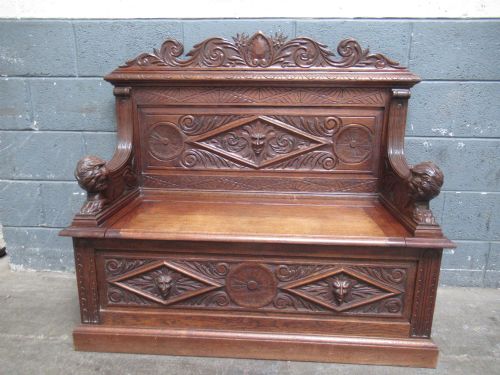
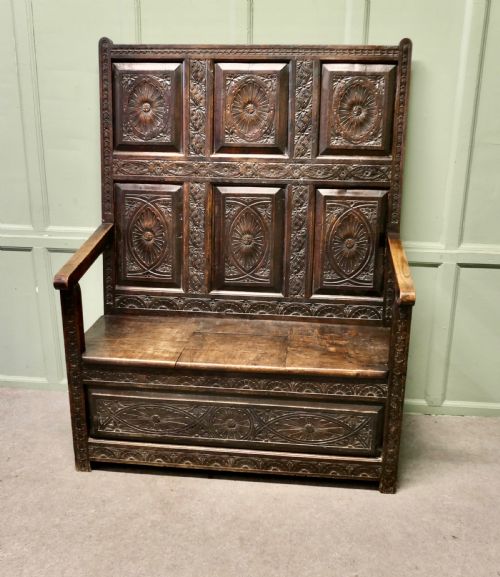
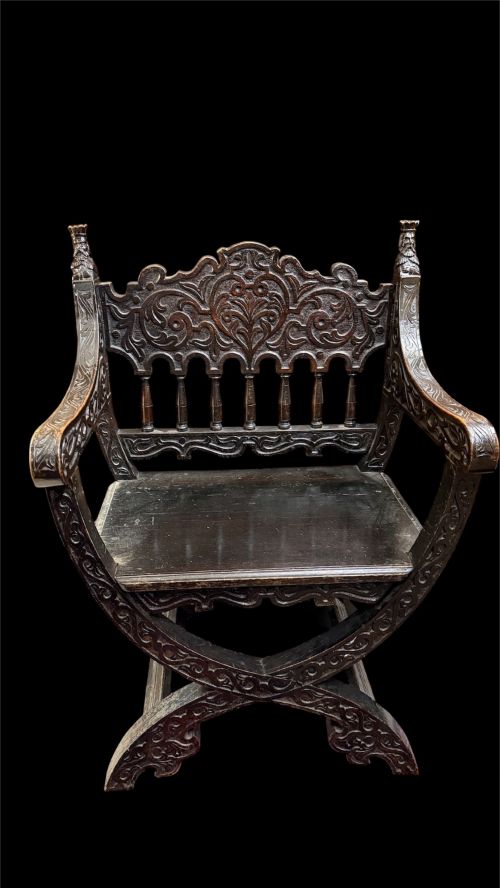
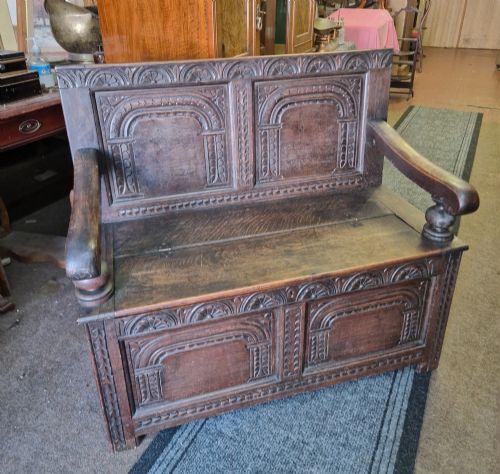
Surface decoration often involves hand carving, with panels displaying geometric strapwork, linenfold patterns, or figurative motifs like the Green Man. Timber surfaces receive traditional wax or polish treatments to highlight the natural grain of the dark wood.
Keep an eye out for grinning Green Man carvings peering out from the backrests.
What varies in quality
The proportion and weight of the timber define the structural integrity, with older 17th and 18th-century pieces displaying denser, deeply aged grain. Later revival pieces range from sturdy country workshop builds to lighter decorative hall seats.
The crispness and depth of the hand carving distinguish standard production work from finer examples. Original working hinges and untouched timber patination elevate the character of individual pieces.
Shapland & Petter·Liberty
The Dark Oak Monks Seat Glossary
- Box settle
- A wooden bench featuring a high back and a box compartment beneath the seat for storage. This form kept drafts away from the sitter in older homes.
- Monks bench
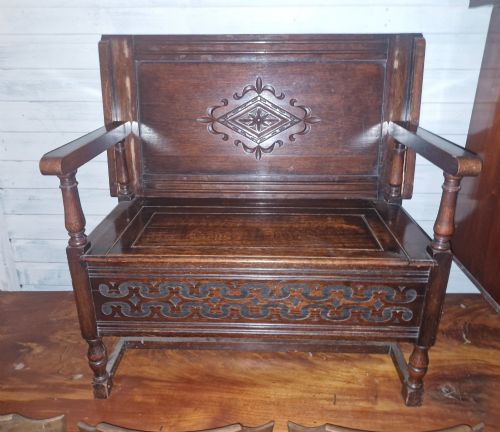
- A dual-purpose piece of furniture with a hinged back that folds down flat to form a table top. It functions as both a seat and a small table.
- Panel-back
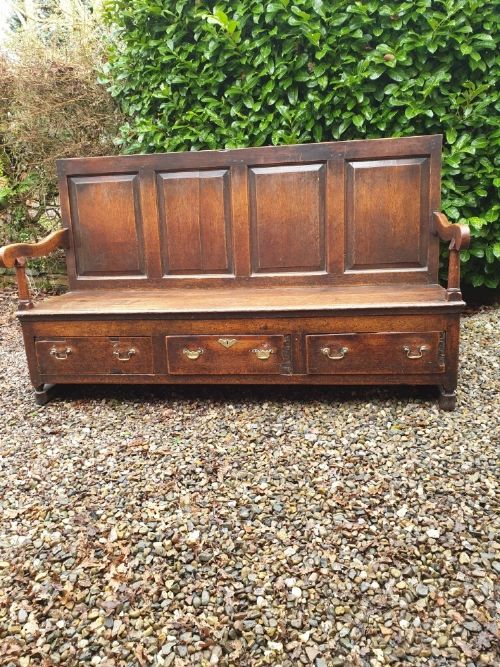
- A backrest constructed from wooden panels fitted within a framed groove. This technique accommodates wood shrinkage over the centuries.
- Mortise and tenon
- A traditional woodworking joint where a protruding tongue fits tightly into a matching cavity. It provides strong, durable connections without reliance on metal screws.
- Patina
- The surface sheen and colour developed by wood through age, handling, and polishing. It signifies the genuine history of an antique surface.
Dark Oak Monks Seat: Frequently Asked Questions
What is a monks bench?
A monks bench is a dual-purpose wooden seat with a hinged backrest that folds forward to create a table surface. It combines seating with a box compartment beneath the lift-up lid for storage.
Historically used in draughty hallways and living spaces, these heavy pieces saved space by serving multiple functions within a single room.
How do I use a dark oak monks seat?
These seats suit entrance halls, boot rooms, and living spaces where hidden storage proves useful for blankets, boots, or household items. The lift-up lid provides easy access to the compartment below.
When fitted with a folding top, the piece can double as a small hall table when not in use for sitting.
How do I tell an 18th-century settle apart from a Victorian revival?
Eighteenth-century examples typically show hand-planed surfaces, pegged joints, and timber that has naturally darkened and dried over centuries of use. Tool marks and structural wear patterns reflect period hand-tool construction.
Victorian and Edwardian revival pieces often utilise machine-sawn timber and feature heavier, stylised carving inspired by earlier Jacobean or Gothic designs.
What woods were used to make these seats?
Oak forms the primary structure for the majority of these benches, chosen for its durability and strength. Secondary timbers such as elm, ash, and sometimes deal appear in internal framing or box bases.
Metal components like iron hinges and brass latches support the moving parts of the folding tops and storage lids.