



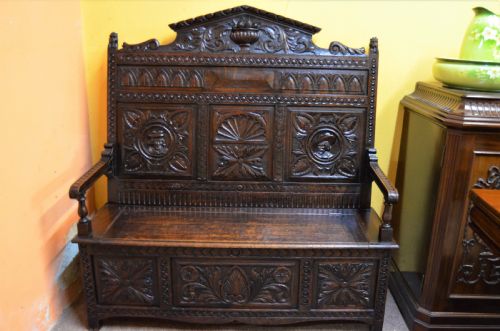
Edwardian Oak Monks Seat
Edwardian oak monks seat pieces combine ingenious folding tables with sturdy hall storage, offering a practical dual-purpose form that anchors a hallway.
Edwardian Oak Monks Seat
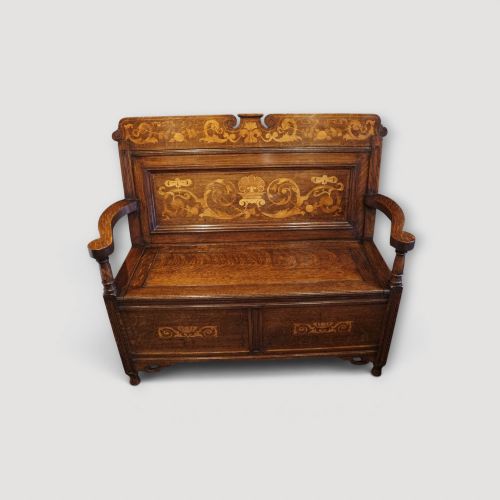
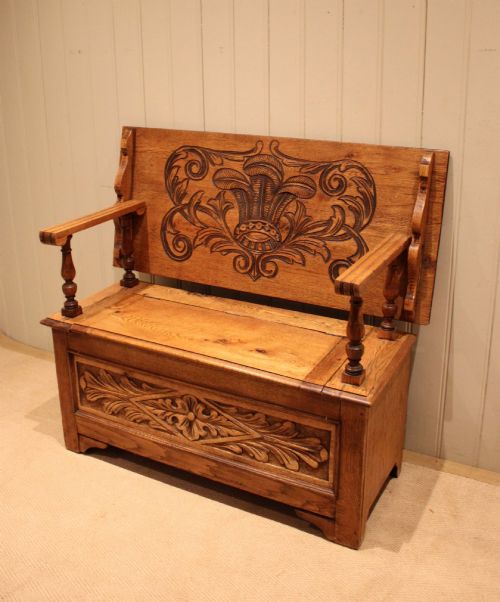
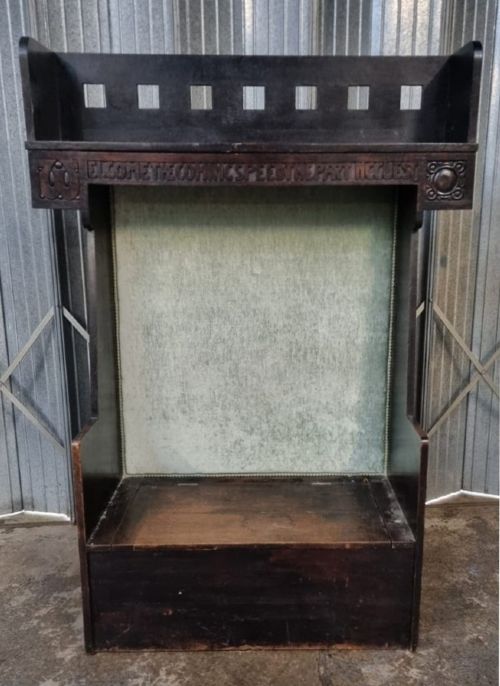
An Edwardian oak monks seat is a versatile piece of furniture designed to serve as a bench and convert into a table, appearing frequently in oak alongside related hall seats and settles. The forms range from simple panelled designs to elaborately carved examples influenced by Jacobean Revival and Arts and Crafts styles.
Buyers seeking these items will encounter pieces spanning the nineteenth century through to the nineteen-thirties, though the Edwardian examples dominate the selection. They function traditionally in entrance halls and corridors, providing both seating and concealed storage beneath the lift-up lid or seat.
Quality and Craftsmanship
The distinction between standard examples and superior pieces rests upon the crispness and depth of the carved ornamentation, as well as the proportion of the timber. Pieces featuring detailed figural or geometric carving executed by hand hold greater presence than those with mechanical or shallow stamping.
Mechanism integrity also dictates worth, since the pivot joints and hinges must align precisely to allow the back to transform smoothly into a table top without binding. The thickness of the solid oak panels and the integrity of the original joints determine how well the structure survives centuries of conversion.
Styles range from Jacobean Revival and Gothic Revival to Arts and Crafts and English Country movements.
Liberty·Shapland and Petter
The Edwardian Oak Monks Seat Glossary
- Monks Bench
- A dual-purpose seating furniture item with a hinged back that folds down flat over the arms to form a table top. This form has roots in medieval history and reappeared strongly during the Victorian and Edwardian revivals.
- Hall Settle
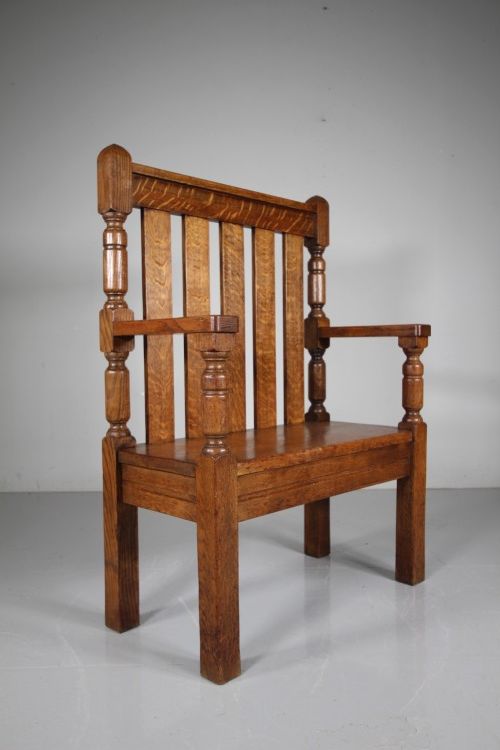
- A high-backed wooden bench, frequently fitted with a box seat for storage, placed in entrance hallways to accommodate visitors. They often feature panelled backs and substantial armrests.
- Jacobean Revival
- A decorative style popular in nineteenth-century and early twentieth-century furniture that imitates the heavy, dark-toned oak and geometric mouldings of the early seventeenth century. It frequently appears on carved panels and turned supports.
- Arts and Crafts
- A design movement valuing hand craftsmanship, simple construction, and the natural qualities of materials over industrial mass production. Pieces from this tradition often display honest joinery and subtle, nature-inspired motifs.
- Gothic Revival
- An architectural and decorative movement that adapts medieval pointed arches, tracery, and heavy quatrefoil motifs into domestic furniture. This aesthetic gives certain oak hall seats a formidable, ecclesiastical appearance.
Edwardian Oak Monks Seat: Frequently Asked Questions
How do I convert a monks seat into a table?
To transform the seat, you release or lift the pivoted wooden backrest upwards and rotate it forward until it rests flat upon the arms. This creates a stable horizontal surface supported by the back of the bench.
Ensure any decorative pins or locking catches are cleared before attempting rotation to prevent straining the original oak pivots and arm joints.
Where should I place a monks seat in my home?
These pieces fit naturally in entrance halls, boot rooms, or large corridors where their dual function as a seat and storage box proves most useful. They also serve well in country house interiors as occasional tables or window seats.
Keep solid oak furniture away from direct heat sources such as radiators to prevent the timber panels from drying out and splitting over time.
How do I tell an Edwardian monks seat from a Victorian one?
Edwardian versions generally display slightly lighter oak tones, cleaner lines, and simpler Arts and Crafts influences compared to the heavier, darker, and more heavily carved Victorian pieces. Victorian examples often lean towards deep Gothic Revival or Jacobean Revival motifs with dense surface ornamentation.
Examining the construction methods and the colour of the oak helps determine whether a piece belongs to the nineteenth or early twentieth century.
What is stored inside the seat compartment?
The box cavity beneath the hinged seat was traditionally used in domestic settings for stowing heavy winter garments, blankets, boots, or walking sticks. It provides deep, concealed storage that keeps hallways tidy.
When lifting the lid, check the age and condition of the original hinges and interior floorboards to understand how the storage space has endured.