
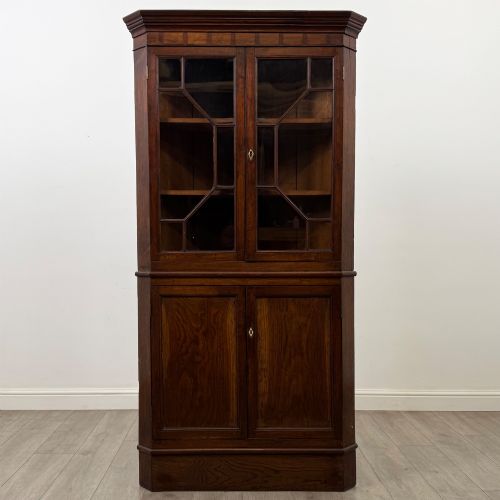
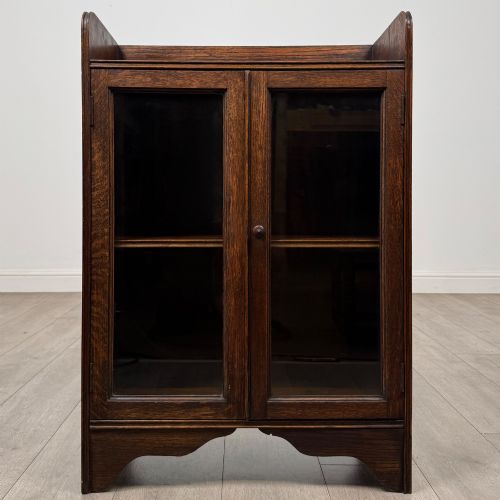
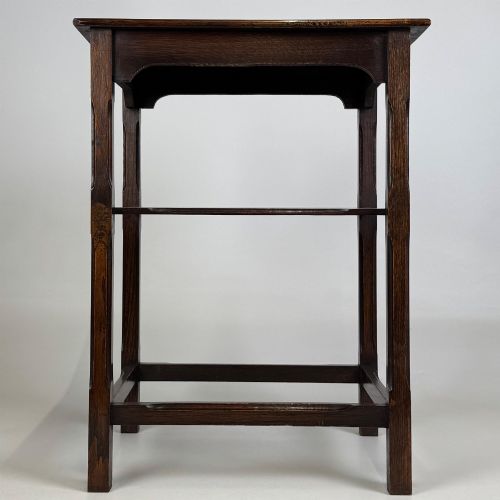
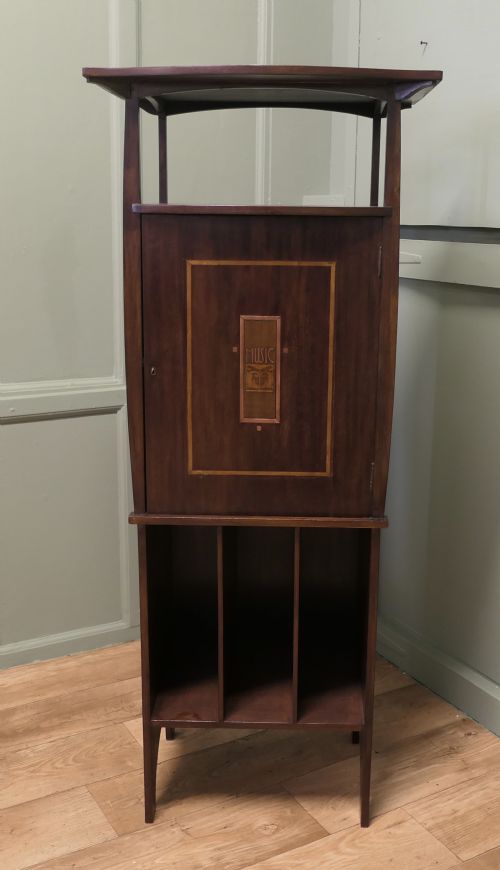
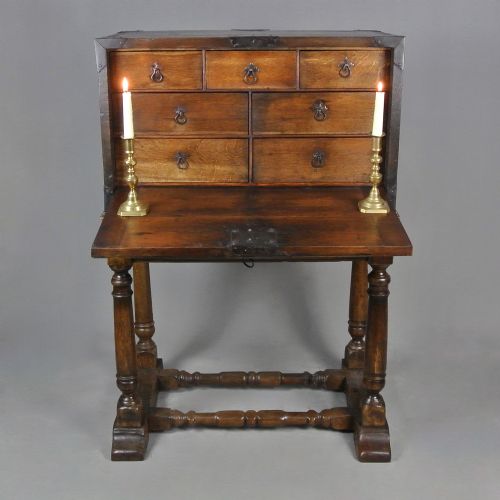
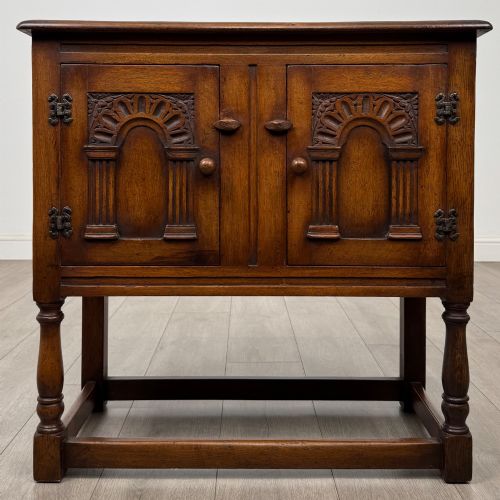

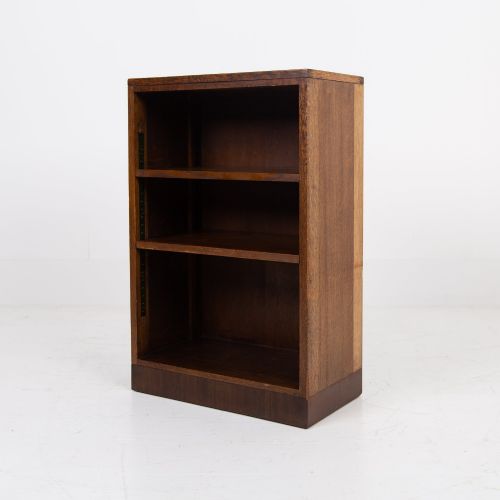
Dark Oak Cabinet on Stand
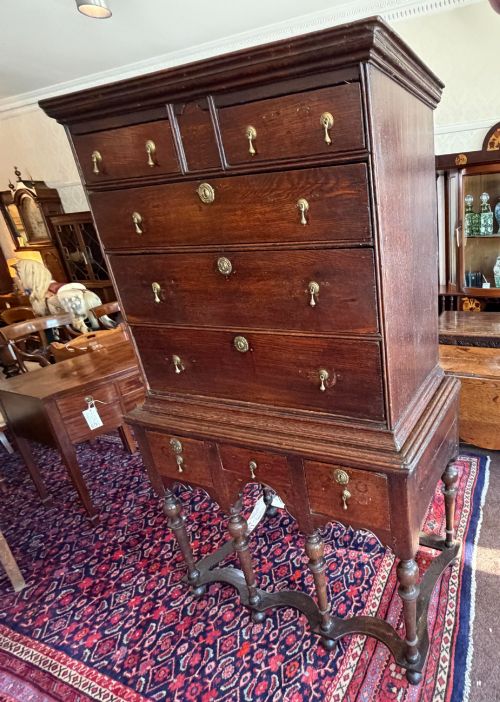
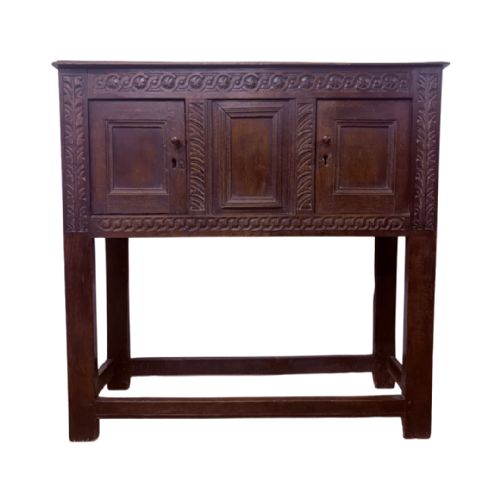
A dark oak cabinet on stand brings sturdy timber and elevated storage into a room, offering both surface presence and compartmental organisation.
Dark Oak Cabinet on Stand
When searching for a dark oak cabinet on stand, buyers examine raised storage furniture that combines a lower support frame with an upper enclosed compartment. These items span periods from the seventeenth century through to later revival movements, displaying substantial timber construction.
The pieces appearing under this category include joined examples from earlier eras alongside Jacobean revival interpretations produced in the twentieth century. Forms range from strong boxes and court cupboards to specialised drawer storage units raised on legs or stands.
Originating primarily from English workshops, these items utilise rich dark oak surfaces that show distinct grain patterns, patination, and period joinery techniques.
Materials and construction methods
Construction relies heavily on solid oak timbers, joined using traditional methods such as mortise and tenon joints to build sturdy frames and doors. Blacksmith-made iron hinges and brass hardware provide functional reinforcement and secure closures on the upper compartments.
Surface finishes emphasise the natural dark tone of the wood through wax polishing and oiling, highlighting the dense grain. Carved decorative elements, moulded cornices, and beaded edges frequently appear on seventeenth-century originals and later revival pieces alike.
Some oak cupboards retain original blacksmith-made locks that still require their heavy iron keys to turn.
Assessing craftsmanship and condition
Quality separates pieces by the integrity of their timber selection and the precision of the original joinery. Superior examples retain their original stands, hardware, and surface patination without extensive timber replacement.
The refinement of hand-carved details and the proportion between the upper cabinet and the supporting stand distinguish master workmanship from standard utility furniture.
GM Elwood for JS Henry·Liberty & Co.
The Dark Oak Cabinet on Stand Glossary
- Joined oak
- Furniture constructed using mortise and tenon frames pinned with wooden dowels rather than glued joints. This method defines seventeenth-century cabinet work.
- Court cupboard
- An enclosed upper storage piece featuring recessed doors or shelves, typically supported on turned columns or a rigid stand. It serves as a traditional display and storage form.
- Jacobean revival
- A nineteenth and twentieth century style that copies the heavy turned legs, geometric mouldings, and dark finishes of seventeenth-century English furniture. It brings historical form into later domestic interiors.
- Chest on stand
- A storage chest elevated on a distinct open frame with legs, raising the main compartment off the floor for easier access.
Dark Oak Cabinet on Stand: Frequently Asked Questions
What is a dark oak cabinet on stand?
A dark oak cabinet on stand is an elevated storage piece consisting of an enclosed cupboard or box mounted upon a distinct base of legs or a frame. These furnishings lift the main compartment to a convenient height while creating an open space beneath.
Such pieces range from seventeenth-century joined examples to later revival interpretations, utilising dense oak timbers and traditional joinery methods.
How were these cabinets used historically?
Historically, these elevated cabinets served to store valuable domestic goods, documents, textiles, or tableware securely above ground level. Raising the main body protected contents from damp stone floors and pests.
The lower stand provided structural support while keeping the storage surface at an accessible height for daily household administration.
How do I distinguish older pieces from later revivals?
Distinguishing period pieces from later revivals involves examining the tool marks, timber shrinkage, and joinery methods. Seventeenth-century examples display hand-riven boards, irregular hand-cut joints, and authentic historic ironwork.
Twentieth-century Jacobean revival items show more uniform machine-sawn timbers, standardised fixings, and cleaner internal construction even when styled to look old.
How do I care for dark oak furniture?
Caring for dark oak furniture requires maintaining a stable indoor humidity and avoiding direct sunlight to prevent the timber from splitting or warping. Regular application of traditional beeswax helps nourish the wood and preserve its deep patination.
Dusting with a dry, soft cloth keeps the carved details and hardware clean without damaging the historic surface.