
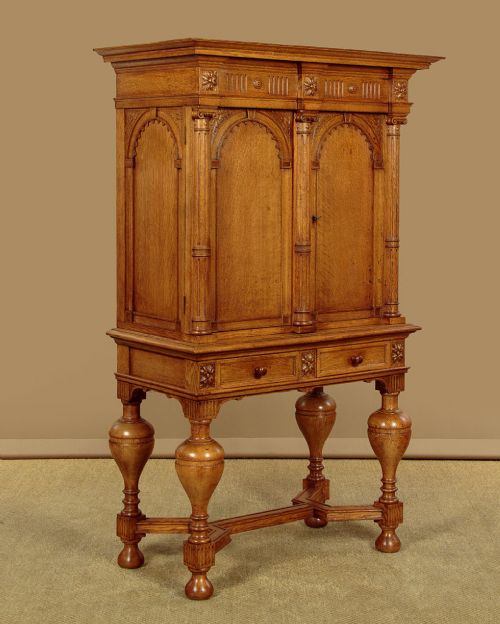

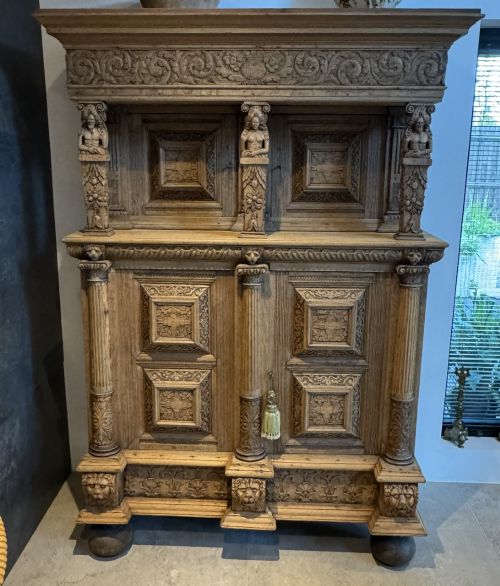


Renaissance Style Carved Cupboard
A renaissance style carved cupboard brings heavy architectural presence and deep historical ornament into a room.
Renaissance Style Carved Cupboard
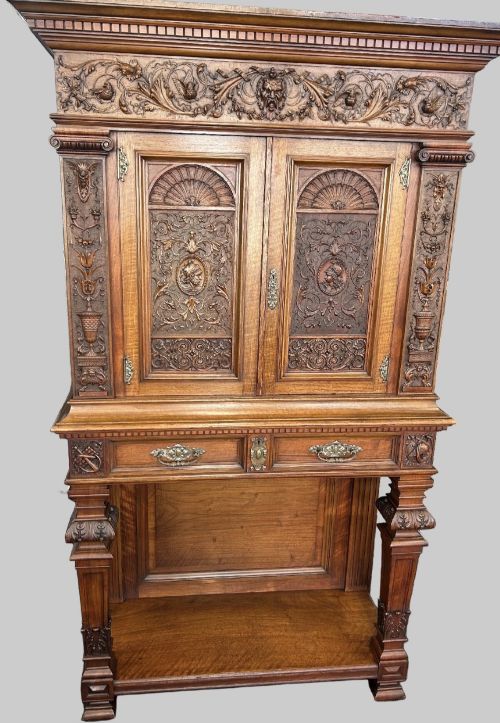
A renaissance style carved cupboard is a substantial storage piece drawing on historical design vocabularies from Italy, France, Flanders, and the Netherlands. Buyers encounter these forms across multiple centuries of production, spanning genuine older examples alongside Victorian and later revival interpretations.
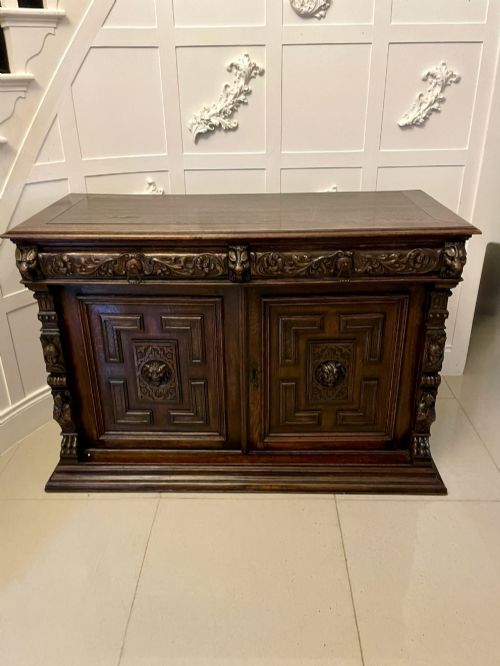
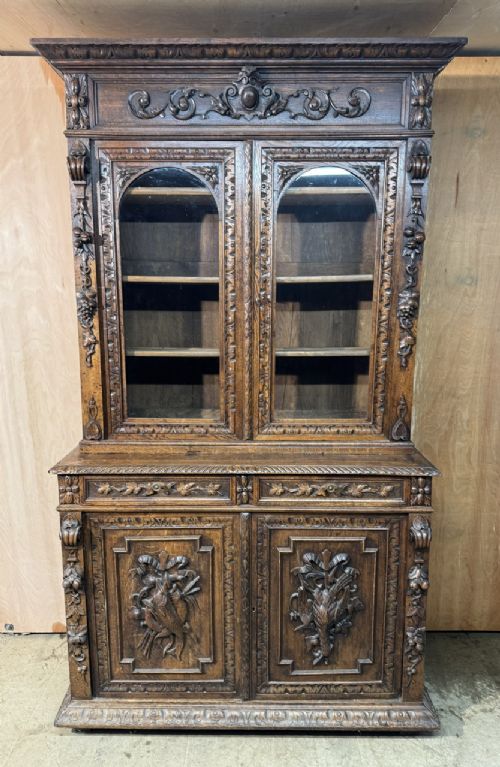
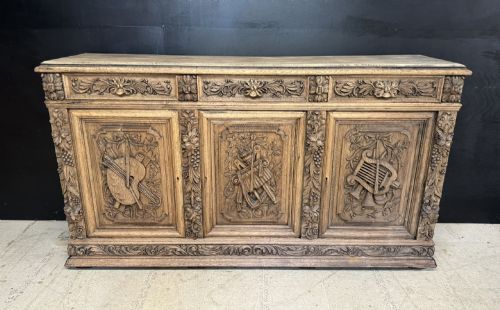
The inventory on this page centres predominantly upon oak and walnut constructions. Forms vary from monumental sideboards and buffets to cabinets on stands and game cupboards, each displaying characteristic relief carving.
Revival iterations from the nineteenth and early twentieth centuries dominate the selection. These pieces appropriate sixteenth and seventeenth-century motifs while serving domestic storage needs in later interiors.
How they were made
Woodworkers built these cupboards primarily using solid oak and walnut, chosen for their strength and suitability for deep chisel work. Master carvers worked directly into the timber to create high-relief panels, figures, and foliage.
Structural integrity relied on traditional joinery methods combined with iron and brass hardware. Glass, marble, and occasionally rosewood appeared in specific revival pieces to add texture and contrast to the primary timber framework.
Materials recorded across the current inventory include solid oak, walnut, rosewood, marble, glass, iron, and brass.
What varies in quality
Depth and sharpness of the hand carving dictate the aesthetic tier of a renaissance style carved cupboard. Crisp, undercut foliage and expressive figural work separate superior examples from mechanical or shallow relief decoration.
Timber selection and structural proportion govern the lasting architectural weight of the piece. Dense, well-figured oak or walnut with balanced cabinetry represents the upper standard of the craft.
The Renaissance Style Carved Cupboard Glossary
- Renaissance Revival
- A nineteenth-century movement drawing inspiration from the art and architecture of the fifteenth and sixteenth centuries. It heavily influenced nineteenth-century cabinet makers.
- Cabinet on Stand
- A primary storage box elevated on a distinct supporting framework or legs. This form lifts the main decorative panels closer to eye level.
- Buffet
- A sideboard or low cupboard traditionally used for food storage and serving. These pieces often feature tiered surfaces and heavy lower doors.
- Relief Carving
- Sculpture in which figures and ornamentation project from a flat background. This technique defines the surface decoration of revival storage furniture.
- Flemish Baroque
- An ornate artistic style originating in Flanders during the seventeenth century. It emphasises movement, drama, and lush natural motifs.
Renaissance Style Carved Cupboard: Frequently Asked Questions
How do I clean a carved oak cupboard?
Dust regularly with a soft, dry brush to prevent dirt settling into the deep recesses of the carving.
Apply a microcrystalline wax sparingly once or twice a year to nourish the timber without building up a sticky residue.
Where should I place a heavy sideboard?
Position the piece against a structurally sound wall away from direct heat sources and strong sunlight. These cabinets require stable conditions to protect older timbers from warping.
Allow enough clearance around the doors and drawers for comfortable operation in your room.
What is the difference between revival and period pieces?
Period pieces originate from the original historical era of the style, whereas revival pieces are later interpretations created centuries afterward.
Nineteenth-century makers frequently adopted these historical aesthetics for contemporary homes while utilising prevailing workshop technologies of their own time.
How do I identify walnut versus oak?
Oak exhibits a coarser grain with visible medullary rays, often showing a lighter golden or medium brown tone. Walnut presents a smoother, darker grain with richer chocolate hues.
Both timbers responded well to the deep chisel work demanded by revival furniture makers.