
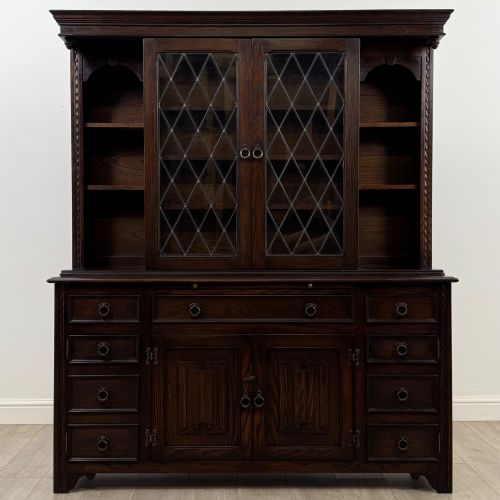
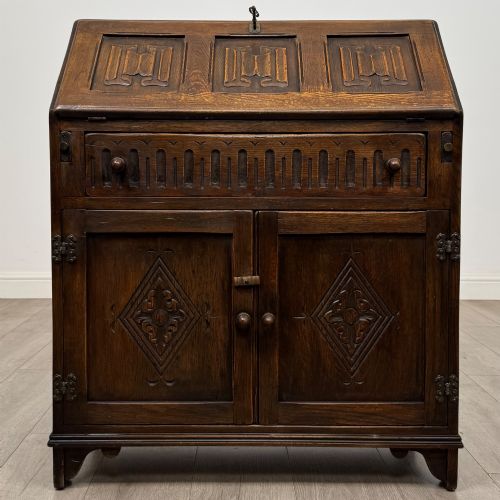
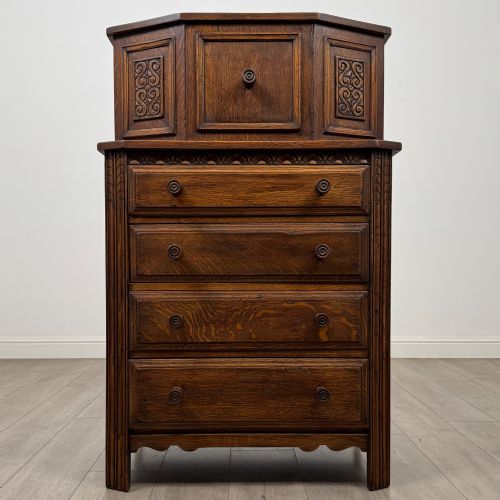

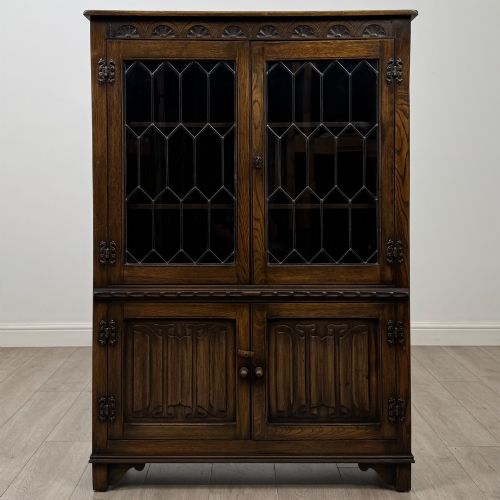
Jacobean Carved Oak Cabinet
A jacobean carved oak cabinet brings dense timber and traditional joinery into a room, offering sturdy storage rooted in centuries of furniture design.
Jacobean Carved Oak Cabinet
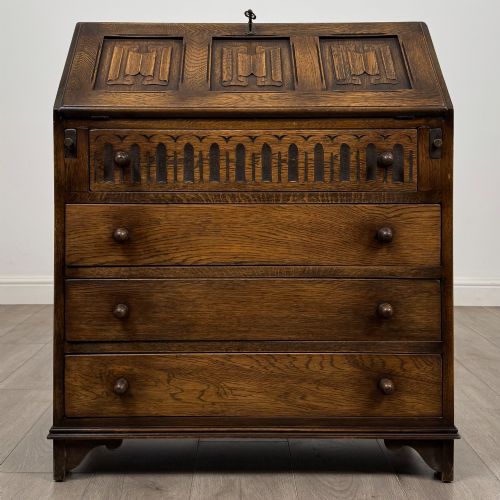
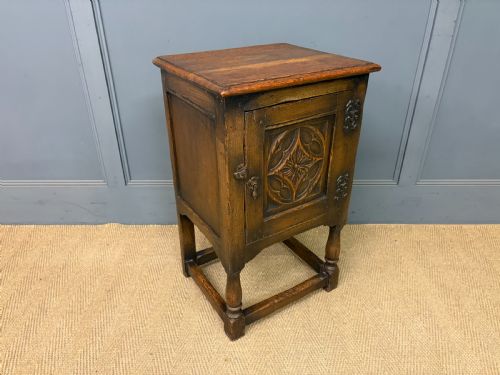
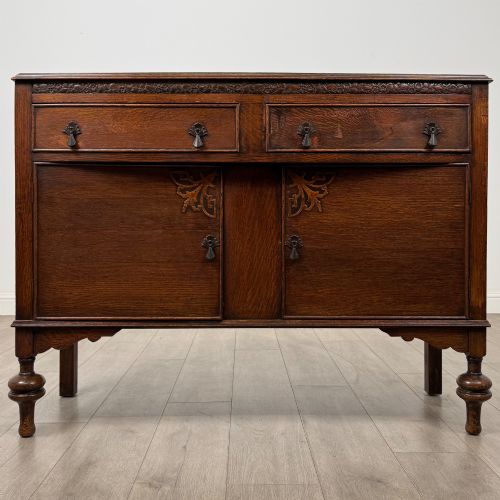
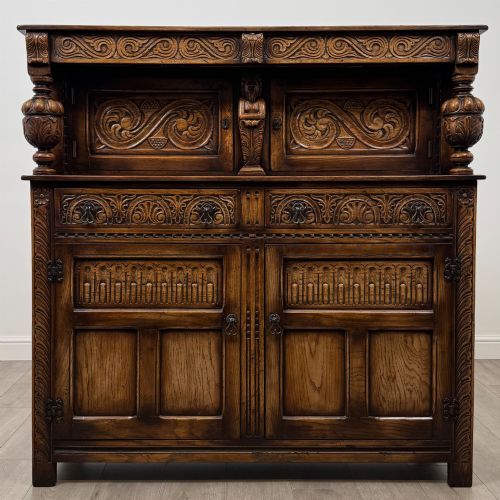
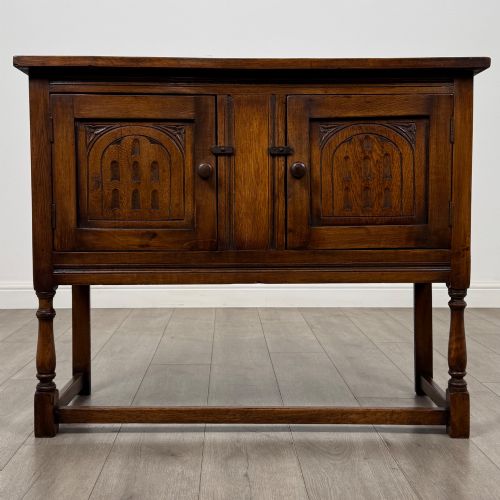
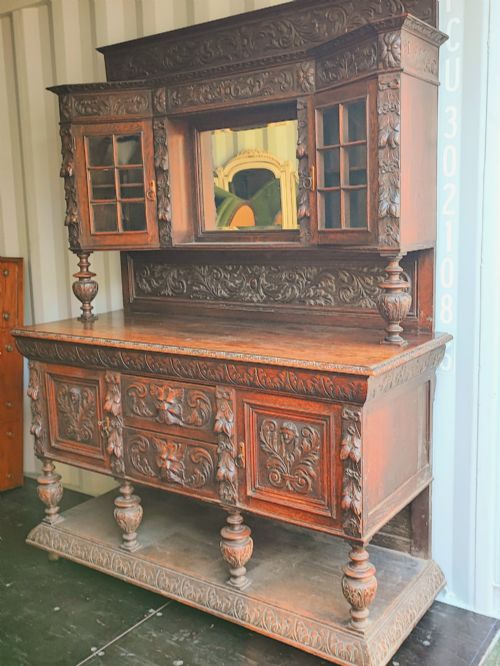
A jacobean carved oak cabinet encompasses sturdy cupboards, sideboards, and court cupboards designed for storage and display. The pieces span genuine seventeenth-century examples alongside later revival interpretations from the Victorian and Edwardian eras.
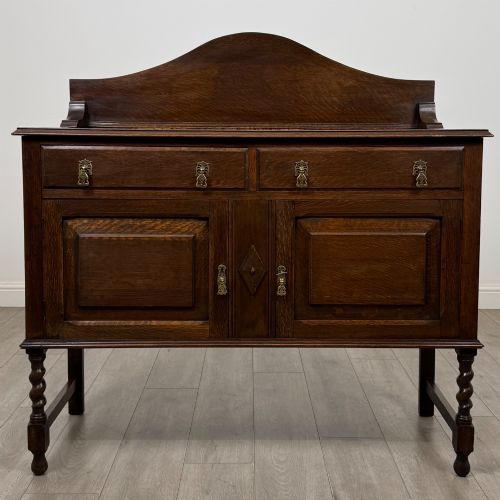
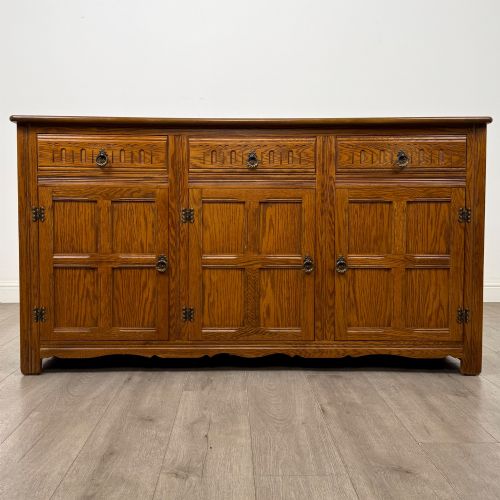
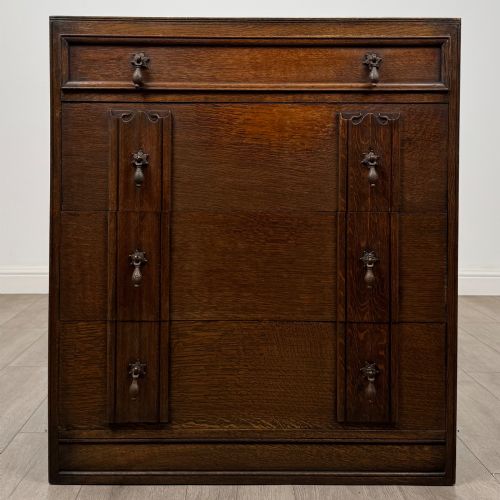
Buyers meeting these items on this page will most frequently encounter Edwardian and twentieth-century revival pieces modelled on earlier forms. These later interpretations often utilise traditional motifs such as linenfold panels, geometric mouldings, and barley twist supports.
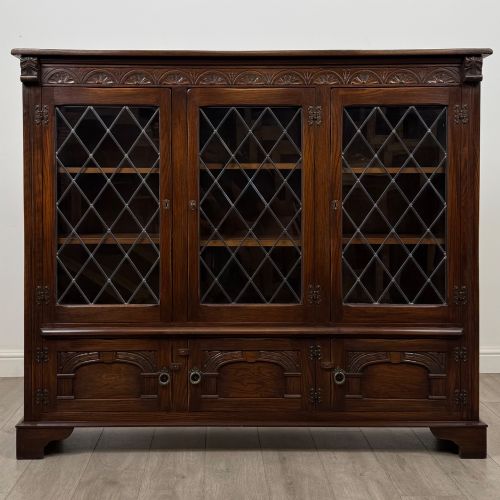
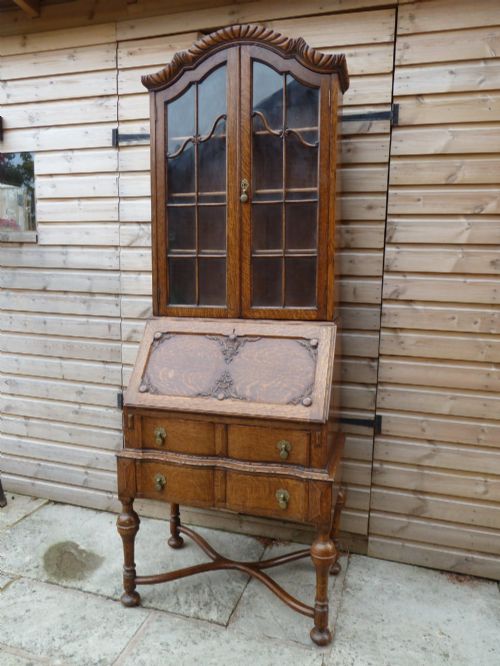
Original seventeenth-century examples appear alongside nineteenth-century Gothic and Tudor revivals to form a varied selection. Forms range from wall-hanging display cabinets and corner cupboards to large sideboards and bureau bookcases.
How They Were Made
Makers built these pieces primarily from solid oak, utilising joined construction methods that allowed the heavy timber to expand and contract naturally. Iron and brass hardware, including strap hinges and drop handles, secured doors and drawers.
Surface decoration relied heavily on hand carving, creating panels adorned with floral patterns, geometric strapwork, and linenfold textures. Glass panels and mirror inserts appeared in later display variants, while lead secured window glazing in specific cabinet doors.
The listings combine seventeenth-century joined oak with Edwardian revival cupboards, showcasing centuries of cabinet-making styles in solid oak and brass.
What Varies in Quality
The depth and crispness of the hand carving distinguish finer examples from simpler production pieces. Crisp relief work on panels and mouldings demonstrates superior workshop skill compared to shallow or mechanical stamping.
Surface finish and material selection create significant distinctions across the range. Pieces retaining untouched original patination on solid timber sit at an advantage over heavily refinished or composite constructions.
The Jacobean Carved Oak Cabinet Glossary
- Court cupboard
- A heavy, multi-tiered sideboard or storage piece common in seventeenth-century interiors. These items often feature enclosed upper and lower sections supported by carved posts.
- Linenfold
- A carved wood panel motif resembling folded cloth. This decorative technique appears frequently on cupboard doors and chest fronts across revival periods.
- Barley twist
- A turned column resembling a spiral rope. Furniture makers utilised this decorative turning extensively for legs and structural supports during the seventeenth century and subsequent revivals.
- Geometric moulding
- Raised wooden profiling applied to drawer fronts and door panels in repeating geometric patterns. This technique added depth and architectural structure to case furniture.
- Joined oak
- Construction utilising mortise and tenon joints secured with wooden pegs rather than metal nails. This traditional method formed the structural skeleton of early storage furniture.
Jacobean Carved Oak Cabinet: Frequently Asked Questions
Where were these cabinets placed originally?
Early examples stood in the principal rooms of large houses to store textiles, silver, and dry goods. They functioned as central storage units where household valuables remained locked away.
Later revival versions moved into dining rooms and halls of twentieth-century homes. Their sturdy surfaces and shelved interiors suited the display of ceramics and the storage of tableware.
How do I spot a later revival piece?
Revival pieces often display machine-cut timber marks, lighter weight, and standardised hardware fittings. Makers working in the Victorian and Edwardian eras adopted seventeenth-century styles while utilising contemporary workshop techniques.
Examine the backboards and interior linings for machine saw marks and uniform thickness. These indicators separate nineteenth- and twentieth-century interpretations from genuine seventeenth-century joined furniture.
What is linenfold carving?
Linenfold is a decorative panel carving designed to mimic folded vertical fabric. Craftsmen carved this texture directly into solid oak boards to add surface interest to cabinet doors.
This motif gained popularity in the Tudor period and returned during Edwardian revival phases. It provides a distinct textural element on chests and cupboards.
How should I care for solid oak furniture?
Solid oak responds best to stable indoor humidity and protection from direct heat sources. Applying natural beeswax occasionally maintains the surface sheen without building up heavy chemical layers.
Avoid placing these heavy timber items near radiators or in damp spaces. Proper climate control prevents the wood from splitting and preserves the original patination.