



Geometric Panel Cupboard
A geometric panel cupboard brings structural depth and rich timber grain to an interior.
Geometric Panel Cupboard
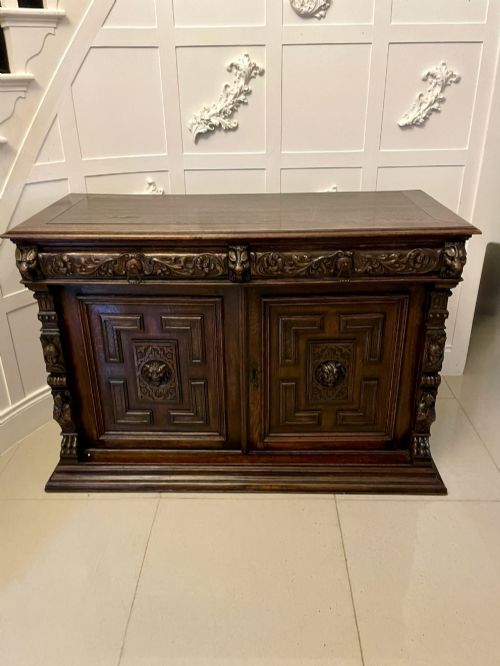
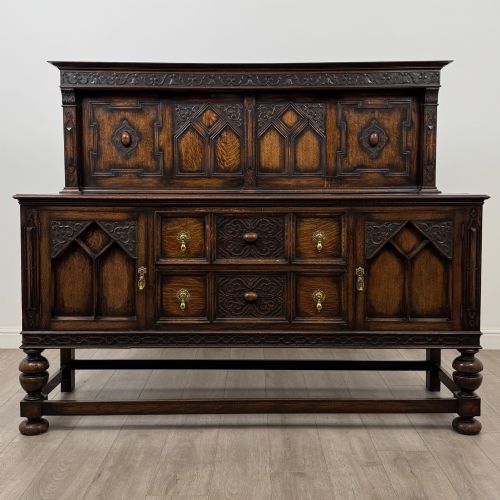
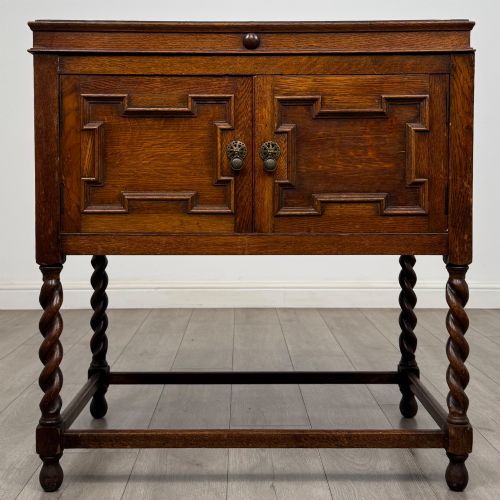
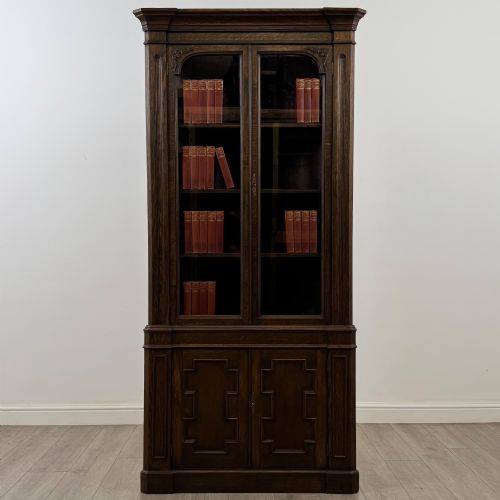
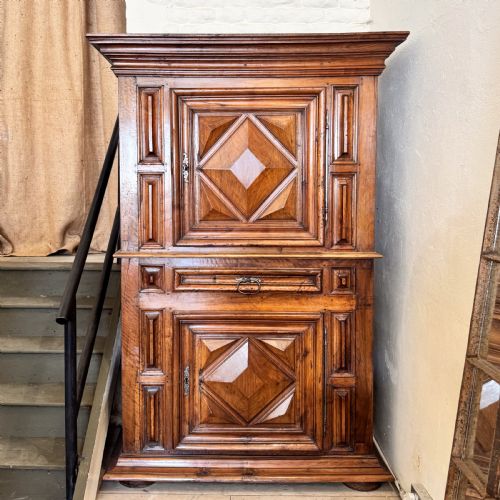
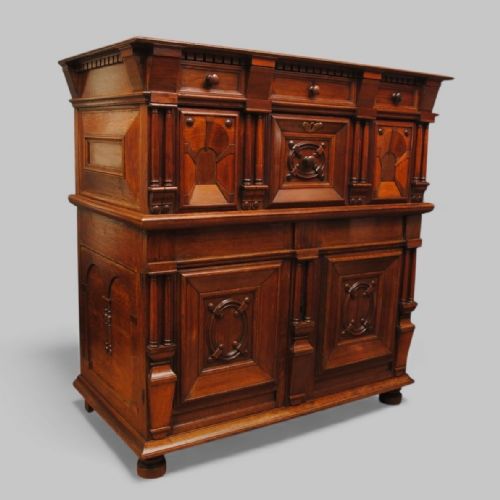
A geometric panel cupboard provides sturdy storage through framed doors and drawer fronts arranged in repeated polygonal or rectilinear patterns. These pieces emerge in formats such as sideboards, side cabinets, dressers, and corner cabinets across several centuries.
The versions most frequently met on this page span the 17th century through the Edwardian period, heavily featuring Jacobean style revivals in solid oak. They range from compact table cabinets to two-part Welsh dressers and substantial sideboards.
Moulded fronts and panelled doors define the aesthetic, often combining vernacular English country construction with continental Flemish or Italian influences. The layout prioritises utilitarian storage behind heavily articulated wooden facades.
How they were made
Constructed predominantly from solid oak, these pieces frequently incorporate secondary woods like walnut, fruitwood, and snakewood to create contrast within the panel decoration. Timber selection relies on quarter-sawn boards that reveal distinct medullary rays.
Joinery centres on traditional frame and panel construction, allowing the wood to expand and contract naturally without splitting the primary structure. Applied mouldings are pinned and glued onto the flat wooden panels to form the characteristic geometric patterns.
Hardware such as brass hinges and iron handles completes the construction, whilst leaded glass appears in select upper cabinet doors. Veneers occasionally surface on later interpretations alongside carved detailing.
Listings feature oak as the primary material, alongside walnut, fruitwood, and snakewood across several centuries.
What varies in quality
Depth and crispness of the moulded work separate standard production from superior examples, as sharply defined geometric facets catch the light and demonstrate timber-working skill. The integration of contrasting timbers like snakewood and fruitwood elevates the decorative ambition of the piece.
Proportion and architectural balance dictate the visual success of the cabinet, particularly where multiple panel tiers meet drawer banks. The structural integrity of the internal carcass and the original state of the timber surfaces determine the enduring worth of the construction.
The Geometric Panel Cupboard Glossary
- Geometric panel
- A wooden door or drawer front decorated with raised or sunken polygonal mouldings arranged in repeating patterns. This technique creates strong shadows and architectural depth on flat surfaces.
- Jacobean style
- A 17th-century aesthetic revived heavily in later Victorian and Edwardian furniture production. It is characterised by dark oak, heavy proportions, and geometric ornamentation.
- Dresser base
- The lower section of a storage unit featuring cupboards and drawers without the upper plate racks. These serve as substantial sideboards or serving tables in dining spaces.
- Quarter-sawn oak
- Timber cut radially from the log rather than tangentially, producing a stable board with prominent flake patterns. Makers utilise this cut to prevent warping in large cupboard doors.
- Moulded front
- A facade shaped with continuous contours and profiles to create relief. This treatment gives depth to the doors and drawers of period storage pieces.
Geometric Panel Cupboard: Frequently Asked Questions
What periods do these cupboards date from?
The pieces span multiple centuries, ranging from authentic 17th-century items through Georgian and Victorian examples to Edwardian revivals. Each era brings distinct interpretations of timber treatment and hardware.
Later revivals often adopt earlier Jacobean design motifs while utilising manufacturing methods typical of the late 19th and early 20th centuries.
How do I distinguish an 18th-century piece from a revival?
Examination of the timber movement, tool marks, and construction joints reveals the age of the woodwork. Period pieces show natural wear patterns and hand-worked surfaces.
Revival pieces often feature machine-cut elements and uniform patination that differs from centuries of continuous domestic use.
Where were these cupboards typically placed?
These storage units functioned primarily in dining rooms, halls, and kitchens to hold tableware, dry goods, and household linens. Their heavy timber construction suited high-traffic domestic spaces.
Corner cabinets and smaller table formats accommodated more compact rooms or specialised display requirements.
How do I care for dark oak and walnut surfaces?
Maintenance requires regular dusting with a soft, dry cloth and occasional application of appropriate natural waxes to nourish the timber. Avoiding direct sunlight prevents the dark finishes from fading.
Stable room humidity protects the frame and panel construction from shrinking or cracking over time.