


Dark Oak Bread Cupboard
A dark oak bread cupboard brings heavy timber and centuries of domestic utility directly into a modern room.
Dark Oak Bread Cupboard
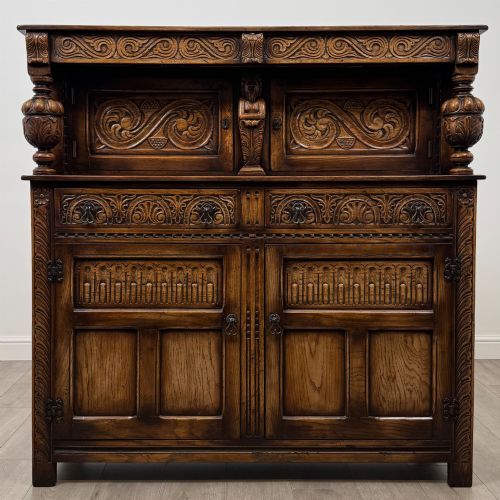
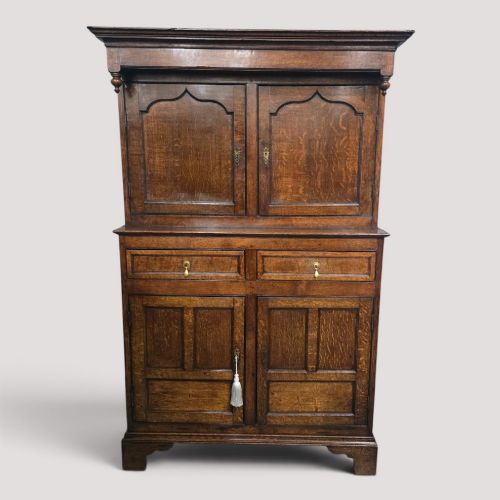
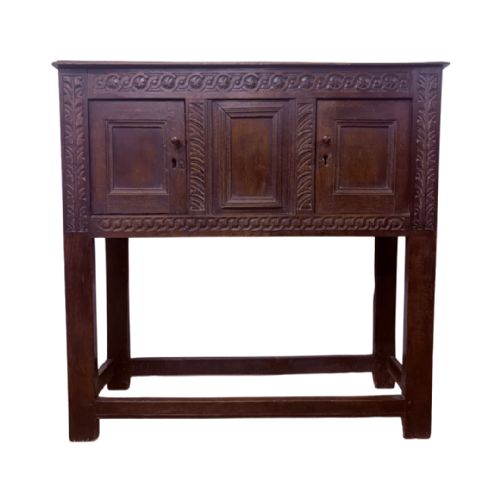
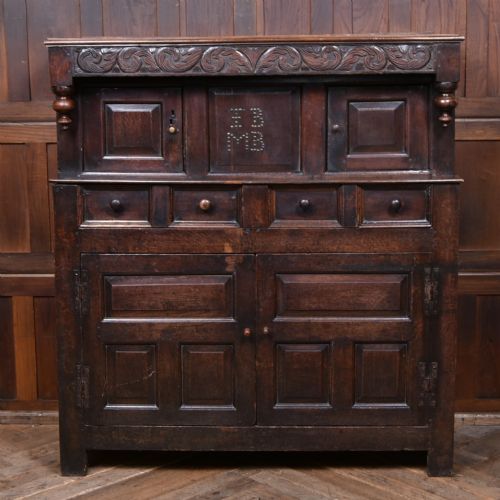
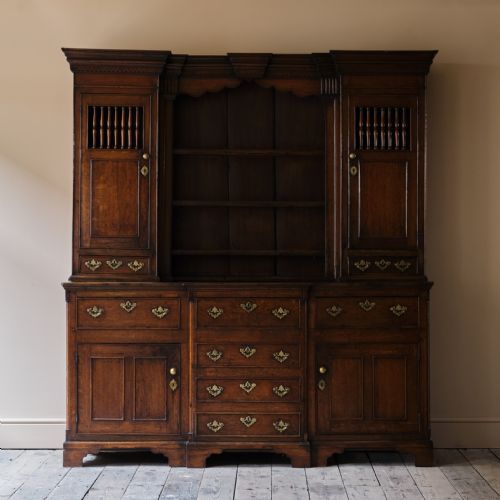
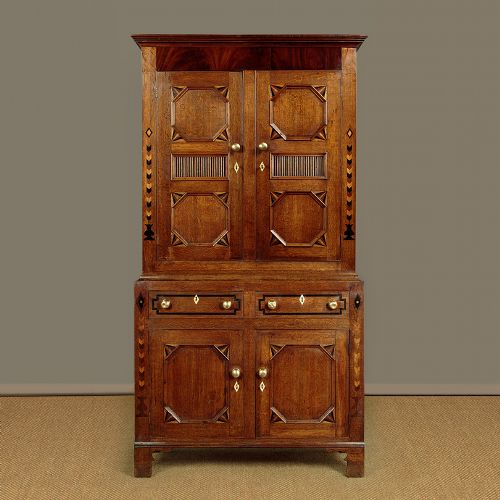
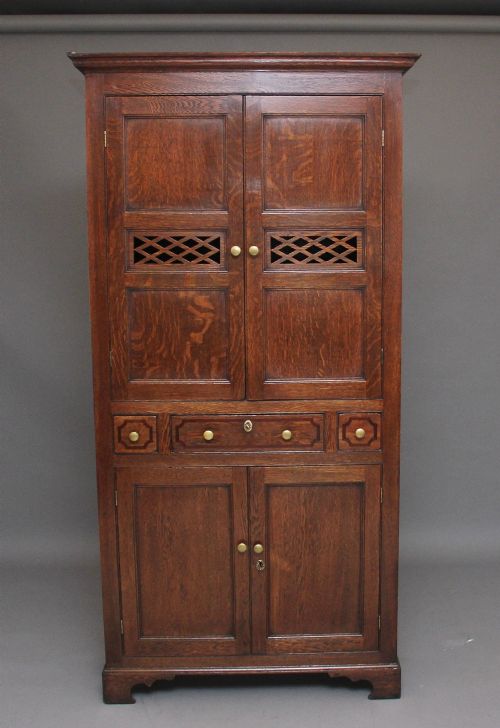
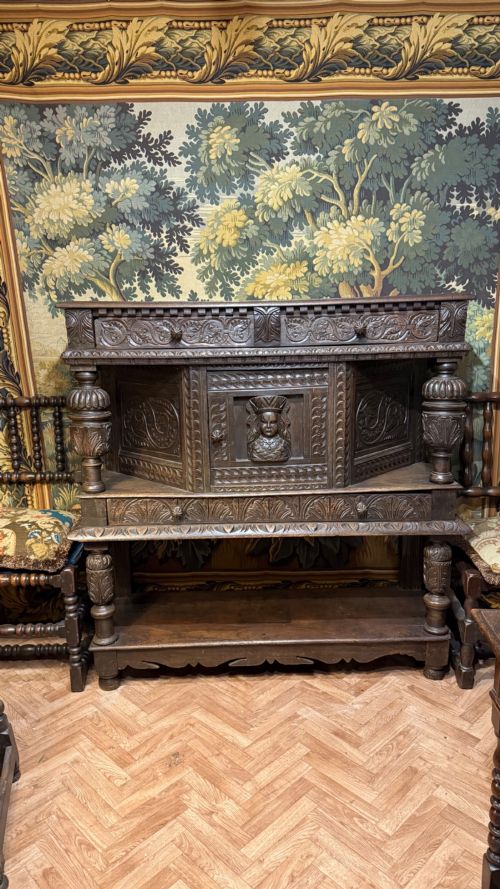
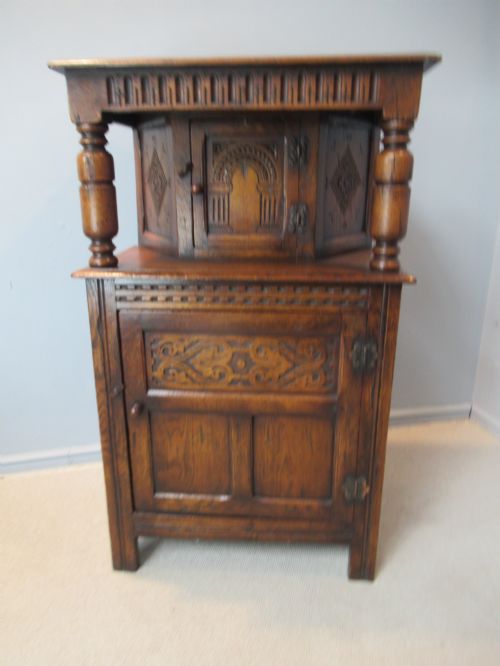
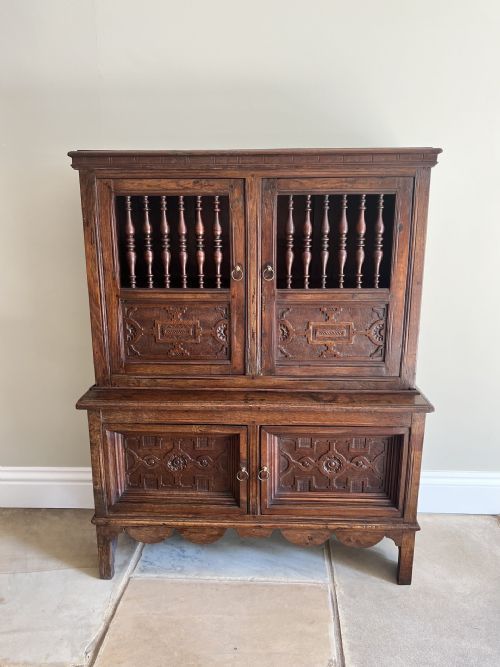
A dark oak bread cupboard encompasses various regional forms designed to store provisions, including Welsh bread and cheese cupboards, court cupboards, and wall cabinets spanning from the seventeenth century through the Edwardian era.
The selections most frequently met on this page include seventeenth-century joined examples and eighteenth-century Welsh vernacular pieces such as the deuddarn and tridarn.
Makers utilised native hardwoods to build functional storage furniture, resulting in surviving pieces that range from small hanging food cupboards to large multi-tiered press cupboards.
How they were made
Joiners constructed these cupboards primarily using solid English oak, occasionally incorporating secondary woods such as elm, ebony, holly, and chestnut for inlay or contrast.
Construction relied on traditional pegged frame and panel joinery, supplemented by forged iron or wrought iron hinges and blacksmith-made locks.
Surface decoration frequently involved carved panels, geometric mouldings, and occasional inlaid ornamentation to break up the dark timber expanses.
Early blacksmiths hammered out custom iron locks for these cupboards, ensuring that household bread remained strictly guarded from midnight thieves.
What varies in quality
Quality rests upon the integrity of the original timber and the crispness of the hand-carved detailing executed by the cabinet maker.
Pieces retaining their original blacksmith-made hardware, unblemished panel work, and honest patination stand distinctly apart from heavily altered examples.
The Dark Oak Bread Cupboard Glossary
- Court Cupboard
- An antique English cabinet style featuring stacked sections, often with recessed upper stages supported by carved columns. These storage pieces date from the seventeenth century and later revivals.
- Joined Oak
- Furniture constructed using mortise and tenon joints secured with wooden pegs rather than metal nails. This method defines early cabinet making.
- Livery Cupboard
- A small food or provision cupboard designed for ventilation, frequently hung on a wall or placed on a stand to keep perishables away from pests.
Dark Oak Bread Cupboard: Frequently Asked Questions
What is a bread cupboard?
A bread cupboard is a historical storage piece built to keep baked goods and perishables safe from pests in domestic kitchens before modern refrigeration existed.
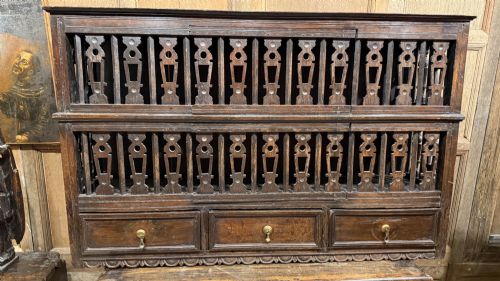
These cabinets often utilise turned spindles or pierced panels to allow air circulation around the stored provisions.
How do I date an oak cupboard?
Dating relies on examining the construction methods, tool marks, and joinery style visible on the piece. Seventeenth-century examples use heavy joined oak frames, whereas later nineteenth-century pieces show different timber preparation.
Hardware such as original blacksmith-made iron hinges and locks also provides reliable chronological clues.
Where were these cupboards made?
These pieces originate from various regions including England, Wales, and France, reflecting distinct local cabinet-making traditions. Welsh vernacular pieces often include specific regional forms like the deuddarn.
English workshops produced heavy court cupboards and livery cabinets utilising native hardwoods.
How do I care for antique oak?
Maintain antique oak furniture by keeping it away from direct heat sources and sudden humidity changes that cause timber to split. Regular dusting with a dry cloth preserves the natural wax finish and deep patination.
Avoid using modern silicone sprays or harsh chemical polishes on aged wood surfaces.