

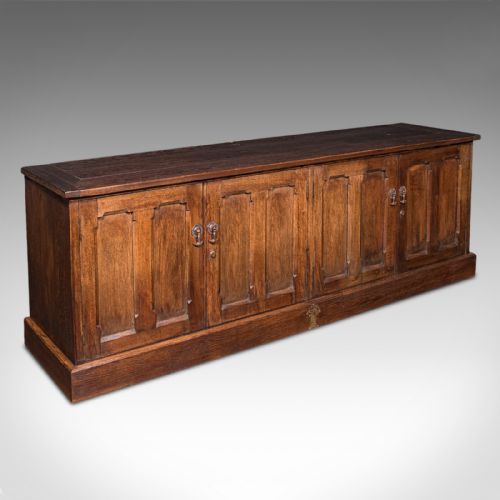


Victorian Oak Side Cabinet
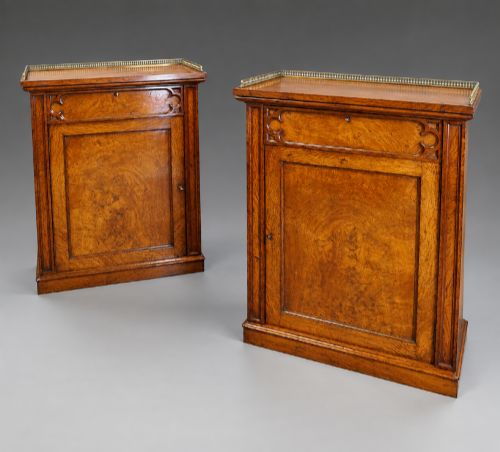
A victorian oak side cabinet brings sturdy architectural presence and carved character into a room, serving as a practical storage piece with distinct period styling.
Victorian Oak Side Cabinet
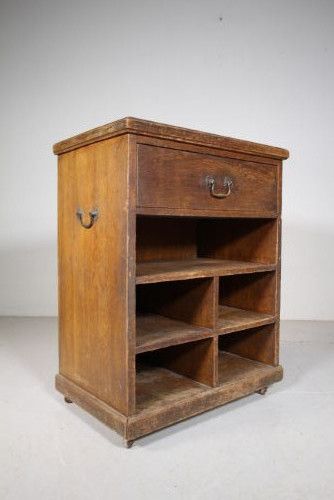
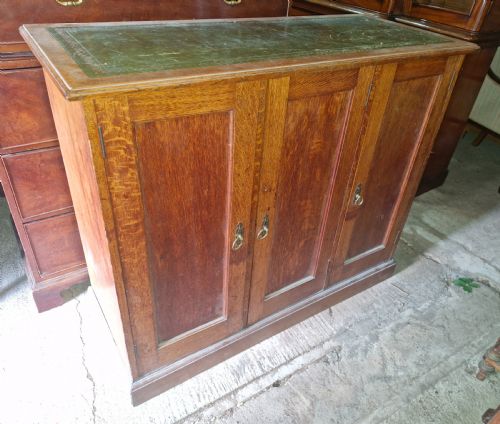
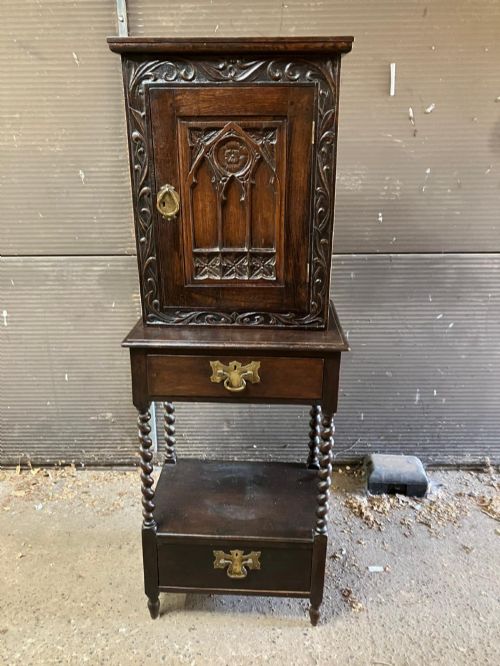
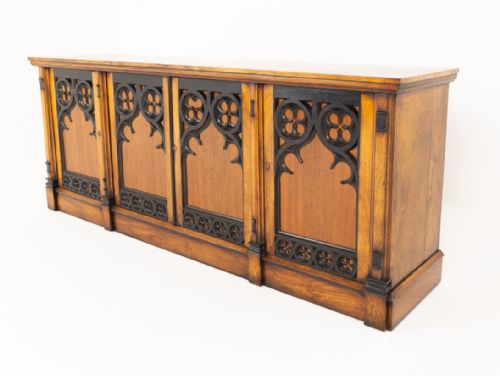
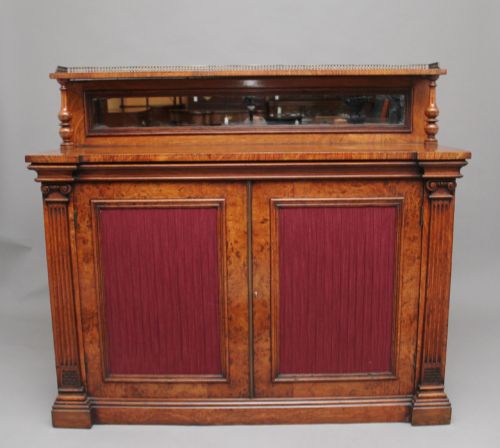
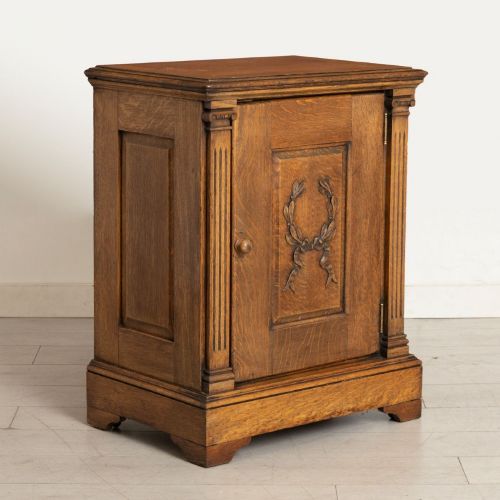
A victorian oak side cabinet covers a range of useful domestic furniture forms, from compact bedside cupboards and hall cabinets to large sideboards, buffets, and bookcase cabinets. You will frequently encounter smaller bedside units and substantial carved cupboards dating from the nineteenth century on this page.
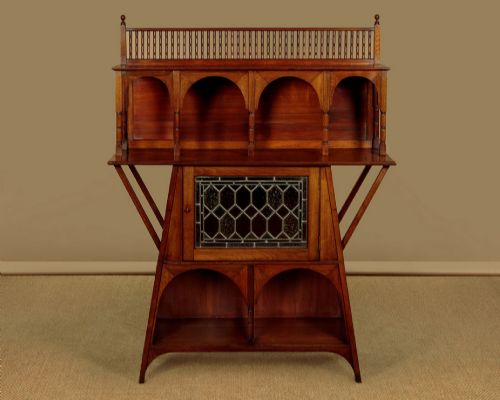
These pieces reflect various aesthetic movements of the period, including Gothic Revival, Arts and Crafts, Renaissance Revival, and Jacobean Revival. Many incorporate architectural elements like linenfold panels, Green Man carvings, and stained glass.
Originating primarily from English country houses and town residences, these cabinets were built to withstand daily domestic use while displaying the substantial timber and decorative motifs favoured by Victorian cabinetmakers.
How They Were Made
Constructed predominantly from solid oak and occasionally pollard oak or figured varieties, these cabinets rely on traditional joinery techniques such as mortise and tenon frames. Timber selection determined the grain pattern, with quarter-sawn oak often utilised to produce distinct medullary rays.
Carving forms a central element of the construction, executed by hand to create deep relief panels, foliage scrolls, and figural details like Green Man masks. Brass hardware, iron fittings, leather inserts, and leaded stained glass frequently complement the heavy timber structures.
Listings feature 19th-century oak alongside brass, glass, iron, and leather materials within Gothic Revival and Arts and Crafts styles.
What Varies in Quality
The standard of a victorian oak side cabinet depends heavily on the depth and crispness of the hand carving, alongside the selection of timber figure. Cabinets featuring deeply undercut foliage and well-defined figural elements sit distinctly apart from simpler, machine-routed or plainly panelled examples.
Hardware and internal fittings also dictate distinction, with original stamped brass locks, working keys, panelled backs, and secondary woods indicating superior workshop output rather than later utility production.
Liberty & Co.·Bruce Talbert·Gillows
The Victorian Oak Side Cabinet Glossary
- Gothic Revival
- A nineteenth-century design style drawing inspiration from medieval architecture, featuring pointed arches, tracery, and heavy carved details. This aesthetic dominates many Victorian oak cabinets.
- Green Man
- A decorative architectural motif depicting a human face emerging from or entwined with foliage, frequently found carved onto Victorian oak cupboard doors and drawers.
- Pollard Oak
- Timber taken from trees that have been pollarded, producing a dense, highly figured grain pattern with clustered knots. Cabinetmakers reserved this decorative wood for prominent panels and fronts.
- Court Cupboard
- A traditional two-stage enclosed piece of furniture with shelves, often heavily carved in revival styles during the Victorian era. These items provided principal storage and display surfaces in dining rooms and halls.
Victorian Oak Side Cabinet: Frequently Asked Questions
What is a victorian oak side cabinet used for?
These cabinets served multiple domestic purposes, acting as bedside pot cupboards, hall storage for linens and sundries, or dining room buffets for serving and tableware.
Today, they function well in hallways, living rooms, and bedrooms, offering enclosed storage surfaces for modern household items while retaining historic character.
How do I identify a Gothic Revival cabinet?
Gothic Revival pieces display architectural motifs borrowed from medieval churches and buildings, such as pointed lancet arches, trefoils, quatrefoils, and heavy chamfered framing.
They also frequently feature deep oak carvings of religious or mythical figures, including Green Man masks and linenfold panels.
What is the difference between pollard oak and standard oak?
Standard oak comes from standard timber growth, showing straight, predictable grain lines and medullary rays when quarter-sawn. Pollard oak comes from trees pruned at a high level, creating tightly clustered knots and swirling figuring.
Cabinetmakers utilised pollard oak as a decorative veneer or solid panel accent on finer Victorian pieces.
How should I care for a waxed oak cabinet?
Waxed oak surfaces benefit from occasional applications of traditional beeswax to nourish the timber and maintain a soft, protective sheen. Avoid placing these pieces in direct sunlight or near heat sources to prevent the solid wood from splitting.