
Dark Mahogany Storage Drawers
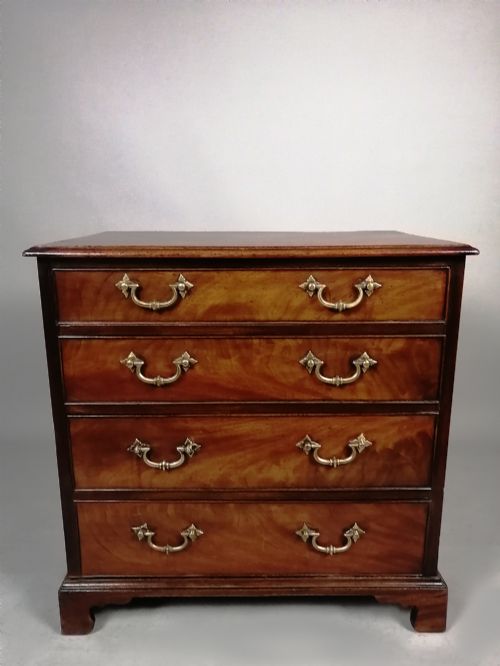
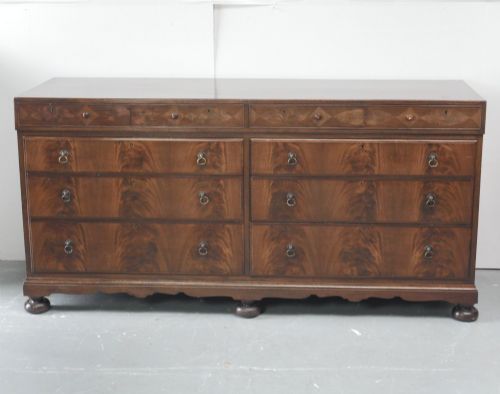
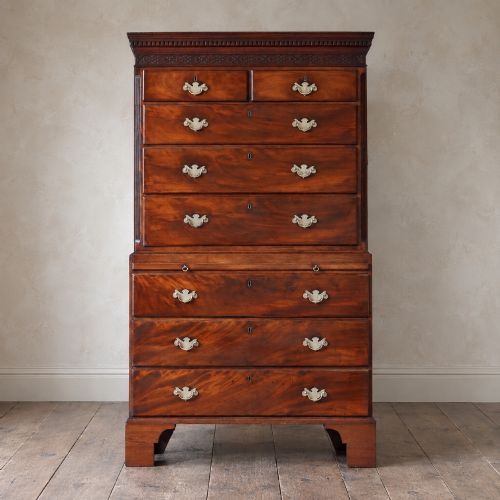
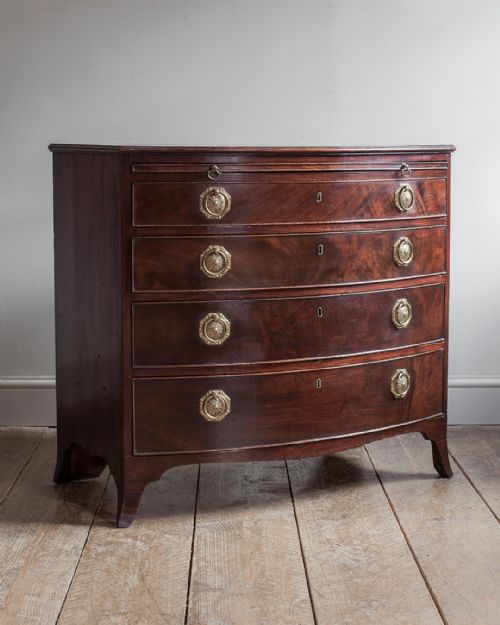
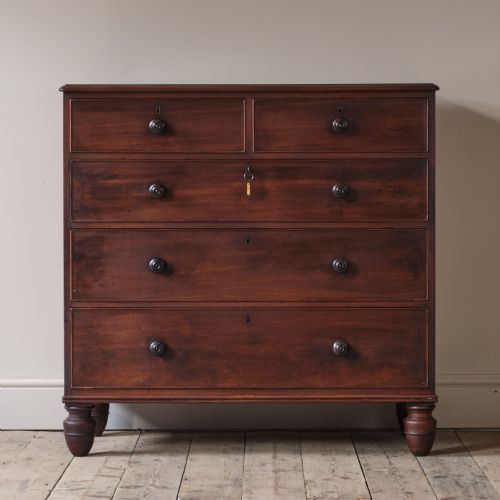
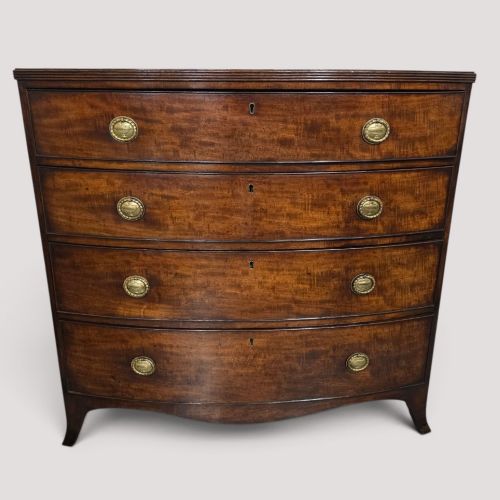
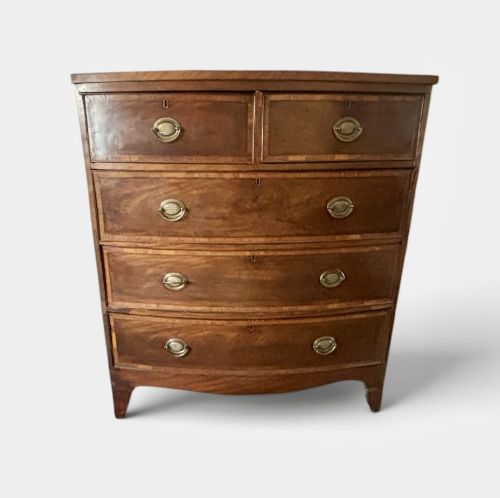
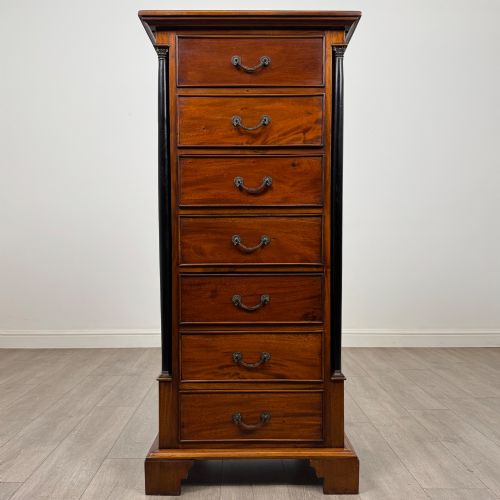
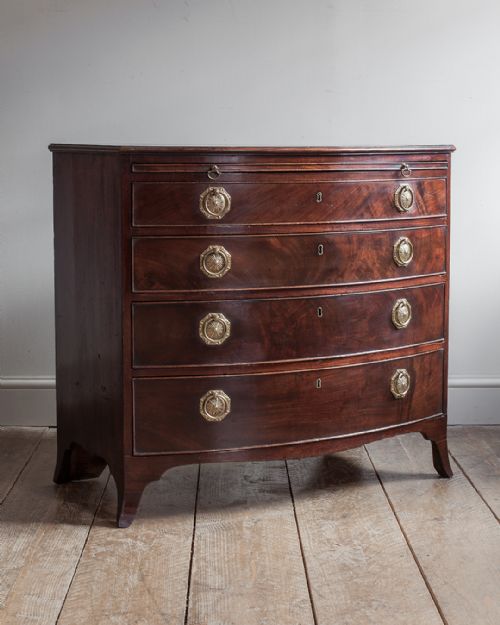
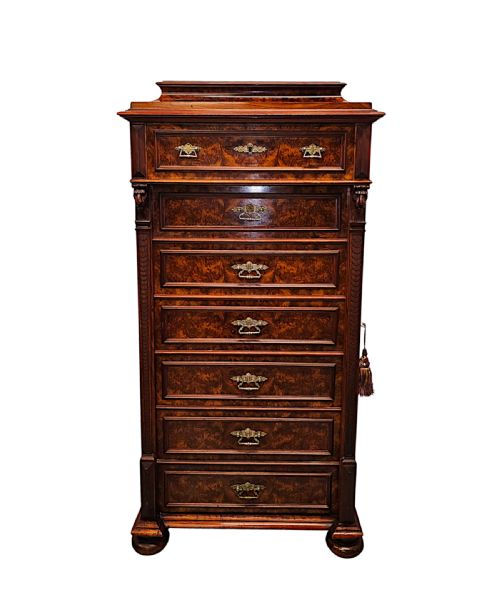
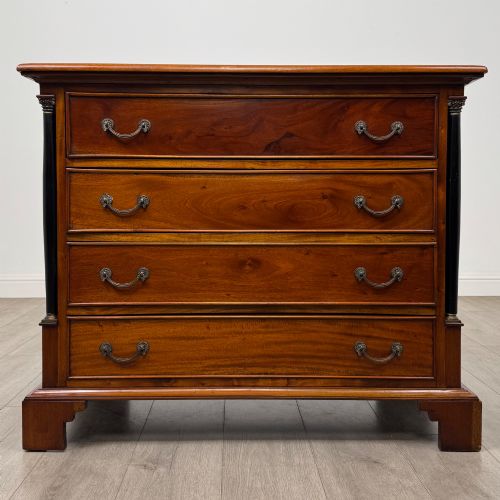
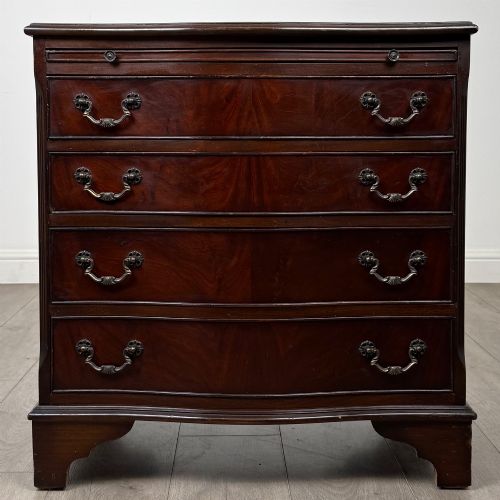
Dark mahogany storage drawers bring deep timber tones and solid proportions to a room, ranging from bow fronts to tall chests.
Dark Mahogany Storage Drawers
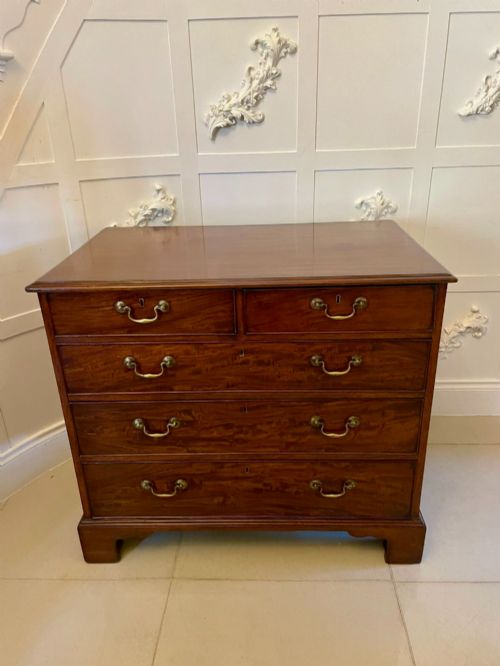
When searching for dark mahogany storage drawers, buyers encounter pieces spanning the Georgian, Regency, Victorian and Edwardian periods, alongside later twentieth-century interpretations.
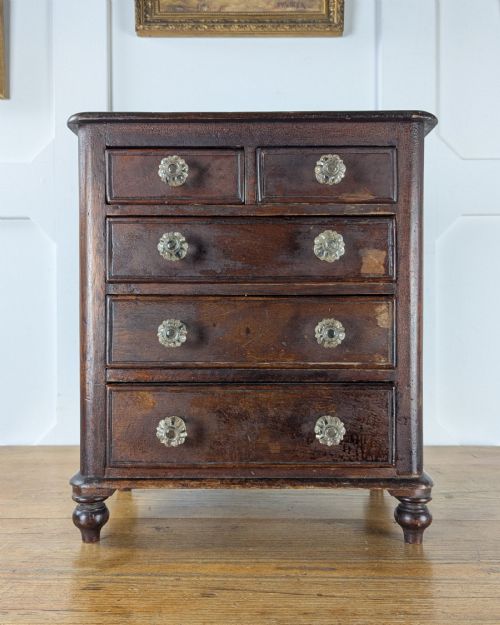
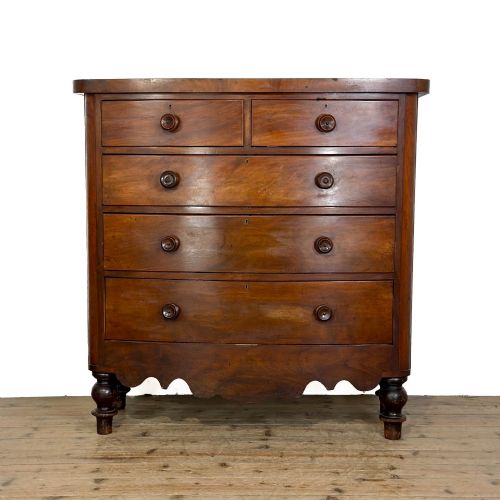
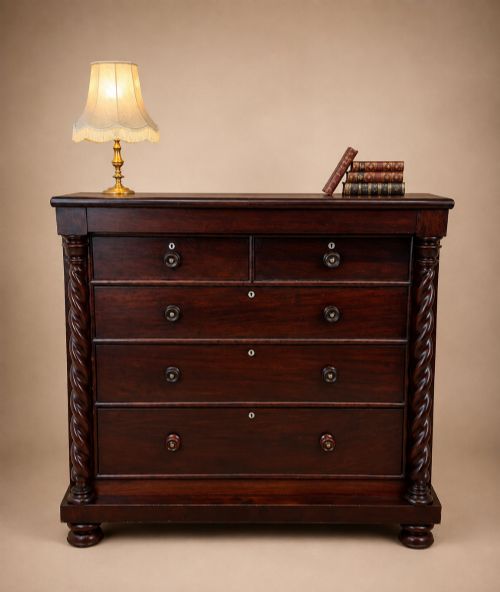
The most common forms on this page include standard chests of drawers, bow front chests, and tall chests on chests, accompanied by occasional sideboards, miniature pieces and apothecary boxes.
Origins stretch from eighteenth-century workshops to early twentieth-century production, utilising deep hardwoods shaped into functional storage.
Distinctions in quality
Quality rests on the depth of the timber figure, the crispness of mouldings such as blind fretwork, and the integrity of the cabinet construction rather than surface condition alone.
Finer examples display careful timber selection, such as matched flame veneer on drawer fronts, alongside robust dovetail joints and well-fitted internal drawers that move smoothly.
Miniature apprentice chests gave craftsmen a portable way to demonstrate their dovetailing mastery to prospective employers.
Whytock & Reid·T & G Seddon
The Dark Mahogany Storage Drawers Glossary
- Bow front
- A cabinet or chest with a convex, curved front profile that swells outward. This shape gained popularity during the Georgian and Regency periods.
- Crossbanding
- A narrow strip of veneer laid around the border of a drawer front or tabletop so the grain runs perpendicular to the surrounding wood.
- Brushing slide
- A pull-out wooden shelf integrated into the upper section of a chest or tallboy, originally used for folding clothes or grooming.
- Chest on chest
- A tall storage piece comprising an upper chest of drawers stacked directly on a slightly wider lower chest, also known as a tallboy.
Dark Mahogany Storage Drawers: Frequently Asked Questions
How do I style dark mahogany storage drawers?
Dark mahogany storage drawers anchor a room with their deep tones and substantial presence. Pair them with neutral walls to let the timber grain stand out.
They function well in bedrooms for clothing, or in living spaces and hallways as lamp tables with supplementary storage.
What is a brushing slide used for?
A brushing slide is a pull-out shelf located just beneath the top surface of a chest. Historically, people used it for folding garments or as a temporary writing surface.
Today, it offers a convenient spot to rest items while accessing the drawers below.
How do I identify a Georgian chest from a Victorian one?
Georgian pieces often display restrained classical proportions, bracket feet, and finely cut dovetails in secondary woods like oak. The timber frequently has a warm, aged patina.
Victorian chests tend to be heavier in scale, sometimes featuring bolder mahogany veneers, plinth bases, or turned feet.