




Antique English Mahogany Commode
An antique english mahogany commode brings deep timber tones and classical proportions to a room, offering practical storage through centuries-old cabinetmaking.
Antique English Mahogany Commode
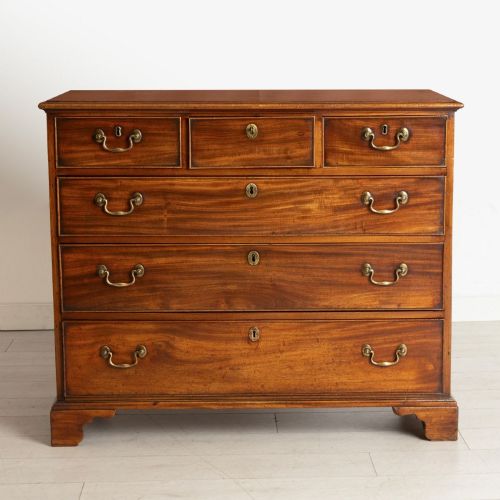
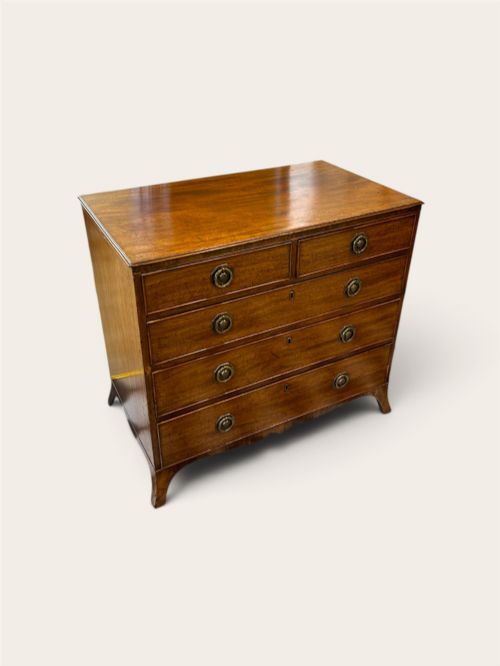
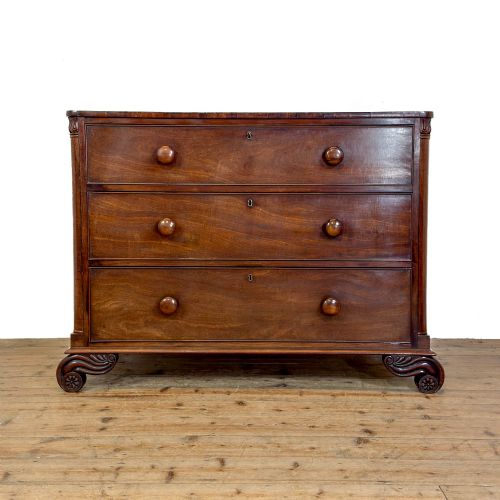
When searching for an antique english mahogany commode, you encounter a selection spanning the Georgian, Regency, and Victorian periods, often taking the form of robust chests of drawers, bedside tables, or side cabinets. These pieces serve as functional storage units shaped by cabinetmakers across the eighteenth and nineteenth centuries.
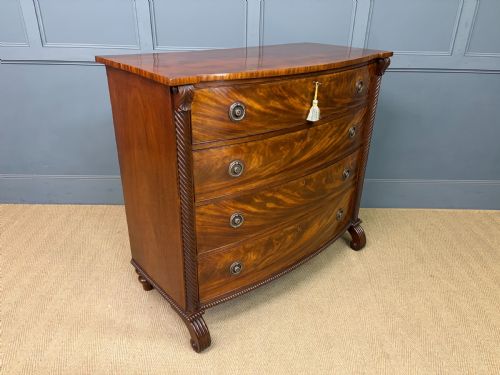
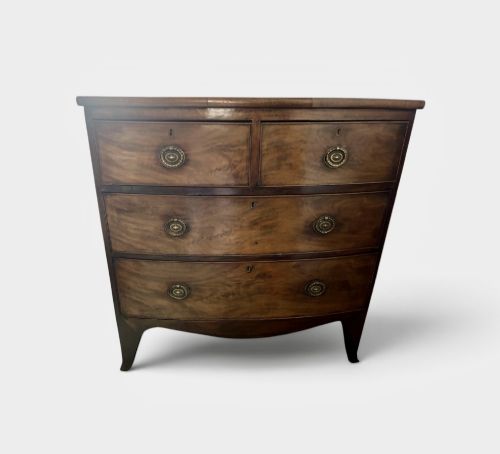
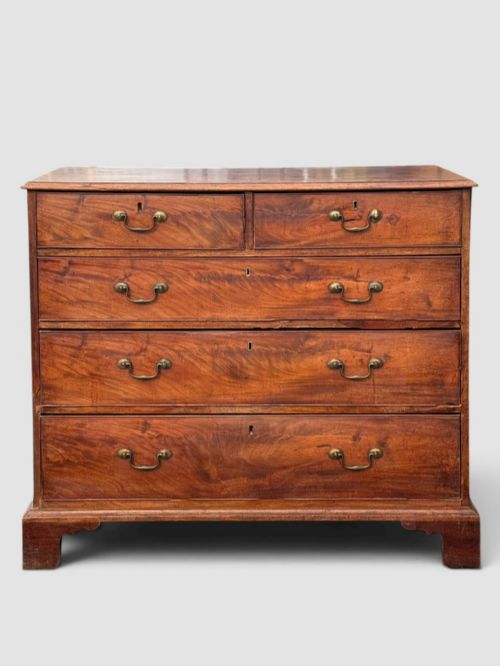
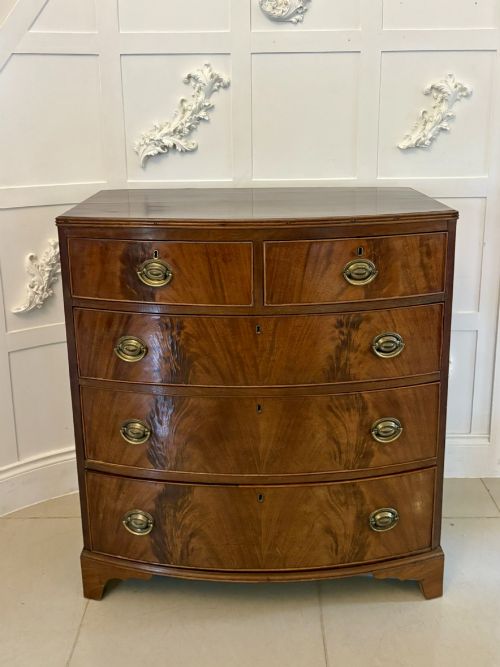
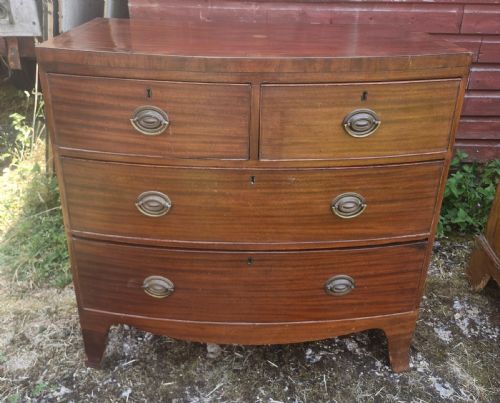
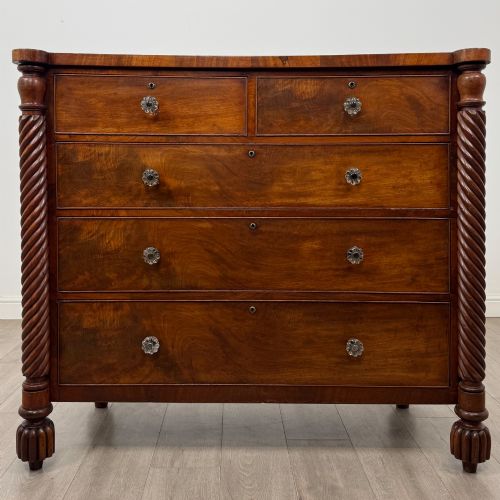
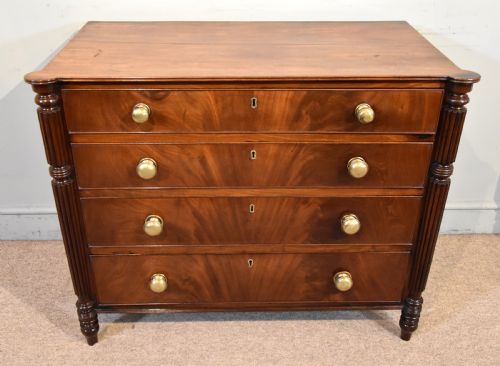
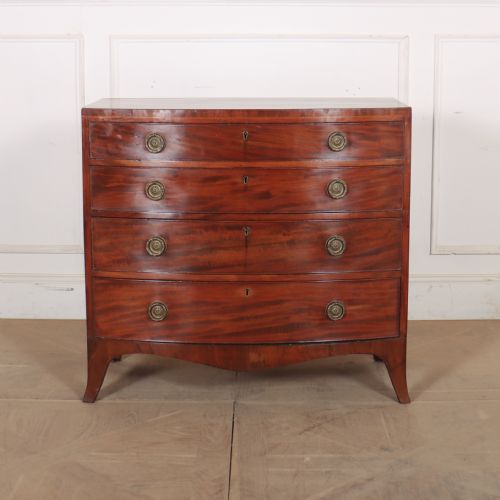
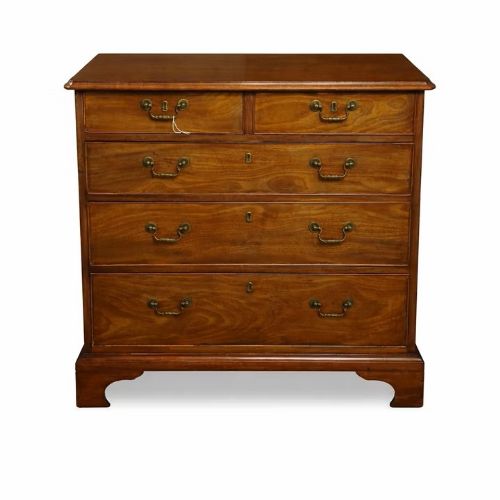
The version you meet most frequently on this page is the bow-fronted or straight-fronted chest of drawers, constructed in rich timber with brass handles and supported on bracket feet or short legs. Alongside standard drawer configurations, variations include bachelor chests with sliding boards and compact bedside night tables.
Origins trace across English workshops from the early seventeen hundreds onward, reflecting shifting neoclassical tastes through graduated drawers and cross-banded details. The inventory demonstrates how diverse regional interpretations, such as Lancashire serpentine fronts, contribute to the wider category.
How they were made
Makers utilised solid timber frames combined with flame mahogany veneers to achieve rich grain patterns across drawer fronts and tops. Oak frequently appears in secondary framing and drawer linings, providing structural stability behind the polished mahogany exterior.
Surface ornamentation relies on precision wood inlay, cross-banding, and applied brass handles or pulls. Construction methods involve dovetail joints on drawers and hand-cut tenons, executed without modern machinery to ensure lasting durability.
Listings feature mahogany, oak, and brass materials spanning Georgian, Regency, and Victorian periods in chest and bedside cabinet forms.
What varies in quality
Quality depends upon the choice of timber and the precision of the veneer work, where figured flame mahogany indicates superior selection by the cabinetmaker. The depth of colour and the crispness of moulded edges further separate standard utility pieces from high-status commissions.
Structural integrity rests on untouched original hardware, sound secondary oak timbers, and hand-dovetailed drawer construction that remains tight after centuries of use. Proportion and balance dictate the visual success of the piece, particularly on serpentine and bow-fronted examples.
C Hindley·J Jarvis
The Antique English Mahogany Commode Glossary
- Commode
- A low chest of drawers or cabinet originating in French taste but applied in English furniture to denote decorative case pieces. They often served dual purposes in bedchambers and reception rooms.
- Flame mahogany
- A decorative veneer cut from the fork of the mahogany tree where branches meet the trunk. This produces a distinctive flickering flame pattern across the timber surface.
- Bow front
- A convex curved cabinet front popular during the Regency and Georgian eras. It softens the severe angles of a room while increasing internal storage volume.
- Brushing slide
- A pull-out shelf integrated above the top drawer of a chest or bachelor's chest. It provided a clean surface for sorting papers or grooming without opening the main drawers.
- Cross-banding
- A border technique where thin strips of veneer are laid perpendicular to the grain of the main panel. It frames the drawer front with a contrasting border of wood.
Antique English Mahogany Commode: Frequently Asked Questions
How do I date a mahogany commode?
Dating relies on observing construction characteristics, timber choice, hardware style, and overall proportions. Georgian pieces often display straight or serpentine lines with bracket feet, while Regency examples lean towards bow fronts and figured veneers.
Secondary woods like oak and the method of dovetailing also help pinpoint the period of manufacture.
Where were these pieces used?
These commodes and chests served primarily in bedchambers, dressing rooms, and parlours to store clothing, linens, and personal possessions. Compact bedside variants stood beside sleeping quarters for night storage.
Larger case pieces occupied principal reception spaces where display and heavy storage were required.
How do I care for mahogany furniture?
Maintain antique mahogany by keeping it away from direct sunlight and sudden temperature shifts that can dry out the timber and veneer. Regular dusting with a soft, dry cloth preserves the polished surface.
Avoid silicone-based polishes and apply traditional beeswax sparingly when the wood appears dry.