



Eighteenth Century Mahogany Commode
An eighteenth century mahogany commode brings rich timber and architectural proportion to a room, offering practical storage through centuries-old craftsmanship.
Eighteenth Century Mahogany Commode
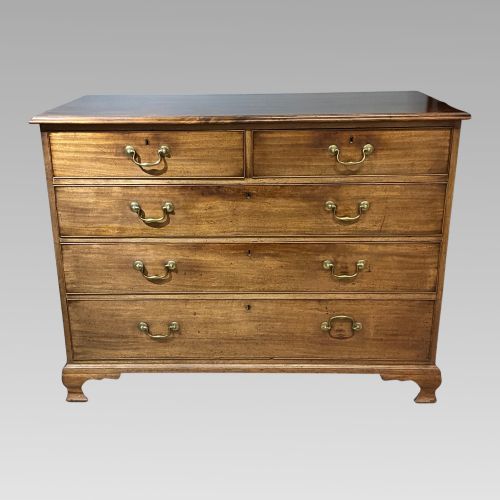
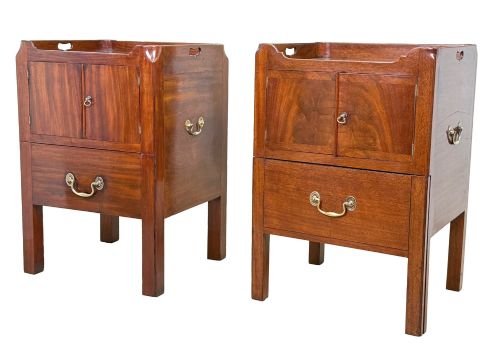
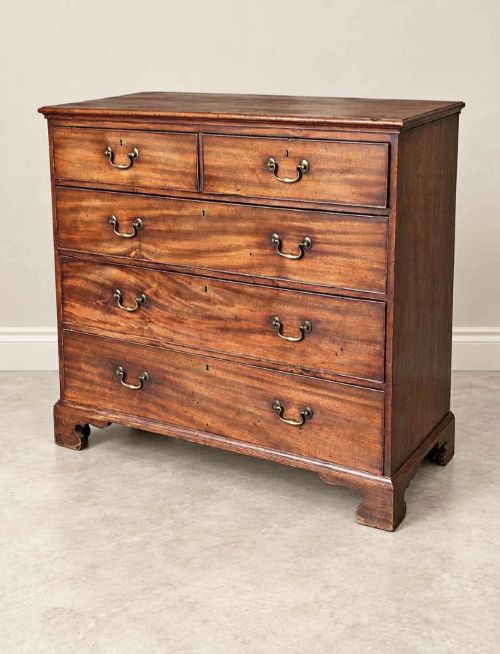
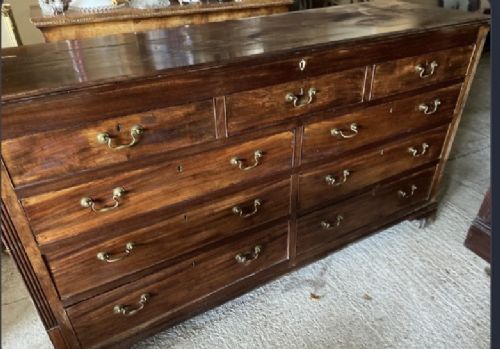
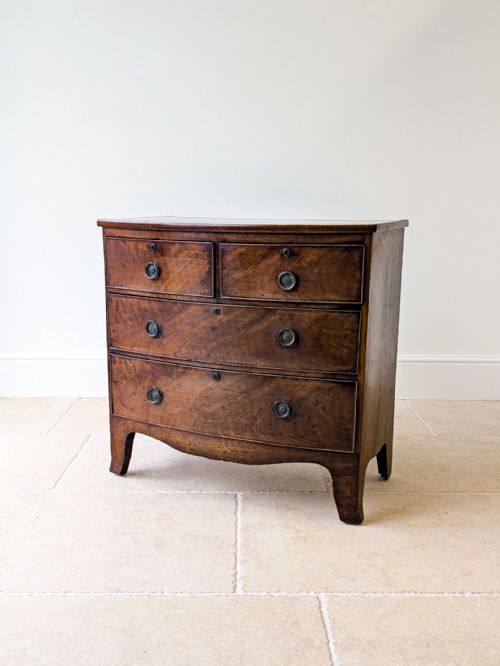
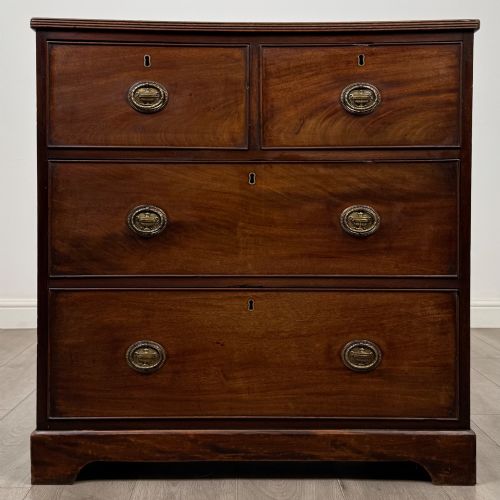
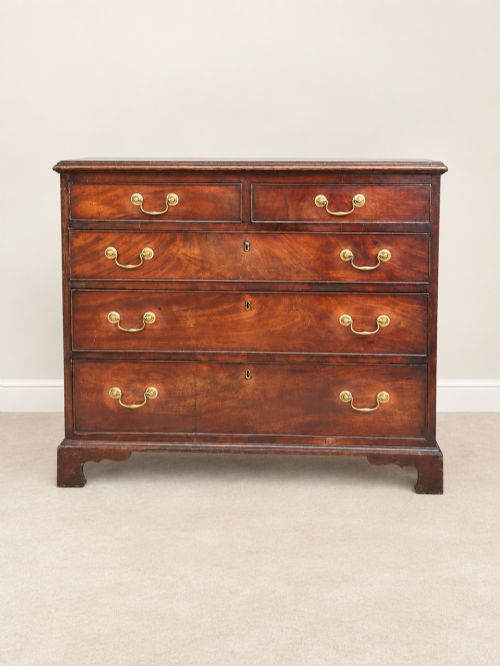
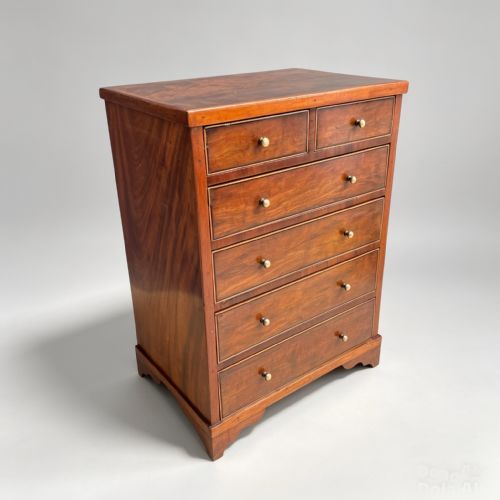
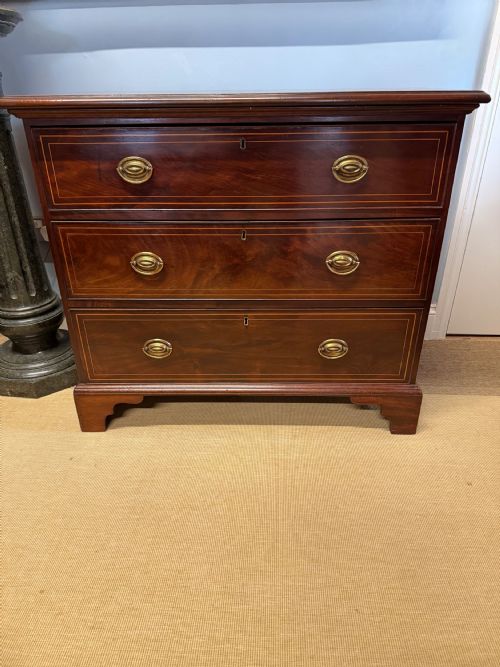
The most common examples on this page are Georgian and George III chests of drawers, often featuring multiple graduated drawers and sometimes incorporating a brushing slide or bachelors chest format. Regional variants such as Dutch Rococo and Cape Dutch Colonial also appear among the selections.
Makers and cabinetmakers of the era utilised native and imported timbers, shaping fronts into curved profiles or straight elevations supported on bracket feet or ogee feet. Miniature versions and dwarf linen press cupboards demonstrate the same stylistic ambitions on a smaller scale.
Materials and construction methods
Carpenters constructed these carcasses primarily using solid mahogany, frequently supported by internal secondary woods such as oak and pine. Drawer linings and carcase backs relied on these sturdy timbers to maintain structural stability.
Cabinetmakers applied decorative details including boxwood inlay and satinwood accents to enhance the figured grain of the primary mahogany surfaces. Brass handles, escutcheons, and drawer pulls provided functional hardware across the facades.
Eighteenth Century Mahogany Commode Retail Price Guide 2026
Typical asking prices for eighteenth century mahogany commode among the pieces listed under this phrase on Sellingantiques today, from the lower quarter to the upper quarter. They describe what is for sale here now, not the wider market.
Some miniature chests were built by apprentices to demonstrate their mastery of dovetailing and curved drawer construction.
Assessing quality in mahogany commodes
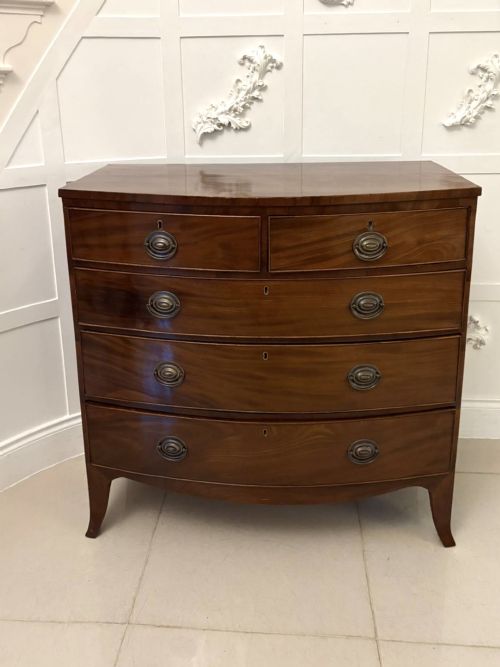
The fineness of the figured mahogany grain and the precision of the boxwood inlay distinguish superior examples from simpler utilitarian pieces. Serpentine and bow front profiles require advanced woodworking skill to shape drawer fronts and matching frames accurately.
Original hardware, sound drawer construction with hand-cut dovetails, and well-proportioned ogee or bracket feet elevate the standing of a commode. Surviving secondary timbers and minimal alterations preserve the integrity of the original construction.
The Eighteenth Century Mahogany Commode Glossary
- Bow front
- A cabinet or chest of drawers featuring a convex, outward-curving front facade.
- Serpentine
- A furniture front characterised by a wavy contour, typically curving outward in the centre and inward at the ends.
- Brushing slide
- A pull-out shelf positioned above the top drawers, historically used for folding garments or grooming.
- Bachelors chest
- A compact chest of drawers frequently fitted with a folding top or sliding shelf.
- Ogee feet
- An S-shaped moulding profile used to support the base corners of a chest.
- Dovetail
- A traditional interlocking joint used to secure drawer corners together.
Eighteenth Century Mahogany Commode: Frequently Asked Questions
What is a brushing slide?
A brushing slide is a pull-out wooden board integrated just below the top surface of a chest of drawers.
Historically, owners used this flat surface for brushing clothes or inspecting garments without having to unpack the main drawers.
How do I care for mahogany?
Mahogany furniture requires stable indoor humidity levels and protection from direct sunlight to prevent the timber from drying out.
Regular dusting with a soft, dry cloth maintains the finish without needing heavy chemical polishes.
What distinguishes a George III chest?
George III chests typically date from the second half of the eighteenth century and display refined neoclassical proportions.
They frequently feature sophisticated woodwork, such as serpentine fronts, boxwood stringing, and quality brass hardware.
Where were these commodes used?
These chests served primarily as principal bedroom storage furniture for garments, linens, and personal valuables.
Their polished timber and decorative facades also suited them for display in formal reception rooms and hallways.