






Serpentine Front Wooden Bureau
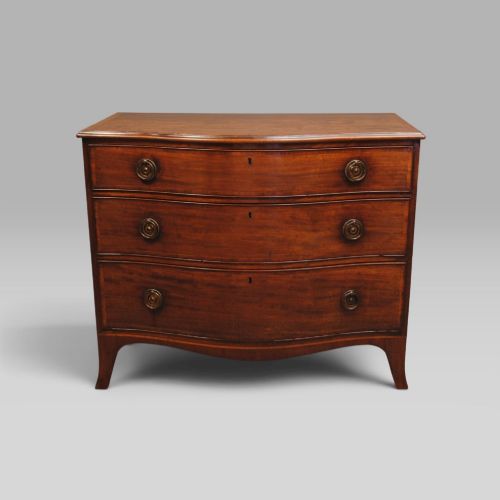
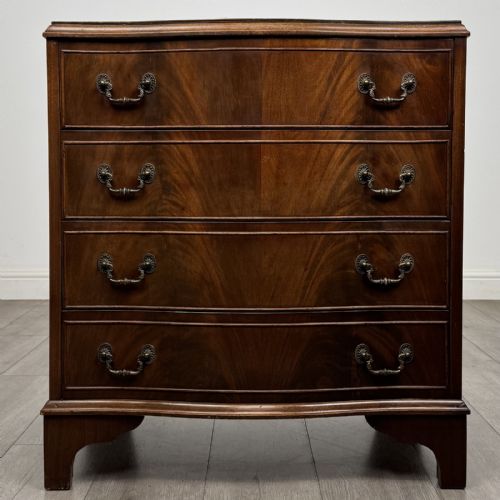
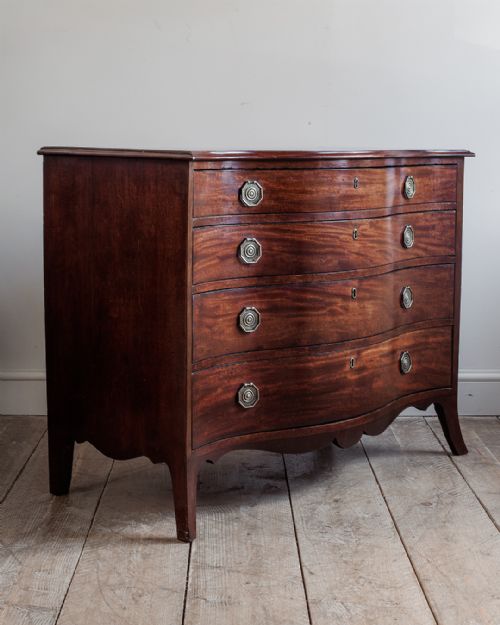
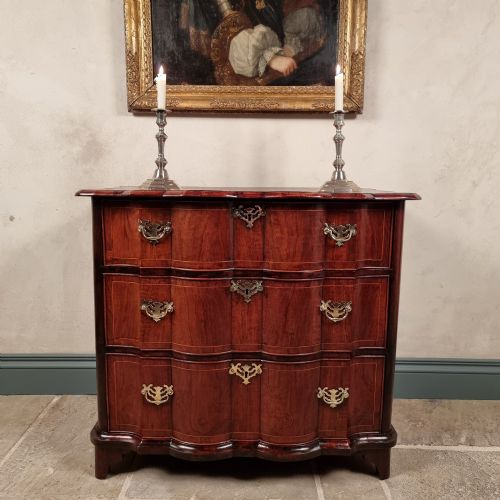
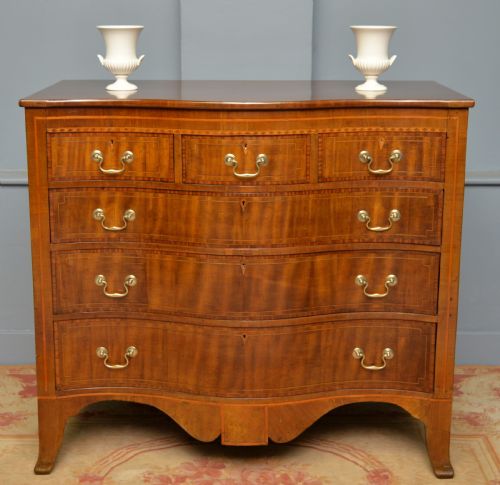
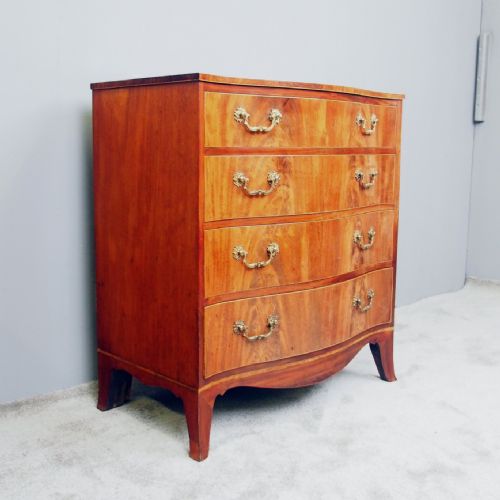
These serpentine front wooden bureau forms are undulating storage chests built in mahogany, walnut, and elm across the Georgian and later revival periods.
Serpentine Front Wooden Bureau
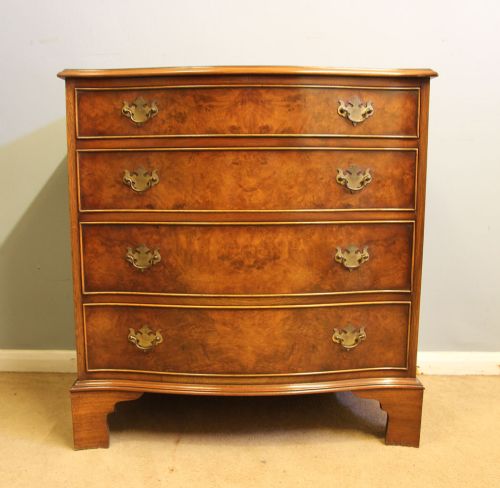
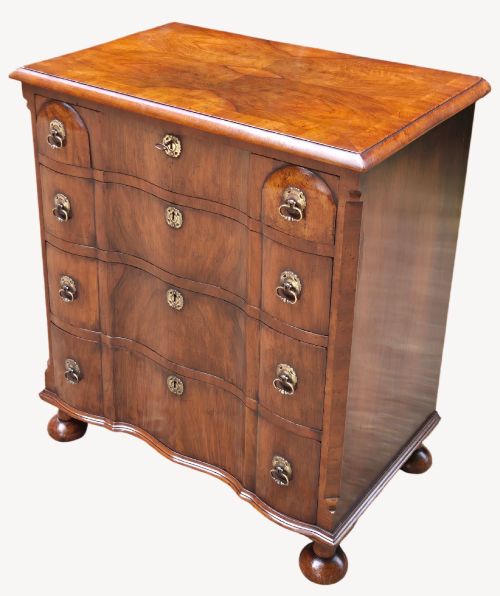
A serpentine front wooden bureau search brings up undulating chest of drawers forms spanning the 18th century, Georgian period, and subsequent revivals. The listings here show pieces created in mahogany, burr walnut, and elm, originating from English and Scottish workshops.
Most examples you encounter on this page are mahogany chests displaying the characteristic convex centre flanked by concave sides. They appear in both authentic 18th-century forms and later 19th-century or 20th-century revivals.
Cabinet makers constructed these storage pieces to serve as formal bedroom or parlour furniture. The curved drawer fronts require precise joinery to maintain alignment across the seasons.
Distinctions in quality and execution
Quality rests in the handling of the serpentine curve and the selection of timber figure, such as fiddleback mahogany or burr walnut. Superior pieces exhibit tight grain matching across the drawer fronts and crisp execution of inlay.
Earlier Georgian examples demonstrate finer dovetailing and proportion compared to later revival pieces. The thickness of the primary timber and the integrity of the secondary woods dictate the structural longevity of each chest.
Serpentine Front Wooden Bureau Retail Price Guide 2026
Typical asking prices for serpentine front wooden bureau among the pieces listed under this phrase on Sellingantiques today, from the lower quarter to the upper quarter. They describe what is for sale here now, not the wider market.
One Lancashire workshop evidently had a theatrical flair, producing a serpentine chest distinct enough to merit the uppercase descriptor fine and unusual.
Maple & Co
The Serpentine Front Wooden Bureau Glossary
- Serpentine front
- A furniture facade featuring a convex central section flanked by two concave curves. This contour requires advanced woodworking skill to execute properly.
- Fiddleback mahogany
- A figured timber variety showing a wavy grain pattern resembling the back of a fiddle. Cabinet makers utilised this prized material for high-status drawer fronts.
- Escutcheon
- A protective plate surrounding a keyhole, usually cast in brass. These hardware elements help date the piece alongside the timber and construction.
- Dovetail
- An interlocking joint used to connect drawer sides to drawer fronts and backs. Hand-cut dovetails indicate traditional pre-industrial craftsmanship.
- Boxwood inlay
- Contrasting light-coloured wood inserted into recesses in the primary timber. It creates decorative borders on Hepplewhite and Sheraton style pieces.
Serpentine Front Wooden Bureau: Frequently Asked Questions
Are these serpentine chests authentic Georgian?
The inventory includes genuine 18th-century George III pieces alongside later 19th-century and Edwardian revival interpretations.
Examining the construction methods and timber ageing helps distinguish original period pieces from later cabinet work.
What woods were used for these chests?
Makers relied heavily on mahogany, alongside walnut, burr walnut, elm, and satinwood. Boxwood inlay appears on specific decorative styles.
Different timbers indicate distinct regional preferences and stylistic periods among the workshops.
How do I care for a mahogany chest?
Keep the wood away from direct heat sources and sudden humidity changes to prevent timber movement. Regular dusting with a dry cloth maintains the surface.
Applying traditional wax periodically nourishes the polished finish without building up heavy residues.
What is a serpentine front?
A serpentine front is a cabinet facade that curves outward in the middle and inward at the sides. This shape demands precise joinery from the cabinet maker.
The undulating profile separates these storage chests from standard flat-fronted drawers.