
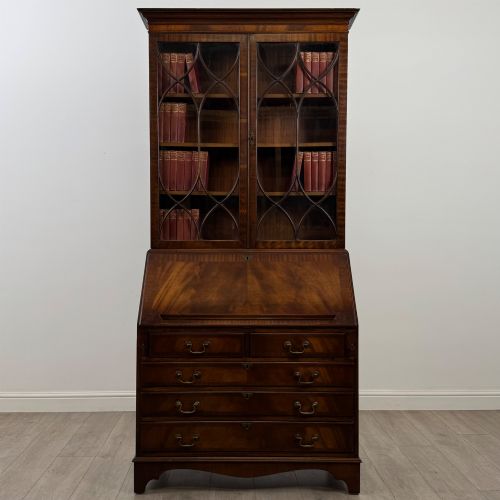
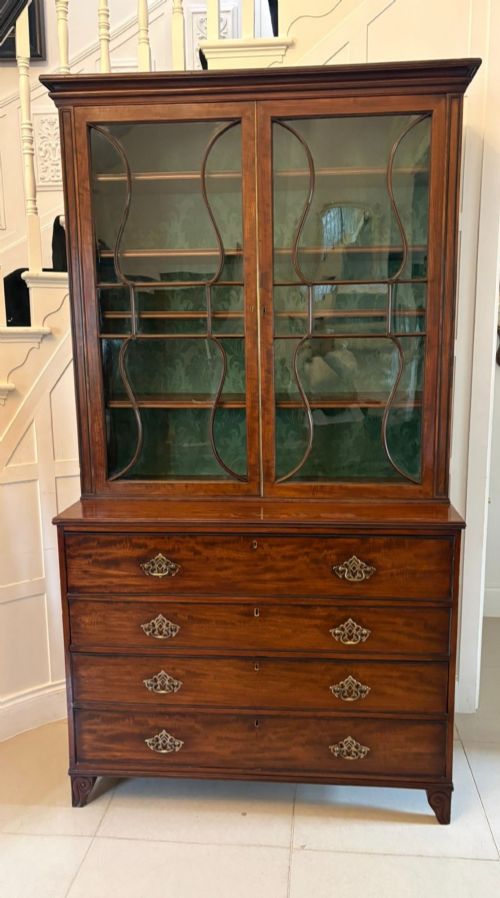
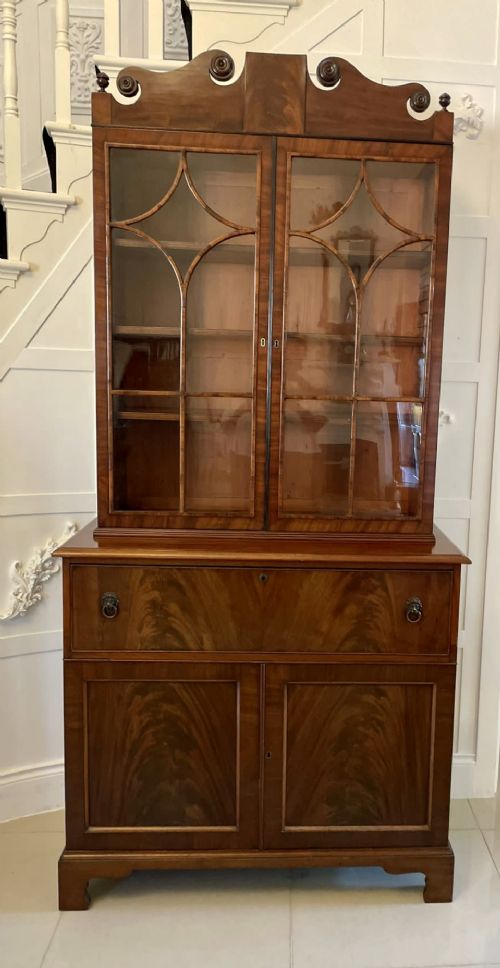
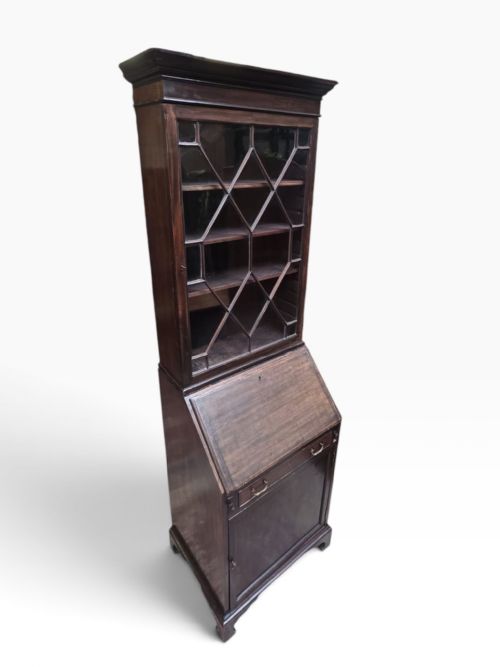
Dark Mahogany Secretary Cabinet
A dark mahogany secretary cabinet combines a practical writing desk with a tall bookcase, offering secure storage and handsome proportions for a traditional study.
Dark Mahogany Secretary Cabinet
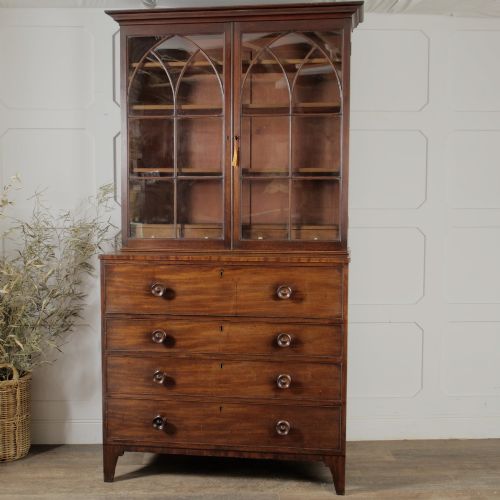
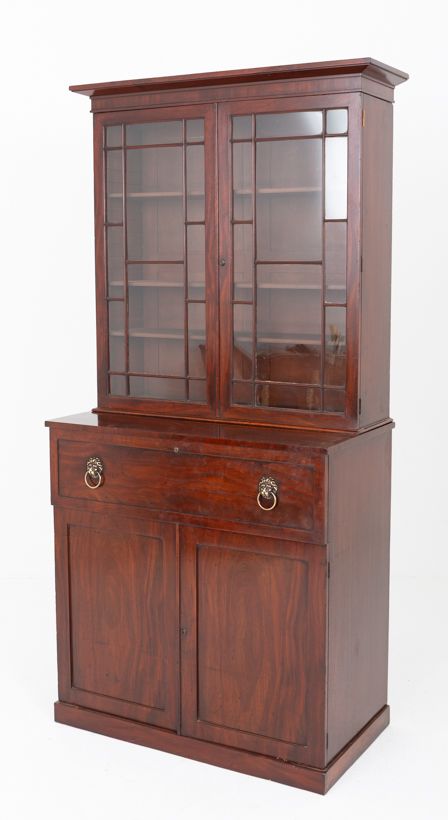
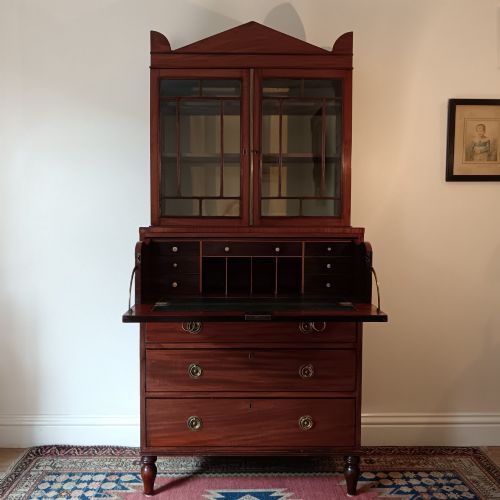
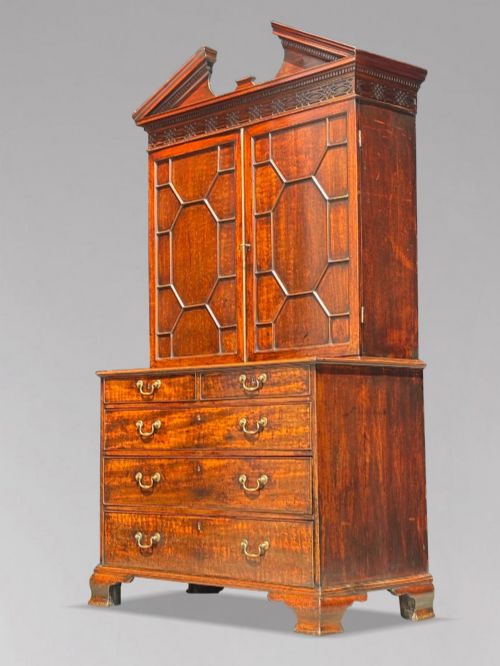
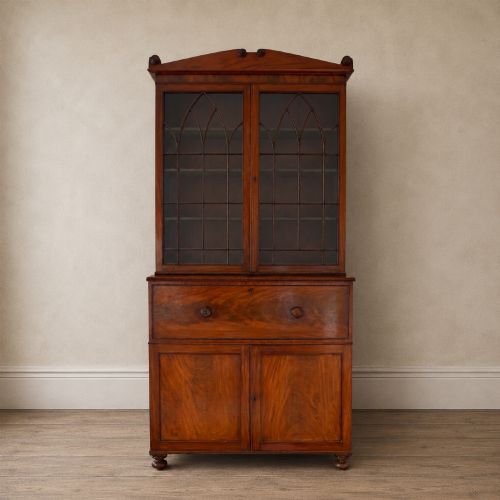
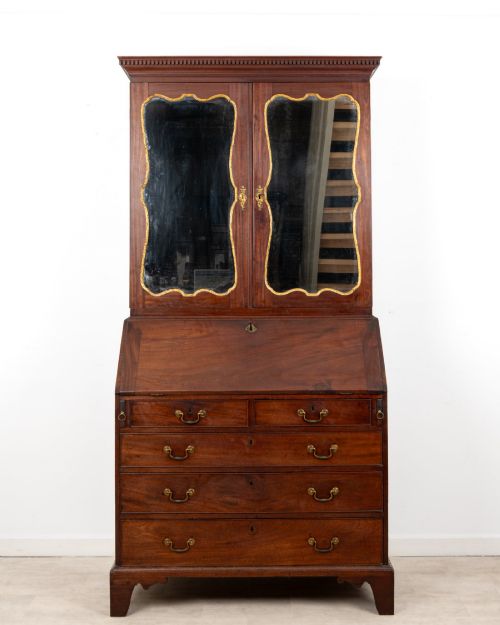
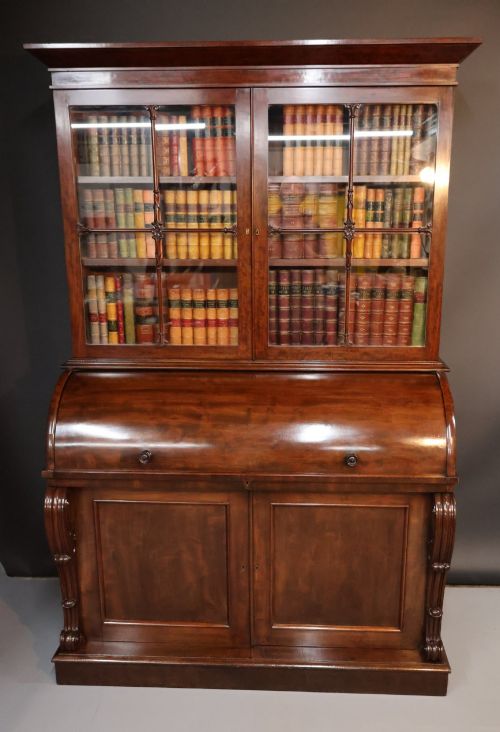
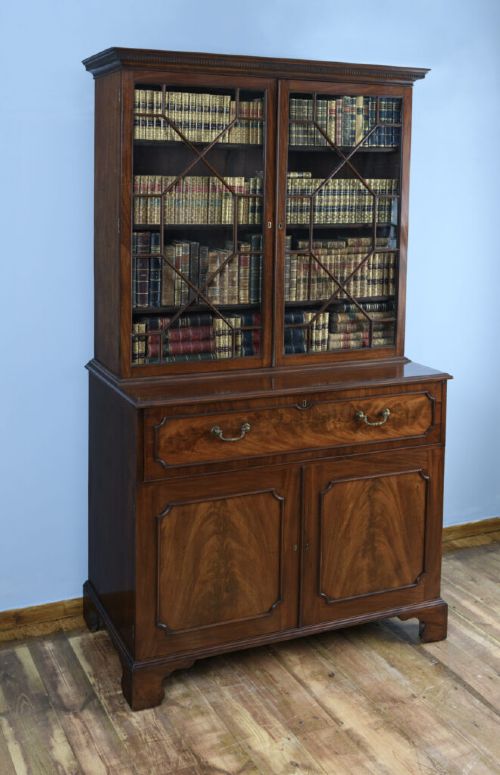
A dark mahogany secretary cabinet, also known as a bureau bookcase or secretaire bookcase, serves as a dual-purpose piece of furniture for writing and book storage. These items typically feature a fall-front desk drawer that conceals a fitted interior with small drawers and pigeonholes, topped by a shelved cabinet enclosed by glass or wooden doors.
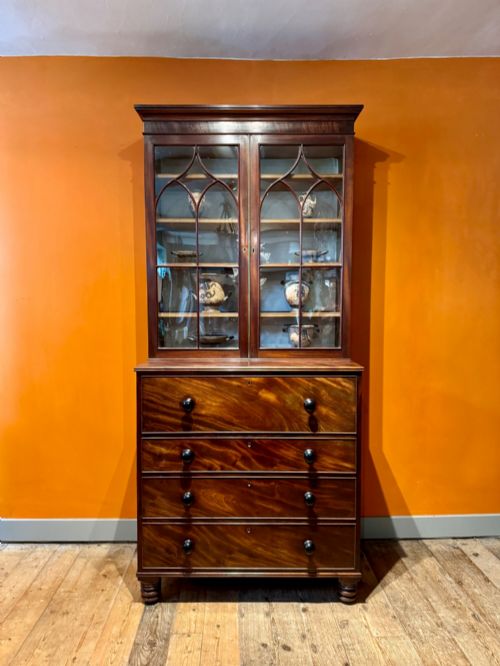
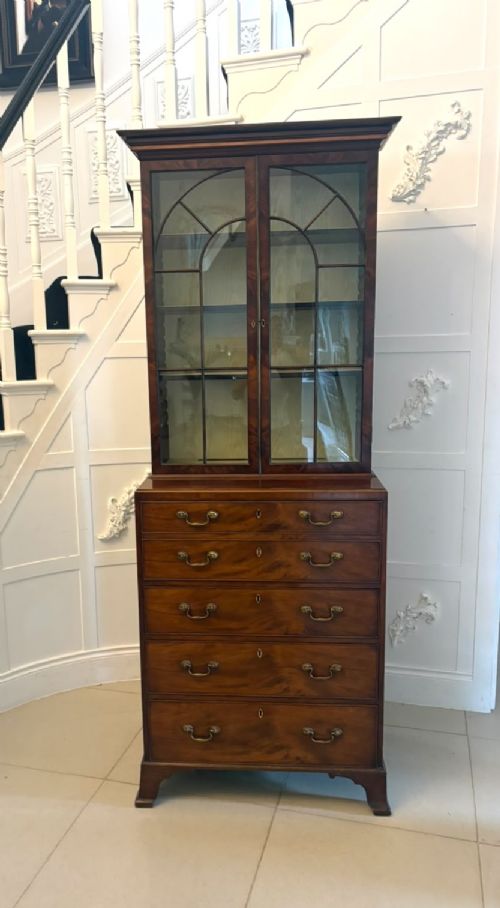
The selections available span multiple stylistic eras, with George III and Regency pieces appearing alongside later Victorian and Edwardian examples. Buyers frequently encounter taller upright formats that integrate lower drawer banks with upper display shelving.
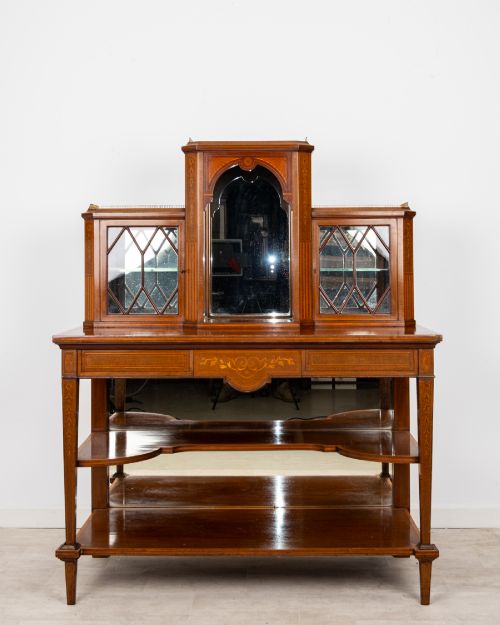
Origins trace back through the Georgian and William IV periods, where cabinetmakers utilised dense tropical hardwoods to construct imposing library and parlour furniture. Simpler Edwardian writing desks and bonheur du jour variations also emerge within the broader category of secretary cabinets.
Materials and Construction
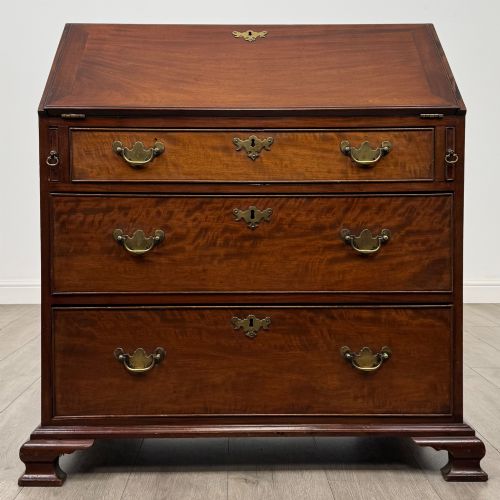
Makers constructed these cabinets primarily using solid mahogany and figured mahogany veneers, accented internally with secondary woods like oak. Brass hardware, including drop handles and escutcheons, secures the drawers and fall-front writing surfaces.
Glazed upper doors utilise individual wooden glazing bars, often arranged in astragal patterns to hold glass panes securely. Leather writing inserts frequently line the fold-down desk compartments, providing a durable surface for correspondence.
Inlaid decorative elements incorporate lighter contrasting timbers such as satinwood and rosewood into the mahogany carcase. Mirror glass occasionally appears within specific cabinet doors or associated writing compartments.
Many antique secretary cabinets contain hidden spring-loaded release buttons inside the pigeonholes, designed to unlock secret compartments for storing valuables.
Judging Quality
The refinement of the interior pigeonholes and small drawers dictates much of the distinction between standard and superior pieces. Elaborate secret compartments, finely turned pull-knobs, and meticulous pigeonhole curves denote superior workshop execution.
The choice of mahogany veneer significantly influences visual appeal, with heavily figured timber commanding greater attention than plain stock. Cabinetmakers who selected symmetrical grain patterns across large fall-front panels demonstrated advanced timber-matching skill.
The integration of original brass fittings and undamaged astragal glazing bars preserves the integrity of the piece. Structural balance within the joinery ensures the heavy upper bookcase rests securely upon the lower writing bureau.
Thomas Chippendale·George Oakley·Gillows
The Dark Mahogany Secretary Cabinet Glossary
- Secretary cabinet
- A piece of furniture featuring a hinged writing flap that drops down to reveal a fitted desk interior, combined with upper shelving. It is synonymous with the bureau bookcase and secretaire bookcase.
- Secretaire
- The French term for a writing desk or cabinet, frequently applied to English furniture that incorporates a pull-out or drop-down writing drawer.
- Astragal glazed
- A method of dividing glass doors into smaller panes using slender wooden mouldings. This technique defines the upper bookcase sections of many Georgian and Regency examples.
- Figured mahogany
- Timber harvested with distinctive, highly decorative grain patterns such as flame or fiddleback. Cabinetmakers reserved these choice veneers for prominent exterior surfaces.
- Bonheur du jour
- A light lady's writing desk popular during the Edwardian era, featuring an upper tier of small drawers and shelves. It represents a more compact relative of the larger secretary cabinet.
Dark Mahogany Secretary Cabinet: Frequently Asked Questions
How do I use a secretary cabinet today?
These cabinets function effectively in modern homes as both display units and functional writing desks. The upper glazed shelves hold books and decorative objects, while the drop-front desk provides a concealed surface for a laptop or stationery.
The internal compartments remain useful for organising small household items, letters, and office supplies while keeping them out of sight when the desk flap is closed.
How can I date a mahogany secretary cabinet?
Dating relies on observing structural characteristics, hardware styles, and timber selection across different periods. Georgian and Regency pieces typically display hand-cut dovetails, dense solid mahogany, and classical proportions, while Edwardian examples often feature lighter construction and satinwood inlay.
Examining the secondary woods inside the drawer linings and the style of the glass door glazing bars helps narrow down the decade of manufacture.
What is the difference between a bureau and a secretaire?
In British furniture terminology, a bureau generally refers to a desk with an angled, sloping fall-front lid that opens forward. A secretaire usually describes a cabinet where the writing surface pulls out horizontally as a drawer or drops down from a vertical front.
Both forms frequently appear combined with upper bookcase sections, leading to overlapping descriptions in historical furniture categories.
How do I care for antique mahogany furniture?
Maintain antique mahogany by keeping the timber away from direct sunlight and strong heat sources that can dry out the wood and crack veneers. Dust the surfaces regularly with a soft, dry cloth rather than applying silicone-based polishes.
Applying a traditional beeswax polish occasionally helps nourish the timber and preserve the natural sheen of the dark mahogany finish.