

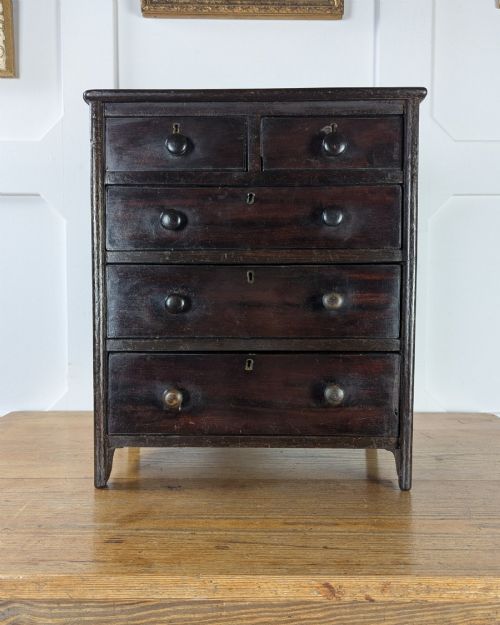
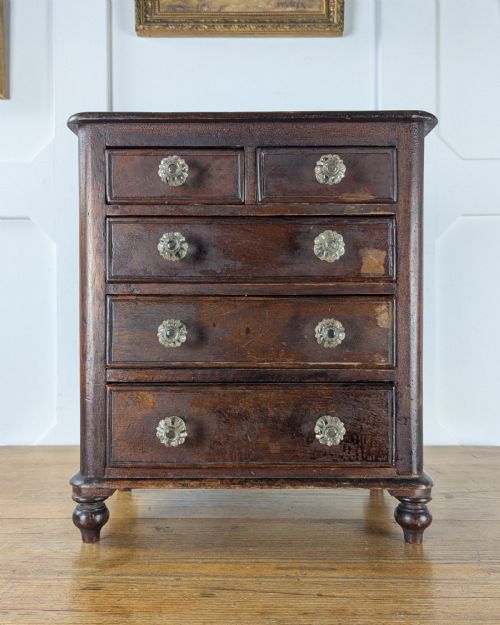
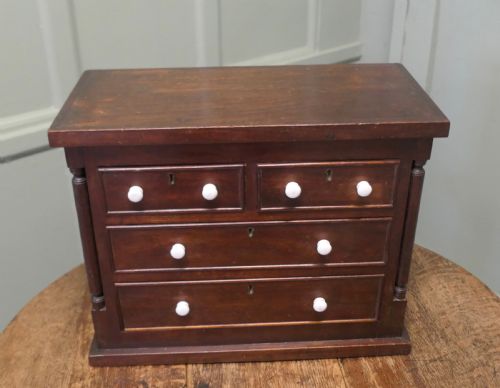
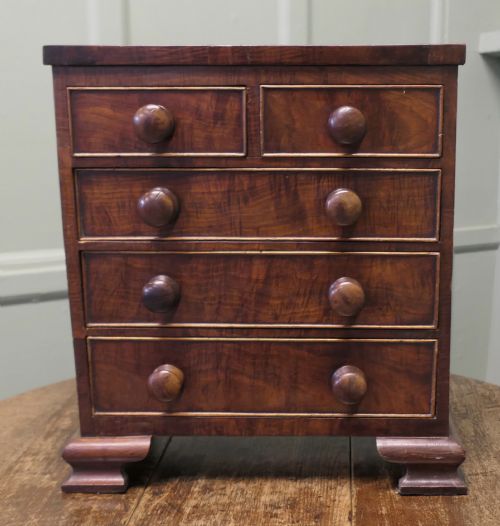
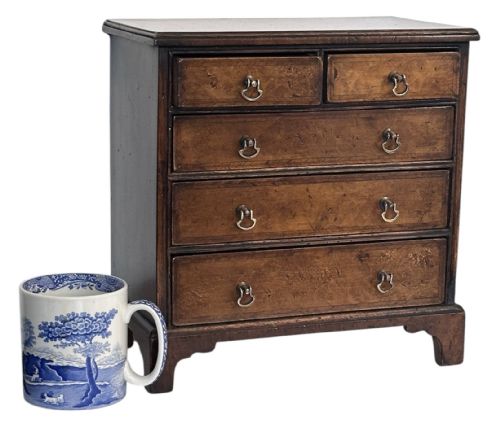


Dark Mahogany Miniature Chest
A dark mahogany miniature chest packs the presence of grand cabinet-making into a small tabletop compass.
Dark Mahogany Miniature Chest
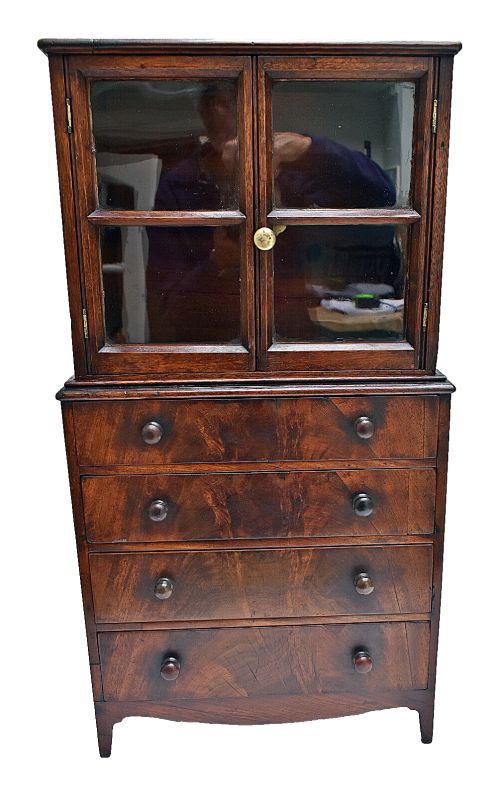
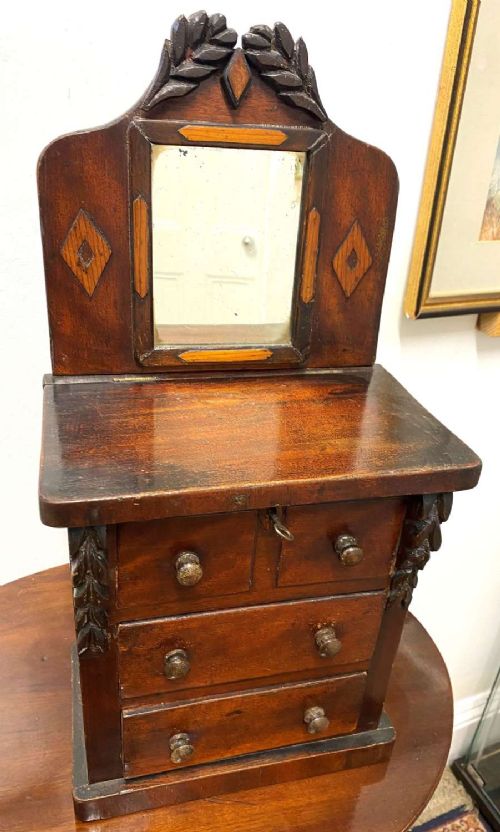
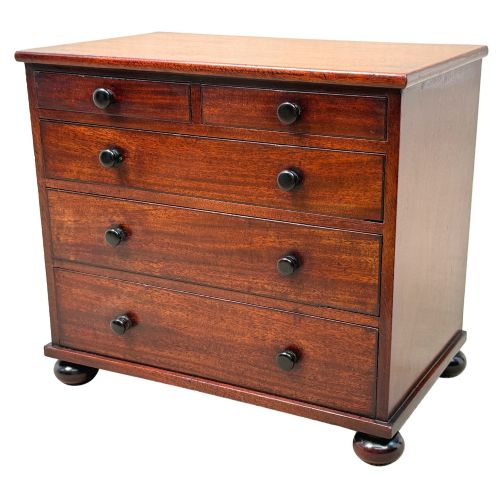
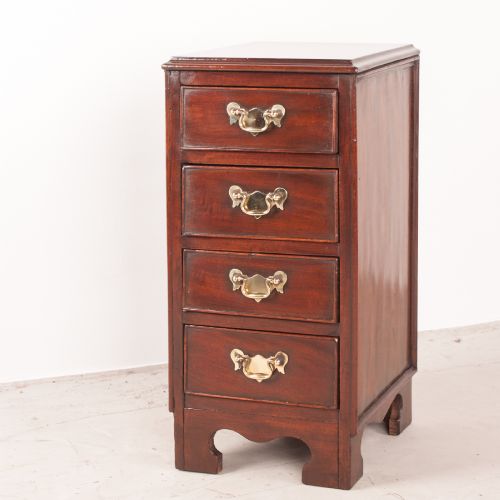
A dark mahogany miniature chest sits on a tabletop or desk, mirroring the joinery and proportion of full-sized furniture. These pieces span Georgian, Victorian, and Edwardian periods, appearing in standard drawer configurations as well as specialised specimen cabinets.
The form encompasses apprentice pieces, trinket storage, and small collector chests designed to hold slides, coins, or jewellery. The wood shows the deep reddish-brown tones typical of the timber across the eighteenth and nineteenth centuries.
How they were made
Cabinet-makers constructed these small chests using solid mahogany and mahogany veneers over secondary timbers such as oak, applying boxwood inlay for decorative contrast. Drawer linings often incorporate fine secondary woods joined with hand-cut dovetails.
Hardware consists of brass handles, escutcheons, and hinges, while turned feet support the base of many examples. Glass panels appear on specific display and microscope slide cabinets to protect the contents within.
Dark Mahogany Miniature Chest Retail Price Guide 2026
Typical asking prices for dark mahogany miniature chest among the pieces listed under this phrase on Sellingantiques today, from the lower quarter to the upper quarter. They describe what is for sale here now, not the wider market.
The furniture forms include miniature chests of drawers, specimen cabinets, tea caddies, and small wardrobes.
What varies in quality
The refinement of the timber and the crispness of the dovetailing determine the grade of a dark mahogany miniature chest. Superior examples display carefully chosen grain patterns and balanced proportions that echo full-scale masterwork.
The integrity of the original brass hardware and the smoothness of drawer operation distinguish higher-tier pieces from utilitarian storage boxes. Patina develops naturally over the centuries, rewarding surfaces that retain their original finish.
The Dark Mahogany Miniature Chest Glossary
- Apprentice piece
- A small item of furniture demonstrated by a craftsman to prove skill before gaining guild membership. Many miniature chests carry this traditional attribution.
- Bowfront
- A curved cabinet front where the central section swells outward. This stylistic choice softens the rectilinear appearance of small chests.
- Specimen cabinet
- A specialised storage piece containing multiple shallow drawers designed to hold natural history collections or microscope slides. These pieces prioritize internal organisation and protection.
- Escutcheon
- A protective brass plate surrounding a keyhole. It prevents the surrounding wood from wearing down during repeated use of the key.
Dark Mahogany Miniature Chest: Frequently Asked Questions
What were dark mahogany miniature chests used for?
These small chests served multiple purposes, from tabletop storage for trinkets and jewellery to specialised housings for watchmakers' tools and microscope slides. Cabinet-makers also created them as salesman samples or apprentice pieces to demonstrate technical proficiency.
Over time, collectors adapted them to display small curiosities, medals, and botanical specimens. Their sturdy construction allowed them to sit safely on desks or sideboards for daily access.
How do I date a mahogany miniature chest?
Dating relies on examining the structural characteristics, secondary woods, and hardware styles associated with periods like the Georgian or Victorian eras. Hand-cut dovetails, boxwood inlay, and turned feet help narrow the span of manufacture.
Changes in brass hardware design and the type of finish applied to the mahogany also offer reliable clues to age. Comparing the proportions to full-sized architectural trends of the same decade clarifies the timeline further.
Are apprentice pieces different from regular miniature chests?
Apprentice pieces represent specific skill demonstrations created by aspiring craftsmen working under a master. Regular miniature chests were often built as high-end luxury items for domestic use or as specialised collector cabinets.
Both categories share identical attention to detail and scale, making them difficult to separate purely by appearance. The distinction often rests on family provenance or traditional attribution recorded over generations.
How do I care for antique mahogany furniture?
Maintain antique mahogany by keeping it away from direct sunlight and sudden temperature shifts that cause the wood to dry out. Regular dusting with a soft, dry cloth preserves the aged patina without stripping the surface.
A light application of traditional wax polish helps nourish the timber and protect the finish against moisture. Avoid silicone-based sprays, which can penetrate the pores and damage the historic surface.