

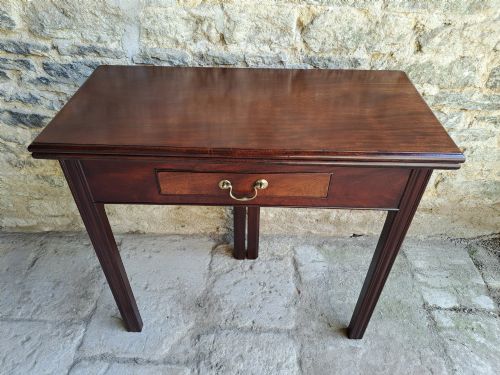
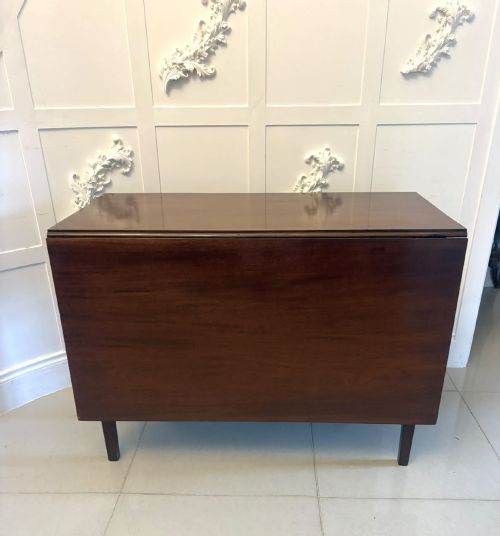
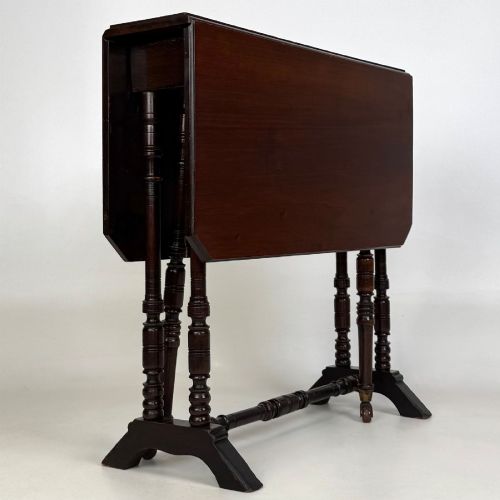
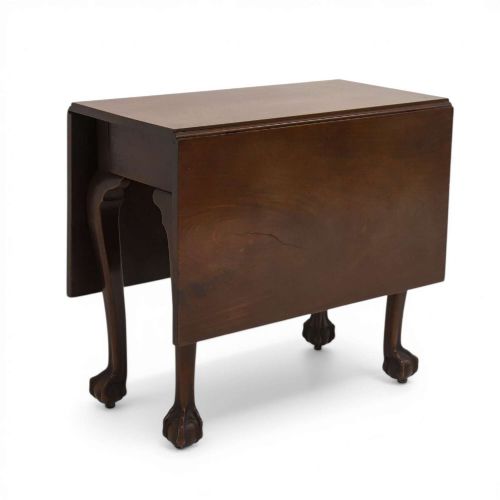
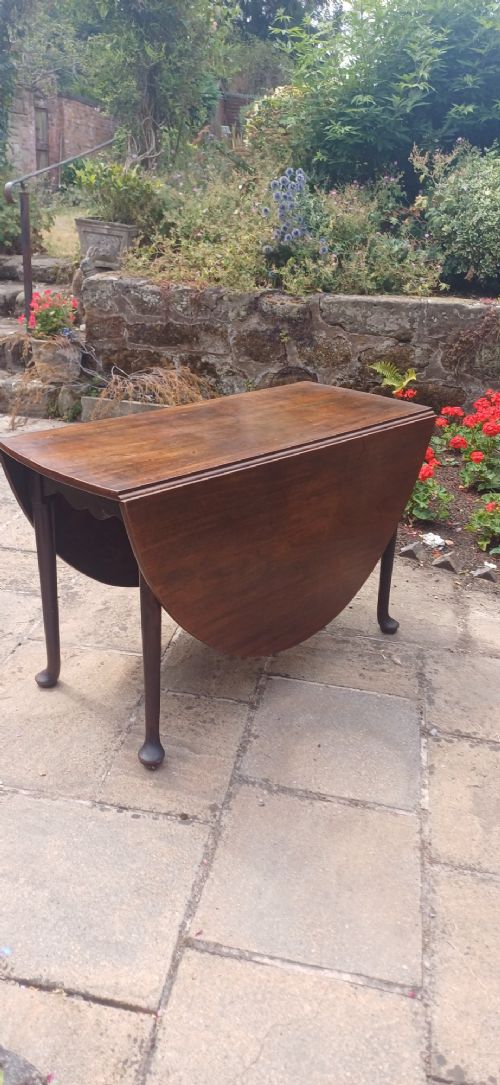

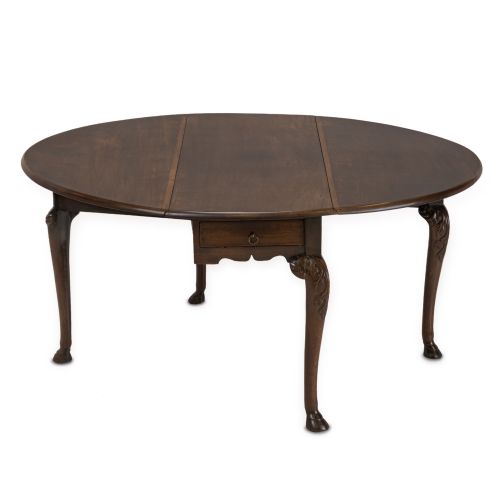
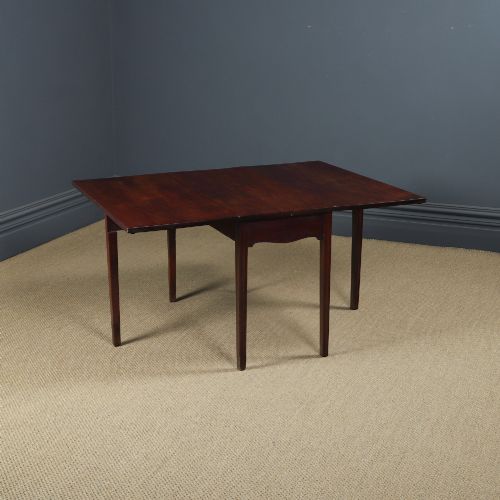


Dark Mahogany Gateleg Table
A dark mahogany gateleg table offers rich timber depth and folding utility, bringing eighteenth-century dining versatility directly into a modern room.
Dark Mahogany Gateleg Table
A dark mahogany gateleg table is a drop-leaf dining or occasional surface designed with hinged flaps supported by pivoting legs that swing outward. When you search for this phrase, you meet examples spanning the eighteenth century, the Georgian period, and Edwardian revivals.
The pieces on this page appear primarily as dining tables, occasional tables, and side tables constructed from rich timbers like Cuban mahogany and solid mahogany. Many pieces retain period characteristics such as pad feet, cabriole legs, or slender spider leg frames.
Buyers encounter forms ranging from compact Pembroke and Sutherland tables to large Irish wake tables built for substantial gatherings. The darker patination developed over centuries gives these folding tables their distinct visual presence.
How they were made
Cabinet makers utilised dense timbers such as Cuban mahogany and solid mahogany, often complemented by satinwood banding or walnut accents. These woods were selected for their ability to take a deep, dark polish while supporting slender structural components like spider legs.
Construction relied on complex hinged drop-leaf mechanisms and swinging gatelegs fastened with timber or iron pivots. Metal elements like brass castors and ceramic fittings appear on select tables to ease movement.
Carving was applied selectively to knees, borders, and feet, featuring pad feet, hoof feet, or claw-and-ball terminals that anchored the substantial weight of the folding leaves.
Dark Mahogany Gateleg Table Retail Price Guide 2026
Typical asking prices for dark mahogany gateleg table among the pieces listed under this phrase on Sellingantiques today, from the lower quarter to the upper quarter. They describe what is for sale here now, not the wider market.
Listings feature pieces spanning the eighteenth century, Georgian era, nineteenth century, and Edwardian period.
What varies in quality
Quality rests upon the selection of the timber and the depth of the natural patination achieved through age and wax polishing. Cuban mahogany boards exhibit a superior density and grain figure compared to later or revival equivalents.
The integrity of the gateleg swing mechanism and the tightness of the knuckle joints dictate how smoothly the folding leaves operate under daily use. Original brass castors and untouched brass hardware add significantly to a piece's integrity.
Proportion and scale separate standard utilitarian examples from pieces displaying refined carving on the cabriole legs or delicate turning on spider-leg frames.
The Dark Mahogany Gateleg Table Glossary
- Gateleg table
- A table with hinged leaves supported by legs that swing out like gates. This design allows the surface area to expand or contract according to space requirements.
- Sutherland table
- A narrow drop-leaf table featuring exceptionally slender legs and leaves that fold down almost vertically. It functions primarily as an occasional or tea table.
- Spider leg
- A style characterised by extremely thin turned legs braced by fine stretchers. It provides lightweight support for smaller occasional and Pembroke tables.
- Pad foot
- A simple rounded foot resting flat on the floor, commonly found on Georgian drop-leaf tables. It terminates the base of a cabriole or straight leg without excessive carving.
- Cuban mahogany
- A dense, dark timber harvested in the Caribbean and prized for its rich grain and heavy weight. Cabinet makers utilised it extensively during the eighteenth century.
Dark Mahogany Gateleg Table: Frequently Asked Questions
How do I use a gateleg table daily?
Keep one or both leaves dropped against the central frame to use the piece as a side table or console against a wall. Raise the flaps and swing the supporting legs outward whenever you need a full dining or work surface.
Protect the dark mahogany surface from moisture and heat by using coasters and placemats. Regular waxing maintains the deep shine without building up heavy residues.
How can I tell an eighteenth-century table from an Edwardian copy?
Examine the underside of the leaves and the pivot joints for hand-cut joinery, timber shrinkage, and tool marks consistent with early hand-working methods. Eighteenth-century surfaces display a deep, natural patination developed over generations.
Edwardian pieces often feature lighter secondary timbers, standardised machine fixings, and cleaner, less variable wood grain. Revivals from the nineteen-hundreds also tend to utilise lighter hardware styles.
What is the difference between a Sutherland table and a gateleg table?
A Sutherland table is a specific, narrower subset of the gateleg family designed with very thin legs and leaves that drop down almost completely flat. They generally serve as small occasional tables rather than primary dining surfaces.
Standard gatelegs incorporate sturdier structural framing built to support heavy meals and frequent folding action. Their proportions accommodate chairs underneath when fully opened.
Will a dark mahogany table fit in a modern room?
The ability to fold down the leaves makes these tables adaptable to rooms with limited floor space. Dropping the flaps transforms a large dining surface into a narrow console.
The dark mahogany tones anchor neutral contemporary interiors while adding visual warmth and historical contrast.