

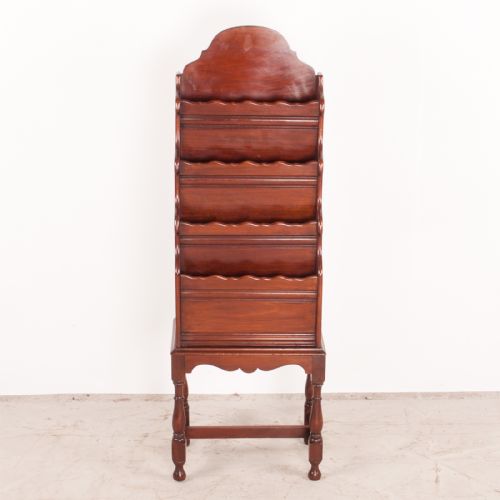
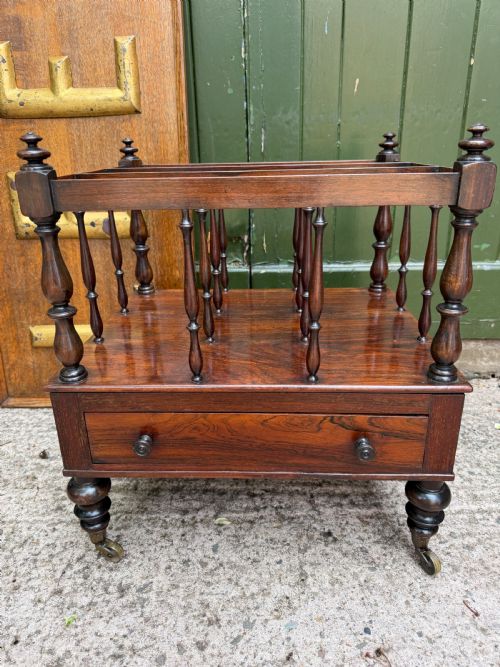

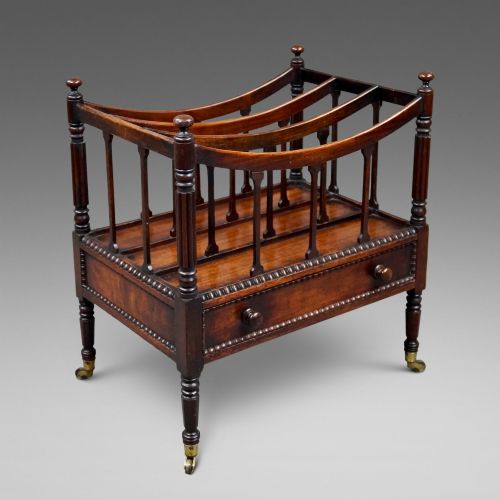


Dark Mahogany Canterbury
A dark mahogany canterbury brings both elegance and order to a room, holding papers and folios with upright grace.
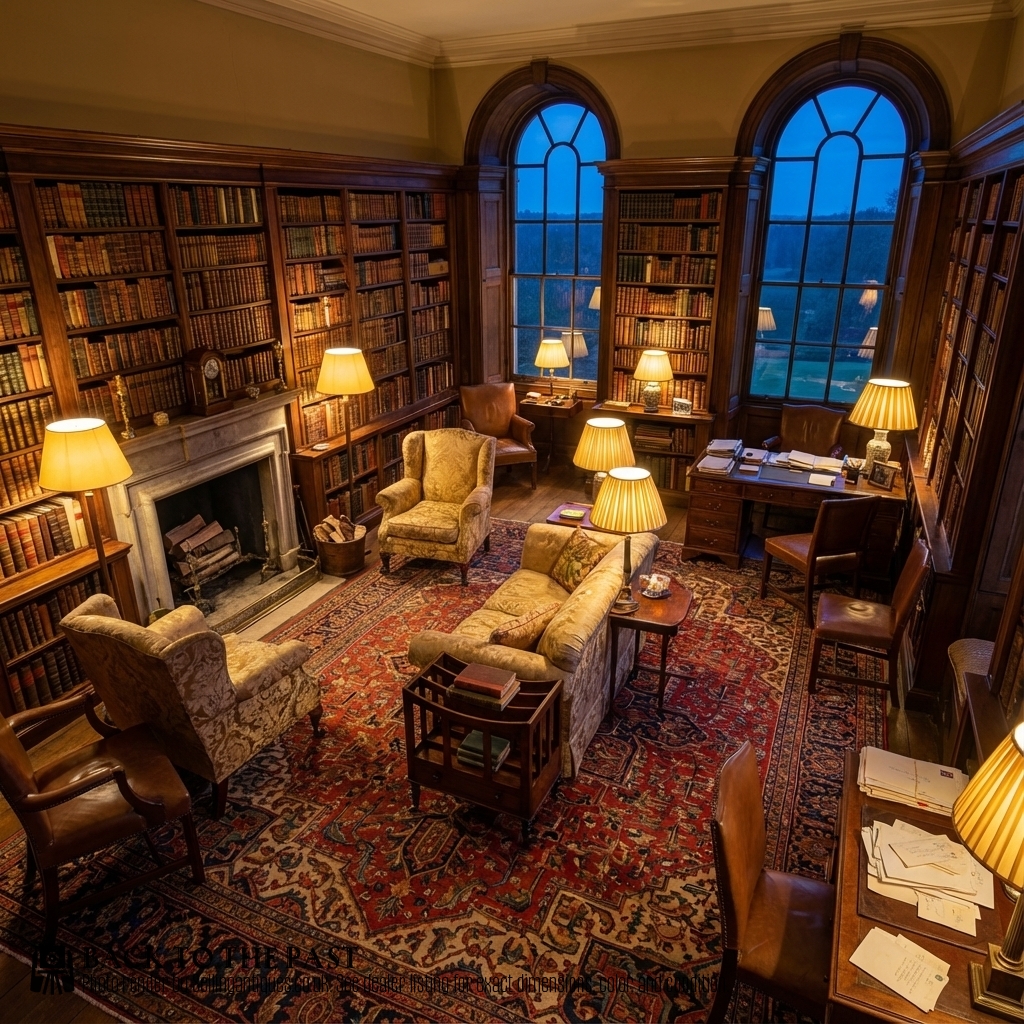
Dark Mahogany Canterbury
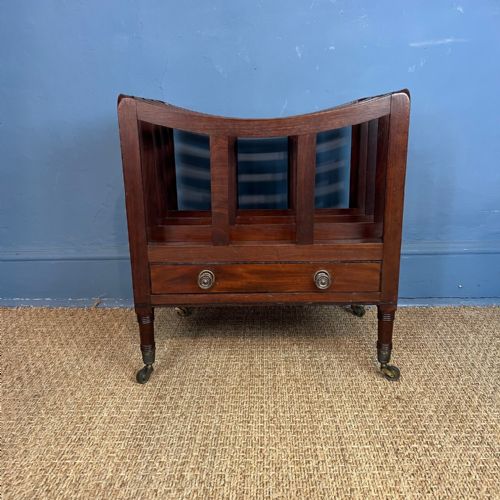
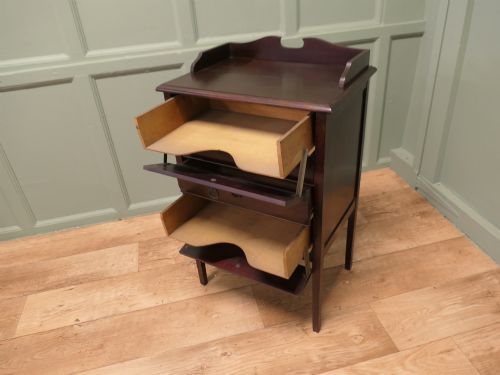
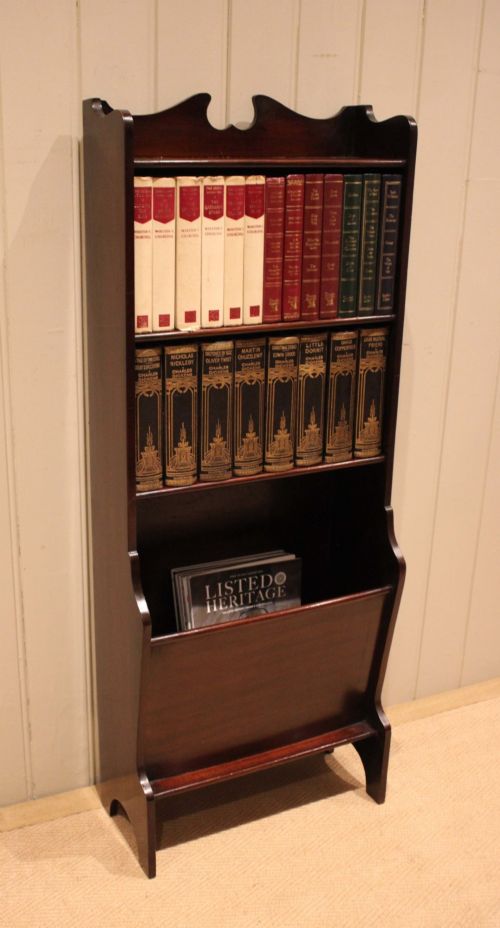
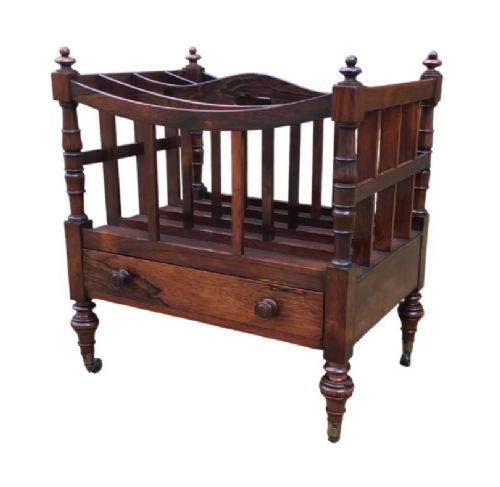
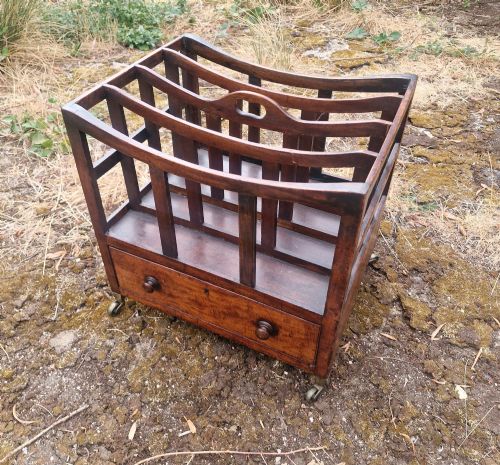
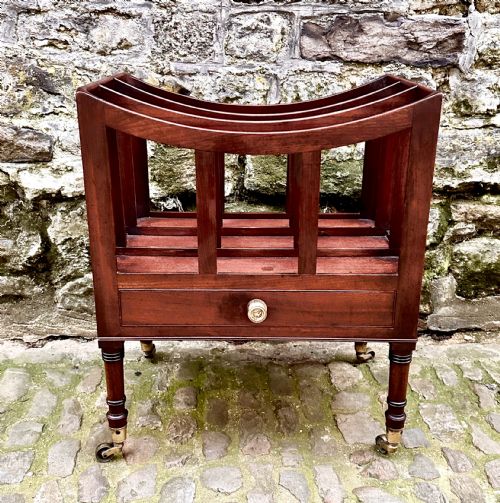
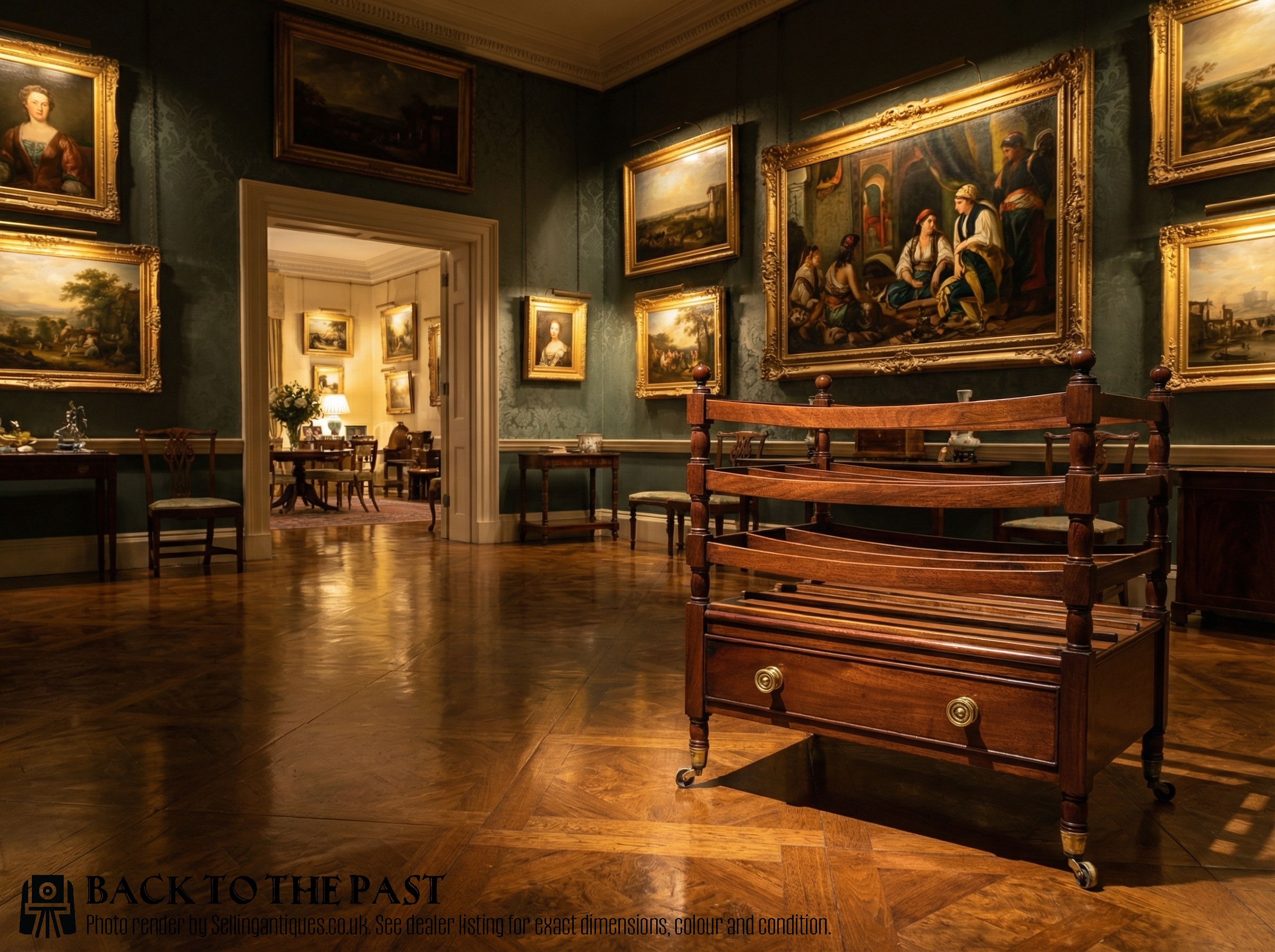
When you search for a dark mahogany canterbury, you encounter low, freestanding furniture pieces designed with upright divisions to hold sheets of music, newspapers, or folios. The pieces on this page span several periods, including Georgian, Regency, William IV, and Victorian eras.
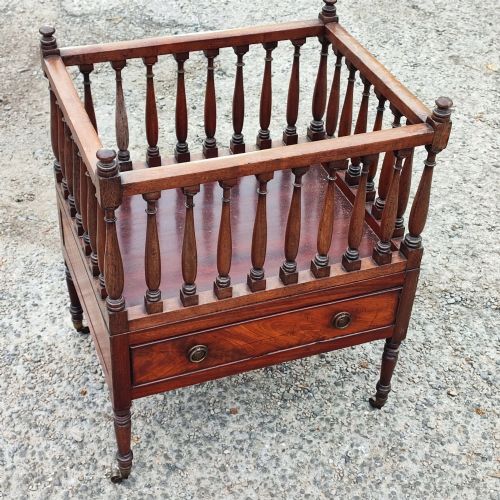
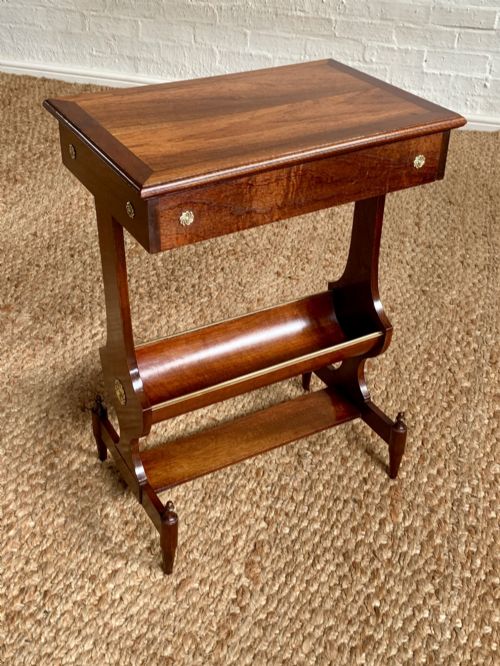
You are most likely to meet boat-shaped designs or multi-division racks fitted with a low drawer beneath the slatted body. These items often double as side tables or music stands, combining compartment storage with a flat top surface.
Originating as stands for musical scores before accommodating periodicals, these items appear in standard dimensions as well as grand scales. The forms reflect the cabinet-making standards of the eighteenth and nineteenth centuries.
How they were made
Carpenters utilised dense tropical timbers, predominantly mahogany and occasionally Cuban mahogany or rosewood, sometimes accented with contrasting ebony banding or delicate inlay work. The structural divisions rely on turned spindle supports or pierced scroll partitions.
Metal fittings such as brass castors and small handles appear frequently on the feet and drawer fronts of these stands. Construction techniques involve precise joinery to ensure the upright partitions withstand the weight of heavy paper folios.
Dark Mahogany Canterbury Retail Price Guide 2026
Typical asking prices for dark mahogany canterbury among the pieces listed under this phrase on Sellingantiques today, from the lower quarter to the upper quarter. They describe what is for sale here now, not the wider market.
One grand scale folio was made to hold oversized music sheets for enthusiastic Georgian musicians.
What varies in quality
The distinction between standard examples and top-tier pieces lies in the grain figuration of the timber and the crispness of the turned or carved details. Finer items exhibit superior proportion, well-matched veneer selections, and substantial brass mounts.
Structural integrity of the slatted divisions and the smooth operation of any integrated drawer indicate the level of craftsmanship invested during manufacture. Pieces retaining their original castors and unblemished wood surfaces command greater appreciation.

Charles Dowsett
The Dark Mahogany Canterbury Glossary
- Canterbury
- A low stand with upright divisions used originally for sheet music and later for newspapers and magazines.
- Division
- One of the vertical partitions that separates the rack into sections for holding papers upright.
- Boat-shaped
- A curved hull-like contour found on the upper rail of certain Regency examples.
- Etagere
- A set of open shelves for displaying small objects, sometimes associated with multi-tiered stands.
- Inlay
- Decorative material set into the surface of the wood to form patterns, such as ebony banding.
Dark Mahogany Canterbury: Frequently Asked Questions
What is a dark mahogany canterbury used for?
These stands were originally built to hold sheet music near a piano or music stand. Over time, their utility shifted toward keeping newspapers, magazines, and folios tidy in a sitting room.
Today, they function as practical side tables or decorative accent pieces that maintain their traditional purpose of holding printed materials.
How do I date a canterbury?
Dating relies on observing the prevailing style and construction methods of specific periods such as the Georgian, Regency, or Victorian eras. Details like boat-shaped rails, turned spindles, and specific wood selections provide clues to the decade of manufacture.
Cabinet-makers adapted the form across the nineteenth century, moving from delicate George III proportions to heavier Victorian scales.
Did all canterburys have drawers?
Many examples include a single shallow drawer positioned beneath the slatted rack section. This compartment served to store smaller accessories like tuning forks, pens, or extra sheets.
Some simpler designs omit the drawer entirely, consisting solely of the upright divisions raised on legs with castors.
Where should I place a canterbury in a room?
These freestanding pieces suit placement beside a sofa, armchair, or desk where reading materials accumulate. Their low profile allows them to sit neatly without dominating the floor space.
The flat top surface also accommodates a small lamp or decorative object while the lower rack stores periodicals.