



Dark Green Wall Art
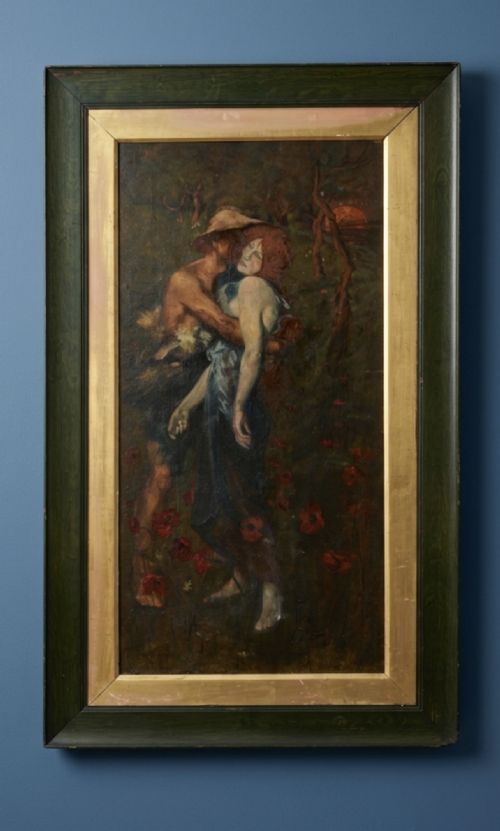
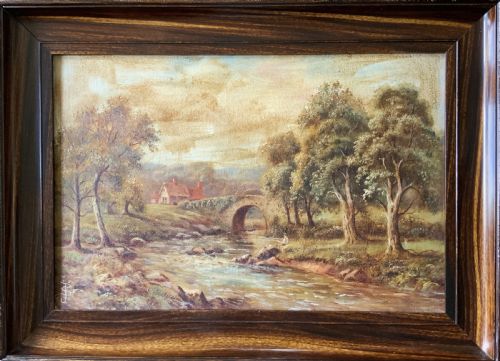
Dark green wall art encompasses centuries of painted canvases, wood panels and glass works dominated by deep forest tones.
Dark Green Wall Art
Dark green wall art brings together oil paintings, reverse glass prints, embroidered samplers and engraved botanicals spanning from the seventeenth century to the mid-twentieth century. The selection leans heavily on antique oil paintings on canvas and wood, alongside portraits, landscapes and still life studies.
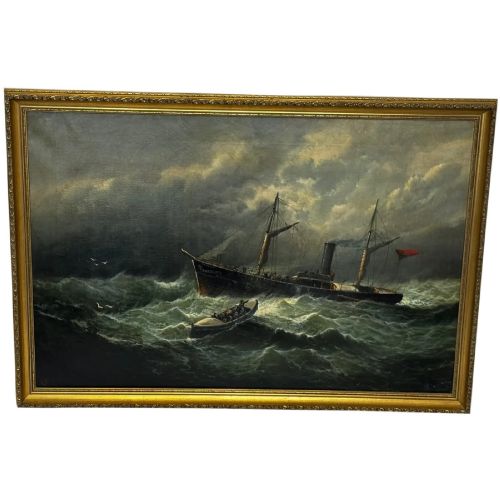
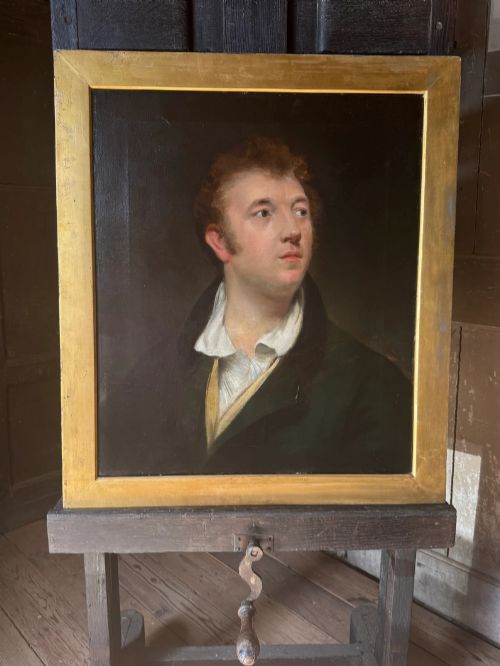
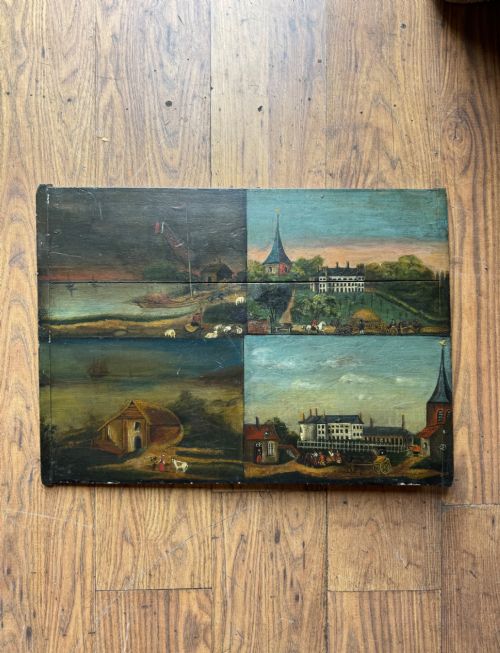
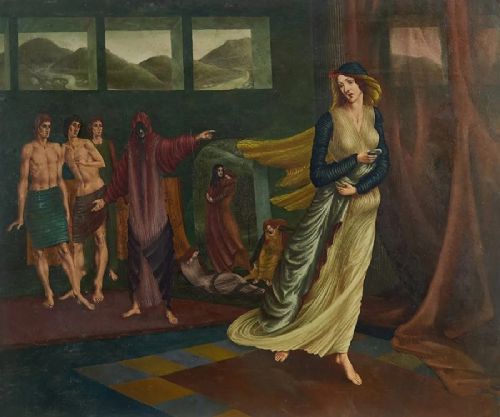
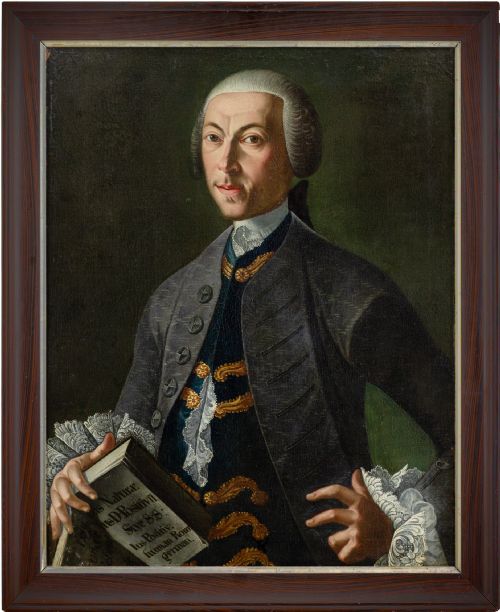
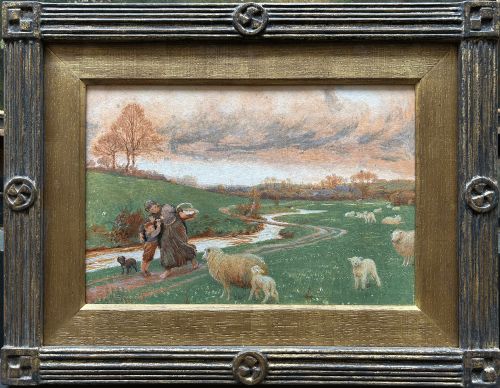
Buyers encounter Victorian maritime rescue scenes, Georgian reverse glass prints, and mid-century abstract compositions sharing a common palette of rich, dark greens. Works range from provincial folk art and naive pieces to formal European school portraits and British landscape studies.
How they were made
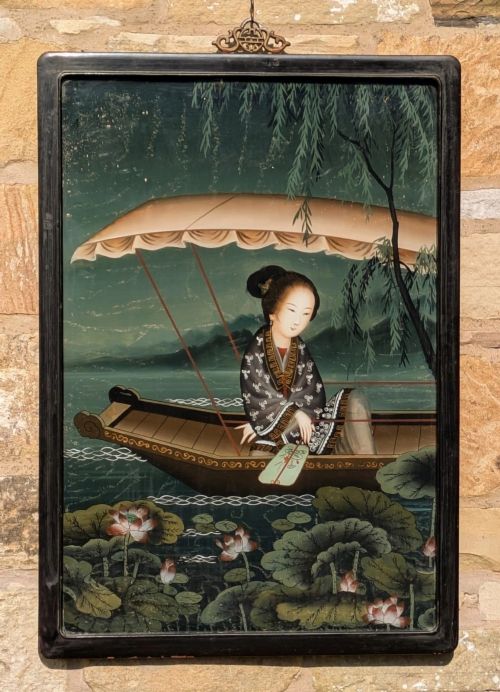
Makers utilised oil paint applied to canvas, wood panels, copper and board, often building up deep tones through layered glazes. Reverse painting and printing on glass required applying pigments directly to the rear of the pane to be viewed through the polished surface.
Frames play an integral role in the construction of these pieces, utilising solid wood, gilt finishes, and period mouldings designed to complement the artwork. Engraved and sandblasted glass wall decorations demonstrate alternative textural techniques from the early twentieth century.
Materials recorded across the selection include canvas, wood panels, copper, paper, and glass used for reverse-painted portraits.
What varies in quality
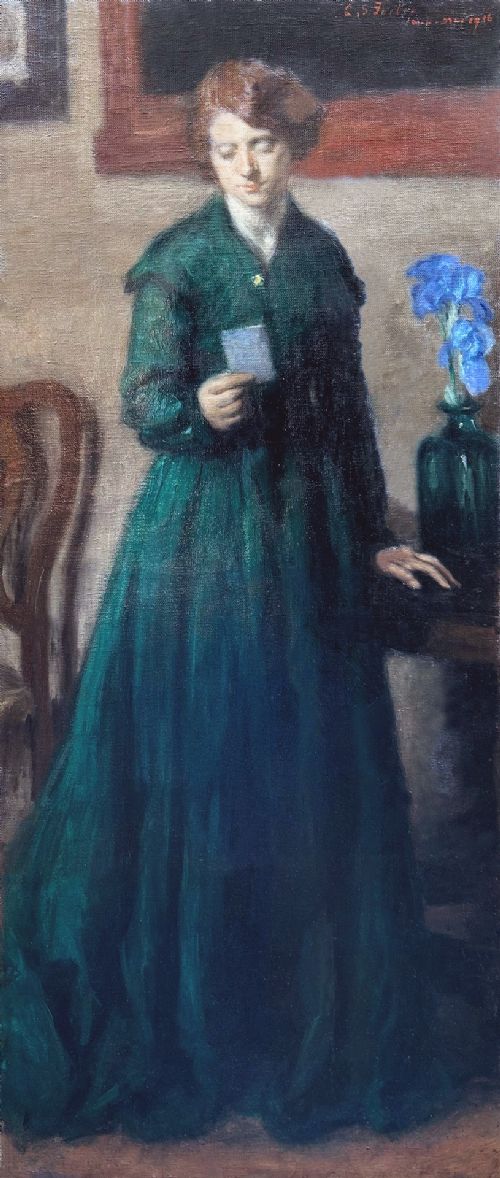
The sophistication of the brushwork and the depth of the pigment layers separate proficient academic execution from naive provincial output. Finer portraits and landscapes display a deliberate management of shadow and light, particularly where dark green drapery or foliage frames the subject.
The preservation of the original support material and framing dictates the integrity of the piece. Untouched oil surfaces retaining their original tension and period frames without modern reconstruction hold greater material authenticity.
William Broome·James Howe·Francis Plummer·Sydney Yates Johnson·Owen Bowen·George Cole·Ernest Higgins Rigg·John Curtis·H. Alken·Richards Rubin·John Osborn·Sonia Delaunay·Cuthbert Edmund Swan·George Lance·John Scougall·William Orpen
The Dark Green Wall Art Glossary
- Reverse painting on glass
- An artistic technique where the image is painted directly onto the back of a glass sheet so the final picture is viewed through the front. This method protects the pigment from atmospheric dirt and gives the surface a glossy finish.
- Oil on canvas
- A painting medium where pigments are suspended in drying oils and applied to stretched fabric. It allows for rich blending of dark green tones and subtle tonal gradations.
- Sampler
- A piece of embroidery produced as a demonstration or test of skill in needlework. These often feature alphabets, motifs, and botanical designs executed in coloured threads.
- Still life
- An artwork depicting mostly inanimate subject matter, typically commonplace objects such as flowers, fruit, or tableware. These compositions frequently rely on dark backgrounds to make foreground items stand out.
- School
- A group of artists influenced by a particular teacher, region, or general period of art history. Attributions to a specific school denote stylistic similarities rather than a direct signature.
Dark Green Wall Art: Frequently Asked Questions
How do I hang heavy framed oil paintings safely?
Heavy oil paintings on wood panels or large canvases require fixings screwed directly into wall studs or heavy-duty hollow wall anchors suited to the weight. Using two fixing points distributes the load evenly and prevents the frame from tilting over time.
Ensure the picture wire or D-rings on the reverse are securely fastened to the wooden stretcher or frame rather than relying on decorative mouldings. Professional framing support safeguards the structural integrity of both the artwork and the wall.
What is reverse glass painting?
Reverse glass painting involves applying oil paint or printing ink directly onto the rear of a glass plate in reverse order, starting with the fine details and finishing with the background. When viewed from the front, the glass acts as a protective glaze while imparting a luminous quality to the colours.
This technique was popular for decorative portraits and prints during the seventeenth and eighteenth centuries. The smooth glass surface requires careful handling to prevent scratching or flaking of the pigments behind.
How can I tell a Victorian painting from a Georgian one?
Victorian paintings often exhibit broader brushwork, more intense colour palettes, and a wider range of narrative subjects influenced by industrialisation and maritime trade. Georgian works tend towards formal portraiture, subdued natural tones, and classical compositions reflecting Enlightenment ideals.
Examining the canvas weave, stretcher construction, and framing style provides additional clues to the era of creation. Maker inscriptions, exhibition labels, and biographical dates of the artist anchor the piece to a specific decade.