






Dark Green Bronze Statuette
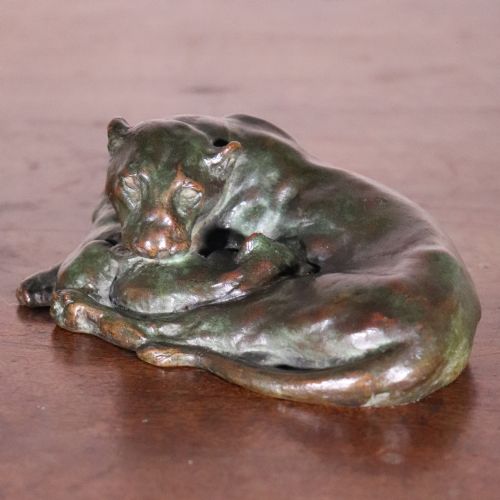
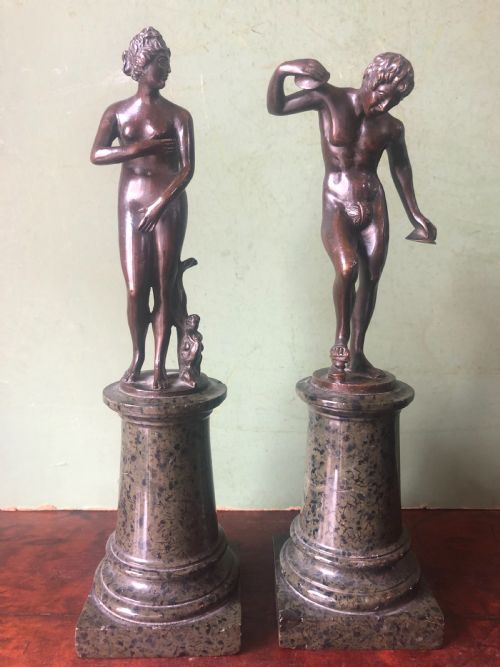
These dark green bronze statuette examples range from Neoclassical figures and French Animalier subjects to Art Deco studies, offering collectors exceptional sculptural depth.
Dark Green Bronze Statuette
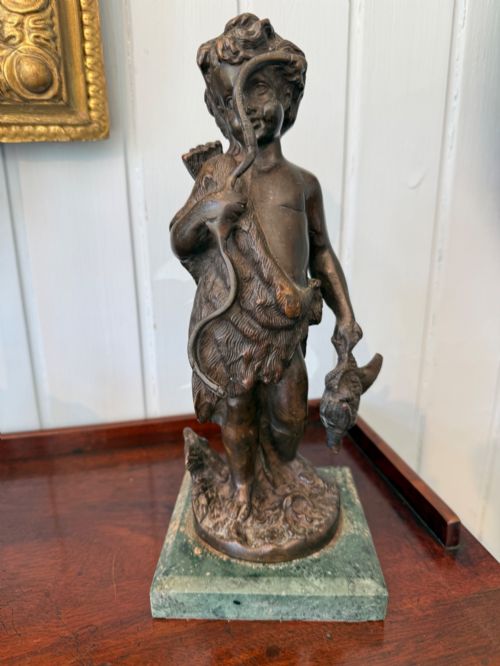
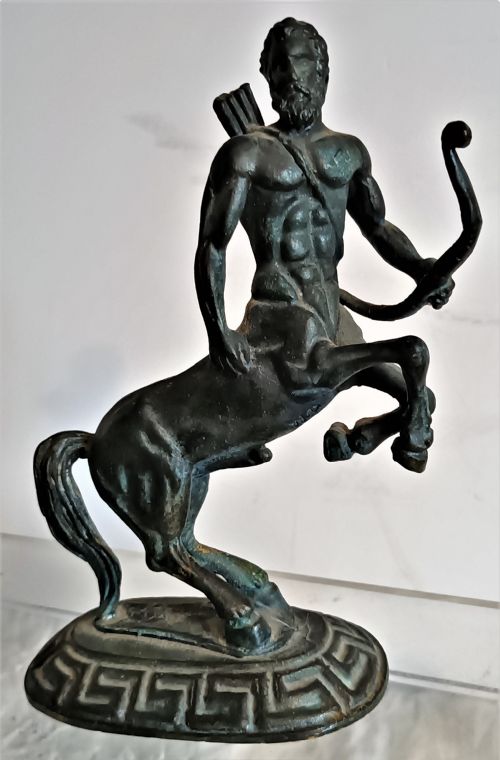
A dark green bronze statuette brings classical mythology, animals and human forms into domestic spaces through solid metal casting. These sculptures span the nineteenth and twentieth centuries, taking the shape of cherubs, centaurs, demons, musicians and dancers.
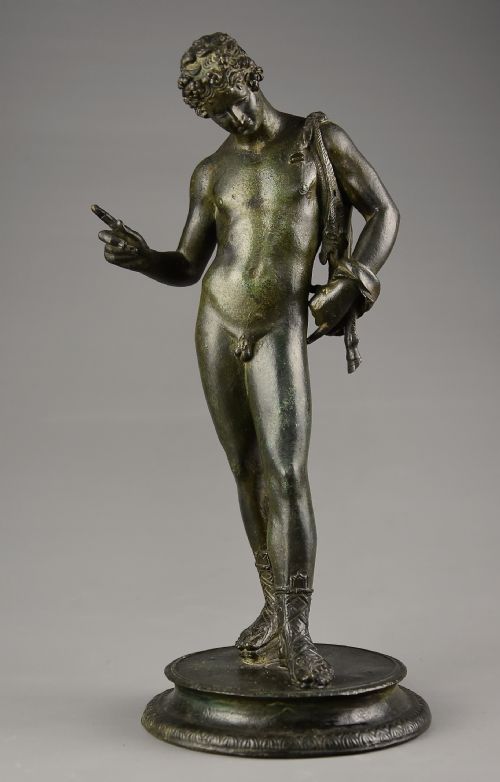
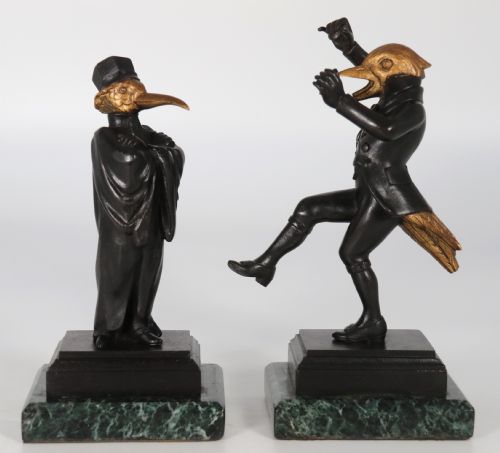
Buyers will encounter Neoclassical Grand Tour souvenirs, French Animalier studies of hounds and lions, and Art Deco works. Subjects range from Roman gladiators and ancient scholars to theatrical birds and mythological figures.
Many of these pieces incorporate integral bases or rest upon separate mounts of marble, onyx or stone. The scale varies from small cabinet figures to substantial tabletop sculptures.
How they were made
Sculptors created these pieces using traditional metal casting techniques, often employing the lost-wax method to capture fine anatomical details in bronze. Founders then applied chemical treatments to produce the characteristic dark green patination seen across the surface.
Selected works incorporate parcel-gilt bronze highlights alongside the dark green patination to emphasise specific garments or details. Many finished casts were secured to heavy stone, onyx or marble bases to provide stability.
Listings feature periods from the nineteenth century through the early twentieth century, incorporating marble, onyx and stone alongside patinated bronze.
What varies in quality
The refinement of the casting and the crispness of the chasing separate standard production from superior output. Master founders achieved sharp definition in hair, musculature and clothing without losing the underlying form.
The depth and uniformity of the dark green patination contribute significantly to the visual success of each piece. Furthermore, the quality of the supporting marble or onyx base and the presence of distinct foundry marks or signatures indicate higher atelier standards.
Antoine L Barye·Anna Vaughn Hyatt Huntington·Jules Dalou·Susse Freres·Bruno Zach·Barbedienne·Mario Korbel
The Dark Green Bronze Statuette Glossary
- Patination
- The chemical coloration applied to the surface of the bronze. This process produces the dark green tones characteristic of these sculptures.
- Animalier
- A nineteenth-century artistic movement focused on the realistic depiction of animals. French Animalier sculptors specialised in dynamic representations of hounds, lions and game.
- Grand Tour
- Souvenir artworks collected by travellers on educational journeys through Europe. These bronze statuettes typically reproduce classical antiquities.
- Parcel-Gilt
- Partially gilded metalwork where specific areas receive a thin layer of gold leaf. This technique creates contrast against the dark green bronze body.
- Lost-wax
- A casting method where a wax model is melted out of a mould to receive molten metal. This process allows for intricate undercuts and delicate surface textures.
Dark Green Bronze Statuette: Frequently Asked Questions
How do I date a dark green bronze statuette?
Dating relies on stylistic markers such as Neoclassical drapery, Animalier realism or Art Deco geometry. Foundry marks and artist signatures also help establish the production era.
Materials used for the base, such as specific types of marble or onyx, provide additional clues regarding the period of manufacture.
Where were these bronze sculptures made?
The listings show production primarily across France, Italy, Britain, Japan and America. European foundries produced many of the Grand Tour and Animalier examples.
Japanese workshops created distinct figures like demons during the Meiji period, while Western studios focused on classical revivals.
How should I display a bronze statuette?
Place the sculpture on a stable, level surface away from direct moisture and extreme temperature fluctuations. The weight of the metal and any stone base requires adequate support.
Positioning the piece to catch indirect light enhances the subtle tones of the dark green patination.