
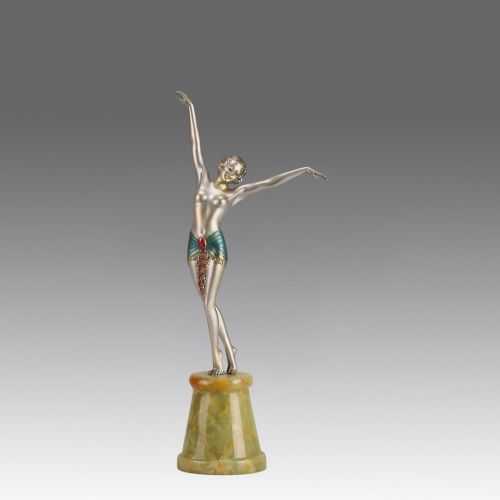
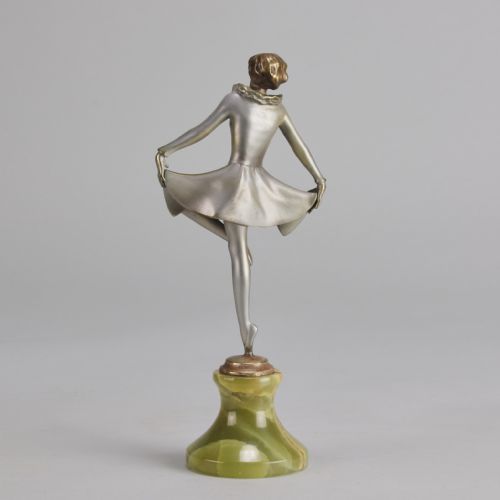


Bronze Dancer Statuette
A bronze dancer statuette captures movement in metal, bringing modernist energy and fluid grace to a mantelpiece.
Bronze Dancer Statuette
A bronze dancer statuette represents figures captured mid-movement, spanning nineteenth-century romanticism through to the geometric lines of the interwar years. These sculptures frequently depict female dancers posed in high kicks, balancing acts, or traditional costumes.
The version most commonly encountered on this page originates from the early twentieth century, particularly the nineteen-twenties and nineteen-thirties. These pieces heavily reflect the modernist aesthetics of the period, often mounted on contrasting plinths.
French and Austrian studios dominate the output, producing figures that range from classical nineteenth-century representations to stylised Art Deco icons. Makers translated the dynamism of contemporary ballet, cabaret, and exotic dance into compact metallic forms.
How they were made
Foundries utilised the lost-wax casting technique to capture intricate anatomical details and flowing drapery in bronze. Molten metal filled moulds that were subsequently destroyed to release the hardened sculpture, ensuring crisp lines.
Surface finishes varied widely, incorporating cold-painting, silvering, and gilding directly onto the metallic surface. Artisans also employed spelter as a more accessible alternative to solid bronze during periods of metal scarcity.
Sculptures were frequently anchored to substantial bases of marble, onyx, or alabaster to provide physical stability. These stone plinths contrasted sharply with the warm tones of the patinated metal above.
Listings feature works spanning the nineteenth century, Art Nouveau, and Art Deco periods, created in bronze, silvered bronze, and spelter.
What varies in quality
The sophistication of the casting process dictates the crispness of fine details like fingers, facial expressions, and costume decoration. Superior examples display smooth transitions and meticulous hand-finishing that preserve the sculptor's original touch.
The application and preservation of surface treatments separate standard productions from masterworks. Intricately cold-painted details or heavy silvering require precise chemical skill to achieve depth and durability.
The choice of mounting materials reflects the tier of the piece, with dense multi-coloured marbles and onyx elevating the presentation. Superior bases are cut and polished to complement the specific kinetic balance of the figure.
Josef Lorenzl·Demetre H. Chiparus·Claire Jeanne Roberte Colinet·Pierre le Faguays·Bruno Zach
The Bronze Dancer Statuette Glossary
- Cold-painted bronze
- A technique where paint is applied to a bronze object without subsequent firing or heat treatment. This method allowed for vivid polychrome clothing on monochrome metal figures.
- Spelter
- A zinc alloy frequently utilised as a cost-effective substitute for bronze in decorative figures. It is softer and lighter than genuine bronze.
- Lost-wax casting
- A historic method for creating metal sculptures from an original model encased in wax and refractory material. It permits complex undercuts and fine textures.
- Patina
- The chemical film or coloration that develops naturally on bronze over time or is applied artificially by an artist. It protects the metal surface and enhances visual depth.
- Gilt bronze
- Bronze that has been coated with a thin layer of gold or gold amalgam. This finish produces a brilliant, reflective golden lustre.
Bronze Dancer Statuette: Frequently Asked Questions
What periods do these figures date from?
The listings span from the nineteenth century through the early decades of the twentieth century. The majority cluster around the interwar Art Deco era.
Earlier nineteenth-century examples often favour romantic or classical subjects. Twentieth-century pieces embrace modernist athletic motion.
How do I distinguish bronze from spelter?
Bronze is heavier, denser, and colder to the touch than zinc-based spelter alloys. Examining any exposed unpainted areas underneath the base usually reveals the underlying metal colour.
Spelter is also softer and more prone to minor surface pitting. Genuine bronze offers greater structural rigidity in slender limbs.
Why are many figures mounted on stone bases?
Stone plinths provide necessary physical ballast to counterbalance dynamic cantilevered poses like high kicks or leaning torsos. Marble and onyx also add decorative weight and aesthetic contrast.
Artisans selected specific stones to complement the metallic patination of the dancer above. This mounting style became a defining characteristic of interwar statuettes.
What is cold-painted bronze?
Cold-painting involves applying non-fired oil or enamel paints directly to the metal surface. This allowed makers to render patterned garments and flesh tones with high realism.
Because the paint was not baked on, surviving examples often show delicate patina wear. This technique was particularly popular in Viennese bronze production.