
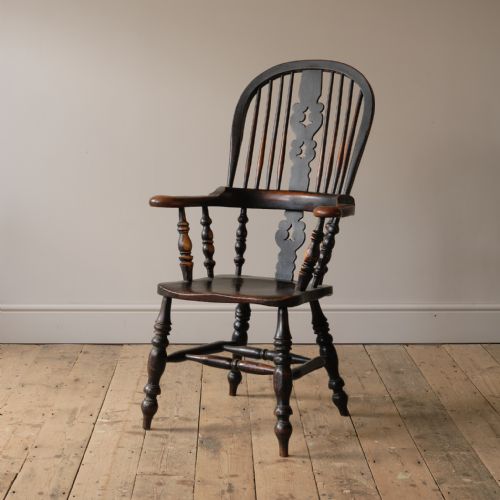
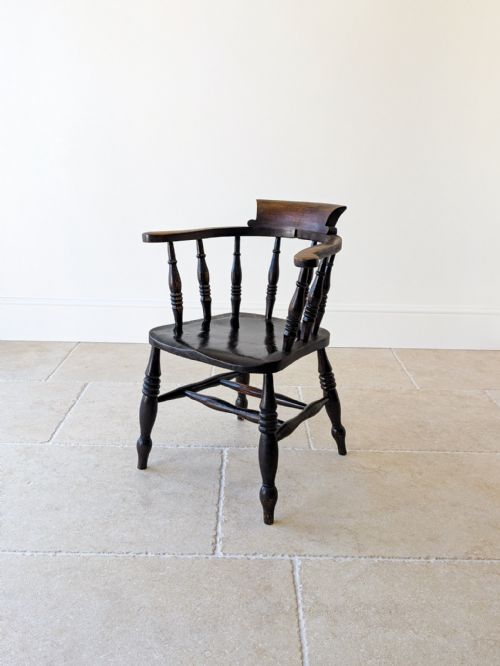
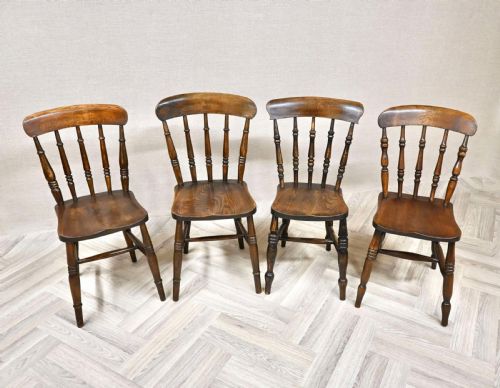


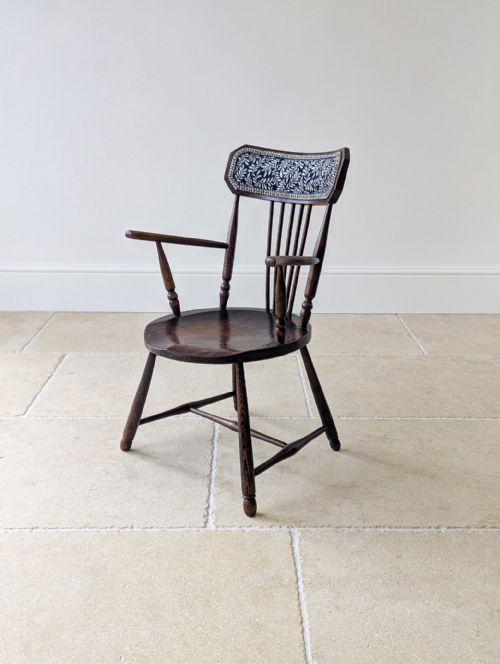
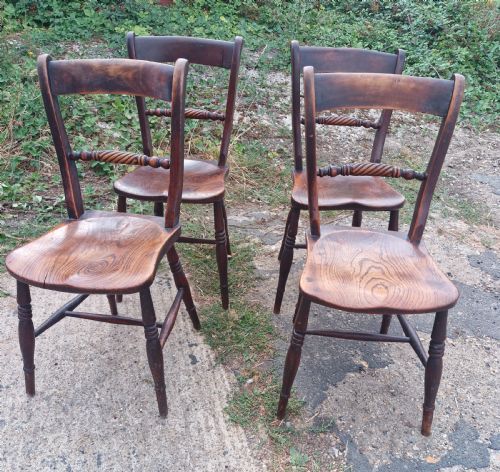
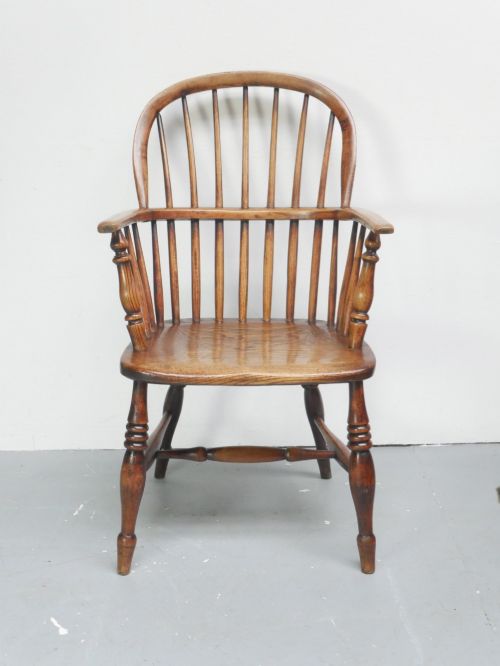
Dark Elm Windsor Chair
These dark elm windsor chair examples offer sturdy vernacular seating built for daily domestic service across generations.
What They Are
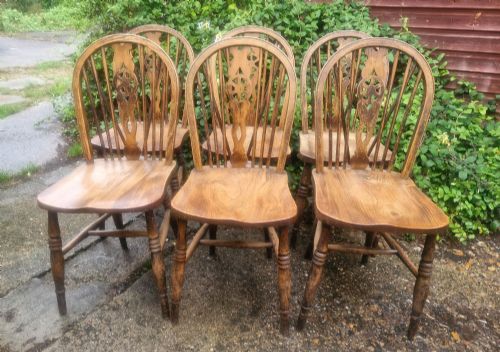
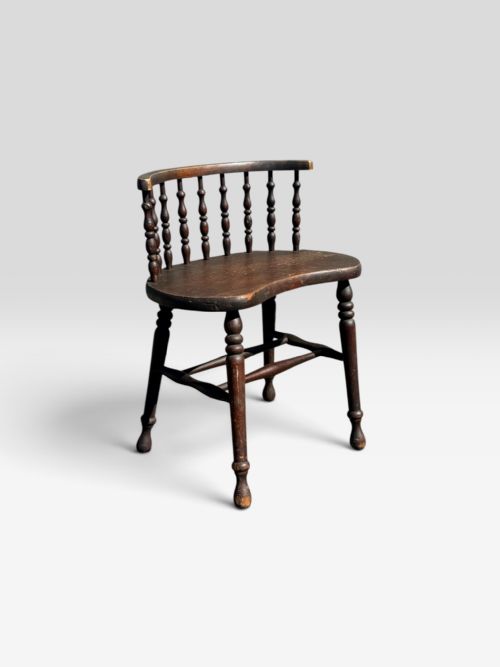
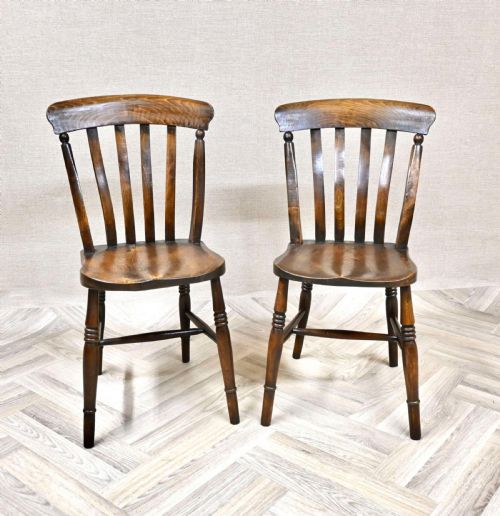
A dark elm windsor chair is a traditional wooden seating form combining a solid saddle-shaped seat with spindle backs and legs wedged directly into the timber. Buyers seek these pieces for their robust rustic character and honest construction.
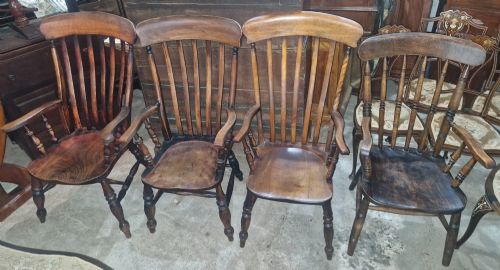
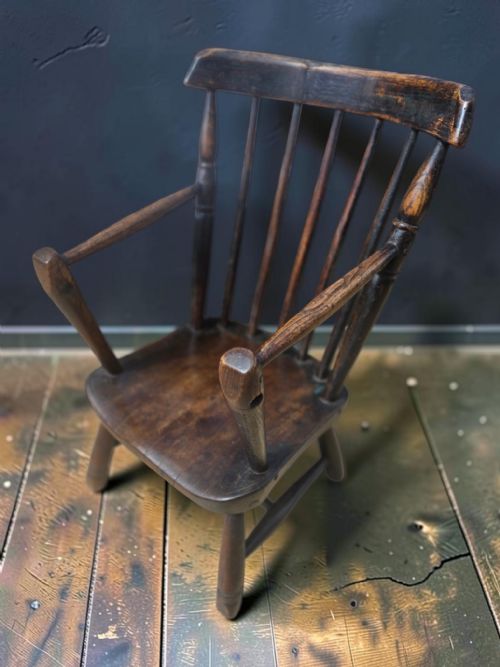
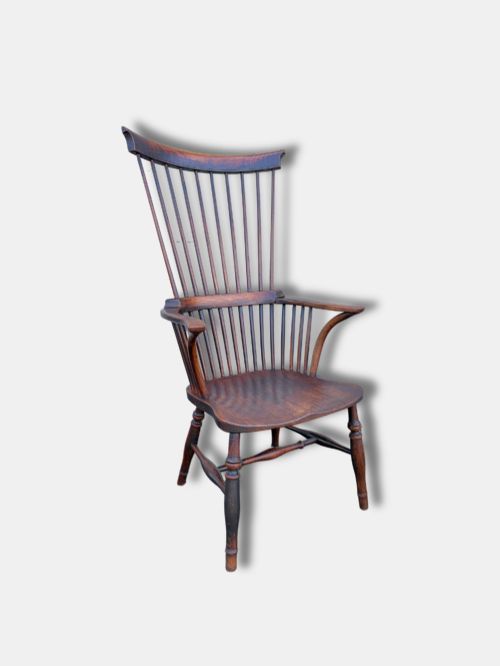
The current selection spans the eighteenth century, nineteenth century, nineteen hundred, and the Edwardian period. Forms range from standard armchairs to broad arm variants and smaller childs chairs.
English country, rustic farmhouse, and Victorian country styles dominate the evidence. These heavy seating items served practical roles in kitchens, farmhouses, and vernacular interiors.
How They Were Made
Construction relies on a combination of native timbers, specifically elm, ash, yew, beech, and oak. Makers selected elm for the heavy, resilient seat planks to prevent splitting under stress.
Spindles, legs, and bow components utilise turned or shaved ash, beech, and yew fitted securely through bored holes. The traditional method involved wedging tenons from the underside to lock components permanently in place.
Retail Price Guide 2026
Typical UK retail prices for dark elm windsor chair, calculated from the Sellingantiques database of over a million retail prices indexed since 2003. This retail price guide relies exclusively on Sellingantiques data; no external sources or auction records are used, so the figures do not describe the wider market.
Listings feature items spanning the eighteenth century to the Edwardian era, utilising elm, ash, yew, beech, and oak.
What Varies in Quality
Quality rests in the balance of timber selection and the fluid grace of the turned spindles and curved arms. Superior examples demonstrate a deep, rich natural grain across the elm seat board combined with slender, well-proportioned uprights.
Early vernacular pieces show the confident hand of regional joiners who prioritized ergonomic comfort and structural integrity over mass production. The integration of contrasting woods like yew or ash for structural framework elevates the piece.
The Dark Elm Windsor Chair Glossary
- Windsor chair
- A wooden chair featuring a thick solid seat into which the legs and back spindles are independently inserted. This form evolved in rural districts to provide durable and repairable domestic seating.
- Broad arm
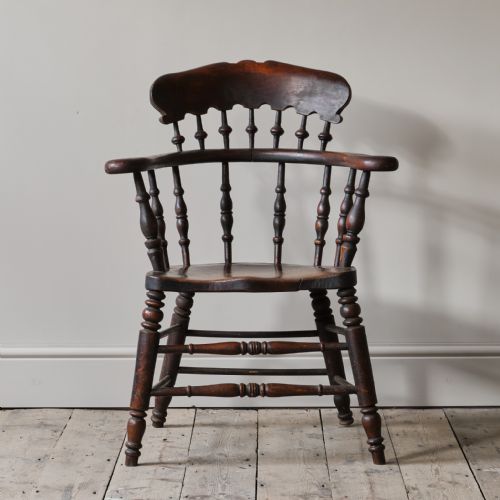
- A chair design incorporating an expanded, flat wooden armrest intended for writing or resting. This feature appears on substantial nineteenth century working examples.
- Vernacular
- Objects made by regional craftsmen following local traditions rather than academic design blueprints. These pieces reflect the immediate materials and practical needs of their makers.
- Wheel back
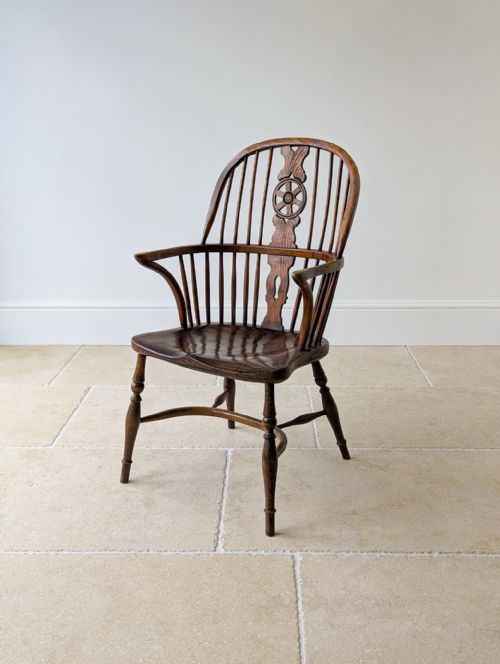
- A chair back incorporating a pierced central splat shaped like a carriage wheel. This decorative motif appears on nineteenth century dining and kitchen variations.
Frequently Asked Questions
What is a dark elm windsor chair?
A dark elm windsor chair is a traditional wooden seat featuring a sculpted solid timber plank for a base with turned spindles forming the back. These utilitarian objects were built for daily use in rural homes and farmhouses.
The darkened surface tone typically results from generations of wax polishing, handling, and the natural ageing of native elm timber. Such pieces function as durable standalone seating in contemporary or traditional interiors.
How do I date a windsor chair?
Dating relies on observing construction details, timber characteristics, and the evolution of the turning on the legs and spindles. Earlier examples from the eighteenth century often display broader proportions and simpler vernacular joinery.
Later nineteenth century and Edwardian pieces frequently incorporate more standardised turnings and factory-influenced elements while retaining the core traditional structure. Comparing the wear patterns on the seat helps confirm genuine age.
Where were these chairs used?
These chairs served primarily in farmhouses, cottages, and provincial kitchens where sturdy seating was essential. Their robust construction suited them for heavy domestic tasks and constant family life.
Over time, collectors moved these practical items into living rooms, studies, and hallways as decorative historical statements. They remain versatile enough for daily sitting when placed on stable flooring.
Are childs windsor chairs rare?
Childs windsor chairs are smaller vernacular versions built to the same exacting standards as adult seating. They were produced in lower numbers because they served a specific, short-term purpose in the family home.
Survival rates vary due to the heavy handling typical of children's furniture. Collectors prize them for their miniature proportions and the skill required to scale down the complex turning work.