
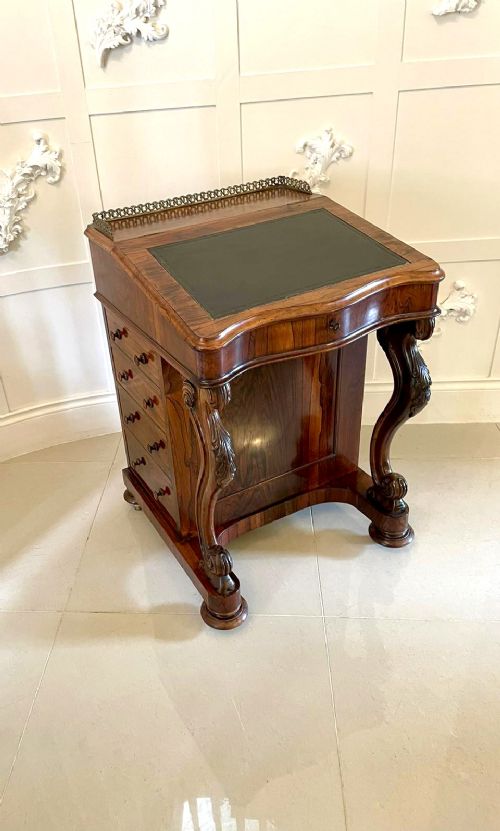
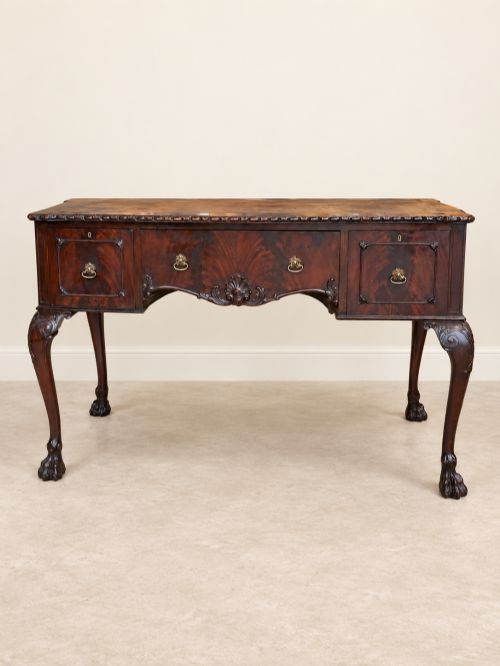

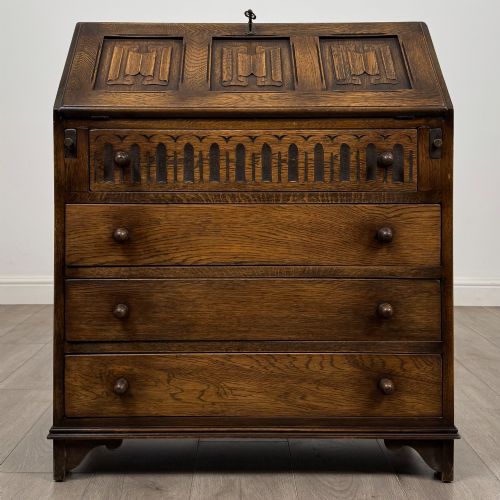
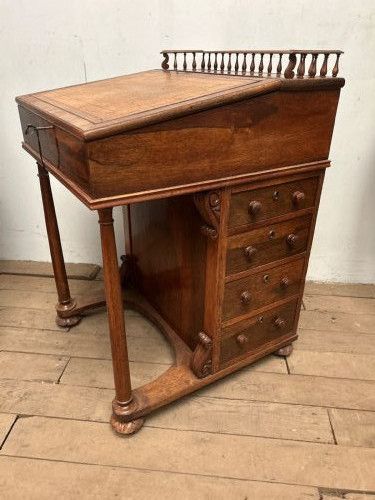
Dark Carved Writing Desk
A dark carved writing desk brings heavy timber and deep relief into a study, offering a practical writing surface built to last centuries.
Dark Carved Writing Desk
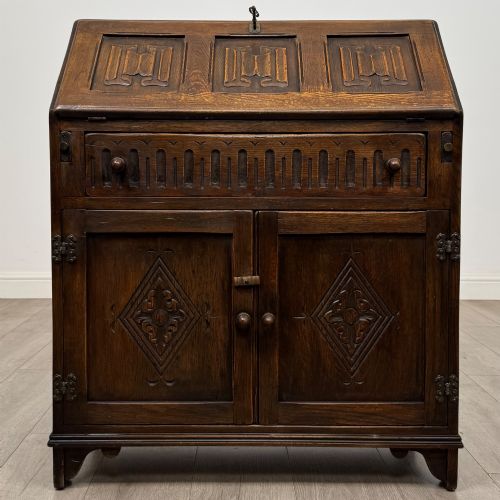
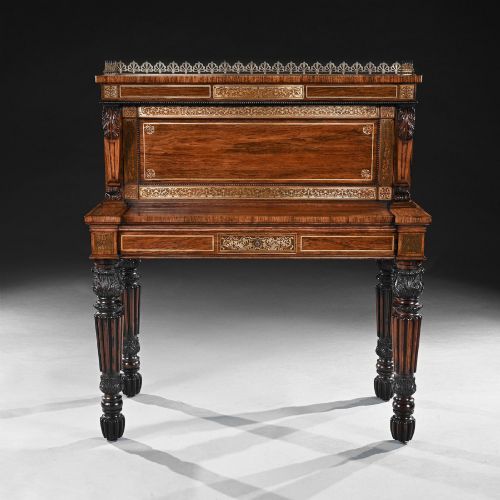
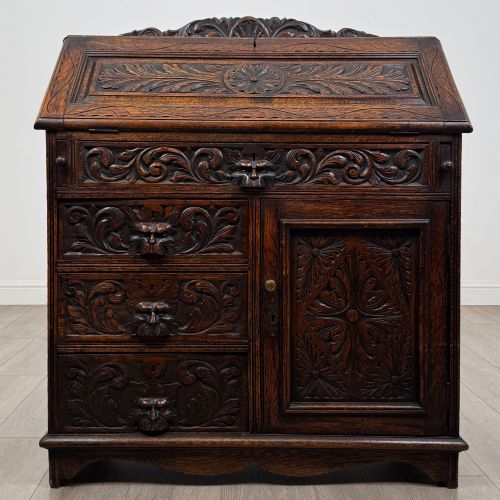
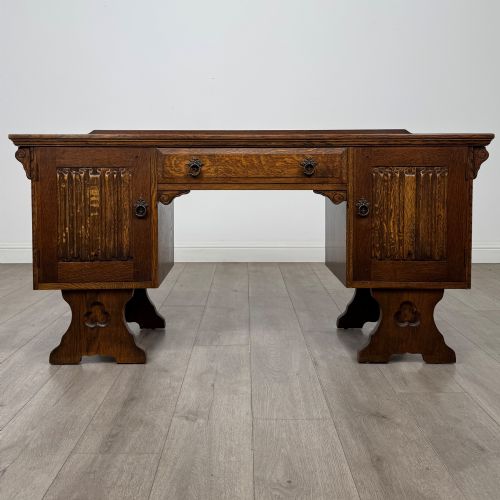
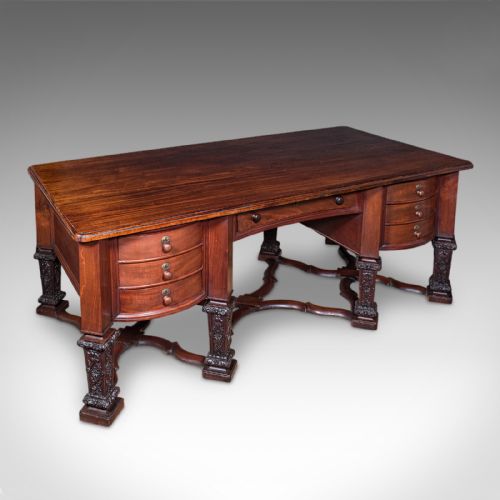
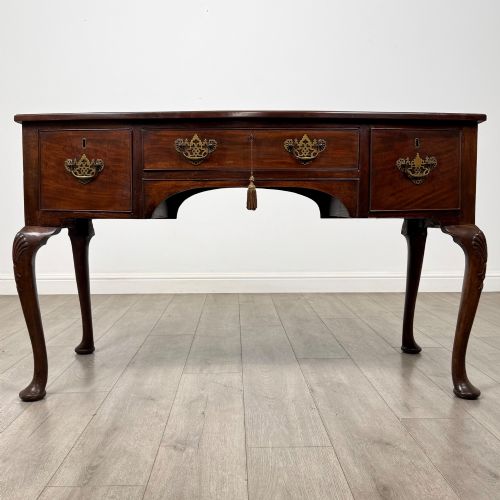
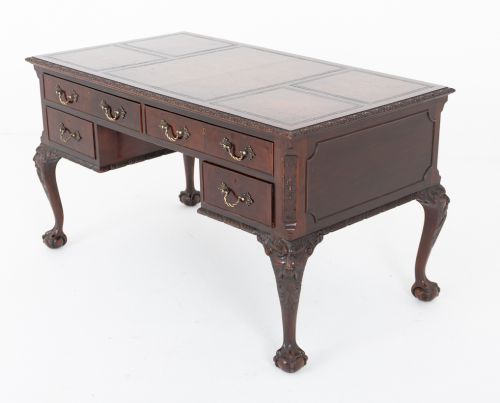
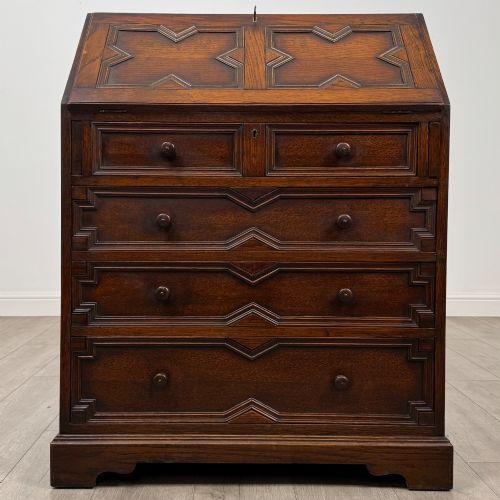
When you search for a dark carved writing desk, you encounter heavy timber furniture designed for correspondence and study across several centuries. The selection spans robust oak pieces featuring linenfold or Green Man motifs alongside refined mahogany and rosewood tables.
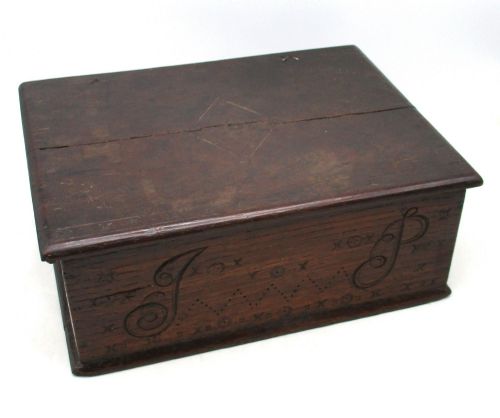
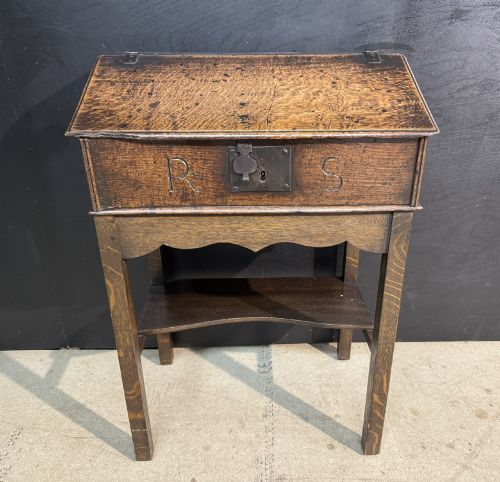
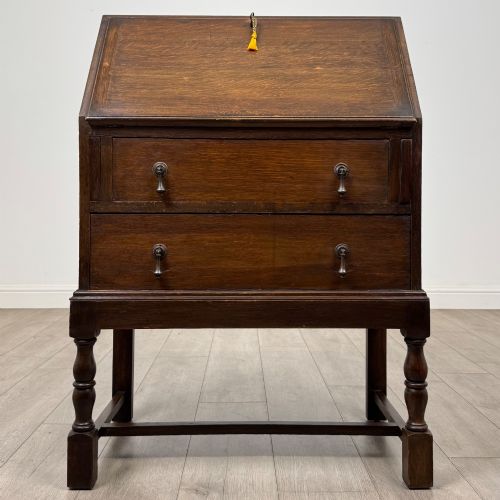
Edwardian bureaux and Victorian oak pedestal desks dominate the available forms, often displaying revival styles such as Jacobean and Tudor. Simpler writing slopes and document boxes from the seventeenth and eighteenth centuries also appear.
These items range from compact side tables with drawers to large partners desks and bureau bookcases. Each version provides a dedicated workspace anchored by dark wood and carved ornamentation.
What varies in quality
The depth and crispness of the hand carving separate standard production from superior examples, where chisel work remains sharp and detailed. Timber selection also dictates the grade, with figured flame mahogany or quarter-sawn oak representing finer craftsmanship.
Structural integrity and the retention of original brass fittings, leather surfaces and working locks influence the standing of a piece. Original patination on the timber surface reflects age and handling rather than modern refinishing.
Some Victorian oak desks stare back at you through the carved wooden eyes of a Green Man.
Gillows Oxford Street Workshop·Mein of Kelso·Williams and Gibton
The Dark Carved Writing Desk Glossary
- Bureau
- A desk featuring a sloping hinged lid that opens to reveal a fitted interior of small drawers and pigeonholes. It usually rests upon a bank of larger drawers.
- Linenfold
- A style of relief carving used on wooden panels to imitate folded fabric or linen. It frequently appears on early oak furniture.
- Lowboy
- A small oak or walnut side table with drawers, commonly standing on four legs. It dates frequently to the seventeenth and eighteenth centuries.
- Davenport
- A compact Victorian writing desk featuring a sloping top and a bank of drawers opening to one side. The stationery box often sits fixed upon the rear superstructure.
Dark Carved Writing Desk: Frequently Asked Questions
How do I care for a dark wood desk?
Keep the timber away from direct heat sources and strong sunlight to prevent the wood from drying out or fading. Apply traditional wax polish sparingly to maintain the sheen and nourish the grain.
Avoid using modern liquid silicone sprays or wet cloths on antique polished surfaces. A soft, dry duster removes daily dust safely.
What is the difference between a bureau and a writing table?
A bureau incorporates a slanted lid that folds down to create a writing surface while enclosing internal compartments. This design keeps writing materials concealed when not in use.
A writing table provides an open, flat top surface without a sloping lid or enclosed pigeonholes. It functions primarily as a freestanding table with integrated drawers beneath the top.
Are partners desks double-sided?
Partners desks feature working drawers and cupboards on both sides, allowing two individuals to sit opposite each other. They were traditionally built for banking or legal offices.
Single-sided pedestal desks have drawers on one face and a panelled back designed to stand against a wall.
How do I identify a Victorian desk?
Victorian desks frequently utilise dense mahogany, rosewood or heavily carved dark oak. They often display revival styles such as Gothic, Elizabethan or Jacobean ornamentation.
Construction methods from this era include machine-sawn timber combined with hand-finished joinery. Drawers commonly feature hand-cut dovetails alongside factory-produced brass hardware.