


Gothic Revival Bureau
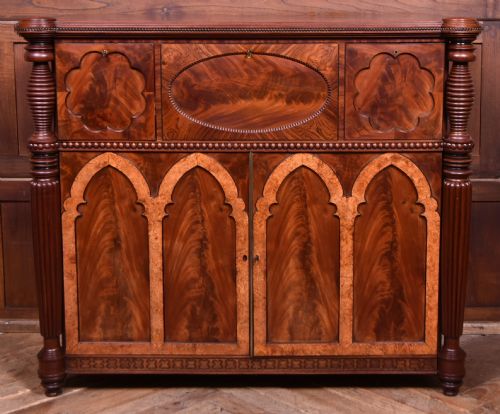
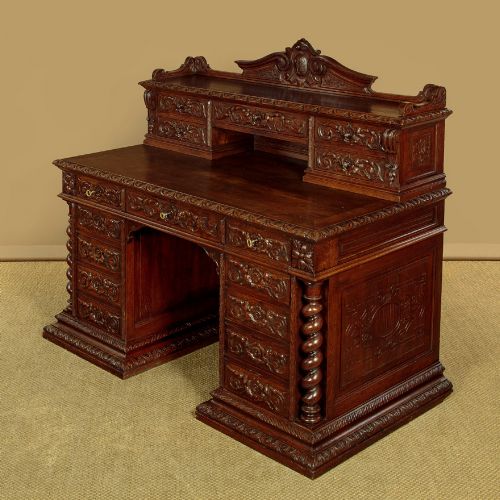
These gothic revival bureau pieces combine medieval architectural forms with practical domestic writing furniture, bringing striking ecclesiastical carved detail into the study.
Gothic Revival Bureau
A gothic revival bureau takes the form of a sloped writing desk or fall-front cabinet, designed to evoke medieval architecture through pointed arches, heavy mouldings, and robust proportions. When you search for a gothic revival bureau, you encounter pieces that translate structural stone motifs into domestic timber construction.
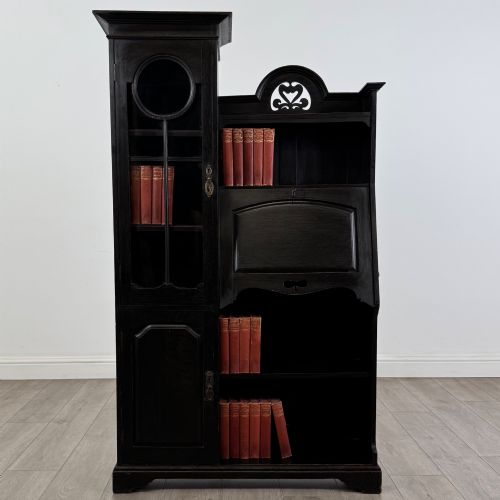
The versions most commonly met on this page date from the Victorian era, particularly the later decades of the nineteenth century, alongside Edwardian examples. These items appear in forms ranging from compact writing desks and davenports to larger secretaire bookcases fitted with internal drawers and pigeonholes.
Makers drew heavily upon historical vocabularies, blending gothic revival styles with Tudor revival, Jacobean revival, and arts and crafts influences. The resulting furniture balances medieval theatricality with the practical requirements of nineteenth-century correspondence.
Materials and construction
Oak dominates the construction of these pieces, selected for its strength and suitability for deep carving, often complemented by mahogany, flame mahogany, and burr walnut veneers. Timber selection dictated the character of the surface, allowing cabinetmakers to utilise rich grain patterns alongside plain boards.
Hardware and secondary elements incorporate brass fittings, glass panels, and leather writing surfaces inset into the fall-fronts or desk tops. Joinery methods relied on traditional cabinetmaking techniques to support heavy superstructure elements like bookcase tops and carved galleries.
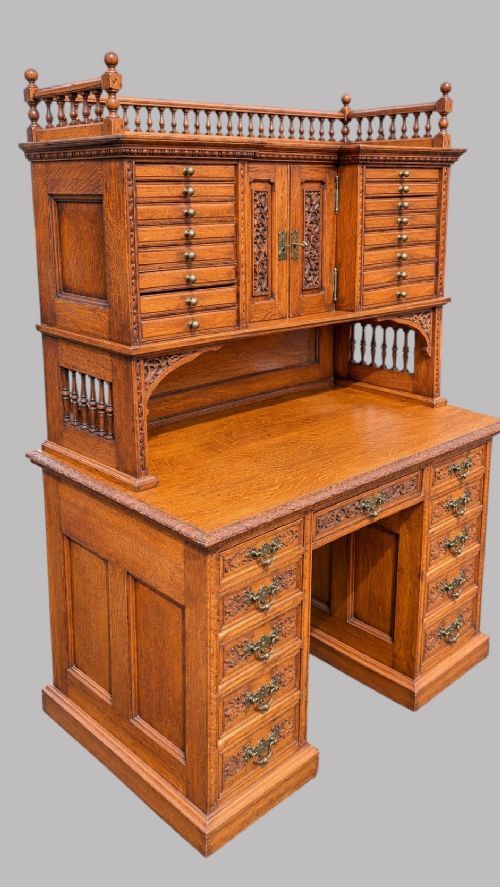
The surviving pieces demonstrate a range of forms, from compact davenports and kneehole desks to tall secretaire bookcases.
What separates the finest examples
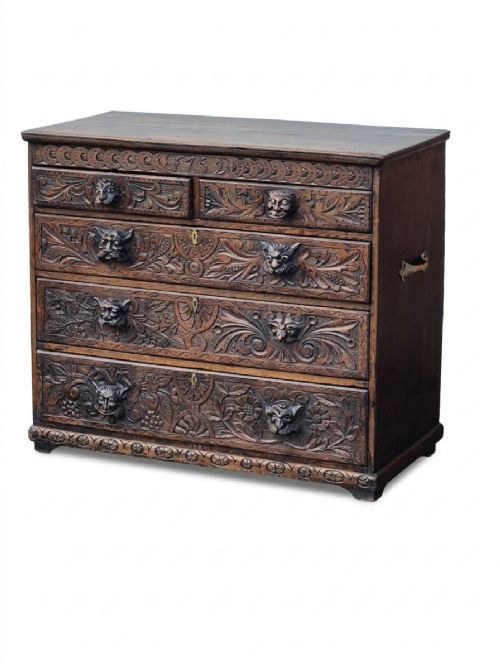
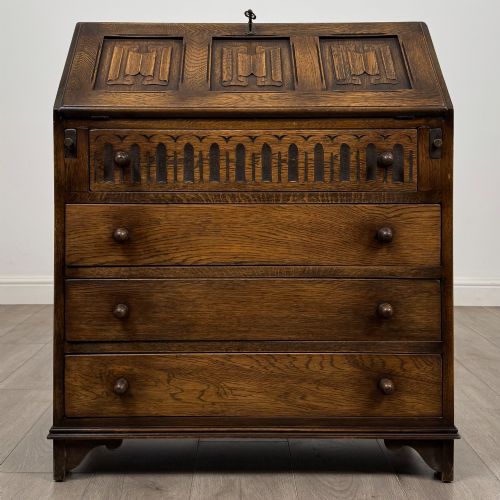
Depth and precision of carving define the upper tier of these pieces, where craftsmen executed complex linenfold panels, grotesque green man masks, and tracery by hand rather than relying on mechanical repetition. The crispness of the chisel work across structural mouldings reveals the hand of a skilled artisan.
Proportion and timber selection further separate standard production from exceptional work. Finer items display carefully matched grain patterns, integrated brass panel details, and structural soundness that prevents the heavy top sections from warping over time.
Gillows
The Gothic Revival Bureau Glossary
- Bureau
- A desk featuring a sloping lid that opens to reveal a writing surface and small interior compartments. This form evolved to store writing materials securely behind a locked fall-front.
- Secretaire
- A piece of furniture containing a built-in writing drawer or fold-down writing flap. It often combines the storage of a chest of drawers or bookcase with a concealed desk.
- Linenfold
- A style of carved wooden panelling that resembles folded fabric or stiff linen. This motif was frequently revived during the nineteenth century to echo medieval church woodwork.
- Green Man
- A sculptural architectural ornament depicting a human face emerging from or entwined with foliage. In nineteenth-century furniture, it appears carved into drawer fronts and pediments.
- Kneehole desk
- A flat-topped desk with a central recessed space for the legs, flanked by pedestals of drawers. This configuration provided ample storage while maintaining a formal architectural presence.
Gothic Revival Bureau: Frequently Asked Questions
What is a gothic revival bureau?
A gothic revival bureau is a Victorian or Edwardian writing desk that incorporates medieval architectural motifs such as pointed arches, tracery, and heavy carved mouldings into domestic furniture.
These pieces range from compact sloping-lid desks to large secretaire bookcases designed to make a dramatic visual statement in a study or library.
How do I date a bureau?
Dating relies on examining the timber species, secondary woods, hardware, and stylistic revival cues. Victorian examples often feature dark oak with deep hand-carving, while Edwardian pieces may show lighter tones or simpler construction.
Looking at the construction of internal drawers and the type of brass or glass used helps narrow the decade of manufacture within the nineteenth or early twentieth century.
How were these desks used?
These desks served as private writing stations for correspondence, household accounts, and the management of estate paperwork. The sloping fall-front folded down to provide a stable writing surface, often lined with leather.
Internal pigeonholes and small drawers kept stationery and inkwells organised, while upper bookcase sections stored reference volumes and ledgers.
How do I care for oak furniture?
Oak furniture benefits from stable indoor humidity levels away from direct heat sources and strong sunlight, which can dry out the timber and cause splits in historical panels.
Routine dusting with a soft cloth and occasional application of traditional beeswax help maintain the natural lustre of the carved surfaces without building up heavy chemical residues.