


Carved Slant Front Desk
A carved slant front desk brings together practical writing space and fitted interior storage, anchored by a hinged flap that drops to form a writing surface.
Carved Slant Front Desk
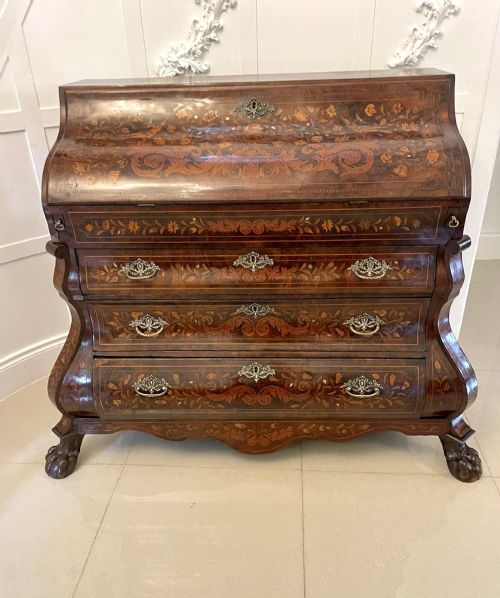
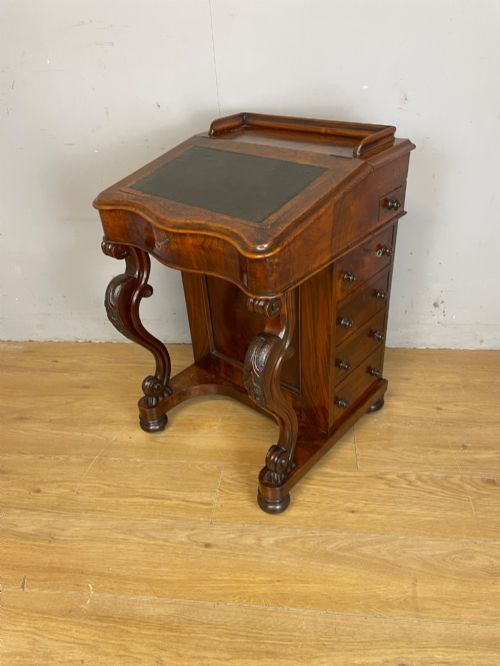
A carved slant front desk encompasses writing furniture spanning from seventeenth century oak desk boxes and vernacular bureaux to eighteenth century mahogany and burr walnut examples, alongside later revival pieces. Buyers exploring this category encounter distinct regional forms, including Dutch bombe shapes and compact Davenport desks featuring side drawers.
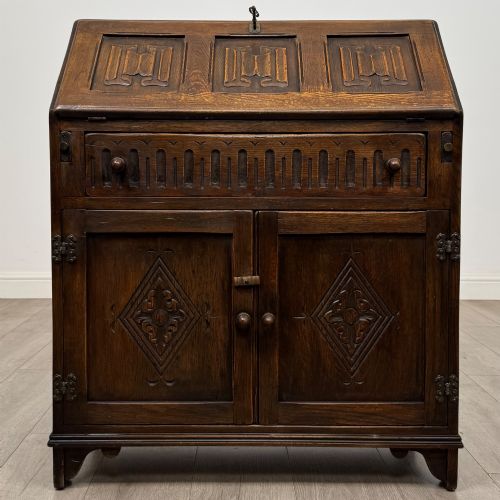
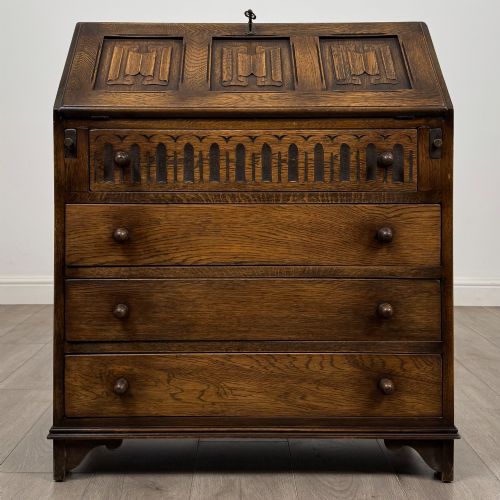
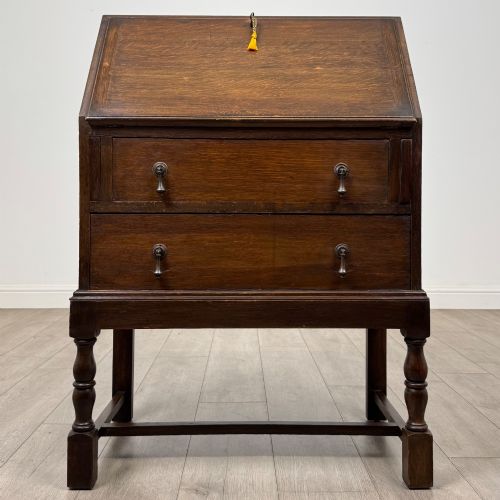
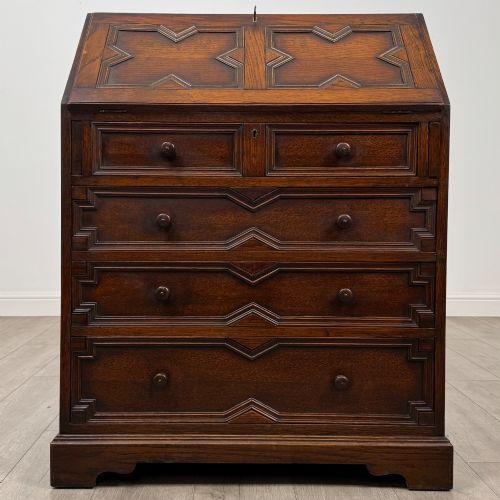
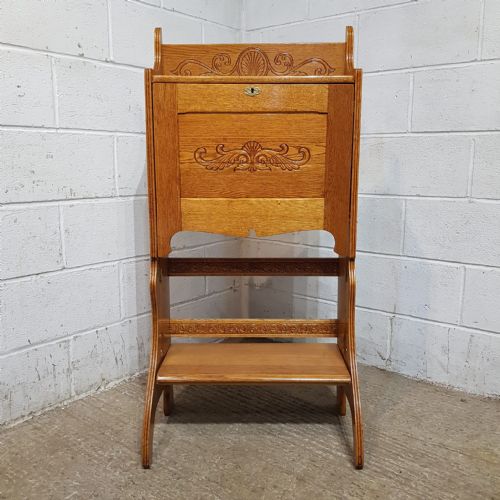
The version most commonly met on this page is the oak bureau, often drawing on Jacobean or linenfold styles from the Edwardian era and the nineteen-twenties. These pieces frequently incorporate fitted pigeonholes and small drawers behind the sloping fall front, resting on bracket feet or sturdy stands.
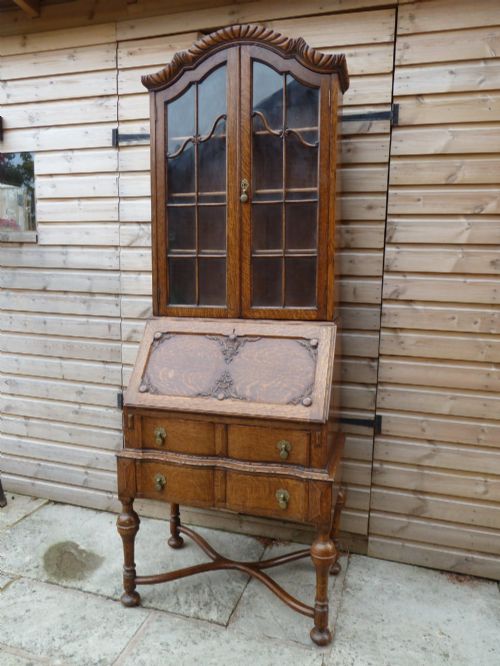
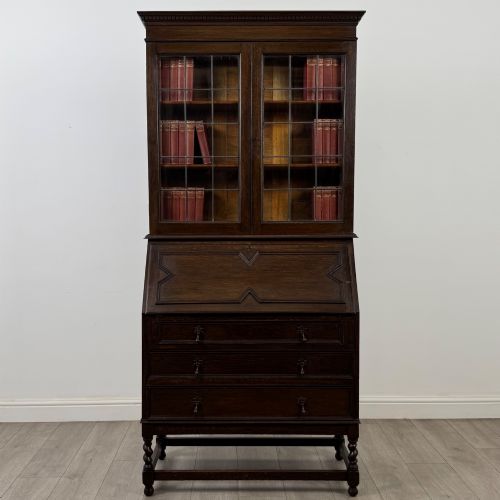
Larger variants in the selection include bureau bookcases, combining the sloping desk lower section with glazed or panelled upper shelving units. Period variations also span Georgian mahogany designs and nineteenth century walnut pieces with detailed marquetry inlay.
Materials and construction techniques
Timbers dictate the primary character of these pieces, with solid oak dominating early and revival examples while mahogany and walnut define eighteenth and nineteenth century production. Burr walnut veneers and floral marquetry inlay appear on decorative bureau surfaces, paired with secondary woods like oak or pine within internal drawer construction.
Traditional joinery methods govern the assembly, utilising dovetail joints for drawer construction and pegged mortise and tenon frames on earlier oak desk boxes. Brass hardware, including drop handles, escutcheons and hinges, fastens onto the timber, while leather inserts occasionally line the writing slopes of later Davenport desks.
Listings span from seventeenth century oak desk boxes through Georgian mahogany bureaux to Edwardian Jacobean revival pieces in oak.
Distinctions in craftsmanship and design
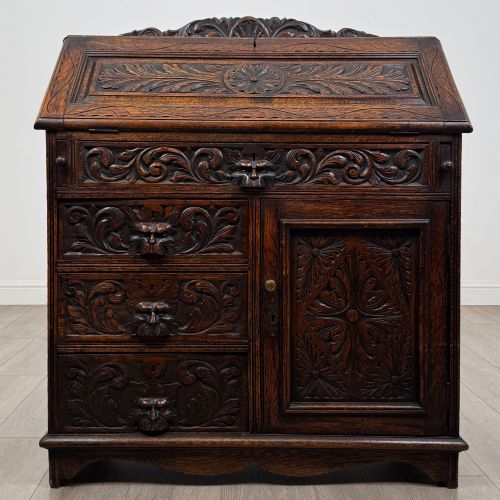
Quality separates pieces through the crispness of carved ornamentation and the symmetry of timber grain selection, particularly in burr walnut and marquetry work. Superior examples exhibit finely figured veneers matched across the fall front, whereas simpler pieces rely on plain cuts of timber with minimal decorative carving.
Internal complexity marks the upper tier of desks, where fitted interiors feature secret compartments, sliding wells and finely turned pigeonholes rather than plain partitioning. The integrity of the carcass, original brassware and the smooth operation of the slant front hinge mechanism further divide standard production from exceptional works.
Liberty and Co
The Carved Slant Front Desk Glossary
- Bureau
- A writing desk with a sloping hinged lid that covers a fitted interior of drawers and pigeonholes. It serves as the primary form within this category.
- Bombe
- A swelling, convex curved profile found on the front and sides of certain Dutch and English walnut pieces. This shaping requires advanced cabinetmaking skill.
- Marquetry
- Decorative veneer patterns formed by fitted pieces of different woods, metals or shells. Floral designs frequently appear on walnut and mahogany surfaces.
- Davenport
- A compact form of writing desk featuring a sloping top and drawers accessed from the side. This type gained popularity during the Victorian era.
- Linenfold
- A style of wood carving that mimics folded fabric, commonly seen on panels of Edwardian oak bureaux. It references earlier Tudor and Jacobean motifs.
- Secretaire
- A piece of furniture containing a built-in writing drawer or compartment with a drop-down front. It often conceals multiple small interior drawers.
Carved Slant Front Desk: Frequently Asked Questions
What is a slant front desk called?
These pieces are frequently designated as bureaux, writing desks or desk boxes depending on their age and specific construction. The term bureau applies broadly to furniture featuring a sloping fall front that conceals internal compartments.
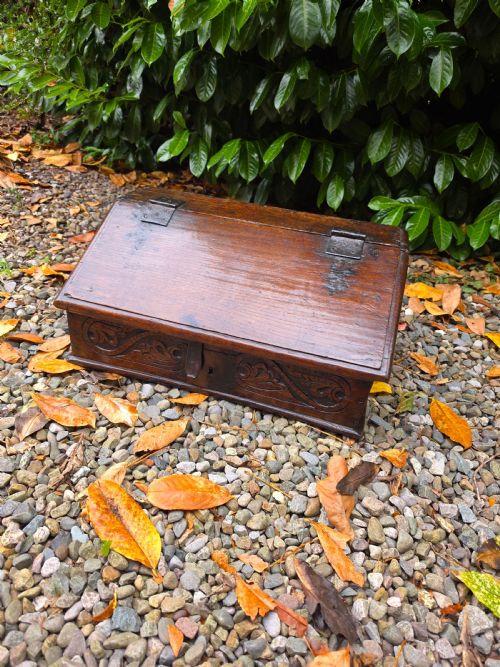
Earlier formats from the seventeenth century are occasionally recorded as bible boxes or desk boxes when constructed as portable or table-standing compartments without lower support stands.
How do you use a slant front desk?
The hinged writing flap drops forward to create a sloping or horizontal writing surface, supported by automatic lopers or wooden arms pulled from the carcass. Internal compartments remain accessible above the writing area for stationery and documents.
Storage is concentrated beneath the writing flap in the form of graduated drawers or cupboards, while the fitted interior organises smaller papers within dedicated pigeonholes and miniature drawers.
Where did slant front desks originate?
Slanted writing furniture evolved from simple portable desk boxes used for reading and writing manuscripts before the development of dedicated freestanding cabinetry. English and continental cabinetmakers refined the form during the seventeenth and eighteenth centuries.
Regional variations developed across England, the Netherlands and France, incorporating local timbers such as oak, walnut and mahogany alongside distinct decorative treatments like bombe moulding and marquetry.
How do I date a wooden bureau?
Dating relies on examining construction methods, timber choices and stylistic details such as carved motifs and hardware. Seventeenth century pieces typically utilise solid oak with pegged joinery and vernacular carvings.
Later eighteenth century examples often feature mahogany or walnut with fine dovetailing, while Edwardian and nineteen-twenties pieces display revival styles like Jacobean carving or linenfold panels on commercial oak carcasses.