

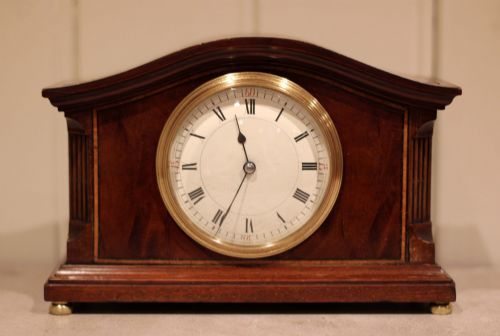


Dark Brown Table Clock
These dark brown table clock examples span the Georgian, Regency, Victorian, and Edwardian eras, offering rich timber cases and mechanical timekeeping.
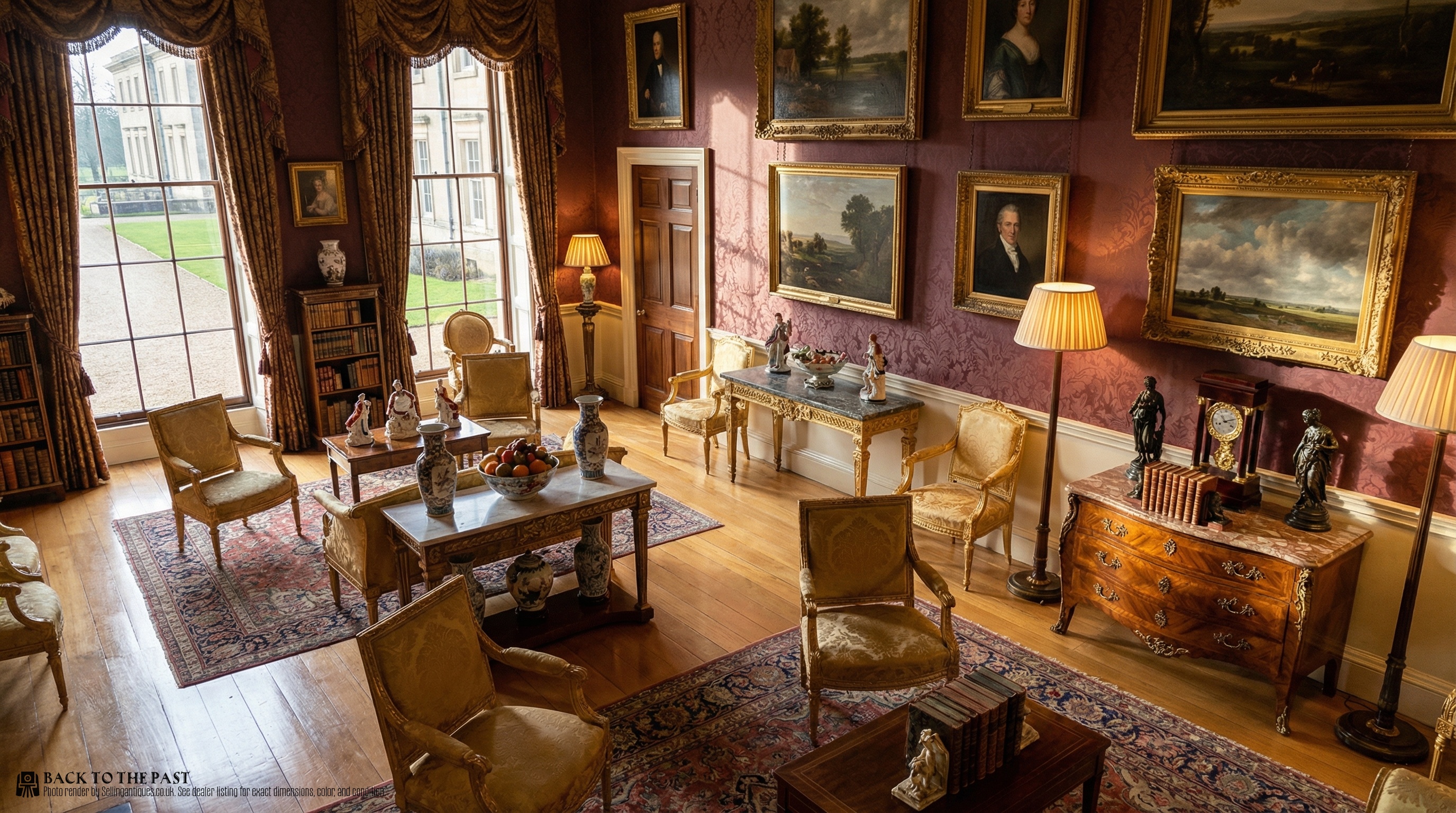
Dark Brown Table Clock
A dark brown table clock brings traditional timekeeping into domestic interiors, frequently taking the form of a mantel clock or bracket clock. These timepieces sit comfortably on desks, ledges, and mantelpieces.
The selections available here range from compact library clocks and portico designs to monumental Black Forest examples and substantial boardroom clocks. Most pieces originate from the nineteenth century, alongside Georgian, Edwardian, and Art Deco iterations.
Buyers encounter diverse stylistic influences across these specimens, including French Empire, Victorian Gothic Revival, and Regency Egyptian Revival. Woods such as mahogany, kingwood, ebonised wood, and coromandel dominate the visual character.
Materials and construction methods
Cabinetmakers constructed these clock cases primarily from solid and veneered timbers like mahogany and kingwood, often incorporating carved wood and tortoiseshell details. Glazed panels protect delicate dials and permit views of the internal mechanics.
Clockmakers fitted brass movements and silvered dials featuring enamel elements to track the hours. Specialised makers utilised specific striking systems, such as Ting-Tang mechanisms, housed within secure wooden enclosures.
Black Forest clocks bring cheerful woodland wildlife motifs straight into the parlour.
Factors determining quality
The refinement of the timber case and the intricacy of its carving dictate the visual standing of each piece. Finely figured mahogany, rich kingwood veneers, and detailed architectural elements elevate standard timepieces into notable works.
Movement complexity and signature maker details separate standard domestic clocks from exceptional examples. High-grade brass mechanisms and signed dials reflect superior workshop output.
Bush of London·Turner of London·William Comyns·Brockbanks of London·Blangy
The Dark Brown Table Clock Glossary
- Bracket clock
- A portable spring-driven clock originally designed to sit on a wall bracket or table surface. These often feature elaborate wooden cases and glass inspection panels.
- Fusee
- A conical pulley used in spring-driven clocks to equalise the diminishing power of the mainspring as it unwinds. This mechanism helps maintain consistent timekeeping accuracy.
- Portico clock
- A mantel clock styled after classical architectural porticos, typically featuring columns supporting a central pediment and dial housing. These gained popularity during the nineteenth century.
- Silvered dial
- A metal clock face treated with a silver compound to produce a matte, reflective finish. Engraved numerals and markings are often darkened for legibility.
- Ting-Tang
- A striking mechanism utilising two bells or gongs to sound the quarters and hours with a distinctive two-tone chime. It is commonly found in nineteenth-century bracket clocks.
Dark Brown Table Clock: Frequently Asked Questions
Where should I place a dark brown table clock?
These clocks suit flat surfaces such as mantelpieces, sideboards, desks, and library tables where their wooden cases and dials remain visible.
Ensure the chosen spot provides a stable, level foundation to keep the internal pendulum or balance mechanism running accurately.
How do I wind a mechanical table clock?
Winding requires inserting the appropriate key into the dial winding holes and turning it gently until resistance indicates full tension.
Avoid over-winding the mainspring, as this can damage the internal gearing and prevent proper operation.
What is the difference between a mantel clock and a bracket clock?
Bracket clocks historically stood on dedicated wall brackets and frequently incorporate complex movements with handles for portability. Mantel clocks are generally designed specifically to rest directly on fireplace mantelpieces.
Both forms utilise timber cases and share similar mechanical configurations depending on their era of production.
How do I identify the period of a wooden clock?
Examine the timber species, architectural style, and dial construction to determine the likely era of manufacture. Georgian and Regency pieces often display classical proportions, while Victorian examples embrace Gothic or ornate carved motifs.
Maker signatures and movement types provide further evidence for dating individual items.