






Carved Wood Mantel Clock
These carved wood mantel clock examples combine precise domestic timekeeping with expressive nineteenth-century cabinetry, offering functional hearth furniture for traditional rooms.
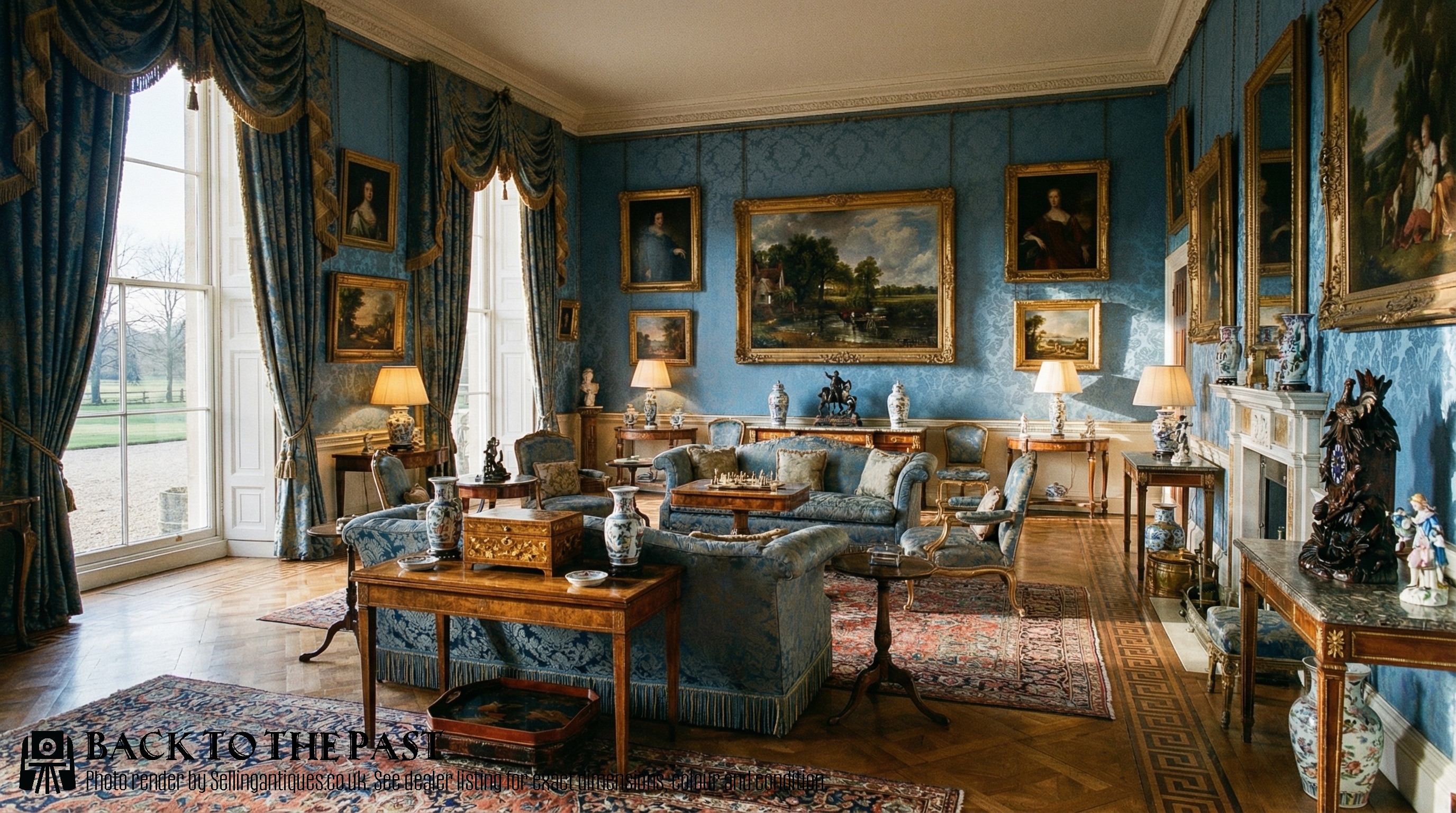
Carved Wood Mantel Clock
A carved wood mantel clock sits upon a shelf or tabletop, bringing mechanical movement and sculptural timber housing into domestic spaces. These objects developed from earlier bracket formats into freestanding mantel pieces during the nineteenth century.
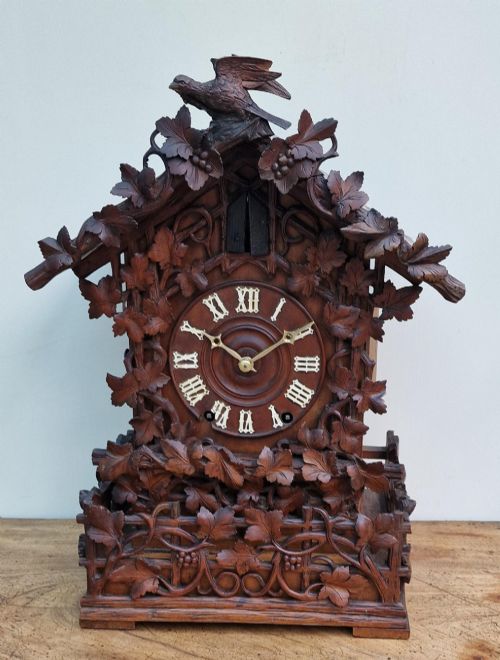
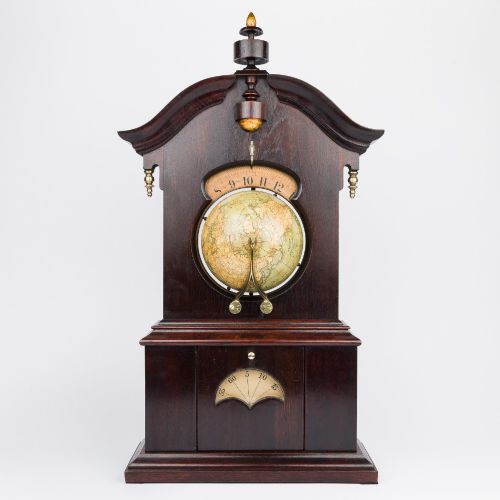
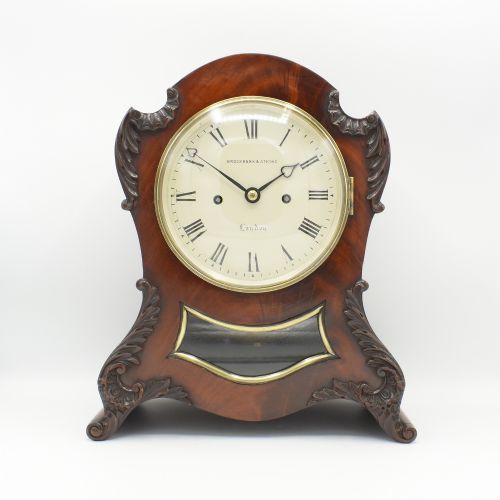
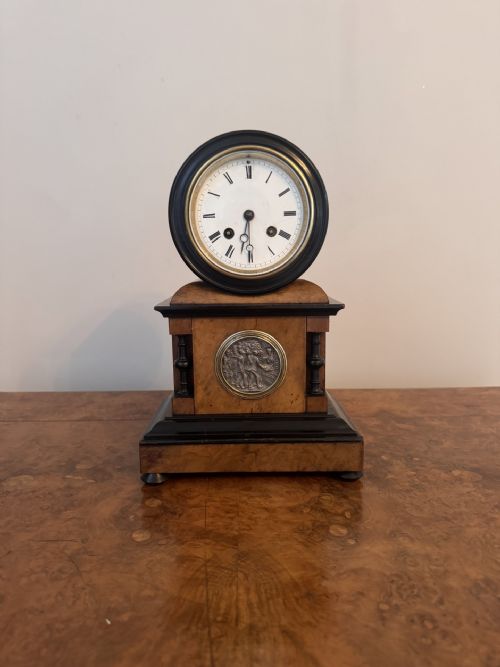
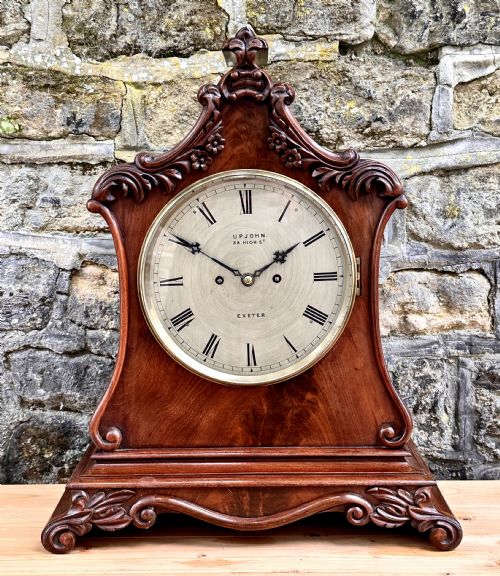
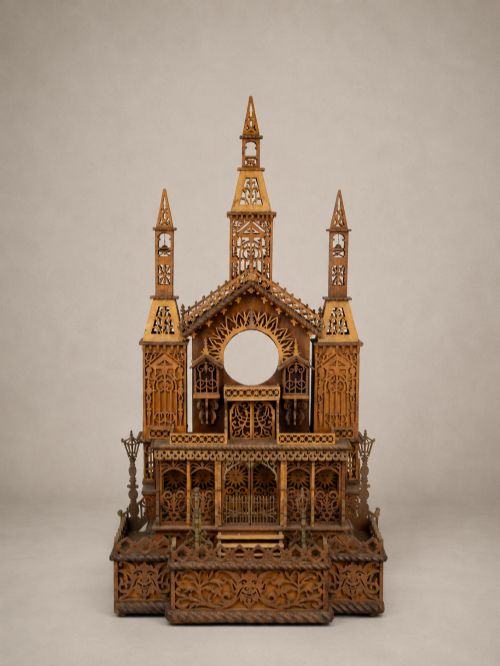
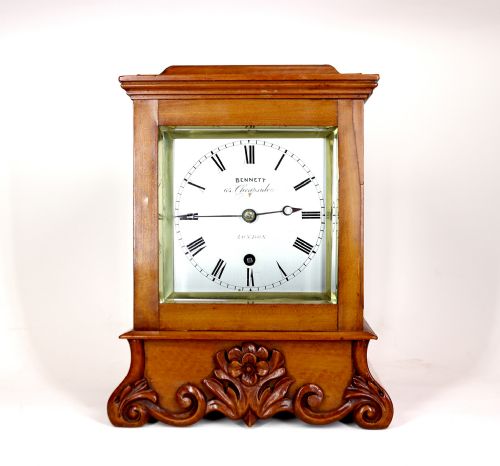
The most common examples on this page date from the Victorian era and the 19th Century, frequently taking the form of Black Forest works or mahogany bracket clocks. Makers housed mechanical movements within architectural, fretwork, or figural timber cases.
Regional variations span English fusee movements in mahogany and walnut to Swiss and German carved linden wood productions. Each piece balances the horological mechanism with the decorative ambitions of its period style.
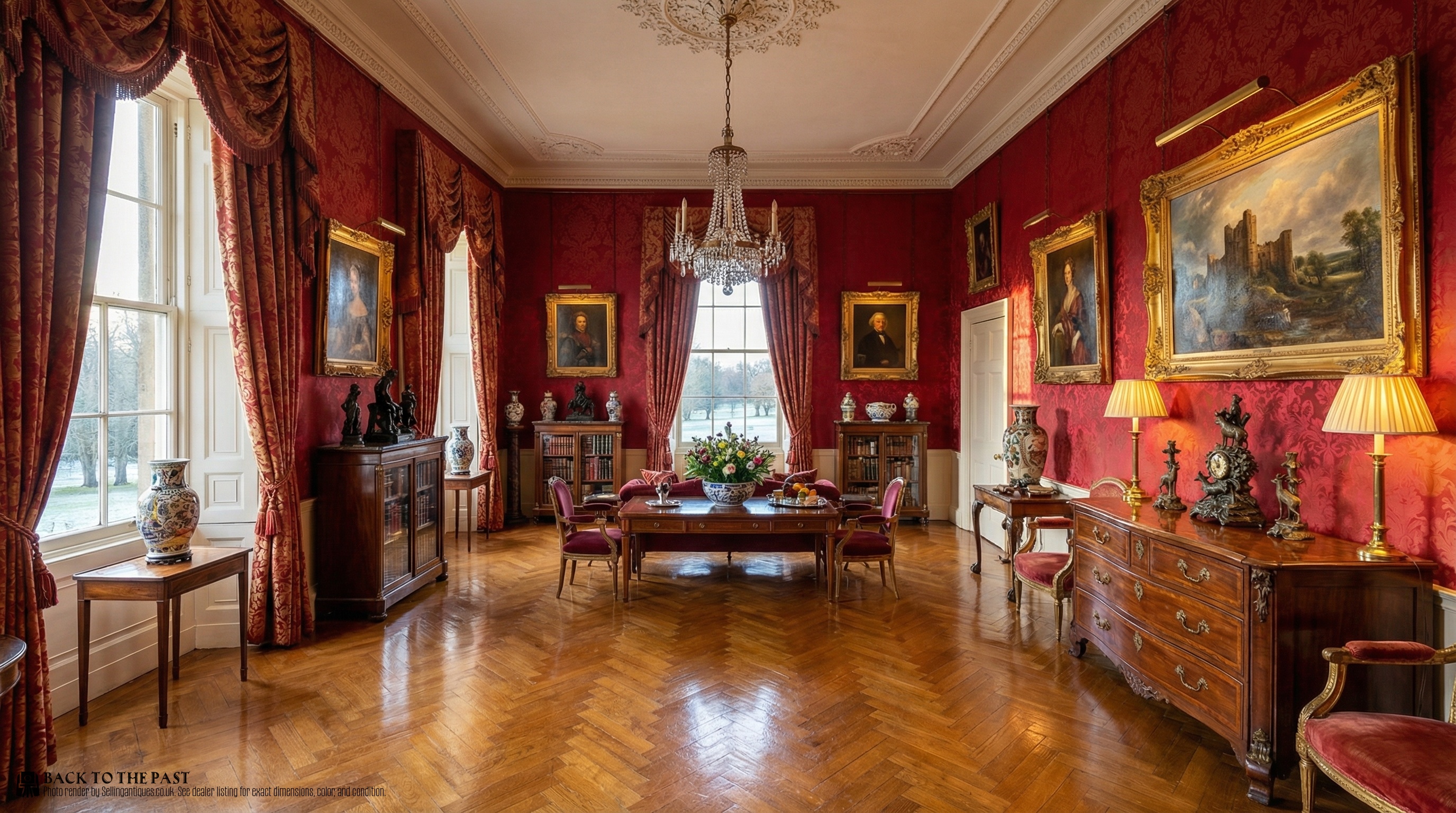
Materials and construction methods
Cabinetmakers utilised dense timbers such as mahogany, walnut, rosewood, and linden wood to construct the heavy cases required to house complex spring-driven or fusee movements. Carved wood details, architectural mouldings, and fretwork panels were hand-worked directly into the solid bodies or applied as ornaments.
Clockmakers fitted brass dials, steel hands, and bevelled glass bezels to protect the enamel or metal chapter rings. Movements relied on precision brass gear trains, often incorporating fusee chains or twin-barrel strikes to regulate the time reliably over multi-day periods.
Carved Wood Mantel Clock Retail Price Guide 2026
Typical asking prices for carved wood mantel clock among the pieces listed under this phrase on Sellingantiques today, from the lower quarter to the upper quarter. They describe what is for sale here now, not the wider market.
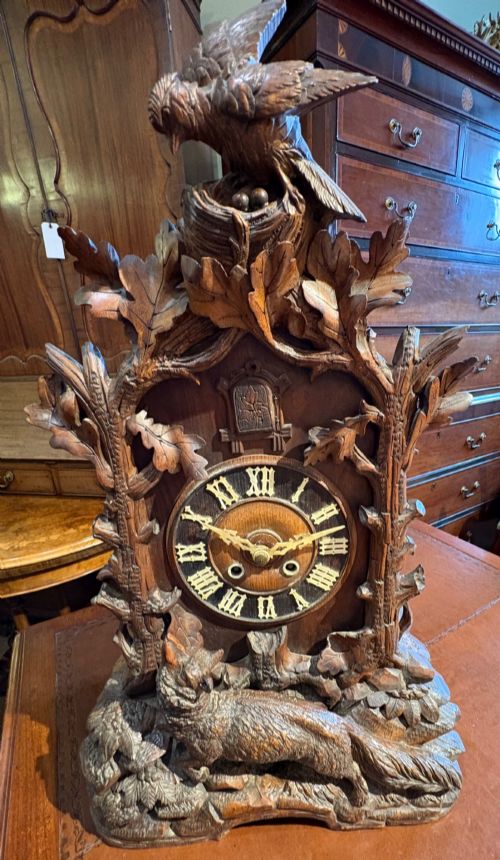
Several clocks arrive complete with cuckoo automata that have startled unsuspecting guests since the reign of Queen Victoria.
Assessing craftsmanship and execution
Quality rests in the crispness of the timber carving and the architectural proportions of the case. Deep, undercut foliage and balanced figural elements separate masterwork Black Forest carvings from simpler mass-produced output.
The sophistication of the internal movement dictates value, distinguishing standard spring-driven models from complex triple-fusee or twin-fusee mechanisms housed within substantial mahogany or rosewood structures.
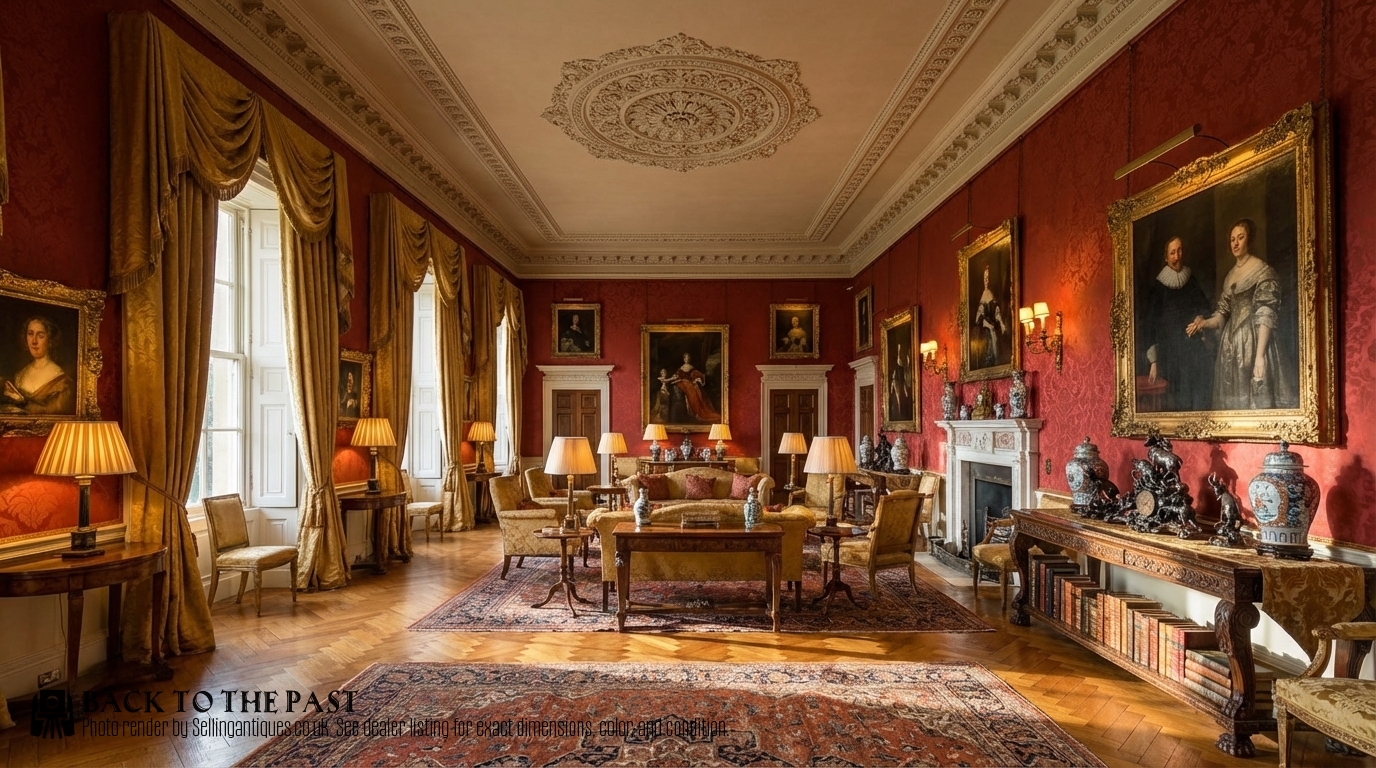
George Wadham Bath·Brockbanks And Atkins·Mappin And Webb·Sir John Bennett·Piggin Norwich·Barrett London·Bergen And Co·Beha
The Carved Wood Mantel Clock Glossary
- Fusee
- A conical pulley used in mechanical clocks to maintain even force on the gear train as the mainspring unwinds. This mechanism ensures more accurate timekeeping throughout the duration of the wind.
- Bracket clock
- A portable clock originally designed to sit on a wall bracket or table. Many examples feature robust carrying handles on top of their wooden cases.
- Black Forest
- A style of wood carving originating from the mountainous region of Germany and Switzerland. These clocks are instantly recognisable by deeply carved foliage, animals, and rustic motifs.
- Dial
- The visible face of the clock where the hours and minutes are displayed. They are frequently constructed from enamelled metal or brass with engraved numerals.
- Striking
- A mechanical function that chimes the hours or half-hours on bells or gongs. Twin fusee movements often split timekeeping and striking into separate trains.
Carved Wood Mantel Clock: Frequently Asked Questions
How do I wind a fusee movement?
Most fusee clocks require a specific winding key inserted into the dial face to tension the mainspring slowly via the internal chain or cord.
Care must be taken not to over-wind the mechanism, stopping firmly as soon as resistance is felt to protect the historical gears.
Where should I place a heavy wooden mantel clock?
These dense timber cases require a stable, level surface such as a sturdy mantelpiece, sideboard, or dedicated wall bracket to ensure the pendulum or balance wheel beats evenly.
Keeping the clock away from direct heat sources and damp environments protects both the delicate internal brasswork and the exterior wood polish.
How do I identify a Black Forest clock?
Black Forest clocks feature elaborate hand-carved linden or walnut woodwork depicting natural elements like leaves, birds, or stags rather than formal architectural columns.
Many of these pieces incorporate moving cuckoo mechanisms or detailed rustic scenes built directly into the sculptural timber housing.
What is the difference between a library clock and a bracket clock?
Library clocks generally present smaller, more understated timber cases intended for intimate domestic study spaces or desks.
Bracket clocks often feature heavier architectural proportions, carrying handles, and sophisticated multi-train movements designed for principal rooms.
Do antique wooden clocks keep accurate time?
Mechanical clocks from the nineteenth century can keep reliable time when properly adjusted, though minor weekly variations are normal for antique movements.
Professional servicing and correct levelling on a solid surface ensure these vintage mechanisms operate smoothly in a modern home.