

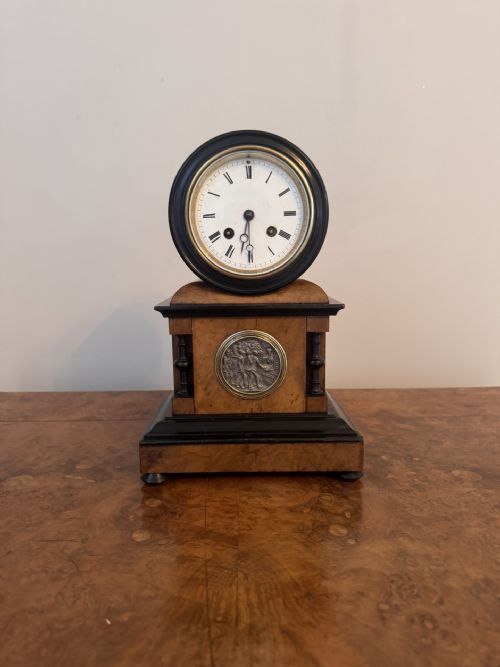
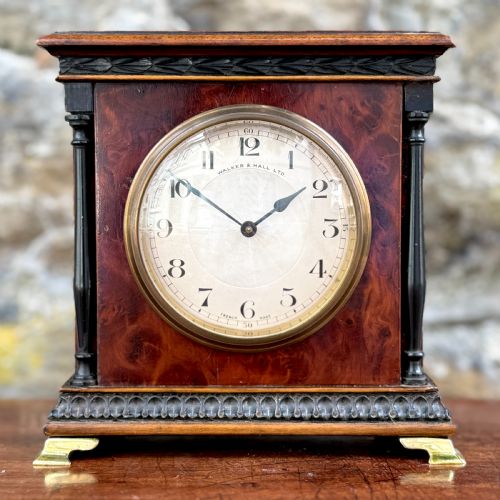


Carved Walnut Table Clock
A carved walnut table clock brings warmth and architectural presence to a room, uniting rich timber grain with precise mechanical timekeeping.
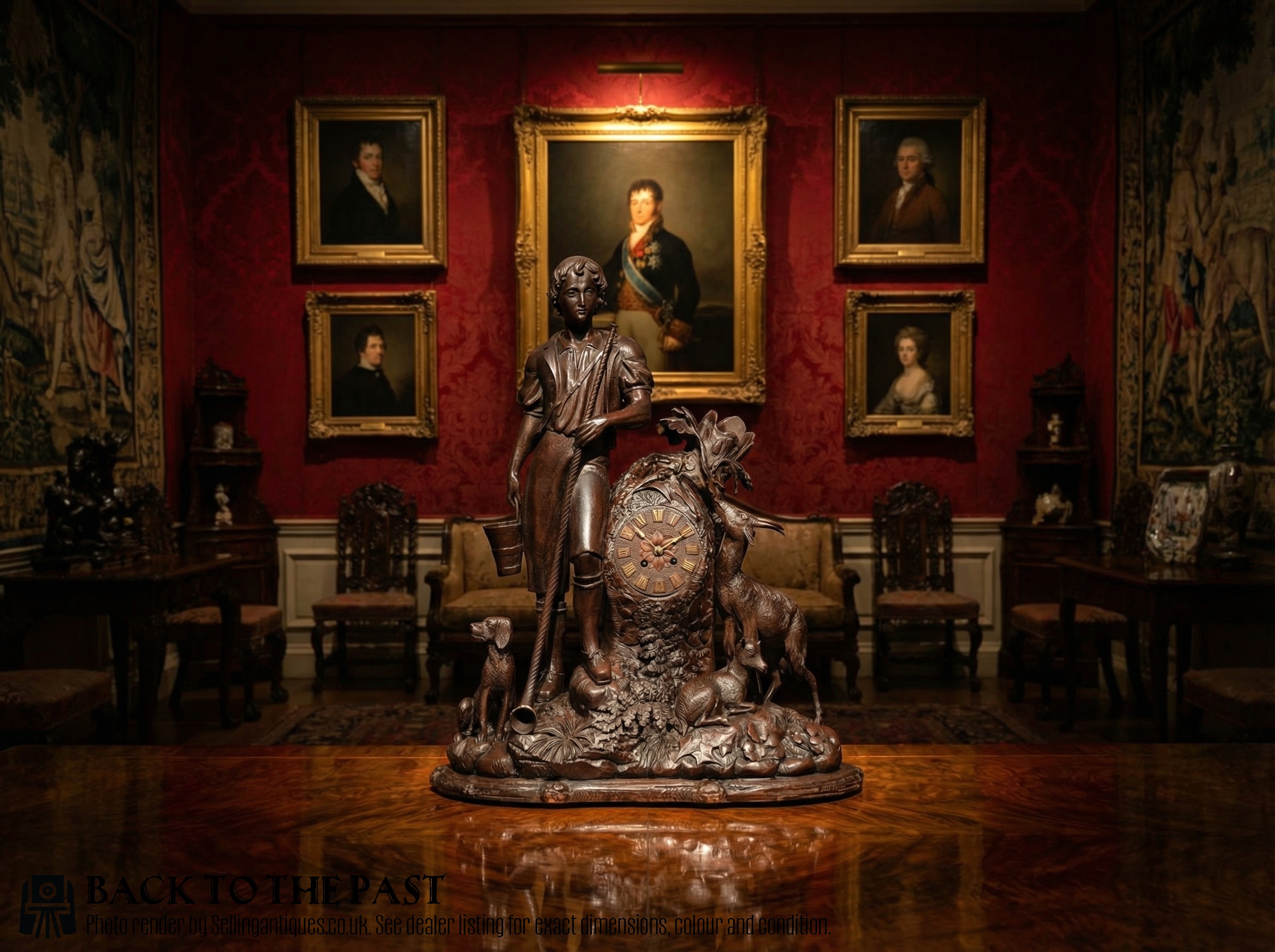
Carved Walnut Table Clock
A carved walnut table clock is a timepiece designed for placement on a mantelpiece, bracket, or sideboard, combining functional horology with cabinetmaking. These pieces span the nineteenth and early twentieth centuries, drawing on Victorian, Edwardian, and continental design influences.
The versions most commonly met on this page include Black Forest carvings in the French Rococo style, alongside bracket and mantel formats originating from German and British workshops. Walnut and burr walnut dominate the timber choices, frequently enhanced by carved detail and brass or ormolu mounts.
How they were made
Cases were constructed from solid walnut and burr walnut, then shaped through hand carving to create the scrolling foliage and architectural motifs characteristic of Black Forest and Victorian designs. Ebonised wood and ormolu accents were often applied to provide contrast and frame the dial.
The mechanical movements inside these cases were fitted with brass plates, enamel dials, and glass viewing covers, sometimes incorporating complex striking trains or musical cylinder mechanisms. Skilled artisans paired robust gear assemblies with highly decorative wooden housings.
Listings feature walnut, burr walnut, and ebonised wood cases accented with brass and ormolu mounts across the nineteenth and early twentieth centuries.
What varies in quality
The depth and crispness of the timber carving set finer examples apart from simpler production pieces, particularly where naturalistic motifs or rococo scrolls are rendered with sharp undercut details. Burr walnut veneer selection also dictates visual appeal, with rich, symmetrical grain patterns commanding greater attention.
Mechanical sophistication influences standing within the range, moving from standard time-and-strike movements to triple fusee or musical boardroom mechanisms produced by esteemed makers. The integration of high-grade brass components and crisp enamel dials further separates standard mantel clocks from exceptional bracket clocks.
German H.A.C.·Walker and Hall·Lenzkirch
The Carved Walnut Table Clock Glossary
- Burr walnut
- A figured timber taken from the growth excrescences of walnut trees, prized for its swirling, highly decorative grain patterns. It is frequently employed as a veneer on the primary surfaces of superior clock cases.
- Bracket clock
- A portable tabletop timepiece, historically designed to sit upon a matching wall bracket or furniture surface. These clocks often feature substantial movements and refined architectural wooden cases.
- Fusee
- A conical pulley mechanism inside a clock that equalises the diminishing power of the mainspring as it unwinds. This ensures consistent force is delivered to the gear train for greater timekeeping accuracy.
- Ormolu
- Gilt bronze mounted onto furniture and clock cases for decorative effect. The technique involves applying a mercury and gold amalgam to bronze before heating.
- Ebonised wood
- Timber treated with a dark stain or finish to imitate ebony. It is frequently used to provide stark contrast against lighter walnut panels and brass mounts.
Carved Walnut Table Clock: Frequently Asked Questions
What is a carved walnut table clock?
A carved walnut table clock is a mechanical timepiece housed in a decorative wooden cabinet intended for display on furniture rather than hanging on a wall. These pieces utilise walnut timbers and often feature intricate hand-carved ornamentation.
Originating primarily during the nineteenth and early twentieth centuries, they encompass various regional styles including Black Forest and British bracket clock designs.
Where should I place a mantel clock?
These clocks find a natural home on mantelpieces, sideboards, desks, or dedicated wall brackets where their detailed timber cases can be viewed closely. Stable surfaces away from direct heat sources and strong draughts ensure the surrounding woodwork remains protected.
Because many examples were designed to be viewed from the front and sides, placing them at eye level or slightly lower enhances both their visual impact and ease of winding.
How do I wind an antique clock?
Antique mechanical clocks are wound using a specific key fitted to the arbors on the dial face, turning gently until resistance is felt. Care must be taken not to overwind the mainspring, as this can cause internal damage.
Different movements require different intervals between windings, ranging from daily operation to fourteen-day or musical gear trains that require less frequent attention.
How can I tell the period of a clock?
Dating relies upon examining the design style, the construction methods of the wooden case, and the signature of the maker on the dial or movement. Victorian and Edwardian examples often display distinct regional characteristics in their carving and brass mounts.
Inscriptions on the movement backplate or historical trade labels inside the case provide the most reliable evidence for pinning down the decade of manufacture.