


Dark Timber Clock
These dark timber clock pieces bring deep walnut, oak and mahogany cases together with brass dials to anchor any room.
Dark Timber Clock
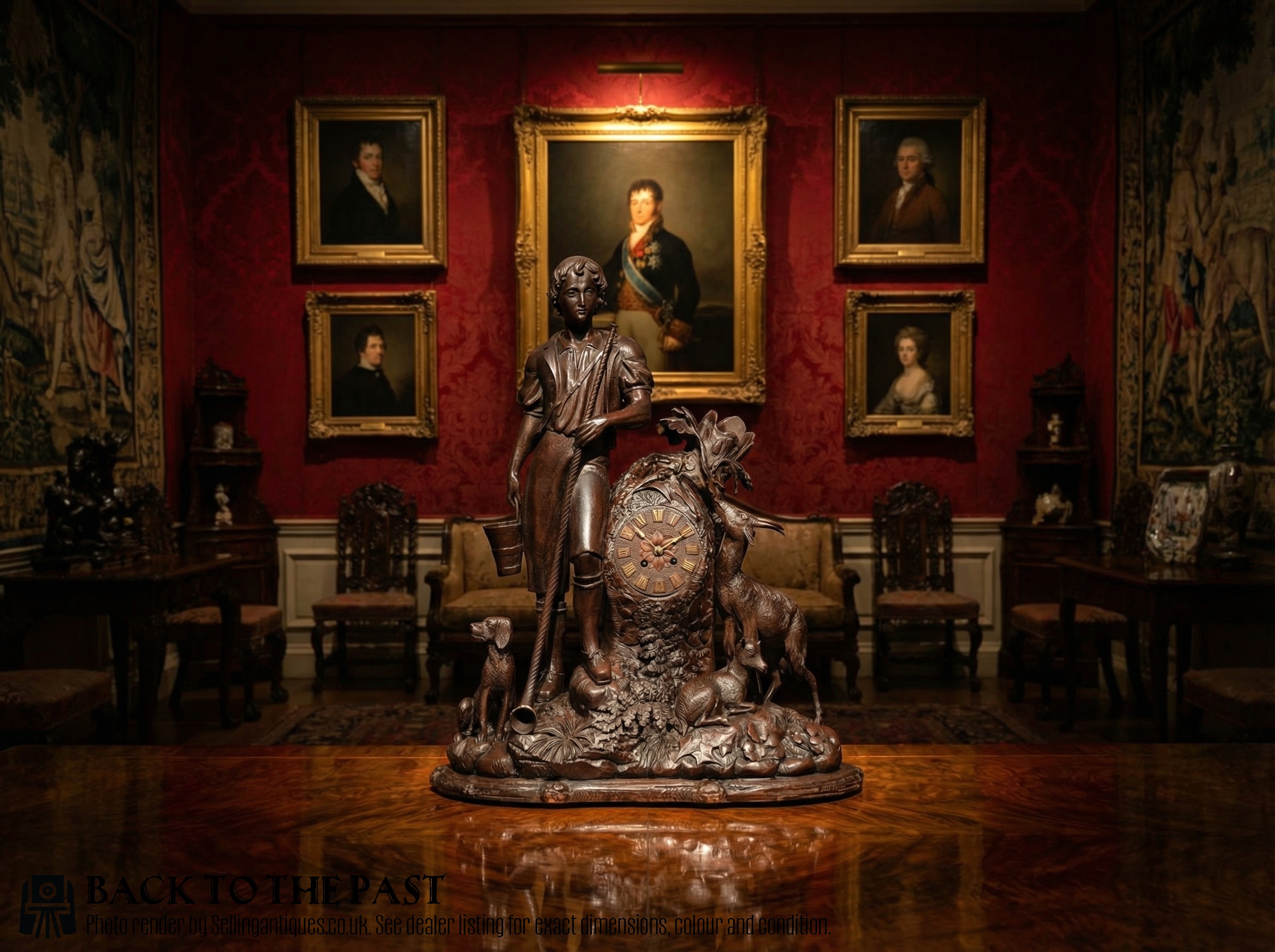
A dark timber clock search uncovers a range of antique timepieces spanning the Georgian, Regency, and Victorian eras alongside 19th-century works. These pieces encompass wall clocks, mantel clocks, barometers, and longcase clocks.
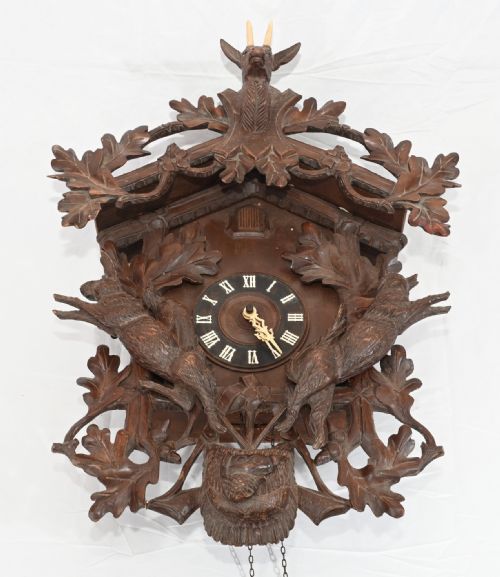
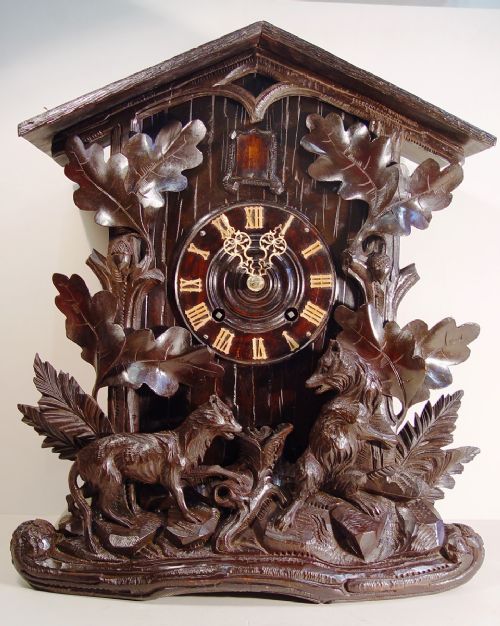
The selections on this page are dominated by 19th-century Black Forest cuckoo clocks and Victorian wall clocks. Buyers frequently encounter carved wood and dark wood cases housing mechanical movements.
Construction and materials
Artisans built these timepieces using woods such as walnut, oak, and mahogany, frequently applying intricate hand-carving techniques to the timber. Brass components, glass panels, and occasional bone details complete the construction.
Movements incorporate traditional mechanisms like fusee setups, while dials utilise materials including ceramic and metal alongside carved timber surrounds.
A carved king looks out from a grandfather clock case.
Factors that define quality
The distinction between standard examples and superior pieces rests in the depth and precision of the timber carving. Elaborate figural carvings and crisp architectural details elevate a piece above simpler production.
The sophistication of the internal movement, such as twin fusee systems, distinguishes finer workshop output from more utilitarian timekeepers.
John Wylde·Beha
The Dark Timber Clock Glossary
- Fusee
- A conical pulley used in spring-driven clocks to equalise the force of the mainspring as it unwinds. This mechanism ensures more consistent timekeeping.
- Black Forest
- A mountainous region in Germany renowned for intricate woodcarving and clockmaking. Pieces from this area typically feature cuckoo mechanisms and naturalistic foliage motifs.
- Longcase clock
- A tall freestanding pendulum clock enclosed in a wooden case, often termed a grandfather clock. These housing structures showcase prominent oak or mahogany grain.
- Dial
- The face of the clock where the hours and minutes are displayed. These components feature ceramic or metal construction with painted or applied numerals.
Dark Timber Clock: Frequently Asked Questions
How do I wind a fusee wall clock?
Wind the clock using the designated key in the winding hole on the dial, turning it gently until resistance is met.
Take care not to overwind the movement, as this can damage the internal spring mechanism.
Where should I hang a heavy timber wall clock?
Mount the clock directly into a solid wall stud using appropriate fixings to support the substantial weight of the timber case and movement.
Ensure the wall is stable and level so the pendulum swings evenly without catching.
How do I identify a Black Forest cuckoo clock?
Look for hand-carved wooden cases featuring leaves, birds, or animals, paired with mechanical cuckoo calls driven by falling weights or spring movements.
These clocks originated in Germany during the nineteenth century and display distinct regional carving styles.
What maintenance does a vintage movement need?
Have the mechanical movement professionally cleaned and oiled every few years to keep the gears running smoothly.
Dust the timber case regularly with a soft, dry cloth to protect the polished wood surface.