


Hand Carved Clock
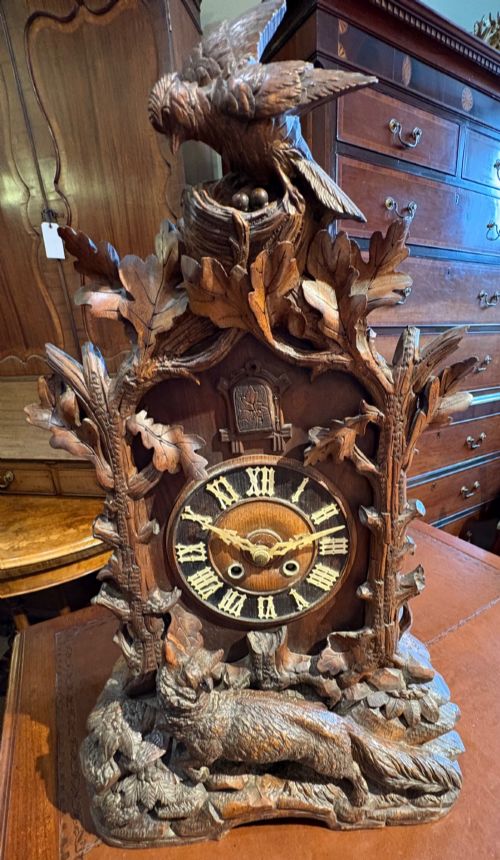
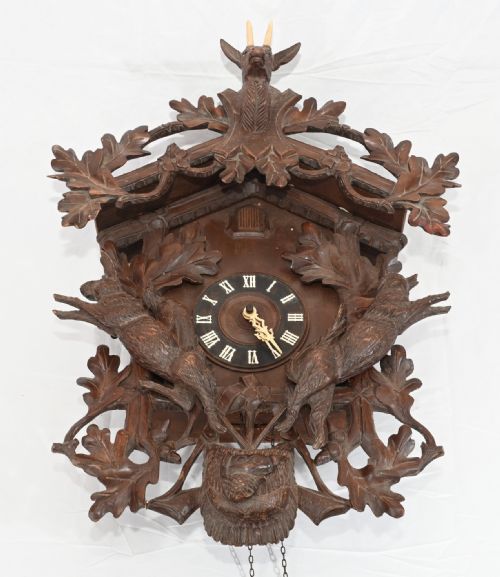
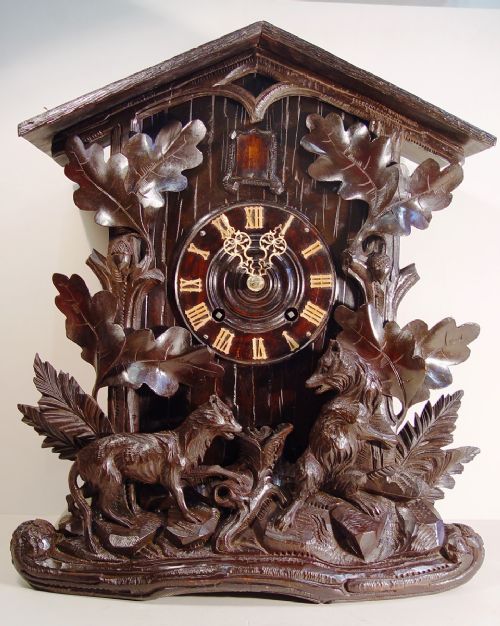
These hand carved clock examples unite centuries of timber craftsmanship, ranging from Swiss Black Forest cuckoo clocks to oak longcase timepieces.

Hand Carved Clock
When you search for a hand carved clock, you encounter wooden timepieces spanning the seventeenth through the nineteenth centuries. These objects include wall-hanging cuckoo clocks, table-standing mantel clocks, barometers, and tall oak longcase clocks.
The most common examples on this page are nineteenth century Black Forest items, often rendered in walnut or linden wood. Alongside these German and Swiss works appear earlier British pieces in oak.
Forms stretch from domestic mantel clocks to grand architectural cases and substantial grandfather clock housings. Each piece relies on hand-tooled timber surfaces to display its specific regional style.
How they were made
Carvers shaped these clocks from solid timbers such as oak, walnut, and linden wood using specialised gouges and chisels. The natural grain of the wood determines the depth and clarity of the carved foliage, figures, and animal motifs.
Movements incorporate brass gears, iron plates, and occasionally bone details for dials or ornamentation. Cases combine structural joinery with surface carving, while glass protects the exposed dials of mantel and wall variants.
One grand case preserves a hand-carved depiction of a king alongside the ticking movement.
What varies in quality
Quality rests upon the depth, sharpness, and biological accuracy of the hand carving across the timber case. Superior examples display high relief with undercut foliage and expressive figures rather than shallow, mechanical milling.
The sophistication of the internal movement also dictates value, with twin fusee or eight-day mechanisms representing higher tiers of clockmaking skill. Harmony between the carved wooden housing and the original dial elevates the status of the piece.
Bergen & Co·William Clement·Beha
The Hand Carved Clock Glossary
- Black Forest
- A style of wood carving originating from the mountainous region of Central Europe, known for depictions of local fauna and foliage. Pieces often take the form of wall-hanging cuckoo clocks or mantel pieces.
- Longcase clock
- A tall pendulum clock enclosed in a wooden case, commonly referred to as a grandfather clock. These housing structures are frequently built from oak and stand independently on the floor.
- Fusee
- A conical pulley used in mechanical clocks to maintain an even pull on the movement as the mainspring unwinds. This mechanism improves timekeeping accuracy across the duration of the wind.
- Linden wood
- A pale timber with a fine, even grain favored by carvers for its cooperative texture. It allows for intricate, splinter-free detailing in complex regional wooden sculptures.
Hand Carved Clock: Frequently Asked Questions
What is a twin fusee movement?
A twin fusee movement uses conical pulleys to regulate the force of the mainspring on both the timekeeping and striking trains. This complex mechanism ensures consistent power delivery to the gears.
You find this system in higher quality nineteenth century table and mantel clocks. It represents a superior level of horological engineering compared to standard spring-driven alternatives.
How should I care for a carved wooden clock case?
Keep carved wooden clock cases away from direct sunlight and rapid temperature fluctuations to prevent the timber from splitting. Dust the intricate crevices regularly using a soft, dry brush.
Avoid applying modern chemical polishes to the antique wood surfaces. Natural beeswax applied sparingly can help maintain the finish over time.
Are these clocks suitable for daily use?
These antique timepieces can operate reliably when properly serviced and installed on a stable, vertical surface. Mechanical movements require periodic cleaning and professional adjustment by a horologist.
Running an older eight-day or cuckoo mechanism demands careful winding following the specific instructions of the movement type. Gentle handling preserves both the carved case and the internal brass gears.